REVIEW · GOA
Private Guided Heritage Walking Tour in Goa
Book on Viator →Operated by Get Me Vacation · Bookable on Viator
Old Goa’s Portuguese story is built in stone. I love how this walk connects Portuguese colonial influence to real sites you can see, not just facts on a page. I also love that you get UNESCO-listed churches as key stops, so the architecture does the heavy lifting.
The only real catch is timing: you’ll be moving on foot for about 3–4 hours, and the tour runs best in good weather. If you hate walking or you’re visiting during rough rain, you may want to plan for a different day.
In This Review
- Key highlights
- Where Old Goa starts: Viceroy’s Arch and the 10:30 plan
- Your guide Abhinav makes the stones speak
- Stop 1: Viceroy’s Arch—Portuguese authority in one doorway
- Stop 2: Basilica of Bom Jesus—red stone and Baroque architecture
- Stop 3: Sé Cathedral—bigger-than-Portugal comparisons
- Stop 4: Yusuf Adil Shah’s gateway—black volcanic rock, one surviving fragment
- Stop 5: Archaeological Museum of Goa—artifacts and colonial portraits
- Stop 6: St. Cajetan’s Church—Jesus statue and river views
- Stop 7: Church of St. Francis of Assisi—UNESCO, frescoes, and wood paintings
- Price and value: $11.33 for entrance sites plus a guide
- How to get the most out of a 3–4 hour Old Goa walk
- Who should book this heritage walk—and who might skip it
- Should you book this private guided heritage walking tour?
- FAQ
- How long is the private guided heritage walking tour in Goa?
- Where does the tour start?
- What time does the tour begin?
- Is hotel pickup and drop-off included?
- Are admission tickets included?
- What languages does the guide speak?
- How big is the group?
- What if the weather is bad?
Key highlights
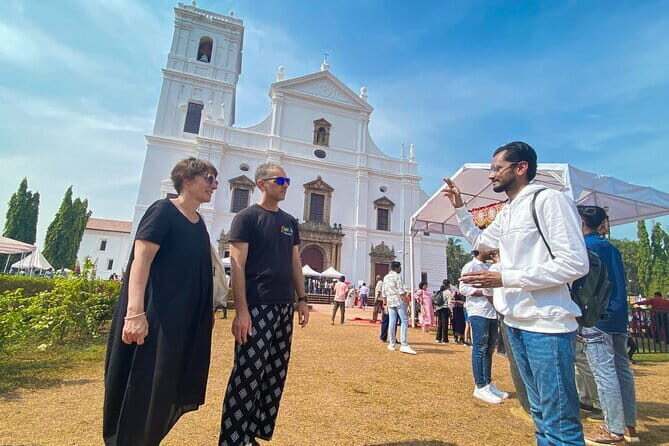
- Portuguese-era landmarks in one tight loop, from Viceroy’s Arch to church interiors
- UNESCO church stops including Bom Jesus and St. Francis of Assisi
- Clear pacing with short on-site visits (around 20–45 minutes each)
- Guide support that fills gaps with tools like printouts, videos, and personal stories (Abhinav is specifically noted)
- Mandovi River + Divar Island views from St. Cajetan’s Church
Where Old Goa starts: Viceroy’s Arch and the 10:30 plan
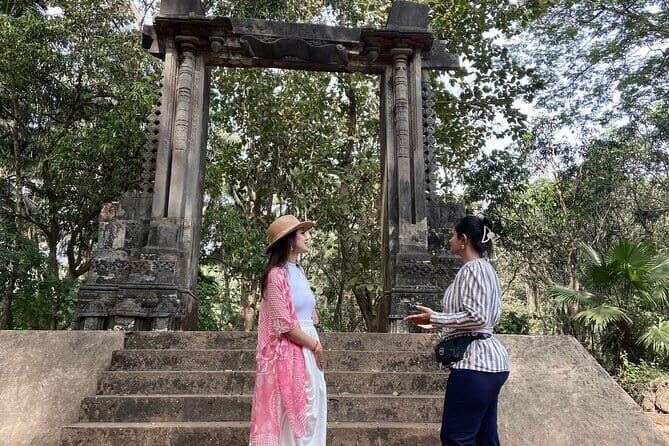
This tour begins at Viceroy’s Arch in Old Goa, with a 10:30 am start. Expect a total time of about 3 to 4 hours, and you’ll end back at the meeting point. That loop matters. You’re not spending your morning bouncing around Goa’s wider sprawl, and you’re not losing time to long transfers.
The group cap is up to 25 people, so it stays manageable. It’s also priced at $11.33 per person, which is the sort of number that makes you think twice about doing the sites solo—especially since entrance fees are mostly included. You’ll also get a mobile ticket, which is handy when you’re juggling sun, photos, and church rules.
What helps most is the “walk with context” approach. You’re not just collecting stops. You’re learning why each place looks the way it does—how Portuguese power showed up in stone, and how local history continued alongside it.
You can also read our reviews of more walking tours in Goa



Your guide Abhinav makes the stones speak
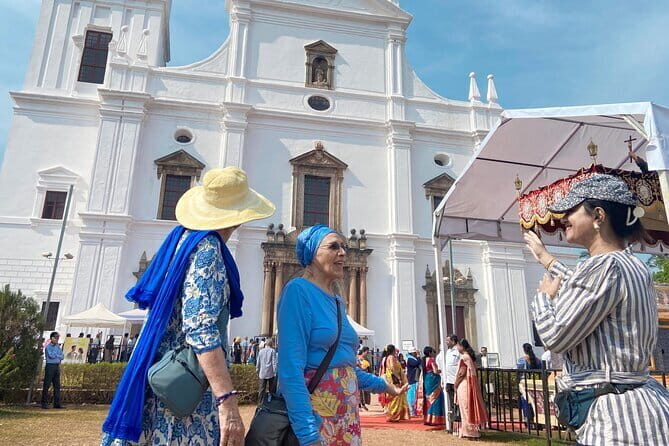
A big reason this tour gets high marks is the guiding. The experience includes a storyteller/guide who can speak English, Spanish, and Hindi. One guide name comes up again and again: Abhinav.
In the field, that shows up as more than explanations. Abhinav is described as friendly and fun, and also attentive to well-being—meaning the pace feels humane, not rushed. He also comes prepared with printouts, videos, and personal anecdotes to help when a building can’t fully explain itself. That’s especially useful in Old Goa, where you often see a structure, but not the surrounding world that made it meaningful.
You should feel comfortable asking questions too. If you’re the type who wants to know what you’re looking at—styles, names, time periods, why something survived while other things didn’t—this tour is set up for that.
Stop 1: Viceroy’s Arch—Portuguese authority in one doorway

You start with Viceroy’s Arch, an ASI protected Monument of National Importance in Goa. You’ll spend about 20 minutes here, which is just enough to get your bearings and understand why this arch matters.
Think of this stop as your “key.” Once you stand here, Portuguese influence stops being abstract. You can start connecting the architecture you’ll see later—especially in the churches—back to the kinds of power and governance that shaped Old Goa.
What to watch for:
- The arch as a symbol of authority (not just a pretty landmark)
- How it sets the tone for the rest of the walk
Possible drawback: arches and gates don’t always feel as dramatic as a full church interior. If you’re expecting a wow moment every 2 minutes, this opening stop is more about framing the story.
Stop 2: Basilica of Bom Jesus—red stone and Baroque architecture
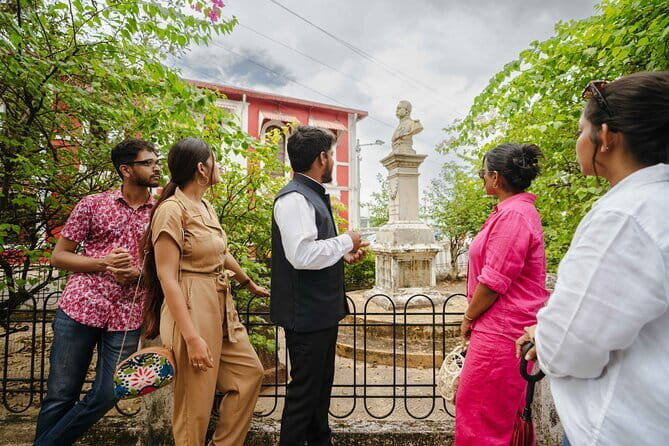
Next up is the Basilica of Bom Jesus. Plan on about 30 minutes, and entrance is included. This is the kind of building that looks historic even when you’re new to the area.
The basilica is described as an ancient-looking red building with a grand Baroque structure. Even better, the style is a mix—Corinthian, Doric, and other architectural elements that were common across parts of Europe. That matters because you can see it: the design doesn’t feel like one straight line of style. It feels like a blending of worlds.
Why this stop is worth your time:
- You’re seeing how European styles took root locally
- You get a strong visual anchor for Portuguese-era Goa
Trade-off to consider: it’s a church, so you may need to adjust expectations around silence, photography rules, and standing time. Still, the interior experience is the point, and the stop is long enough to do it properly.
Stop 3: Sé Cathedral—bigger-than-Portugal comparisons

Then you’ll visit Sé Cathedral, again about 30 minutes, with admission included. The cathedral is described as being bigger than any church in Portugal and also believed to be Asia’s largest Church.
Even if you take those comparisons as “best-known claims,” the point still lands. This is not a small, quiet chapel feeling. It’s large-scale religious architecture, and your guide’s explanations help you understand how the size connects to the meaning placed on the site.
What to focus on:
- The scale, and what that implies about community importance
- How the cathedral fits into the broader Portuguese footprint in Old Goa
One consideration: size can feel overwhelming if you walk in with no context. That’s where having the guide matter—your “what am I looking at” questions get answered fast.
You can also read our reviews of more guided tours in Goa






Stop 4: Yusuf Adil Shah’s gateway—black volcanic rock, one surviving fragment
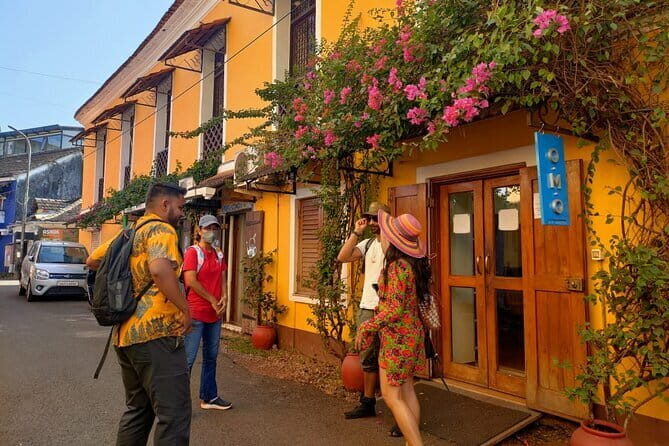
At about 20 minutes, the Gateway of the Palace of Yusuf Adil Shah is a sharper historical turn. This is described as a stone gateway of black volcanic rock, and importantly, it’s the sole remnant of a grand 16th-century sultan’s palace.
That “sole remnant” detail is what makes this stop hit. You’re not looking at a full palace layout. You’re looking at what survived—and what that suggests about how places change, get repurposed, or get erased over time.
Practical tip: this is a photo-friendly spot. You’ll likely want to stop, frame the rock and doorway shapes, and let your guide’s story connect the gateway to the wider timeline.
Possible drawback: if you’re hoping for a long scenic walk through palace ruins, you’ll want to manage expectations. It’s short, and the history is carried by a fragment.
Stop 5: Archaeological Museum of Goa—artifacts and colonial portraits
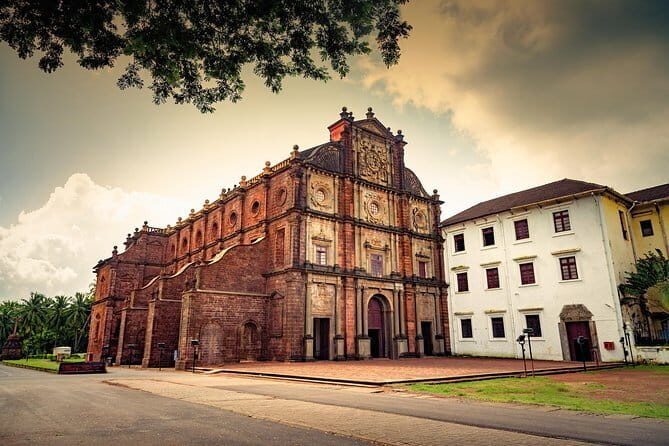
Next is the Archaeological Museum of Goa, around 30 minutes. This is a compact history museum with ancient artifacts excavated in Goa, plus portraits from colonial times. Entrance is included.
This stop is valuable because it gives your brain a place to organize what you just saw outside. Churches and gates are “big visuals.” Museums help you connect them to objects and people—stuff that makes history feel less like a timeline and more like real life.
What you’ll likely appreciate here:
- Artifacts excavated in Goa (so it stays local)
- Colonial-era portraits that help you picture the human side of the period
If you’re the type who learns best by switching contexts, this museum is a smart mid-tour reset. And because it’s only about 30 minutes, it doesn’t turn into a slow detour.
Stop 6: St. Cajetan’s Church—Jesus statue and river views
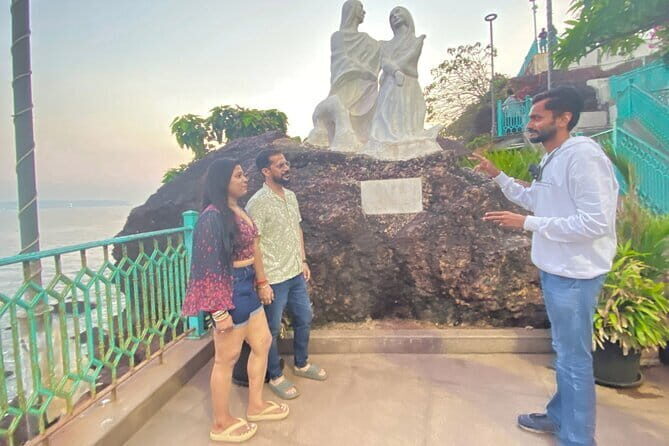
At about 45 minutes, you’ll visit St. Cajetan’s Church. This one is listed with admission ticket free, which helps the value feel even better.
This stop also stands out for views. You’ll get excellent scenery over the Mandovi River and Divar Island. If you’ve only been thinking about Old Goa as churches and stonework, this is the reminder that the region’s geography shapes the experience.
Inside the story is a Statue Of Jesus and the earlier connection to the Shahs palace gateway. Your guide can help you see how these elements connect to the broader Portuguese-era narrative you’ve been building all morning.
The main consideration here is time. Forty-five minutes is long enough that you can take in the church and the viewpoints—just don’t rush it. If you’re trying to cram everything in fast, you’ll miss the best part: that river-and-island view.
Stop 7: Church of St. Francis of Assisi—UNESCO, frescoes, and wood paintings
Your final major stop is the Church of St. Francis of Assisi, a UNESCO World Heritage Site. Plan on about 30 minutes, with admission included.
This is a high-impact ending. The buildings are described as brilliantly preserved, and inside you’ll find fine decorative frescoes plus paintings on wood showing the life of St Francis of Assisi.
Why it’s a great finale:
- You’re not just seeing architecture; you’re seeing religious storytelling in art form
- UNESCO status signals that what you’re looking at has global significance
- Ending here feels like you’re stepping from “history explanation” into “history you can see with your eyes”
Possible drawback: frescoes and wood paintings reward slow looking. If you only take quick glances, you might feel like you rushed the best part. Give yourself a little time to stand and actually look.
Price and value: $11.33 for entrance sites plus a guide
At $11.33 per person, this tour is priced like a budget-friendly way to get serious access. You’re also told that all fees and taxes are included, and entrance tickets are included at most stops (with St. Cajetan’s Church listed as free).
That’s where the value gets real. If you tried to piece this together on your own, you’d likely pay for multiple entrances across churches and lose the context that makes the architecture meaningful. Here, you get a multilingual guide and photo opportunities, plus the route is tightly organized into about half a day.
A practical note: it’s described as being booked about 7 days in advance on average. If you’re visiting during a busy season or you have a narrow window, it’s smart to lock in earlier than later. That small planning effort can help you avoid having to switch days.
How to get the most out of a 3–4 hour Old Goa walk
This is a walking-focused experience. Even with short stop times, you’ll be on your feet and moving between sites. For a smoother day:
- Wear comfortable shoes you don’t mind getting a little dusty
- Bring water, especially if the weather turns warm
- If you care about photos, keep your camera ready but expect some places to limit how you shoot
Also: the tour is noted as requiring good weather. If skies look rough, don’t assume you’ll keep the same plan. The experience may be moved or refunded if poor weather cancels it.
If you’re trying to see Goa beyond beaches—Portuguese influence, church architecture, and the “why” behind the shapes—this tour is made for that mindset.
Who should book this heritage walk—and who might skip it
Book this if:
- You’re in Goa for a short time and want an efficient Old Goa hit
- You like architecture and historical context, not just sightseeing stamps
- You want a guide who can answer questions across English, Spanish, and Hindi
- You appreciate when someone brings materials like printouts and videos to make missing context visible
Consider skipping if:
- You want a mostly relaxed, low-walking tour
- You’re visiting when weather is unreliable and you can’t shift plans
- You only want beach time or want a tour with long scenic breaks (this one is focused on buildings and stories)
Should you book this private guided heritage walking tour?
Yes, if your goal is to understand Old Goa’s Portuguese-era footprint in a way that sticks. The route is tight, the time on each site is reasonable, and the guide-driven storytelling adds value that you won’t get from wandering alone.
The strongest reason to book is the combination: UNESCO church stops, entrance fees mostly included, and a guide approach that’s supported with real materials. If you show up rested, bring comfy shoes, and give the art inside the churches a bit of time, this is the kind of tour that makes the stones feel alive.
FAQ
How long is the private guided heritage walking tour in Goa?
It runs for about 3 to 4 hours.
Where does the tour start?
It starts at Viceroys Arch, Old Goa, Goa 403402, India.
What time does the tour begin?
The start time is 10:30 am.
Is hotel pickup and drop-off included?
No, hotel pickup and drop-off are not included.
Are admission tickets included?
Admission tickets are included for most stops, and St. Cajetan’s Church is free. All fees and taxes are included overall.
What languages does the guide speak?
The guide can speak English, Spanish, and Hindi.
How big is the group?
The tour has a maximum of 25 travelers.
What if the weather is bad?
The experience requires good weather. If it’s canceled due to poor weather, you’ll be offered a different date or a full refund.