REVIEW · GOA
Highlights of Portuguese influenced Goa (2 Hours Guided Walking Tour)
Book on Viator →Operated by Yo Tours Goa · Bookable on Viator
Portuguese Goa comes alive on foot. I love how the guide turns Panjim Church and Archbishop’s Palace into a clear story of Portuguese rule until 1961, and you’ll enjoy the Fontainhas neighborhood lanes that many people skip. It’s the kind of walk where monuments and everyday streets explain each other.
One possible drawback: this route has a noticeable hill and steps near Altinho Hill, so wear shoes you trust. Also, it runs best when the weather is good, since a lot of it is outdoors.
I like that it’s small (up to 20 people) and runs on a mobile ticket, so the start feels easy. In about two hours, you get a guided “map in your head” for Panaji that you can use the rest of your trip.
In This Review
- Key things that make this Portuguese Goa walk worth it
- Portuguese Goa in Panaji: the point isn’t just buildings
- Starting at Church Square: the Panjim Church anchor
- Altinho Hill steps and the route up toward Archbishop’s Palace
- Portuguese-influenced lanes and Fontainhas: where the neighborhood does the talking
- The old High Court and official residences: reading power in architecture
- The finish at Maruti Temple on Altinho’s hillock
- Price and logistics: $11.35 for a guided route with real access
- Pacing tips: how to enjoy the hill without turning it into a grind
- A quick heads-up about food expectations
- Who this Portuguese Goa walking tour fits best
- Should you book this Portuguese influenced Goa walking tour?
- FAQ
- How long is the Portuguese influenced Goa walking tour?
- Where does the tour start and end?
- What’s included in the tour price?
- What isn’t included?
- What group size should I expect?
- Is the tour dependent on weather?
- Can I get a full refund if I cancel?
Key things that make this Portuguese Goa walk worth it
- English + Hindi guide: you get stories and practical recommendations in languages most visitors can handle.
- Portuguese-era sites in real sequence: you move from Panjim Church toward Altinho Hill and the Archbishop’s Palace, not just random stops.
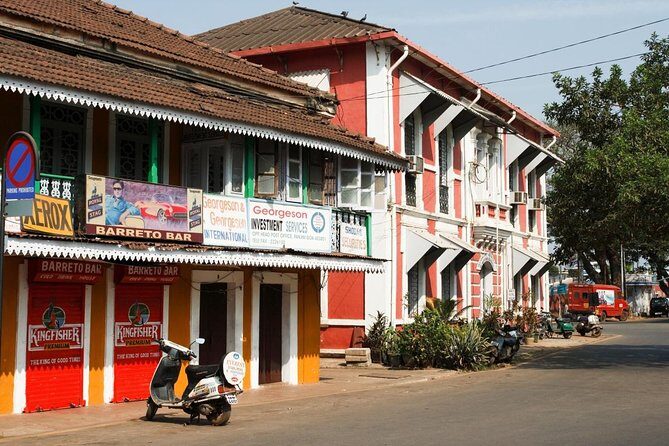
- Fontainhas neighborhood time: the walk includes colorful lanes, centuries-old buildings, and cafes in this local area.
- Hilltop payoff at Maruti Temple: you finish on top of the Altinho hillock for those view-worthy moments.
- Good value for the price: at about $11.35 per person, you’re paying mainly for the guide, route context, and access to side lanes.
Portuguese Goa in Panaji: the point isn’t just buildings
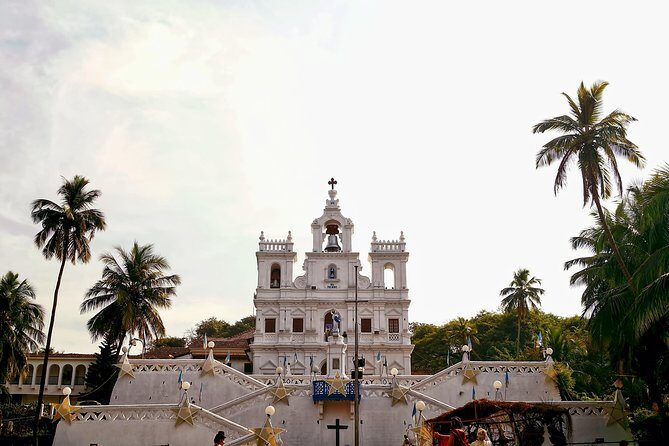
This tour works because it treats Portuguese influence like something you can still notice in the city’s layout, not just in a few plaques. You’ll be walking through Panaji’s historic areas where the Portuguese era shaped religion, architecture, and the feel of the streets until 1961.
What I like most is the balance between big landmarks and smaller local details. You start with the kind of sites people recognize, but the walk quickly shifts to Portuguese-influenced lanes and everyday neighborhood sections, so the story feels grounded instead of museum-like.
And since the guide also shares money-saving and city-signal tips, the walk can help you plan the rest of your days with less guessing. That’s real value when you’re moving around a place for the first time.
You can also read our reviews of more walking tours in Goa


Starting at Church Square: the Panjim Church anchor
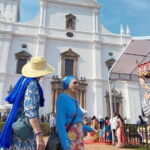
Your tour starts at Church Square, Altinho, Panaji—right by the Panjim Church area. This matters because it sets the tone early: Portuguese presence in Goa is often tied to Catholic landmarks, and starting here gives you a clear reference point.
From the start, you’re not just looking around. The guide’s job is to connect what you see to why it exists. You’ll hear how Portuguese rule lasted until 1961 and how that long stretch left visible marks on Panaji’s historic core.
I’d also treat this first segment as your orientation time. If you keep your camera ready and also pay attention to street direction and landmarks, you’ll later recognize what you’re seeing on your own.
Altinho Hill steps and the route up toward Archbishop’s Palace
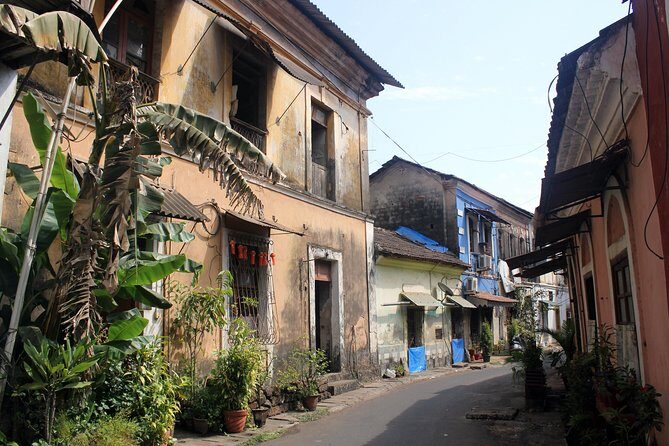
After the Church Square start, the walk moves upward toward Altinho Hill’s stepped street and the Archbishop’s Palace area. Expect a real climb, not a flat stroll. This is where the tour’s pace becomes “walking plus elevation,” so take it steady and pause when you need to.
Why I think this section is worth the effort: it gives you a more layered city view. When you’re moving up, you understand how Panaji sits relative to key areas, and you get that slightly different perspective that makes the architecture feel more connected.
At the Archbishop’s Palace stop, you’re moving from general Portuguese influence into a specific kind of power and place. The guide’s storytelling helps you read the building not only as a structure, but as a symbol of the era’s institutions.
If you’re sensitive to stairs, you might feel the effort more here than in the rest of the walk. Still, it’s only about two hours total, so pacing yourself from the beginning helps.
Portuguese-influenced lanes and Fontainhas: where the neighborhood does the talking
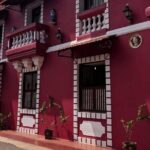
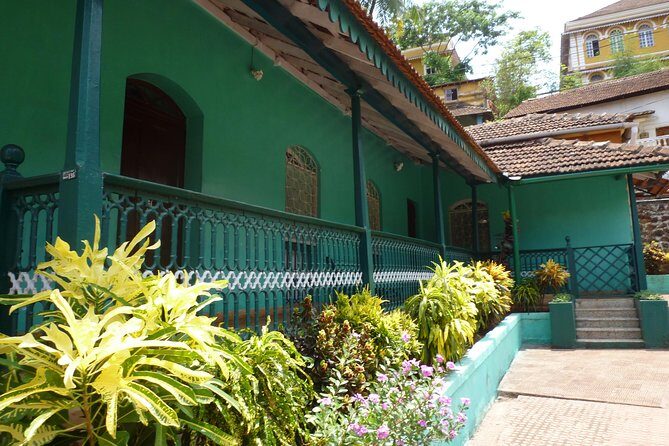
One of the best parts of the tour is the shift into the side lanes and neighborhood feel. You’ll walk through Portuguese-influenced lanes, then spend time in Fontainhas, the colorful area known for older buildings and local life.
Here’s the practical angle: this isn’t just scenery. This is your chance to see how the Portuguese touch shows up in daily streets—street edges, building character, and the way people move through the area. You’ll also see the mix of old and in-use spaces, including cafes inside the Fontainhas neighborhood.
The tour also includes a modest art gallery stop. It features Scandinavian art and original work by locals. That’s a nice change of pace from only churches and government sites, and it helps you see Goa as more than a colonial “then vs. now” story. You’re seeing contemporary creativity living alongside older structures.
If you want a simple success strategy: slow down on these lanes. Let the guide’s explanations land, then look again yourself. Small details tend to make the whole Portuguese story feel more real.
The old High Court and official residences: reading power in architecture
As the walk continues, you reach areas tied to governance and one of the city’s major legal landmarks. You’ll see the old Indian High Court, and the route also connects to one of the oldest High Courts of India. That’s a big sentence, but the on-foot format makes it easier to digest: you’re not reading about it, you’re standing near the place where history becomes architecture.
The walk also passes Goa’s Chief Minister’s Official Residence. Again, the goal isn’t just to tick a box. It’s to notice how official spaces sit inside the city’s fabric and how that older layout shapes where people live, work, and gather.
For you, this section is valuable because it explains the city’s layers. Portuguese influence didn’t erase local systems; it overlapped with them. Walking between religious landmarks, courts, and official residences helps you understand how the city evolved into the version you see today.
If you like taking photos, keep your phone steady and watch for respectful angles. Government-linked buildings often have rules or boundaries, so follow the guide’s lead on where you can stand and what you can capture.
You can also read our reviews of more guided tours in Goa




The finish at Maruti Temple on Altinho’s hillock
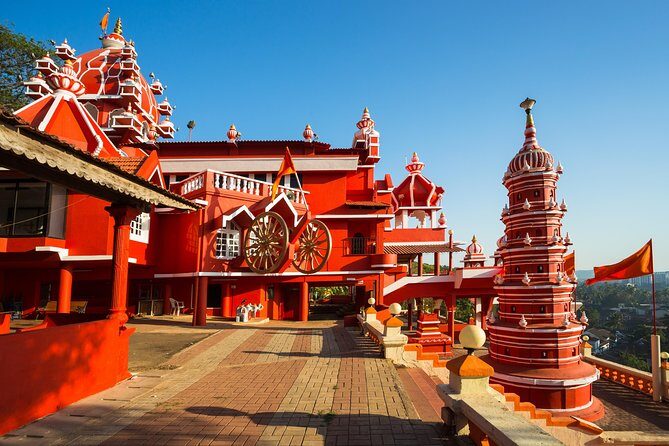
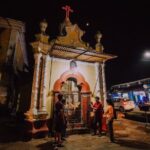
The walk ends at Maruti Temple, located in the Hindu Neighbourhood on top of the Altinho hillock. This ending point feels thoughtful: after all the Portuguese-era context, you close with a Hindu landmark and a hilltop position that gives you a strong sense of place.
Even if you’re not a temple-focused visitor, finishing here is practical. The elevation helps you see the surrounding streets and rooftops, and the stop gives you a natural wrap-up moment for the whole story you just walked through.
The tour’s end is near Hotel Mandovi Maruti Dayanand Bandodkar Marg, but the core point is the temple location and the view potential. Give yourself a moment here before you rush back down—this is where the walk’s effort pays off.
If you’re planning what comes next, think about your exit strategy too. You’ll finish at a hilltop area rather than a flat downtown street, so decide in advance how you’ll continue exploring.
Price and logistics: $11.35 for a guided route with real access
At about $11.35 per person for roughly two hours, this is priced like a value-focused walking tour. You’re mainly paying for the guide’s storytelling, the route context, and the ability to access lanes and side spots that you might not naturally wander into.
A small group size (maximum 20 travelers) is also part of the value. It means you’re more likely to get explanations that actually fit the group, and the guide can keep you moving without turning it into a chaotic crowd herding exercise.
You also get a mobile ticket, which cuts down on waiting around at the start. The tour is near public transportation, so you’re not locked into private transport costs.
What’s not included matters too:
- No bottled water
- No snacks
- No private transportation
So I’d plan to bring your own water bottle and consider a light snack before you go. Two hours sounds short, but the hill and stairs near Altinho make hydration and energy management worth it.
And one more practical note: the experience is described as requiring good weather. If the forecast looks messy, go in with flexibility since the operator may adjust.
Pacing tips: how to enjoy the hill without turning it into a grind
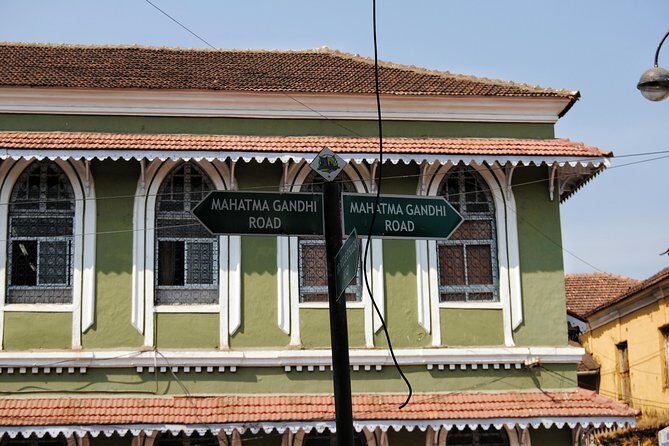
This tour isn’t a long trek, but it does have altitude and steps. If you want a smooth experience, treat it like a gentle workout with sightseeing.
I’d do three simple things:
- Wear comfortable shoes with grip.
- Take breaks when the group pauses—don’t wait until you’re winded.
- Keep a water bottle handy since it’s not provided.
Also, the walk is only about two hours, so you’ll be glad you didn’t over-plan other activities right before or right after. I like pairing it with a slower meal afterward in Fontainhas or somewhere nearby, so you can linger with a calmer pace.
A quick heads-up about food expectations
One consideration I’d take seriously: there can be confusion about whether a food stop is part of the tour experience. If food tastings or a specific food segment matter to your day plan, confirm details with the operator before you go.
That doesn’t mean the tour is bad—it means your expectations should be clear. If you care about eating on the route, you’ll enjoy the walk more when you know what to expect ahead of time.
Who this Portuguese Goa walking tour fits best
This tour is a great match if:
- you want Portuguese-era context tied to what you’re walking past
- you like seeing neighborhoods beyond the main tourist circuit
- you enjoy history explained in street-level scenes, not just large monuments
- you’re comfortable with a hill-and-steps finish
It may be less ideal if you want an entirely flat, minimal-walking experience, because the Altinho Hill section is part of the route.
Families can often join, but I’d still judge based on how your group handles stairs. For anyone who gets tired easily on inclines, the best move is slower pacing and breaks.
Should you book this Portuguese influenced Goa walking tour?
I’d book it if you want Panaji with an actual walking storyline: start at Church Square, climb toward Altinho Hill and the Archbishop’s Palace, then shift into Fontainhas lanes and end at Maruti Temple on the hilltop. The route format makes Portuguese influence feel like part of daily city life, not only a chapter in a textbook.
At $11.35 for about two hours, it’s also one of those low-risk choices where you get a guide-driven framework for the rest of your sightseeing. Bring water, wear good shoes, and check about any food expectations, and you’re set up for a satisfying, practical walk.
FAQ
How long is the Portuguese influenced Goa walking tour?
The tour lasts about 2 hours.
Where does the tour start and end?
It starts at Church Square, Altinho, Panaji, Goa, India and ends at Maruti Temple in the Hindu Neighbourhood on top of the Altinho hillock. The end point is near Hotel Mandovi Maruti Dayanand Bandodkar Marg, Panaji, Goa 403001.
What’s included in the tour price?
You get a friendly English & Hindi speaking guide, storytelling and access to hidden lanes and places, plus local tips and recommendations.
What isn’t included?
Bottled water, snacks, and private transportation are not included.
What group size should I expect?
The tour has a maximum of 20 travelers.
Is the tour dependent on weather?
Yes. It requires good weather. If it’s canceled due to poor weather, you’ll be offered a different date or a full refund.
Can I get a full refund if I cancel?
You can cancel up to 24 hours in advance for a full refund.