REVIEW · GOA
Panaji: Fontainhas Neighborhood Cultural Guided Walking Tour
Book on GetYourGuide →Operated by Yo Tours · Bookable on GetYourGuide
Panjim clicks faster when you walk it. This Fontainhas cultural guided tour threads through Portuguese-era heritage lanes and up to Altinho Hill viewpoints, with stops that connect churches, courts, and neighborhood life. You’ll follow a friendly Yo Tours storyteller (English and Hindi) who makes the streets make sense.
The one drawback to plan for: at 2 hours, the rhythm can feel a bit tight if you’re hoping for extra café time inside Fontainhas or want slower photos in every lane. If you pace yourself well and save cafés for after, you’ll get a lot out of the walk.
In This Review
- Key Points You’ll Feel Right Away
- Starting at Immaculate Conception Church: Set Your Bearings Fast
- Up the Stepped Street to Altinho Hill and the Archbishop’s Palace
- Goa’s Old High Court and the Chief Minister’s Residence Stop
- Fontainhas Portuguese-Looking Lanes: More Than Pretty Walls
- Chapel of St. Sebastian: A Quiet Center in Fontainhas
- The Art Gallery Stop: Scandinavian Meets Original Goan Pieces
- From Fontainhas Hindu Neighborhood to the Hanuman Shrine on Altinho
- Wrapping Up at Maruti Temple: A Strong Finish Point
- Price, Time, and Value at $14 for Two Hours
- Walking Comfort, Timing, and What to Bring
- Should You Book This Panjim–Fontainhas Walking Tour?
- FAQ
- Where is the meeting point for the Panaji Fontainhas tour?
- How long is the walking tour?
- What languages does the guide speak?
- Is hotel pickup or drop-off included?
- Is water provided during the tour?
- What should I bring?
- Is the tour wheelchair accessible?
- What are the main stops I can expect?
Key Points You’ll Feel Right Away
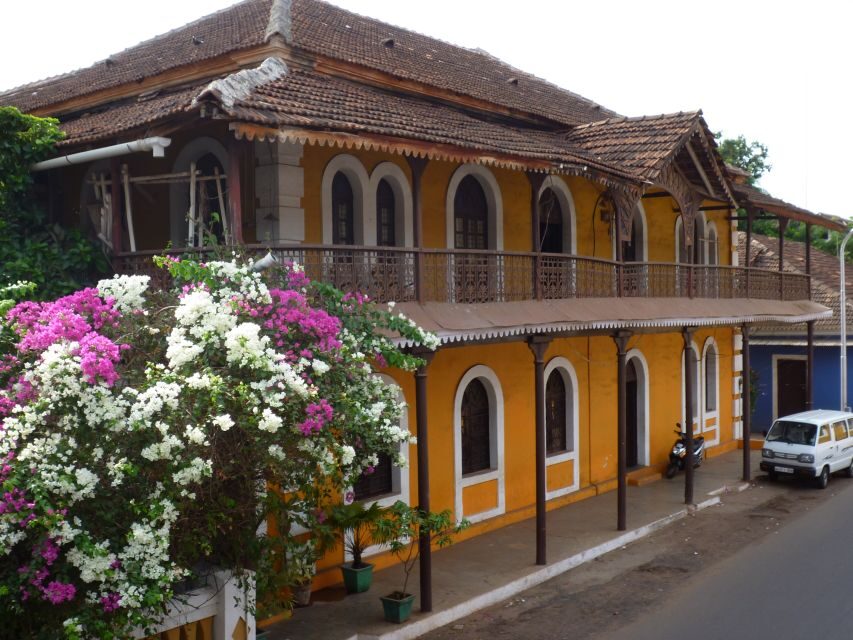
- A Panjim route built around real landmarks, not just generic photo stops
- Portuguese-influenced streets in Fontainhas, plus a Hindu neighborhood and a Hanuman shrine
- Altinho Hill viewpoints paired with authority buildings like the Archbishop’s Palace and Goa’s Chief Minister’s residence
- A small art gallery stop with Scandinavian art alongside original Goan pieces
- End-of-tour tailored tips, so you leave with a practical next-day plan
Starting at Immaculate Conception Church: Set Your Bearings Fast

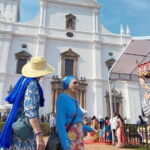
You meet outside the Our Lady of the Immaculate Conception Church in Panjim, in a neon green t-shirt with a Yo Tours ID. This is a smart start. Panjim can feel easy to wander, but the guide helps you orient quickly so the rest of the city stops being random streets.
From the first minutes, you’re not just walking for views—you’re learning how Panjim’s layers fit together. The church gives you a clear anchor point for the Christian side of the story before the tour climbs toward Altinho.
Practical note: arrive about 15 minutes early. The tour starts strictly on time, and you don’t want to miss the opening explanation while everyone files in.
You can also read our reviews of more walking tours in Goa



Up the Stepped Street to Altinho Hill and the Archbishop’s Palace
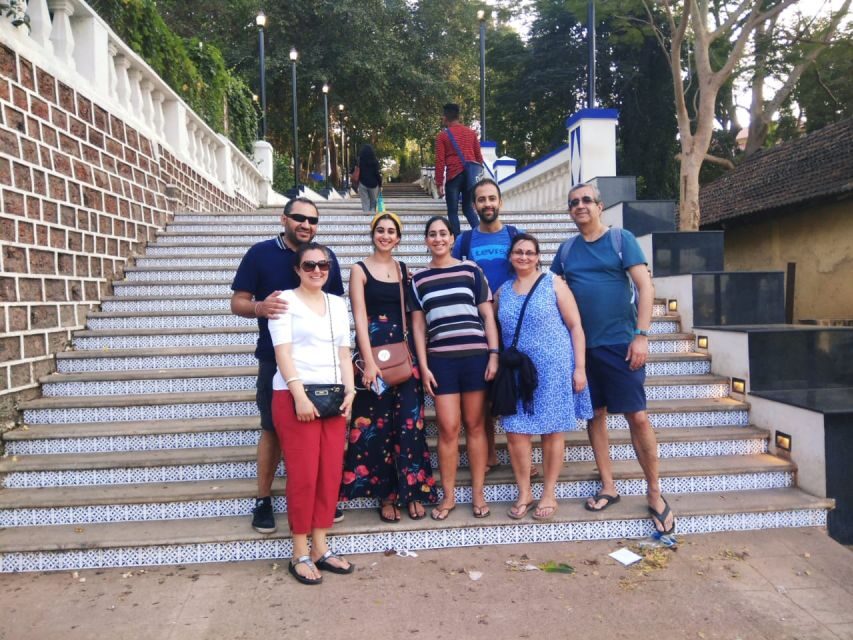
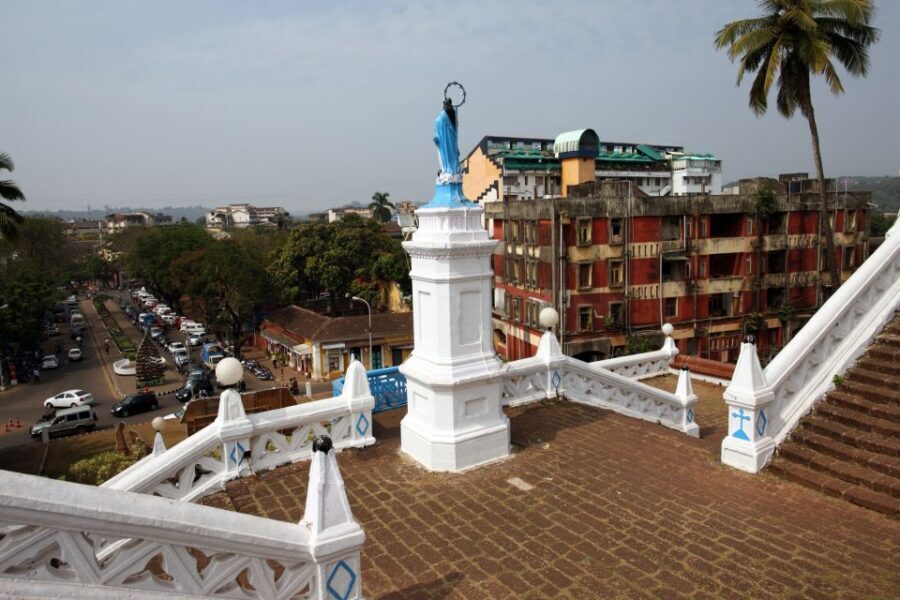
Once you leave the church area, you head toward a stepped street that leads up to Altinho Hill. The climb is the tour’s main “effort moment,” and it’s worth it. From up there, Panjim feels more readable: you see how neighborhoods stack and how viewpoints shape the way locals move and gather.
The stop at the Archbishop’s Palace adds weight to what you’re seeing. Instead of treating buildings like backdrops, the guide connects them to power and presence—who had authority, how it was displayed, and why the hill became meaningful.
Even if you don’t care about architecture, the setting helps you understand why the city developed where it did. Hilltop places weren’t just pretty; they were practical anchors in the landscape.
Goa’s Old High Court and the Chief Minister’s Residence Stop

After Altinho, the walk brings you to a High Court building that’s described as one of India’s older courts. This is a fascinating contrast to the church and palace nearby. The city isn’t only about temples and cathedrals; it also shows how law and administration shaped everyday life.
You also see the official residence of Goa’s Chief Minister. Seeing it on foot (rather than from a distance) changes the perspective. You start noticing how government spaces sit beside neighborhood streets, and how the city’s “public” identity sits next to its daily routines.
This is one of those stops that many visitors skip because they don’t know what they’re looking at. Here, the guide gives you just enough context to make the place meaningful without dragging you into a textbook.
Fontainhas Portuguese-Looking Lanes: More Than Pretty Walls
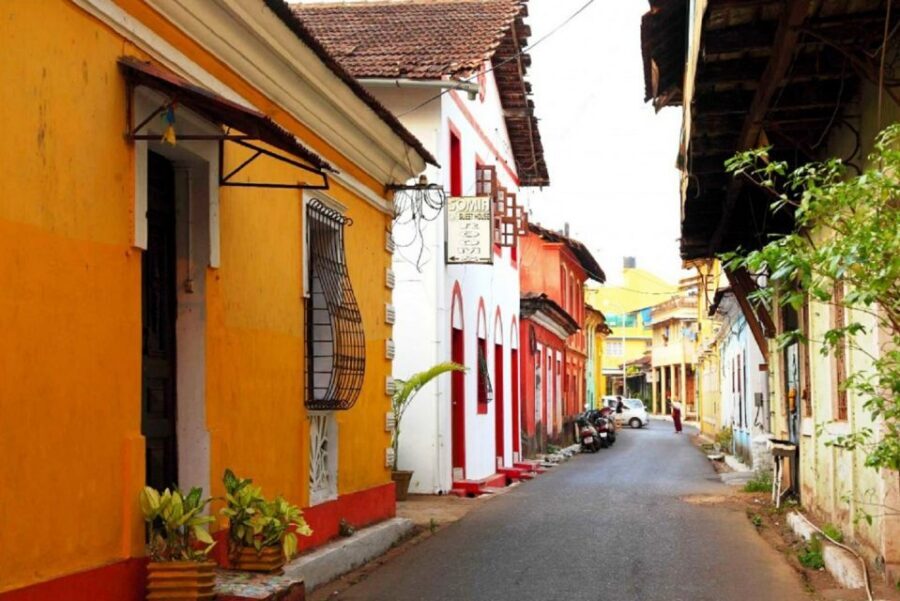
Then comes the part most people come for: Fontainhas. You’ll walk Portuguese-influenced lanes with vibrant homes, century-old structures, and charming cafés. The vibe is why this neighborhood gets attention, but the real payoff is learning what to notice as you move.
Look at the way buildings face the street. Notice how narrow lanes create a different kind of pace—slower, more intimate, more “you’re inside the city” than “you’re passing through.” This is where the guide’s storytelling matters, because the buildings start reading like lived-in history instead of decorative scenery.
A practical tip: if your dream is a pastry and a long coffee, plan that as a post-tour add-on. The tour covers the neighborhood well, but at 2 hours the schedule doesn’t linger. You can still enjoy cafés, just don’t expect the tour to turn into a food crawl.
Chapel of St. Sebastian: A Quiet Center in Fontainhas
In the heart of Fontainhas, you stop at the Chapel of St. Sebastian. This is a smaller, more focused moment than the big-name landmarks. That’s the point. The chapel helps you understand how faith shows up at neighborhood scale—not only in major institutions.
Stopping here also gives you a breather. The walk is active, but the guide uses moments like this to slow the pace just enough so you don’t feel rushed while thinking through what you’ve seen.
If you’re paying attention, you’ll notice how this chapel fits alongside the Portuguese-influenced streets and how the neighborhood’s mixed cultural life comes through in small details.
You can also read our reviews of more guided tours in Goa





The Art Gallery Stop: Scandinavian Meets Original Goan Pieces
Next is a modest art gallery stop. What makes it memorable is the mix: Scandinavian artwork alongside original Goan pieces. That contrast gives you a different kind of cultural lens. You’re not only seeing what Panjim inherits; you’re also seeing how it continues to interpret art through different influences.
This is a good choice for travelers who get museum fatigue. It’s not a huge, exhausting museum day. It’s a compact stop that helps you understand the city’s creative present, not just its past.
If you’re the type who likes to buy a small souvenir but hates crowded markets, an art gallery stop can feel calmer and more personal. You may also find pieces you wouldn’t expect in Goa.
From Fontainhas Hindu Neighborhood to the Hanuman Shrine on Altinho
As the tour continues, you move through a Hindu neighborhood within Fontainhas. This matters because it shows a different side of the same urban area. Fontainhas isn’t one-note; it’s a place where different faiths and traditions sit close enough that daily life overlaps.
Then you head to a small shrine dedicated to Lord Hanuman atop the Altinho hillock. This is a perfect end-of-tour “meaning” stop. You’re already up on Altinho’s height, so the shrine feels like a spiritual punctuation mark—like the hill isn’t just administrative or religious in one direction; it’s layered.
For me, this segment is the tour’s quiet win: you see how Panjim’s identity is shaped by more than one tradition, and you understand why the city reads as plural when you’re standing in it.
Wrapping Up at Maruti Temple: A Strong Finish Point
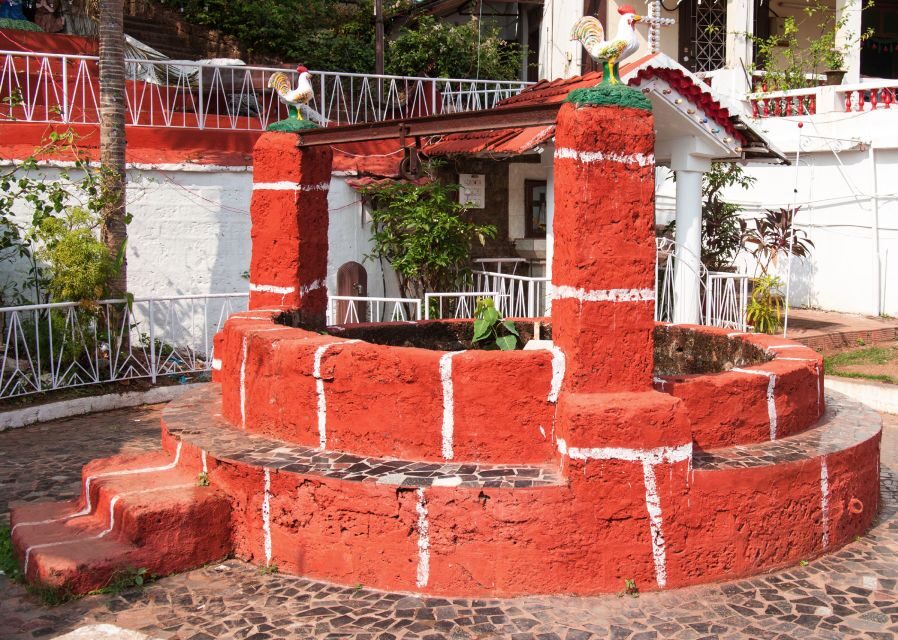
You end at Maruti Temple. It’s a clear, walkable destination that also makes sense with the Hanuman focus earlier, since Maruti is closely connected to Hanuman devotion.
What I like about the finish is the clean handoff. You’re not left wandering with no next step. The guide wraps up by sharing tips and personalized recommendations for more of Goa, depending on what you care about—food, sightseeing, or slower neighborhoods.
This matters more than you might think. Panjim and nearby Goa can be big. A good guide helps you choose what to do next so you don’t waste a day chasing the wrong things.
Price, Time, and Value at $14 for Two Hours
At $14 per person for about 2 hours, this tour is priced for people who want structure without a big budget. You’re paying for guide expertise plus access to lanes and stops that many first-timers would miss on their own.
The value shows up in three ways:
- You get a route that links neighborhoods to landmarks (so it’s not random walking)
- You get specific stops like the Chapel of St. Sebastian, the art gallery, and the Hanuman shrine
- You get local recommendations at the end, which can save you time later
Is it perfect? Not quite. If you’re hoping for a slow, café-heavy wandering day, you might find the tour’s pace a little tight. But if you want orientation fast and then free time after, the 2-hour length is a good match.
Walking Comfort, Timing, and What to Bring
This is a walking tour, and you should take it seriously at shoe level. Bring comfortable shoes. You’ll also want sunglasses and a sun hat, because you’ll be outside for much of the day.
Water is not included, so carry it yourself. Even if you don’t feel thirsty at the start, climbing toward Altinho can catch you off guard.
It’s also not suitable for wheelchair users. If mobility is an issue, you’ll need a different plan or accommodations that aren’t part of this tour setup.
Should You Book This Panjim–Fontainhas Walking Tour?
Book it if you want a guided route that actually teaches you how Panjim works—Portuguese-influenced streets, major civic landmarks around Altinho, and the Hindu neighborhood and Hanuman shrine that many casual walkers gloss over. The small art gallery stop is a bonus for people who like variety without turning the day into a museum marathon.
Skip (or reconsider) if your priority is a long, slow neighborhood hangout with lots of café time. With the schedule set for 2 hours, you’ll likely want to do that on your own right after the tour. Also, if walking distance and the hill slope are a problem, choose a different option since this one isn’t set up for wheelchairs.
FAQ
Where is the meeting point for the Panaji Fontainhas tour?
You meet outside the Our Lady of the Immaculate Conception Church in Panjim, Goa. Your storyteller will be waiting in a neon green t-shirt with a Yo Tours ID.
How long is the walking tour?
The tour lasts about 2 hours.
What languages does the guide speak?
The guide speaks English and Hindi.
Is hotel pickup or drop-off included?
No. Hotel pickup and drop-off are not included.
Is water provided during the tour?
No. Water is not included, so you should carry your own.
What should I bring?
Bring comfortable shoes, sunglasses, a sun hat, and water.
Is the tour wheelchair accessible?
No. The tour is not suitable for wheelchair users.
What are the main stops I can expect?
You’ll start at Immaculate Conception Church, walk toward Altinho Hill and the Archbishop’s Palace, see a historic High Court building and the Chief Minister’s official residence, visit Fontainhas lanes and the Chapel of St. Sebastian, stop at an art gallery, see a Hindu neighborhood and a Hanuman shrine on Altinho, and finish at Maruti Temple.