REVIEW · GOA
Panaji City Tour with museum visit
Book on Viator →Operated by Exclamations Goa · Bookable on Viator
Panaji is a city you feel in your shoes. This walking tour threads through the bylanes of Panjim with clear storytelling, a museum with serious political-history stops, and time to taste Goa beyond the beach.
I especially like the tight pacing: you hit the highlights in about 2 to 3 hours without feeling rushed. The Fontainhas section also delivers that old Goa atmosphere fast, with architecture you’ll want to photograph.
My second big win is the variety packed into short stops: the Goa State Museum (including its Portuguese and liberation-era chapters), the colorful Latin-laned Fontainhas walk, and a quick temple visit in the city center.
One consideration: this is a walking trail, and the experience runs best with good weather, so plan for heat or rain.
In This Review
- Key highlights I’d plan around
- Panaji by foot: the smart 8:00 am start
- Goa State Museum in a former palace: where politics meets architecture
- Fontainhas: shell windows, Azulejos, and a time-warp walk
- Mahalaxmi Temple stop: a brief pause in the middle of the city
- Snack breaks in local cafes and bakeries: the best way to taste Goa
- Guides and pacing: when “short” still feels complete
- Price and value: how $12 holds up
- Who should book this Panaji tour with museum visit?
- Should you book this Panaji walking tour?
- FAQ
- How long is the Panaji City Tour with museum visit?
- What does the $12 price cover?
- What are the main stops on the tour?
- Is the museum ticket included?
- Where do I meet, and when does the tour start?
- Is this a private tour or shared group?
- What if the weather is bad?
Key highlights I’d plan around
- Goa State Museum in a former royal/colonial building, including a liberation-flag moment
- Fontainhas lanes with shell windows and painted Azulejos tiles
- A short, structured route: ~25 minutes museum, ~40 minutes Fontainhas, ~10 minutes temple
- Snacks included, with cafe and bakery tasting time built into the walk
- A private group setup so your people stay together on the trail
Panaji by foot: the smart 8:00 am start
This is the kind of tour that makes Panaji make sense. You meet in the morning near India Post Panjim Head Post Office on MG Road (Patto Colony). A start time of 8:00 am helps you beat the worst heat and gives you daylight for the best views in Fontainhas.
The walking route is designed for “get oriented fast” energy. You move through the city’s core by lanes and streets where the layout tells a story, not just where buildings look pretty. The group stays compact enough that you’re not stuck waiting forever at every corner, but it’s still a group experience with a guide keeping the flow.
Practical tip: wear comfy shoes with grip. Panaji’s bylanes are walkable, but your soles will notice every curve and uneven patch. If you’re coming from the beach or you like late starts, this one is an early-to-mid-morning tradeoff, and it’s worth it for the pace and lighting.
Also note the tour includes snacks, and that changes how you plan your morning. You can skip the full breakfast routine and still make it through the walk feeling human.
You can also read our reviews of more city tours in Goa



Goa State Museum in a former palace: where politics meets architecture
The tour’s first major stop is the Goa State Museum, with about 25 minutes on-site. This building is the real star: it was once the summer palace of Adilshah, then used by Portuguese officials. That change in rulers is built into the structure and the story.
Here’s why this stop matters even if you’re not a museum person. The museum isn’t framed as dusty collections. It’s positioned as a set of eras in one place—Adilshah’s royal use, Portuguese administration, then later political symbolism. The building is also connected to the hoisting of India’s flag marking Goa’s liberation, and it later served as a secretariat for the Goa legislative assembly.
A small comfort detail that helps: the museum is reported as air-conditioned, which is a lifesaver when you’re doing a walking itinerary in Goa’s mornings that can still run warm.
What to do in your 25 minutes: don’t try to read every label. Focus on the “why this building keeps changing hands” theme. You’ll get more meaning from the flow of dates than from any single exhibit.
Potential drawback: if you love long museum stays, 25 minutes will feel short. But the entire point here is to use the museum as a historical anchor, then carry that context into the streets you walk next.
Fontainhas: shell windows, Azulejos, and a time-warp walk
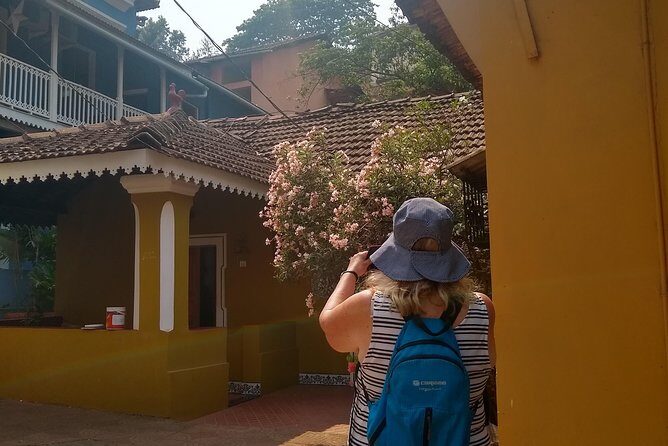
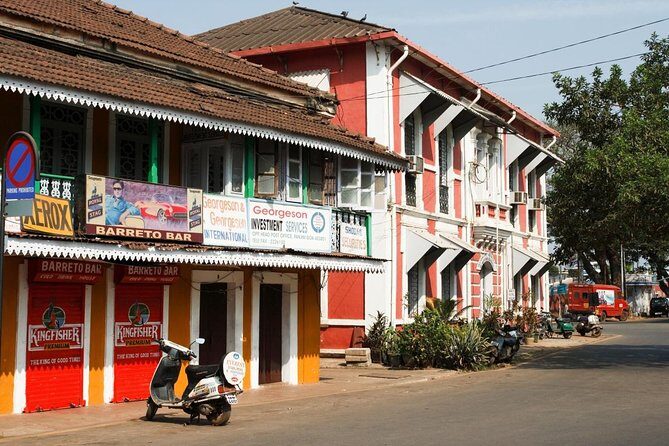
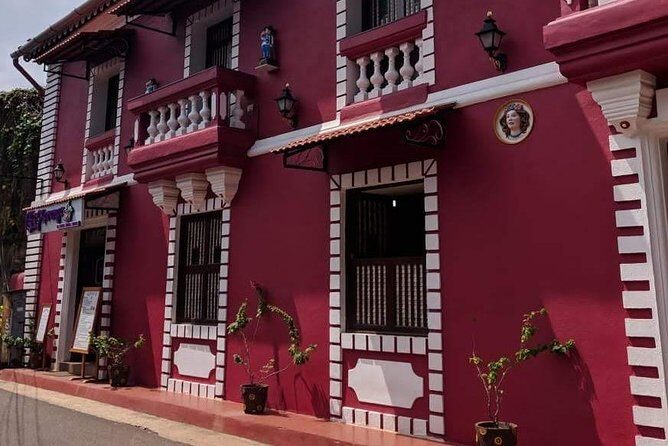
Next comes Fontainhas, roughly 40 minutes of strolling. This is the part people remember because it looks like a lived-in time capsule: Latin architecture style, colorful streets, and details you’d miss if you just pass through.
The features are specific and fun to spot as you walk:
- Shell windows
- Painted Azulejos tiles
- Painted facades and lane geometry that feel very different from newer parts of Panaji
The best value of this section is that the guide doesn’t treat Fontainhas like a photo stop. You get the stories behind the lane layout and the architectural influences, so you’re not just collecting pictures—you’re building context. That’s a major reason this walk rates well: the route hits multiple layers of meaning quickly.
One more reason Fontainhas works so well on a tour like this: it’s walkable even when your attention span is tired. You’re not stuck only inside; you’re moving through small scenes in sequence, which keeps the momentum.
When it might be tricky: the lanes can be tight. If you’re carrying a heavy bag or you’re traveling with mobility limitations, plan to keep your pace slow and keep your route expectations realistic.
If you want better photos, take a moment at lane corners. The color and tile details show up best when you’re not rushing and when you’re slightly turned to catch the way walls line up.
Mahalaxmi Temple stop: a brief pause in the middle of the city
The itinerary includes a short visit to Mahalaxmi Temple, about 10 minutes. This is not meant to become your main religious deep dive. Instead, it offers a quick contrast to the museum-history focus and the Portuguese-leaning architecture of Fontainhas.
Why this stop is still worth your time: it gives you a sense of how Panaji’s everyday life continues alongside the older, story-heavy parts of the city. Even a brief temple visit can change how you read the neighborhood—suddenly, the streets aren’t only about the past. They’re about what people do now.
Practical note: keep your time respectful and follow local guidance. With only 10 minutes, the goal is attention, not lingering.
Snack breaks in local cafes and bakeries: the best way to taste Goa
This tour doesn’t treat food like an optional add-on. You get snacks included, plus built-in time to hop into local cafe and bakery spots for authentic Goan savories and snacks.
That matters because Goa’s food culture is often easier to understand than its history. The flavors make the influences tangible—spice, baking traditions, and the quick snack-and-walk rhythm of everyday locals.
What you should do: go with a light appetite and don’t plan to eat a big meal right before the tour. The timing is short enough that snacks will feel satisfying, not heavy.
Also, if you’re someone who likes to taste first and ask questions later, this is a strong match. You can usually chat with staff and learn what to order, and you’ll be better at spotting food choices you’ll actually want to chase again after the walk.
The tour is also clear about what it does and doesn’t include: snacks are included, but you shouldn’t plan on shopping time being part of the experience.
You can also read our reviews of more museum experiences in Goa
Guides and pacing: when “short” still feels complete
This experience is run by Exclamations Goa. It’s described as a private tour/activity—meaning your group stays together rather than being mixed into random crowds. That typically helps the guide keep the storytelling on track and keeps you from feeling like you’re constantly waiting for strangers.
From the feedback that shaped what people love most, the guides tend to bring energy to the history. Names that come up include Vimala and Sawani, and the recurring theme is that the explanations feel both informative and fun. That balance is what makes the walking portions work; without it, Fontainhas can become just pretty lanes.
Pacing-wise, the stop lengths are short by design:
- 25 minutes at the Goa State Museum
- 40 minutes in Fontainhas
- 10 minutes at Mahalaxmi Temple
So this tour is best for people who want a smart orientation and a satisfying taste of Goa’s culture without committing an entire day.
If you’re hoping for a slow, hour-long wander at every stop, you may feel this is too structured. But if you like to move, learn, and then go explore on your own afterward, this format is a good fit.
Price and value: how $12 holds up
The price is listed at $12, and on paper that seems almost too low for a guided walking experience with multiple stops. Here’s why it works: the route is time-efficient, and admission tickets for the key stops are shown as free, while snacks are included.
In practical terms, you’re paying for three things:
- Guided context that turns scenery into meaning
- Entry management (admission tickets aren’t something you’re paying separately for on this route)
- Food tasting time that makes the walk feel complete
You also get a mobile ticket and group discounts, which can improve the value if you’re traveling with friends.
Where value can wobble: if you’re the type who always wants shopping, long museum time, or additional stops, you might find the experience’s structure too tight for your style. But for a first visit to Panaji, $12 is a strong entry-level spend.
Who should book this Panaji tour with museum visit?

I think this tour is a great match if you:
- want an easy first day in Panaji plan
- like history that’s tied to real buildings and street scenes
- enjoy food tastings and don’t want to guess what to eat
- prefer a walk that’s structured, not chaotic
It may be less ideal if you need a lot of downtime, dislike walking on uneven lanes, or want a deep, hours-long museum experience.
Also, if you’ve heard Goa is only beaches, this itinerary is designed to show you the city side. You’ll spend time on Portuguese-influenced architecture and the political-story layers of the museum, which is a nice corrective to the one-note travel picture.
Should you book this Panaji walking tour?
If you’re visiting Goa and you want more than beach time, I’d book it. For a low-cost morning walk, you get a museum that explains major historical transitions, a Fontainhas stroll packed with recognizable architecture details like Azulejos tiles and shell windows, plus snack stops that make the whole experience feel practical, not academic.
Book it especially if you’re short on time and you want to leave Panaji feeling oriented, fed, and with a clearer sense of how the city’s layers fit together. If you want a leisurely, slow-paced day with shopping and long museum reading, consider adding extra self-guided time after the tour so you can stretch out where you feel drawn in.
FAQ
How long is the Panaji City Tour with museum visit?
It runs about 2 to 3 hours.
What does the $12 price cover?
Snacks are included, and the tour is offered at $12. Admission tickets for the listed stops are shown as free, while shopping is not included.
What are the main stops on the tour?
The tour includes the Goa State Museum, a walk through Fontainhas, and a visit to Mahalaxmi Temple, plus snack stops at local cafes and bakeries.
Is the museum ticket included?
Yes. The museum stop lists Admission Ticket Free.
Where do I meet, and when does the tour start?
The meeting point is near India Post Panjim Head Post Office on MG Road, and the start time is 8:00 am.
Is this a private tour or shared group?
It’s described as private, so only your group participates.
What if the weather is bad?
The experience requires good weather. If it’s canceled due to poor weather, you’ll be offered a different date or a full refund.