REVIEW · GOA
The Cultural And Historical Walking Tour in Margao
Book on Viator →Operated by Soul Travelling · Bookable on Viator
Margao has stories you can walk through. This 3-hour Cultural and Historical Walking Tour puts you in the oldest parts of the city, starting at the Holy Spirit Church and finishing with local snacks in town. I like that it’s run as a tight small-group experience, and I also like that the route is built around actual places, not vague explanations.
One thing to consider: because it’s a guide-led storytelling walk, the depth and flow of historical detail can vary with who’s leading you, so come ready with a couple of smart questions.
You’ll meet at Holy Spirit Church on Holy Spirit Rd in Borda (Madgaon), right in the middle of Margao’s real neighborhoods. It’s scheduled for a 4:00 pm start and ends back at the meeting point, so it’s easy to plan the rest of your evening.
At a glance, this is a great fit if you want culture on foot in Goa’s economic and cultural capital—without wrestling with directions. Just note the tour is fundamentally walking, so comfortable shoes matter.
In This Review
- Key things I’d plan around on this Margao cultural walk
- Margao on foot: why this 4:00 pm start is practical
- Good value at $11.15: what you get for the money
- Small group, mobile ticket, and what the tour style feels like
- Entering Margao at Holy Spirit Church: 450+ years of starting points
- A Goan mansion with mysteries: why the Margao Massacre matters
- Portuguese-era architecture and how Margao was established
- A monument tied to a major Indian personality
- Snacks on the route: what’s included and how to make it work
- Who this Margao walk suits best (and who should rethink)
- One thing to watch: guide depth can affect your experience
- Should you book the Margao Cultural And Historical Walking Tour?
- FAQ
- What is the duration of the Margao Cultural and Historical Walking Tour?
- How much does the tour cost?
- What time does the tour start?
- Where do I meet for the tour?
- Where does the tour end?
- Is this a walking tour?
- How big is the group?
- What’s included in the price?
- Is free cancellation available?
- Does it include a mobile ticket?
Key things I’d plan around on this Margao cultural walk
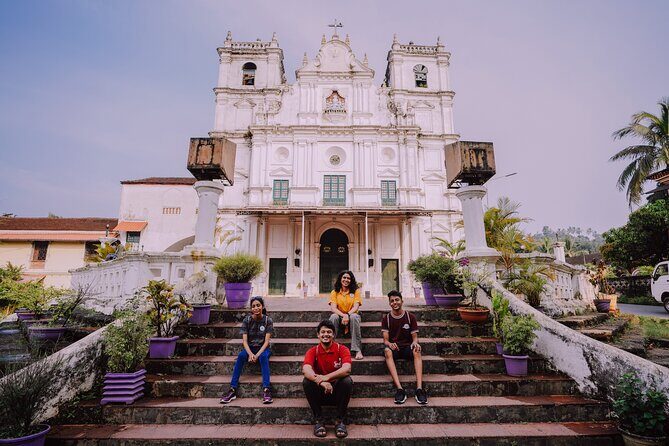
- Holy Spirit Church (450+ years old): you’ll start at one of Goa’s oldest churches in the heart of Margao
- A small-group cap: the tour is designed to feel personal, with limits stated as max 8 and an overall max of 10
- Back-alleys plus mansions: the route takes you through older lanes and architectural standouts
- Margao Massacre connected to a Goan mansion: you’ll hear why that place has marks tied to conflict
- Portuguese-era links: the walk connects houses and structures to how Portuguese influence shaped the town
- Snacks included at local food joints: pre-decided portions show up during the walk
Margao on foot: why this 4:00 pm start is practical

A 4:00 pm meeting time works well in Goa because it leaves you open for a slow daytime plan, then lets you spend the afternoon learning the town. The schedule also fits a classic walking-tour rhythm: meet, walk, stop, eat, then return without hunting for transport at the end.
This is also the kind of tour where you feel the city more than you just see it. You move through streets and lanes that don’t always make it onto postcard routes, and your guide’s job is to connect those spaces to what happened there—especially in the older core of Margao.
If you’re the type who likes to understand why a place looks the way it does, the timing matters. You’re not rushing to fit in ten stops in one day; you’re given a focused window to notice details—facades, street layouts, and the way buildings sit in the neighborhood.
You can also read our reviews of more walking tours in Goa



Good value at $11.15: what you get for the money
At $11.15 per person for roughly 3 hours, this tour is priced in a way that feels built for value. The biggest reason is what’s included: you get snacks during the walk, plus the operator includes all fees and taxes, and you also receive Soul Travelling goodies.
The “small-group” setup is also part of the value equation. In many budget tours, you end up as one face in a crowd. Here, the cap is tight enough that you can actually hear the story and (more importantly) ask follow-ups when something clicks.
You do still want to think about what you personally want from a guided walk. If you’re looking for a casual evening stroll with clear local context and a couple of good food stops, this feels like a smart deal. If you need highly academic explanations all the way through, you may want to come prepared to ask your guide to slow down on specific topics.
Small group, mobile ticket, and what the tour style feels like
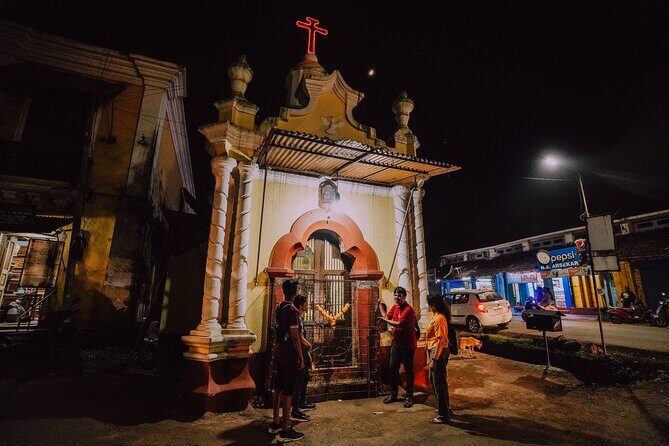
This experience is designed for personal attention. It’s described with a max group size of 8, and the operator lists a maximum of 10, which basically tells you the same story: you won’t be swallowed by a big bus-group dynamic.
You’ll use a mobile ticket, which is handy because you don’t have to think about printing anything. You also get clear start/end structure: meet at Holy Spirit Church, then the tour ends back where you began.
The walking format is key. This isn’t a hop-on bus tour, and it isn’t built around frequent rides between far-flung sites. Instead, the route is intentionally compact enough that you can learn by moving—watch a building, walk past a lane, and then get the explanation that makes that street make sense.
The only real “style” caution I’d give you is about guide-led storytelling. One person’s best guide is another person’s too-light on facts. If you care deeply about historical precision, go in with a few questions ready—like what architectural elements are most important here, or what the annual phenomenon refers to.
Entering Margao at Holy Spirit Church: 450+ years of starting points
Your walk begins at Holy Spirit Church in Borda, in the heart of Margao. The church is described as 450+ years old and one of Goa’s oldest churches, which matters because you’re not starting at a decorative stop—you’re starting at a foundation point for local architecture and tradition.
The tour highlights that the church holds secrets you won’t find in other churches. That means you should expect the guide to point out specific architectural features, not just general history. It also notes a special phenomenon that takes place every year, so there’s likely a yearly tradition or event connected to the church that helps explain why people talk about it beyond the walls.
When you’re standing at a place like this, your job as a participant is simple: slow down. Notice the way the structure feels in its setting, and listen for what your guide says is distinctive. If you’re the kind of person who photographs buildings, keep your camera ready—but prioritize hearing what makes this church different, since that’s the part that turns a photo into understanding.
A small tip for enjoyment: if anything about the annual phenomenon is unclear, ask a quick follow-up. Even one extra sentence from the guide can turn the stop from interesting to memorable.
A Goan mansion with mysteries: why the Margao Massacre matters
After the church, the walk shifts into the older streets and toward a Goan mansion tied to the infamous Margao Massacre. This is one of those parts of a city tour where the details matter because the story is anchored to a physical place.
The tour describes the mansion as full of mysteries, and it links the site to battles that shaped Margao. It also notes there are marks that speak to conflict—so this stop is likely to be more than a background anecdote. It’s the kind of place where you’ll want to look carefully for what the guide calls out, because those small visible cues are what the explanation is built on.
I like stops like this because they break the “pretty buildings only” pattern. Margao’s older architecture isn’t just decoration; it’s connected to power, conflict, and the way a town remembers. That’s what makes the story stick.
The drawback? If you prefer tours that keep things light all the way through, this kind of conflict-connected site can feel heavier. But for anyone interested in how places really formed, it’s exactly the kind of stop that adds meaning.
You can also read our reviews of more historical tours in Goa





Portuguese-era architecture and how Margao was established
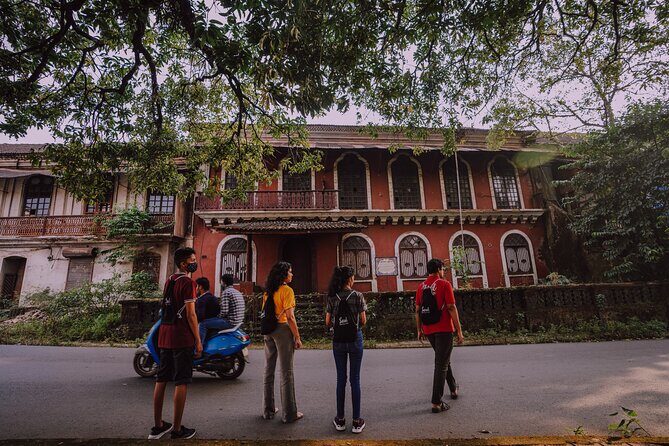
The middle of the walk is about how Margao developed, including its architecturally rich houses and the splendid structures that were once crucial for the Portuguese. This isn’t presented as a single landmark. It’s presented as a pattern you can read as you move: the shapes of houses, the details on buildings, and the layout of neighborhoods that tell you who had influence and what that influence looked like in daily life.
For you, this is where the tour becomes more than a checklist. When a guide connects architectural details to historical roles—like how certain structures mattered to Portuguese control or operations—it helps you see the city as a record, not just a backdrop.
You’ll also move down winding back alleys and lanes. Those streets matter because they show you how the neighborhood functions, not just how it photographed in the past. Even if you don’t memorize every detail, you’ll start to recognize the logic of the streets and buildings—where form follows history.
The best approach here is to listen for comparisons. Ask yourself: what changed, what stayed, and why would Portuguese-era priorities shape house design and the location of key structures?
A monument tied to a major Indian personality
Midway through the walk, you’ll visit a special monument that hosted one of the greatest personalities of India. The tour doesn’t list a name in the information provided, but it clearly frames the stop as a moment of national importance connected to Margao.
Even without knowing the figure’s name ahead of time, the practical value is clear: you get a bridge between local Goan identity and a wider Indian story. That’s what makes a monument stop worthwhile. It gives the town context beyond Goa.
Here, I’d suggest staying attentive to how the guide connects the monument to the larger narrative of Margao’s identity. Is it about political presence, cultural memory, or historic visits? Even one crisp explanation will help you understand why this stop belongs on a cultural-and-historical walking route.
Snacks on the route: what’s included and how to make it work
The tour’s last component is food, and it’s not random. The experience includes snacks at local food joints, with pre-decided portions. That means you’re not stuck guessing what to order, and you don’t have to spend extra time finding something that fits your budget.
I like that the food is built into the schedule. It turns the walk into a full experience: history first, then a chance to reset with local flavor. It also makes the tour feel more grounded, because you’re tasting the city while you’re still absorbing it.
One practical note: since the portions are pre-decided, if you have dietary needs or strong restrictions, you should clarify ahead of time with the operator. The tour data doesn’t spell out customization, so it’s best to treat the snack inclusions as set items.
And don’t rush the food stop. This is where you can ask one last question, compare notes with your guide, and walk away with a clearer picture of what you just learned.
Who this Margao walk suits best (and who should rethink)
This is best for people who want culture and history at walking speed. It’s also a strong match if you like guided explanations that keep you from getting lost in back alleys—because that’s a real part of the experience.
If you’re traveling with mobility constraints, the tour data says most people can participate, but it is still a walking tour. Wear shoes you can stand and walk in comfortably for 3 hours.
You’ll also enjoy it more if you like architecture details and the way stories connect to places. The route focuses on the Holy Spirit Church, a mansion tied to the Margao Massacre, Portuguese-era links, and a monument associated with a major figure in India—so if that mix sounds like your kind of day, you’re in the right place.
One thing to watch: guide depth can affect your experience
Here’s the honest consideration. This is a guide-led tour, and the learning experience depends heavily on how the guide frames the facts. The tour materials emphasize secrets in the church architecture, mysteries in the mansion, marks connected to battles, and a special annual phenomenon.
If your priority is very specific local history details and you want a heavier, more scholarly explanation style, go in ready to ask follow-ups. A simple question like what element is most important to notice at the church, or which specific evidence points to the mansion’s battle story, can help you get more out of the walk.
On the flip side, if you want a warm, narrative approach that helps you see Margao in a new way—without turning the whole thing into a lecture—you should find it fits nicely.
Should you book the Margao Cultural And Historical Walking Tour?
I’d book it if you want an efficient, affordable way to understand Margao’s older core through major landmarks, architecture, and street-level storytelling. At $11.15 with snacks included, it’s hard to beat the value—especially with the small-group format and the strong overall rating and recommendation rate.
Skip it or consider an alternative if you specifically need deep academic history delivered in a highly structured way. This tour is built for walking, listening, and connecting stories to places, so it works best when you’re open to that style and you engage with your guide.
If you’re in Goa and you want one smart afternoon that turns Margao from a name on a map into a city with identifiable stories, this is a very reasonable choice.
FAQ
What is the duration of the Margao Cultural and Historical Walking Tour?
It runs for about 3 hours.
How much does the tour cost?
The price is $11.15 per person.
What time does the tour start?
The start time is 4:00 pm.
Where do I meet for the tour?
Meet at Holy Spirit Church, Holy Spirit Rd, Borda, Madgaon, Goa 403601, India.
Where does the tour end?
The tour ends back at the meeting point.
Is this a walking tour?
Yes, it is designed for people who can walk, and it’s described as best suited to mobile travelers.
How big is the group?
The tour is described as a small-group experience with max 8, and the operator lists a maximum of 10 travelers.
What’s included in the price?
It includes snacks (pre-decided portions), Soul Travelling goodies, all fees and taxes, and the tour experience.
Is free cancellation available?
Yes. You can cancel up to 24 hours in advance for a full refund.
Does it include a mobile ticket?
Yes, it uses a mobile ticket.