Church bells and Portuguese stones in two hours. This guided walk is a practical way to see Old Goa’s biggest church hits—starting at the UNESCO Basilica of Bom Jesus—without spending a whole day hunting on your own. You’ll connect the dots between Portuguese rule and the churches that still shape the streets today.
I also really like the way the tour keeps moving while still stopping for explanations, so you actually understand what you’re looking at. On top of that, guides who speak English & Hindi (Geronimo and Joaquim are standout examples) make the religious side feel clear and human, not like a lecture. The one thing to plan for is the heat and walking pace—moderate fitness helps, and in summer you’ll want water and protection.
In This Review
- Key things you’ll notice on this Old Goa church walk
- Old Goa by foot: what a 2-hour church route really feels like
- Starting at Basilica of Bom Jesus: the UNESCO stop that sets the tone
- Church of St Francis of Assisi plus art and museum space
- Sé Cathedral: the largest church in Asia and the Jesus statue moment
- Adil Shah Palace Gateway and Viceroy’s Arch: where rulers meet stone
- Church of St Cajetan and the Mandovi River and Divar Island views
- Price and value: what $13.07 buys you in real terms
- Who should book this Old Goa ruins walk (and who might not)
- Small-group tips that make the tour smoother
- Should you book the Walk Through the Ruins of Old Goa?
- FAQ
- How long is the Walk Through the Ruins of Old Goa?
- Where does the tour start and end?
- How much does it cost?
- Are entrance tickets included for the churches?
- Is the tour small-group or private?
- Do I get hotel pickup and drop-off?
- What languages does the guide speak?
- What fitness level do I need?
- Is there free cancellation?
Key things you’ll notice on this Old Goa church walk
- UNESCO time at Bom Jesus with a focused, photo-friendly route
- All church entrance tickets included, so you don’t worry about extra payments
- A small-group cap of up to 15, which keeps questions from turning into a crowd
- English and Hindi storytelling that explains what you’re seeing and why it matters locally
- View stops, including the Mandovi River and Divar Island at the end of the walk
Old Goa by foot: what a 2-hour church route really feels like
Old Goa can feel like a puzzle at first. One street looks calm, then suddenly you’re staring at a church facade with Portuguese-era details, then you turn a corner and the scale changes again. This tour is built for that moment—short enough to stay energetic, long enough to get a proper feel for the historic cluster.
You’re looking at a walking loop with several major churches and church-adjacent landmarks. The big advantage is rhythm. Your guide doesn’t just point at buildings; you get context as you go, so the places start making sense in sequence. It also helps that the group stays small (max 15), which means you can pause when you want photos or a clearer explanation.
Duration is about 2 hours. That means you should expect a steady pace with a few brief pauses at each stop. If you’re the type who likes to linger at altars, carve-out a bit of extra time after the tour on your own—this is structured, not slow wandering.
You can also read our reviews of more walking tours in Goa



Starting at Basilica of Bom Jesus: the UNESCO stop that sets the tone
The tour begins at the Basilica of Bom Jesus on Old Goa Road. This is your anchor stop. Being UNESCO-listed matters, not just for the label, but because it’s one of the most significant church sites in Old Goa, and your guide uses that to explain the whole Portuguese footprint in a way you can remember.
What I’d watch for here: look for how the basilica’s prominence shapes the area around it. You’re not only seeing a church—you’re standing at the center of a network. Your guide’s job is to connect the architecture to the story, including how Portuguese settlers influenced what got built and how faith was practiced in the region.
Another practical win: having entrance covered means you can focus on the experience instead of thinking about tickets and lines. If you’re visiting with limited time, Bom Jesus is the kind of stop you don’t want to miss.
Church of St Francis of Assisi plus art and museum space
Next you’ll move to the Church of St Francis of Assisi, and the stop includes time linked with the Archaeological Museum and the Kristu Kala Mandir Art Gallery. Even if you’re not a museum person, this pairing works because it broadens the focus. A church is one layer; the artifacts and art tied to the setting help you understand how the community preserved and interpreted its faith and culture.
Here’s how to get the most out of it: slow down when you enter the museum or gallery area, even briefly. The best tours don’t just repeat what the guide says—they give you a few seconds to connect a visual detail to a story. If you like seeing how religious life translates into objects, art styles, and displays, this part will feel especially worthwhile.
Keep in mind that this stop still sits inside the walking-tour time limit. So think of it as a highlight sampler, not a full museum afternoon.
Sé Cathedral: the largest church in Asia and the Jesus statue moment
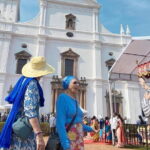
Sé Cathedral is next on the route, described as the largest church in Asia, plus you’ll see the Statue of Jesus. This is one of those places where scale can surprise you. Even from outside, the cathedral’s mass and presence give you a quick sense that this isn’t a small neighborhood chapel.
The value of having your guide here is interpretation. It’s easy to treat a cathedral as a big building and move on. The guide helps you notice what makes the design meaningful—especially in a place where Portuguese-era influences and local context overlap.
When the tour includes the statue moment, that’s also a useful way to reset your attention. You’ll have walked between sites, then you get a clear focal point that’s good for photos and for taking a breath before the next leg.
Adil Shah Palace Gateway and Viceroy’s Arch: where rulers meet stone
After Sé Cathedral, you’ll head to the Adil Shah Palace Gateway, then continue to the Viceroy’s Arch and another Statue of Jesus stop. This section shifts the feel slightly. You’re still in the church-and-heritage area, but the landmarks bring in a broader angle: power, architecture, and the layers of who ruled and what they left behind.
I like this part because it prevents the tour from becoming only about religious buildings. Even if your main interest is churches, these gateways and arches help you understand that the area wasn’t built in isolation. It developed through different eras and influences, and the stone remains.
For best results, don’t just shoot photos. Stand where your guide suggests and follow the explanation. These landmarks can look similar at a glance if you’re rushing, and the guide’s job is to point out the distinctions that matter.
You can also read our reviews of more guided tours in Goa





Church of St Cajetan and the Mandovi River and Divar Island views
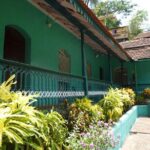
You’ll finish at St. Cajetan Church, and this is where the tour gives you a payoff beyond architecture: views of the Mandovi River and Divar Island. Finishing with scenery is smart. By the last stop, your brain has had enough churches to fill a memory bank, and then you get an open view that helps everything feel less crowded.
If you’re sensitive to heat, this ending is also practical. You’ll likely want to pause longer for photos and a cooling moment. Even a short break helps because you’re ending rather than starting fresh.
St. Cajetan Church ties the experience together. You’ve seen a UNESCO basilica, major churches, cathedral scale, and ruler-era landmarks. Ending here means you leave with one final church stop that feels complete, not abruptly cut off.
Price and value: what $13.07 buys you in real terms
At $13.07 per person, this is one of those tours that feels like it’s priced for access, not for luxury. The real value isn’t the low number—it’s what’s included: entrances to all the churches, plus a guide who provides English and Hindi storytelling.
Also, the group size cap (up to 15) matters at this price point. Large group tours tend to rush. Here, the format is built to keep you close enough to ask questions and to hear explanations without yelling. When you’re paying mostly for guided interpretation, small group size is part of the cost-value equation.
Another plus: transport to places on this tour if any required. That wording usually means you won’t be stuck sprinting between far points if it’s not necessary. You still walk, but the tour tries to keep it workable.
The only thing you control: since there’s no hotel pickup and drop-off, you’ll need to get yourself to the meeting point at Basilica of Bom Jesus and then make your own plans after the tour ends at St. Cajetan Church.
Who should book this Old Goa ruins walk (and who might not)
This tour is a great match if you:
- Want a structured, time-efficient way to see multiple major Old Goa churches
- Like learning the story behind religious buildings, not just taking pictures
- Prefer a small group so you can ask questions while you’re standing right in front of the architecture
- Are okay with walking for about 2 hours with a moderate fitness level
You might think twice if you:
- Want Old Goa highlights beyond churches and church-linked landmarks
- Need a very relaxed pace with long museum time, since this is a focused route with limited duration
For summer planning, I’d treat this as a sun-and-sweat outing. One helpful tip from my experience of this route type: bring water, sunscreen, and a cap. In hot months, humidity can make “just a 2-hour walk” feel longer.
Small-group tips that make the tour smoother
A guide can only do so much if you show up unprepared. These are the practical things that help:
- Bring water and plan for shade breaks when you can. It’s an outdoor walking day.
- Wear sunscreen and a hat/cap, especially if you’re going in summer.
- Don’t over-pack your schedule. This tour ends at St. Cajetan Church, so leave time to continue at your own pace afterward.
And one more: take a minute to look up. Many Old Goa churches reward you for that simple habit—details above eye level can be the most telling parts of the design.
Should you book the Walk Through the Ruins of Old Goa?
If your goal is a high-impact Old Goa experience in about 2 hours, I’d book this. The combination of included church entrances, a small group with English and Hindi explanations, and the route that strings together Bom Jesus, Sé Cathedral, St Francis, and St Cajetan makes it one of the more efficient ways to understand how Portuguese influence shaped the area’s sacred architecture.
One caution: go in expecting a church-and-heritage route, not a broad “everything in Old Goa” sampler. If that fits your style, this is good value and a smart way to see a lot without chaos.
FAQ
How long is the Walk Through the Ruins of Old Goa?
It runs for about 2 hours.
Where does the tour start and end?
It starts at Basilica of Bom Jesus, Old Goa Road, Goa 403402, India and ends at St. Cajetan Church, Old Goa, Goa 403402 (GW48+62M).
How much does it cost?
The price is $13.07 per person.
Are entrance tickets included for the churches?
Yes. Entry to all the churches on the tour is included.
Is the tour small-group or private?
It’s a small-group experience with a maximum of 15 guests. It’s also listed as a private activity, meaning your group participates.
Do I get hotel pickup and drop-off?
No. Hotel pickup and drop-off are not included.
What languages does the guide speak?
The guide can speak English and Hindi.
What fitness level do I need?
You should have a moderate physical fitness level.
Is there free cancellation?
Yes. Free cancellation is available up to 24 hours in advance for a full refund.