REVIEW · JAISALMER
Historical Places with Private Camping in Thar Desert.
Book on Viator →Operated by Fifu Camel Safaris · Bookable on Viator
Starry sand dunes beat any postcard. This 2-day Jaisalmer outing strings together real desert history with private camping under the night sky, plus an included camel ride timed for sunset. You’ll start with a 10:00am jeep pickup, visit key sites around town, then head out for a night on the dunes with dinner and a cozy camp setup.
What I like most is the way the day mixes historic stops with breathing room for photos. You get an English-speaking jeep driver who gives you the basics, then you can linger at places like Kuldhara, Bada Bagh, and Amar Sagar Jain Temple at your own pace.
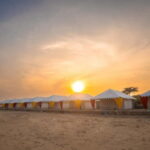
My other favorite part is the overnight setup: you sleep on Indian cots on the sand or in small igloo tents, then wake up to breakfast on the dunes. The only drawback is that a couple of site entry fees are not included (Kuldhara specifically), and the campfire setup is weather-dependent—so plan for the possibility of a less dramatic evening if conditions are rough.
In This Review
- Key things to know before you go
- Jaisalmer to the Thar: how the day is paced
- Kuldhara Abandoned Village: a ghost-town lesson in power and taxes
- Bada Bagh and Amar Sagar Jain Temple: desert monuments with different moods
- Bada Bagh: big garden ideas in a desert setting
- Amar Sagar Jain Temple: reconstruction across centuries
- Jaseri Lake picnic: the oasis break that makes the desert feel real
- Khaba Fort and the move out toward the dunes
- Camel ride to sunset: the best time to go slow
- Night under stars: cots, igloo tents, and campfire timing
- Breakfast on the dunes and the optional second camel ride
- Price and value: what $78.61 buys you in real terms
- Logistics that matter: tickets, weather, and what to plan for
- Who this Thar Desert night is best for
- Should you book the private camping extension from Jaisalmer?
- FAQ
- How long is this Thar Desert private camping experience?
- Do I get picked up from a hotel in Jaisalmer?
- Is this tour private or shared?
- What meals are included?
- Are camel rides included?
- Where do I sleep during the night in the desert?
- Are entrance fees included for Kuldhara Abandoned Village?
- Is Jaseri Lake admission included?
- What happens if weather is bad?
Key things to know before you go
- Day-long jeep circuit from Jaisalmer: morning pickup and multiple heritage stops with time to photograph
- Camel ride timed to sunset: a long ride into the dunes, plus an optional second ride the next morning
- Jaseri Lake picnic break: lunch near the oasis before you go deeper into the sand
- Vegetarian dinner on the dunes: dinner is cooked for you, with an invitation to join the cooking experience
- Sleep on cots or in igloo tents: choose the style that fits your comfort level
- Extra tickets are limited but real: Kuldhara costs extra, and some stops list admission as not included
Jaisalmer to the Thar: how the day is paced
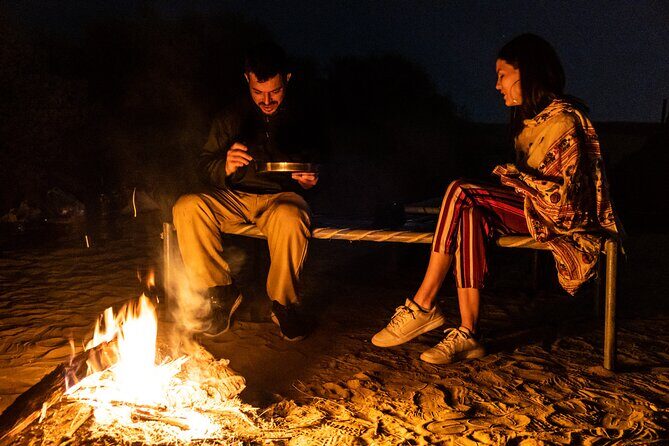
This tour is built as a true full-day desert extension. Instead of just an afternoon safari, you get a full history-and-desert rhythm: morning monument circuit, lunch by an oasis, sunset camel ride, then dinner and sleep on the dunes. The total plan runs about two days, with the second morning finishing around 10:30am.
You start from a clear meeting point: Hotel Fifu, opposite Nagarpalika, Postal Colony, Jaisalmer, Rajasthan 345001. Pickup begins at 10:00am, and the return to Jaisalmer is timed so you can still use most of your next day.
Because it’s described as a private tour/activity, you’re not dealing with random strangers cutting into your pace. It also means your driver can keep the day moving without the constant reshuffling you sometimes get on larger group trips.
You can also read our reviews of more private tours in Jaisalmer
Kuldhara Abandoned Village: a ghost-town lesson in power and taxes
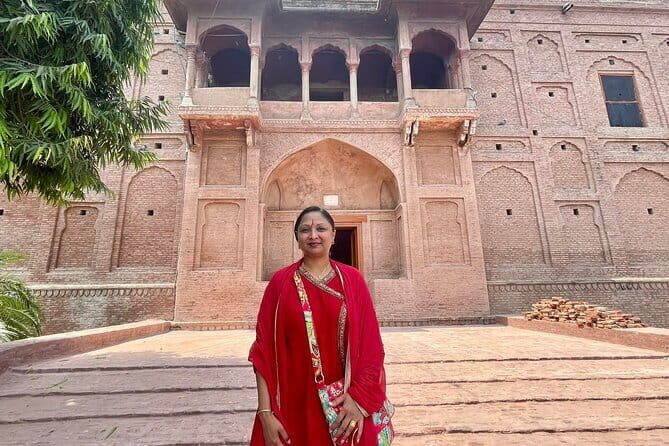
The first big stop is Kuldhara Abandoned Village, a site tied to a 17th-century community of Paliwal brahmins. The story goes that heavy taxes and torture were imposed, humiliation pushed villagers to leave, and what remains is a stark example of an abandoned village. It’s one of those places where the emptiness feels loud—even without extra storytelling.
What I love here is the contrast. In the morning, you’re still close to Jaisalmer’s world, but you step into a place that feels frozen in time. Your driver gives a brief explanation, and then you can walk, look, and take pictures at a comfortable pace.
One practical note: Kuldhara has a 50 rupees per person entry fee that is not included. It’s not a dealbreaker, but it is something to budget for so the day stays smooth.
Bada Bagh and Amar Sagar Jain Temple: desert monuments with different moods
After Kuldhara, you move through more heritage sites that shape the region’s identity in different ways.
Bada Bagh: big garden ideas in a desert setting
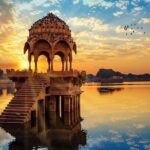
Bada Bagh translates to Big Garden. The idea was royal: Maharaja Jai Singh II wanted to create a garden in the desert and commissioned the land to include a water tank in the 16th century. Later, cenotaphs were built for the royal family, turning this area into a formal memorial space.
This stop is short, so you’ll want to be ready with your camera when you arrive. Even in a brief visit, you get a sense of how rulers tried to solve desert life with engineering—and how that legacy became monument form.
Amar Sagar Jain Temple: reconstruction across centuries
Next comes Amar Sagar Jain Temple, dedicated to the 23rd Tirthankara, Parshva. The temple was destroyed in 1152 AD, reconstructed in 1615 by Seth Tharu Shah, and rebuilt again in the 1970s to remind people of its earlier glory.
I like this stop because it adds a spiritual angle to the day. The architecture and the story of rebuilds make it feel less like a quick sightseeing checkbox and more like a living reminder that cultures recover after loss.
Admission for these stops is listed as not included, so don’t expect tickets to be automatically handled for every monument.
You can also read our reviews of more historical tours in Jaisalmer

Jaseri Lake picnic: the oasis break that makes the desert feel real
Then comes a change of pace: Jaseri pond / Jaseri Lake, described as an oasis in the desert. You’ll go here for about an hour, and the tour also plans a picnic lunch near the lakeside. After lunch, you get rest time before heading toward the dunes.
This part matters more than it sounds. If your desert night is only about sleeping under stars, you miss a key rhythm: the transition from built heritage to survival in sand and water scarcity. Jaseri helps you feel that shift.
Good news for budgeting: Jaseri pond is listed as admission free in the tour info. So while some sites cost extra, this one should be easy on your wallet.
Khaba Fort and the move out toward the dunes
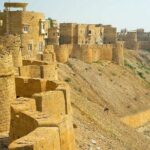
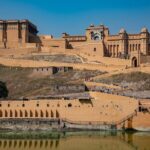
Before you fully commit to the desert ride, you stop at Khaba Fort, an ancient fort dating back to the 13th century. It’s set amid a barren desert village that was once populated by the Paliwal brahmins.
This fort stop bridges the day nicely. You’re seeing how communities lived, defended, and formed settlements—then you’re about to leave that world behind and head into open dunes.
Like some other monuments, admission is not included here, but the time is short (about 20 minutes). Think of it as a checkpoint that builds context before the bigger sand experience.
Camel ride to sunset: the best time to go slow
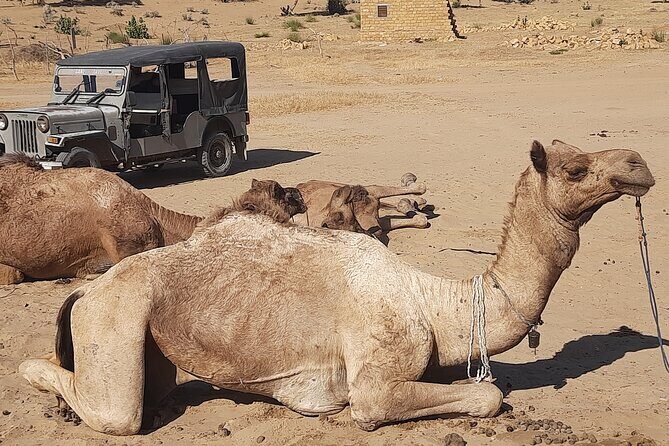
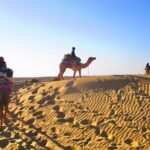
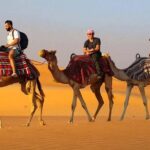
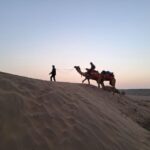
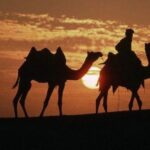
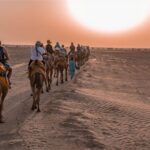
Once you reach your designated dunes area, the tour focuses on one main moment: a camel ride into the desert until sunset. The ride is scheduled for about 2 hours, and that timing is the sweet spot for getting changing light and a satisfying distance away from Jaisalmer’s lights.
A camel ride is not a theme-park activity here. It’s real travel pace: steady, a little bumpy, and slower than you expect. That’s actually part of the charm. If you like watching how the dunes stretch and soften as the sun drops, this is your time.
You’ll return after sunset and have your camp setup. Dinner is vegetarian, and the tour includes a chance to participate and learn Indian cooking. One name that stands out from the cooking experience is Soda, the chef who prepares the meal with fresh products and invites people into the process.
If you’re traveling with kids, this portion is often the highlight—just keep in mind it’s still a 2-hour ride. It can be great fun, but it’s not a short stroll.
Night under stars: cots, igloo tents, and campfire timing
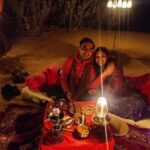
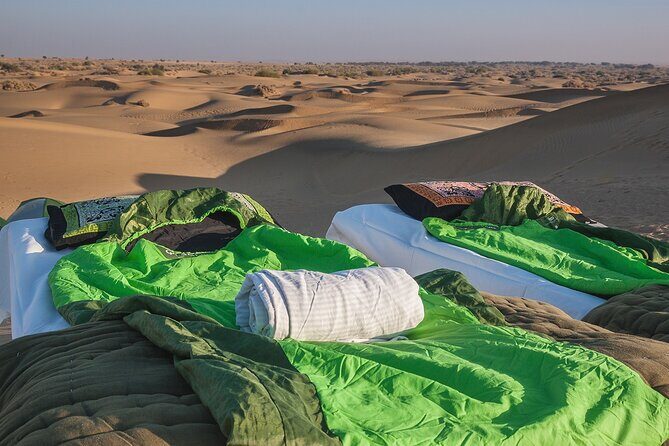
Dinner comes after the camel ride, and then your sleeping arrangements start. The plan includes Indian cots placed on the dunes, plus small igloo tents for anyone who prefers to sleep inside a covered space. The description also calls out dome tent style sleeping, so you’re essentially choosing between sand-level simplicity or a more sheltered feel.
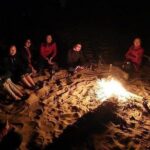
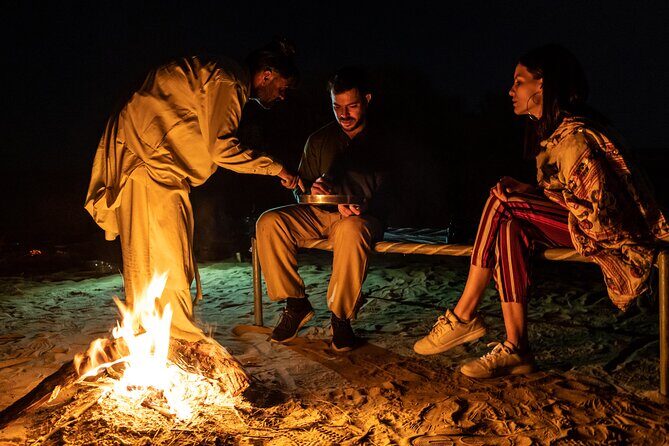
After dinner, you relax near a campfire if weather permits. This “if” matters in the Thar—clouds, wind, or colder evenings can change the vibe. Even without firelight, the star setting is a huge part of why people book this night.
What I like about the overnight setup is that it doesn’t pretend to be luxury, and it doesn’t try to overcomplicate things. You’re out there for the real experience: night sounds, a simple meal, and a place to sleep that matches the desert environment.
Breakfast on the dunes and the optional second camel ride
The next morning starts with breakfast on the dunes. This tour also gives you an optional second camel ride, if you want one. The limit is up to 2 hours, and it’s designed so you can still make it back to Jaisalmer on time.
The schedule is clear about timing: you’ll need to be back by 10:30am. They start the jeep back at 9:30am, and you return to Jaisalmer around 10:30am.
If you love the desert enough that you want another ride, go for it early in the morning. If you’re more focused on comfortable pacing, you can skip it and just enjoy breakfast and the changing morning light over the dunes.
Price and value: what $78.61 buys you in real terms
At $78.61 per person, this is a value play if you compare it to paying for separate pieces. The included list is strong: lunch, coffee/tea, snacks, bottled water, private transportation, camel ride(s), and two dinners plus two breakfasts. That’s not just “a dinner included” situation—it’s a full desert overnight package with transport built in.
Where you should watch your budget is not the main price. It’s the small extras: Kuldhara costs 50 rupees per person. Other stops list admissions as not included, so if you find ticket booths at each site, you may need to handle those individually.
The private logistics are also part of the value. You’re not hopping between shared rides at every step. The day follows one driver and one plan, which usually makes it easier to keep the rhythm.
If you’re the kind of traveler who likes a schedule with room to wander at stops, this price makes more sense than if you only care about one moment (like the camel ride) and would otherwise skip the rest.
Logistics that matter: tickets, weather, and what to plan for
A few practical points can make the difference between smooth and stressful.
First, remember that Kuldhara entry is extra. If you arrive without small cash, you may slow down the first part of the day.
Second, the tour is described as requiring good weather. If conditions cause cancellation, you should expect a different date or a full refund. Also, campfire is weather permitting, so it’s smart to accept that the atmosphere might be quieter on a windy evening.
Third, you’ll be traveling by jeep for a lot of the day. Wear comfortable clothes and shoes, especially because you’ll be walking around monuments and then moving gear-free across sand for the dunes portion.
Who this Thar Desert night is best for
This tour fits people who want more than a quick safari. I’d suggest it if you care about three things:
- You like historical sites with stories that connect to how people lived.
- You want an overnight in the desert with real night-sky time, not just an evening meal.
- You want included meals and transport so you’re not piecing together vendors.
It’s also a good family-style choice in the sense that it’s built for “most travelers,” and at least one family with kids around 4 and 7 has highlighted it as a great night. Still, remember the camel ride lasts about 2 hours on day one, and the second ride (if you choose it) also has a time limit.
If you want a super-fast hit-and-run version, this might feel like too much schedule. If you want a full story from abandoned villages to dunes under the stars, it’s a strong match.
Should you book the private camping extension from Jaisalmer?
I think you should book if you want a balanced desert night: history in the morning, an oasis lunch, camel ride at sunset, then a cozy night under the sky. The included meals, private transportation, and sleep setup make it feel like a complete experience rather than a single activity stitched to travel.
Skip or reconsider if you don’t like paying small extra fees at monuments, or if weather uncertainty would stress you out. Also, if you hate the idea of long sitting time during camel rides, plan your expectations.
If you’re traveling around Jaisalmer and you want that full two-day desert feel, this is one of the more practical ways to do it.
FAQ
How long is this Thar Desert private camping experience?
It runs for about 2 days. The tour starts at 10:00am in Jaisalmer and returns around 10:30am the next morning.
Do I get picked up from a hotel in Jaisalmer?
Yes. Pickup is offered, and the meeting point is Hotel Fifu, opposite Nagarpalika, Postal Colony, Jaisalmer.
Is this tour private or shared?
It’s a private tour/activity, meaning only your group participates.
What meals are included?
Lunch is included, along with snacks, coffee and/or tea, bottled water, dinner (2), and breakfast (2).
Are camel rides included?
Yes. You’ll have a camel ride to the sand dunes until sunset, and you also have the option of a second camel ride the next morning (up to 2 hours).
Where do I sleep during the night in the desert?
You sleep on Indian cots on the sand dunes, and there are also small igloo tents available if you prefer to sleep inside.
Are entrance fees included for Kuldhara Abandoned Village?
No. Kuldhara has an entry fee of 50 rupees per person that is not included.
Is Jaseri Lake admission included?
Jaseri pond is listed as admission free in the tour details.
What happens if weather is bad?
The experience requires good weather. If it’s canceled due to poor weather, you’ll be offered a different date or a full refund. Campfire is also noted as weather permitting.