REVIEW · MUMBAI
Small Group Authentic Mumbai Virtual Cooking Class with Dessert
Book on Viator →Operated by Mystical Mumbai · Bookable on Viator
You don’t need Mumbai tickets to taste Mumbai. This live Skype class with chef Kajal teaches you how to make pav bhaji and rice kheer step-by-step, plus you can ask questions in real time. Two things I really liked: the cooking guidance is clear (the English is excellent), and the class is built around a real local cook and her family stories, not just a recipe slideshow.
I also like that you get an ingredient list in advance, so you can shop and prep before the session starts. One thing to consider: this is a home-based experience, and the operator specifically warns that you should not expect professional-level videography.
Timing is another small reality check. You’ll join at an available time in IST (Indian Standard Time), and you’ll want a stable internet connection so you can follow along without lag.
In This Review
- Key things you’ll notice right away
- From Mumbai Via Skype: how the class actually feels
- The Mumbai meal makers: pav bhaji basics you’ll recognize
- What you’ll do during the pav bhaji part
- Rice kheer: dessert with festival roots, not just sweetness
- Learning from a Mumbai local: Kajal’s background and the family element
- Price and value: what $20 buys you in real terms
- Prep checklist before you hit join
- First, confirm your time zone
- Next, test your connection
- Then, handle allergies and ingredient constraints early
- Finally, set up your kitchen like you mean it
- The practical experience: what you should expect to learn
- Who this is best for (and who should think twice)
- Should you book this virtual Mumbai cooking class?
- FAQ
- How long is the virtual cooking class?
- What dishes will I learn to cook?
- Who teaches the class?
- Is the class interactive?
- Do I need to provide my own ingredients?
- What time zone are the class times listed in?
- How many people are in the group?
- Can I cancel and get a refund?
Key things you’ll notice right away
- Chef Kajal’s home-kitchen teaching style: Traditional recipes taught from a family background, not a formal studio demo
- Real-time questions during the cook: You can pause mentally and ask what you need as you go
- Two dishes in 90 minutes: Savory pav bhaji, then a festive sweet finish with rice kheer
- Ingredient planning before class: You’re told what you need ahead of time so you aren’t scrambling mid-session
- Small group limit (up to 6): Less chaos, more chance to get answers when you ask
- Culture comes with the food: You’ll get a chance to meet the family and learn about home life in Mumbai
From Mumbai Via Skype: how the class actually feels
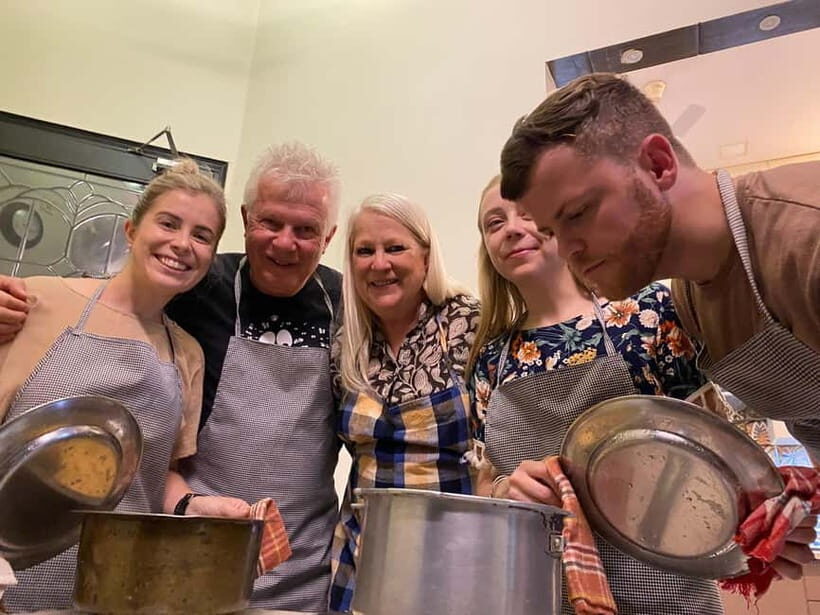
This is a virtual cooking class, so the “where” is your kitchen. What makes it work is the “who”: chef Kajal, cooking live from her home in Mumbai, guides you through what to do next and answers questions as you cook.
The format is simple. You join a live session, the chef explains each step, and you follow along at your own counter. Since this is a small group (up to 6), the vibe is more like a cozy lesson than a big online show. That matters because Indian cooking often turns on timing—how long something simmers, when it thickens, and when to taste and adjust.
One nice detail from the way the experience is described: it’s not just about cooking. You also get to meet the family, hear stories around the food, and learn a bit about local culture and home life. That’s part of the value, especially if you’re at home trying to make a dinner feel like an actual event.
You should also plan on treating it like a live performance. Your internet connection matters. If your video freezes, you’ll still have the steps, but you might miss a moment where the chef says when to add something or how the texture should look.
You can also read our reviews of more cooking classes in Mumbai

The Mumbai meal makers: pav bhaji basics you’ll recognize
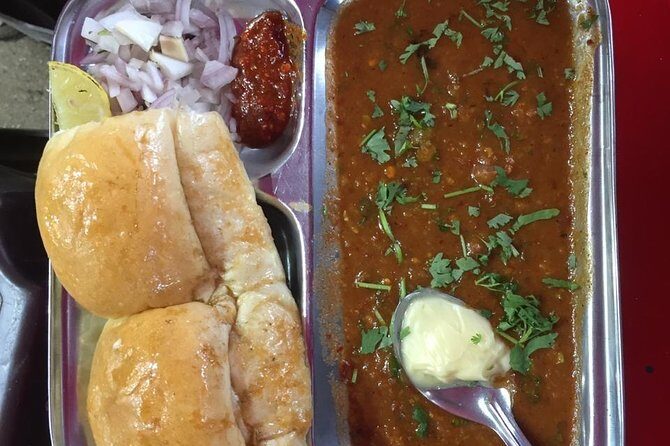
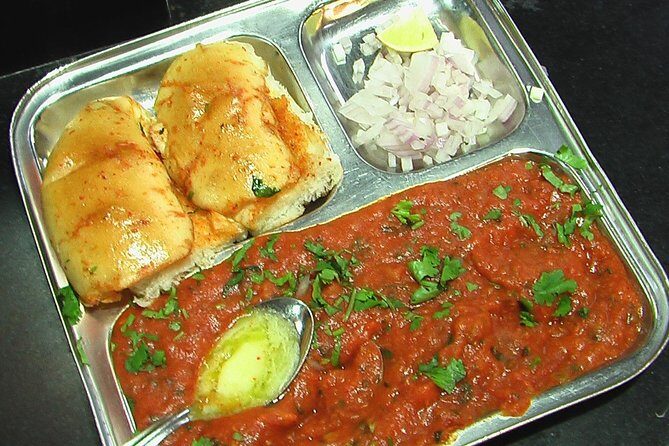
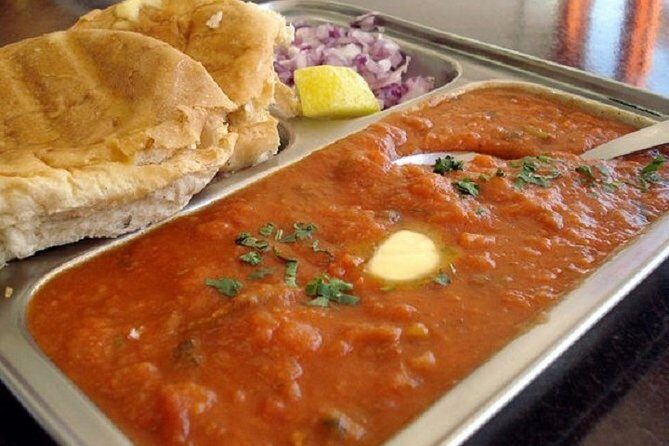
Pav bhaji is one of those foods people can spot instantly, even if they’ve never cooked it at home. It’s common across Mumbai—served in big hotels and roadside eateries—and it’s all about that thick, hot vegetable curry served with buttered bread rolls.
Here’s the core idea you’ll cook: a thick vegetable curry made from seasonal vegetables, plus potatoes, tomatoes, and onions. It’s served hot, and the dish is designed to taste bold and comforting.
If you’ve ever wondered why it’s called pav bhaji, you get that context here. The word pav comes from the Portuguese word for bread, and bhaji in Marathi means a vegetable dish. That kind of detail is more than trivia. It helps you understand why the flavors and ingredients feel like a mix of influences—Mumbai food often carries history in the ingredients and the names.
What you’ll do during the pav bhaji part
You’re not just making a generic “vegetable curry.” You’re learning the approach behind Mumbai street-style comfort food. The chef walks you through a step-by-step method for getting that thick, mashable texture and that satisfying savory taste.
In a typical session flow, you’ll start with prepping and building flavor, then move toward cooking down until it becomes thick. You’ll also learn how it’s meant to be served: pav bread rolls topped with butter, ready to go alongside the curry.
The main drawback risk with a virtual class is that you might not have the same sensory feedback as in-person learning. Still, the real-time Q&A helps. If your curry is too thin, too thick, under-seasoned, or not tasting right, you can ask and adjust.
Rice kheer: dessert with festival roots, not just sweetness
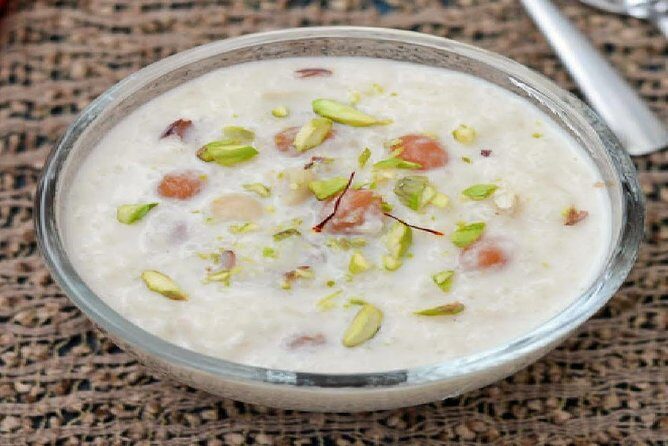
Rice kheer is a traditional Indian sweet dessert made for festivals and occasions. It’s not meant to be a quick candy-like finish. It’s built to feel slow, comforting, and celebratory.
The “why” behind kheer is part of the experience. You’re learning a dessert that’s tied to special days, not just a random sweets recipe. That matters because the technique is often about consistency—how creamy it becomes, how it thickens, and when it’s ready.
In the class, you’ll make rice kheer right after the savory dish. The pairing is smart. Pav bhaji warms you up, and kheer gives you a finish that feels properly Indian, not like a generic dessert you could make anywhere.
If you like desserts that use simple ingredients and then get transformed with patience and technique, this is a great fit. And because the chef teaches with a live connection, you can ask about what “done” should look like, which is especially useful for sweets where timing can make a difference.
Learning from a Mumbai local: Kajal’s background and the family element
Chef Kajal’s teaching adds weight to the recipes. She comes from a traditional Indian family and learned these recipes from her mom and her older sister. She started food tours in 2017, and pav bhaji is highlighted as one of her most popular dishes in Mumbai.
That background shows in how the class is positioned. It’s not presented as an abstract cooking theory lesson. It’s presented as a home-kitchen skill passed down and taught with pride.
One detail I really value is that the experience explicitly includes stories around the food and local culture, not just cooking steps. You’re invited to meet the family. Even though you’re online, that human piece turns the class into something closer to a cultural evening than a DIY video tutorial.
Also, multiple people have pointed out that the host’s English is very good. When you’re learning spice levels, textures, and timings, clear language is not a luxury. It’s the difference between making dinner and making mistakes that you don’t understand.






Price and value: what $20 buys you in real terms
At $20 per person for about 1 hour 30 minutes, this class is priced like an easy add-on for your trip—or for life at home—rather than a full-blown cooking vacation.
The value is strongest if:
- you want a live teacher who can answer questions
- you’re interested in Mumbai-style food, specifically pav bhaji and rice kheer
- you like learning alongside someone with a local family background
- you want a dinner plan that feels special and structured
This isn’t a professional cooking studio class. The provider is upfront that videography won’t be polished like a TV show, and it’s not positioned as a professional-level course. But for the price, that trade-off can still be worth it because the instruction is live, the group is small, and the experience includes culture and family stories.
In at least one experience, people praised that the session was friendly, the host was easy to follow, and the food tasted delicious. Another helpful note: ingredients were said to be delivered with plenty of time in one case. Even if that varies by location, the overall message is consistent: you’re meant to be prepared, not thrown into chaos.
Prep checklist before you hit join
Virtual cooking classes go sideways when people treat them like streaming video. Do a little prep and it feels smooth.
First, confirm your time zone
Available times are given in IST (Indian Standard Time). If you’re traveling, convert carefully. If you’re at home elsewhere, double-check the conversion so you don’t join late and miss the first steps.
Next, test your connection
The class notes that you should ensure your internet is working properly. I recommend doing a quick test 10–15 minutes before the session. If your video/audio is unstable, you’ll struggle to time steps and ask questions.
Then, handle allergies and ingredient constraints early
If you have allergies, you should share them with the chef. That’s the right move for safety and for getting cooking that works for your needs. Also, since you receive an ingredient list ahead of time, you can plan substitutions or shopping.
Finally, set up your kitchen like you mean it
You’ll be cooking two dishes back to back. Clear space on your counter. Keep a timer if you like one. Have serving items ready so pav bhaji can go from pot to plate while it’s hot, because that part matters.
Pav bhaji is best served hot, and kheer is meant to come out at the right consistency, so you’ll get more enjoyment if your kitchen is ready before the chef moves on.
The practical experience: what you should expect to learn
Here’s what the class is built to deliver, in plain terms.
You’ll learn:
- how pav bhaji is constructed as a thick vegetable curry, not thin soup
- the idea of serving it with buttered pav rolls
- the basic approach to rice kheer as a traditional festival-style sweet
- how to ask questions during cooking and get guidance in real time
- how Indian home cooking often includes stories, family, and context
The “small group” piece helps here. When you’re learning by doing, you want a chance to clarify. With a maximum of 6 travelers, you’re less likely to get lost in the shuffle.
And the overall teaching style—step-by-step with a chef who learned from family—tends to make the recipes feel doable. Even if you’re not a confident cook, you’re getting a path, not just a list of ingredients.
Who this is best for (and who should think twice)
This is ideal if you:
- want Mumbai food specifically, especially pav bhaji
- enjoy learning from a real local home chef
- want a structured, live dinner plan
- have kids or family members who want to join from different locations (the experience has been shared across multiple family members in different places)
- like dessert that’s tied to Indian celebrations
It’s less ideal if you:
- expect a polished production like a restaurant cooking school TV set
- need hands-on correction in a physical classroom setting
- dislike video-based lessons or have unreliable internet
If your kitchen is ready and your connection is stable, you’ll likely find it easy to follow.
Should you book this virtual Mumbai cooking class?
I’d book it if you want a fun, affordable way to make an authentic-feeling Mumbai meal at home, with a real person teaching you live. The strongest reasons are simple: chef Kajal teaches from a family tradition, you can ask questions as you cook, and the class focuses on two iconic dishes—pav bhaji and rice kheer—that work as a complete meal.
I’d hesitate only if you’re picky about video quality or you want a formal, professional training atmosphere. The provider is clear that this is home-based, not studio-grade.
If you’re curious about Mumbai food culture and you want dinner that feels like a local moment, this is a solid choice for the price.
FAQ
How long is the virtual cooking class?
It runs about 1 hour 30 minutes.
What dishes will I learn to cook?
You’ll learn to make pav bhaji and rice kheer.
Who teaches the class?
The chef is Kajal, based in Mumbai.
Is the class interactive?
Yes. It’s live, and you can ask questions in real time as you cook.
Do I need to provide my own ingredients?
You’ll have an ingredient list ahead of time, so you can prepare. If you have allergies, you should share them with the chef.
What time zone are the class times listed in?
Available times are provided in Indian Standard Time (IST).
How many people are in the group?
The experience has a maximum of 6 travelers.
Can I cancel and get a refund?
Yes. You can cancel for a full refund if you cancel at least 24 hours before the start time. If you cancel within 24 hours of the start time, you won’t receive a refund.