REVIEW · JAIPUR
Private 6-Day Golden Triangle Tour: Delhi, Agra, Jaipur by Car
Book on Viator →Operated by Namaste India Vacations · Bookable on Viator
A Golden Triangle trip, with real flexibility, not a race. This private 6-day route strings together Delhi, Agra, and Jaipur by car, then adds the off-the-usual-stop Abhaneri stepwell, all with a guide who stays with you day to day.
What I like most is that it’s built around comfort and control: daily hotel pickup in an air-conditioned vehicle, and a named guide experience like Mohammed in Agra, who helped with great context and even better photos.
I also like the way you’re not stuck in someone else’s pace. Since it’s private for just your group, you can linger, pause, and adjust when lines, heat, or traffic turn your day into a puzzle. The only real consideration is that while the tour covers guide and transport, monument entry tickets and meals are not included, so you’ll want to plan your budget beyond the headline price.
In This Review
- Key Things That Make This Tour Worth Your Time
- Road-Trip Golden Triangle: What Private Really Changes
- Delhi on Your Schedule: Old Delhi Rickshaw, Mughal Icons, and Akshardham
- Red Fort and Humayun’s Tomb: Two Monument Styles in One Day
- India Gate and Swaminarayan Akshardham: Contrast in Religious and Civic Space
- Old Delhi Rickshaw and Street Food: A Pick-Your-Comfort Moment
- Agra Beyond the Taj: Forts, Baby Taj, Moonlight Gardens, and Zardozi Craft
- Taj Mahal: The Main Event, With Time to See It Properly
- Agra Fort and Itmad-ud-Daula: When You Want Less Crowded Detail
- Mehtab Bagh: The Garden Perspective Across the River
- Marble Art Palace: A Craft Stop That Adds Texture to the Day
- My Take on Guide Quality in Agra: Mohammed’s Photo Help
- Abhaneri and Chand Baori: The Detour That Breaks the Usual Route
- Jaipur Masterclass: Amber Fort, City Palace, Hawa Mahal, Jantar Mantar
- Amber Fort: Hilltop Views and Fort-Architecture Focus
- City Palace and Hawa Mahal: Two Icons, Two Different Reasons to Stay
- Jantar Mantar: The Astronomy Stop That Often Becomes a Favorite
- Jaipur Gems & Jewellery: Short, Optional-Feeling, and On-Route Easy
- Driving Times, Comfort, and How to Avoid a Sore-Day Schedule
- One leg you can plan around
- Safety and driver smoothness: what Ajay’s example suggests
- Price and Value: Is $215 a Smart Deal for This Route?
- Who This Tour Fits Best (and Who Might Want Something Else)
- Should You Book This Private 6-Day Golden Triangle Tour?
- FAQ
- FAQ
- What is included in the tour price?
- Are monument entrance tickets included?
- Do I choose my own hotel?
- Does the tour provide hotel pickup?
- Which cities and main areas are visited?
- Is this a private tour or a shared group tour?
- Is food included?
- What are the cancellation rules?
Key Things That Make This Tour Worth Your Time
- Private car + daily pickup so you’re not hunting for rides or timing yourself to transit
- A guide with you each day (Mohammed is one example) for smoother museum-style stops and photo spots
- Real Delhi mix of Old Delhi streets by rickshaw and major Mughal-era sights
- Agra beyond the postcard with forts, the Baby Taj, gardens, and a craft stop for Zardozi work
- Chand Baori at Abhaneri gives you the stepwell experience most Golden Triangle schedules skip
- Jaipur highlights with structure from Amber Fort to City Palace, Hawa Mahal, and Jantar Mantar
Road-Trip Golden Triangle: What Private Really Changes
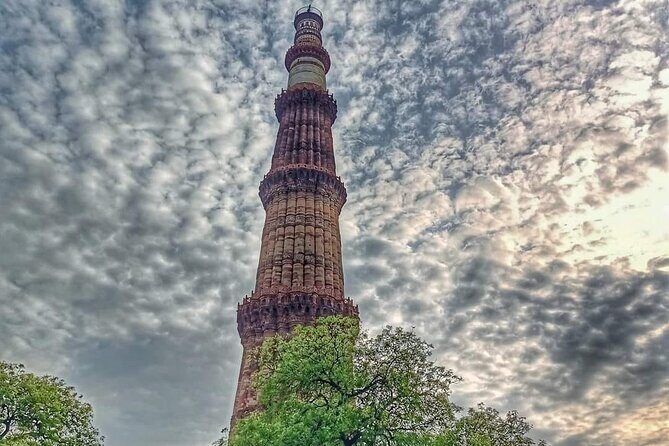
Golden Triangle itineraries can feel like a checklist sprint. This one changes the feel because you’re driving between cities in a private, air-conditioned vehicle, and a guide is assigned for the sightseeing blocks in Delhi, Agra, and Jaipur.
That matters in India, where the day can flip fast. If you run behind, you’re not forced into a rigid group shuffle, and you can ask your guide to reorder a stop based on light, crowds, or your own interests.
You can also read our reviews of more private tours in Jaipur



Delhi on Your Schedule: Old Delhi Rickshaw, Mughal Icons, and Akshardham
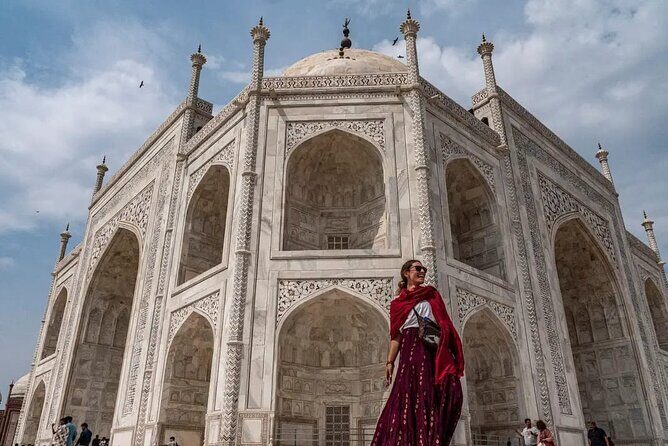
Delhi works best when you split it into two moods: the Old City street energy and the grand Mughal landmarks. This tour’s approach gives you that, with an Old Delhi rickshaw ride and visits to major monuments like Red Fort, Humayun’s Tomb, and Qutub Minar.
Red Fort and Humayun’s Tomb: Two Monument Styles in One Day
Red Fort is a landmark you’ll recognize immediately. It’s a Mughal-era fortress built under Shah Jahan (completed in 1648), and even when you keep it practical, the scale makes it worth your time.
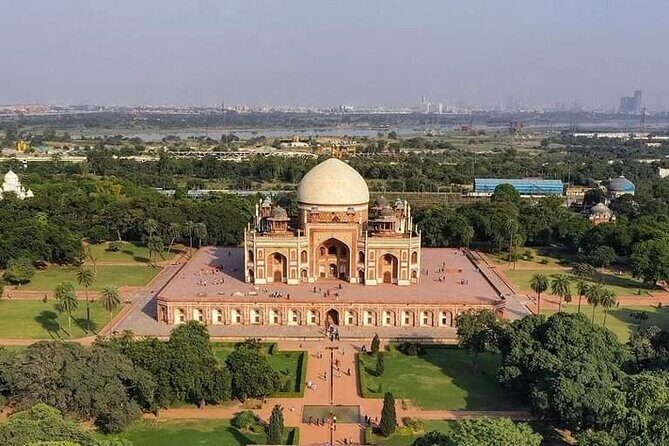
Humayun’s Tomb gives you the opposite feeling: more garden-tomb calm and more architecture detail. It’s UNESCO-listed and often treated as a key stop for understanding how Mughal design evolved.
Here’s a useful reality check: entrance fees for these specific monuments are not included. So if you’re trying to travel on a strict budget, check your ticket plan early and keep a little cash or card access for day-of entry.
India Gate and Swaminarayan Akshardham: Contrast in Religious and Civic Space
India Gate is a quick stop but a good one for orientation. It’s a major war memorial in New Delhi, and it helps break up a day packed with old stone and old streets.
Then you shift to Akshardham Temple, one of those big, modern temple complexes that feels like an entire world of its own. Your time here is about 1.5 hours, and just like the other major monuments, entry is not included in the tour price.
Old Delhi Rickshaw and Street Food: A Pick-Your-Comfort Moment
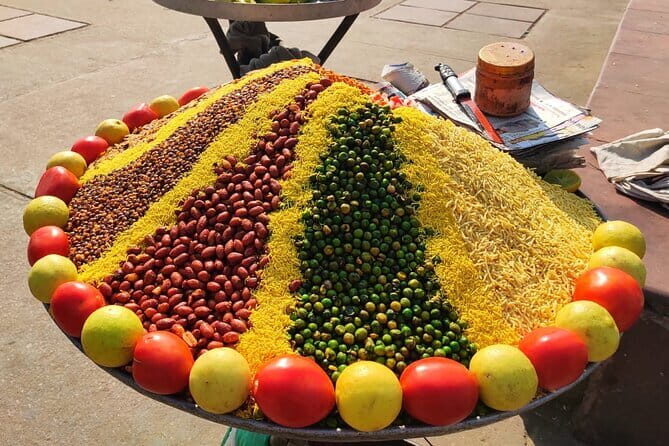
The schedule includes a rickshaw ride through Old Delhi and time for local street food. Food costs are on you because meals are not included, but this is exactly the kind of experience that works best when it’s flexible.
If you’re sensitive to spice or crowds, use your guide’s judgment. You can keep it to a short snack run, or skip it and spend that time on a quieter viewpoint.
A few more Jaipur tours and experiences worth a look

Agra Beyond the Taj: Forts, Baby Taj, Moonlight Gardens, and Zardozi Craft
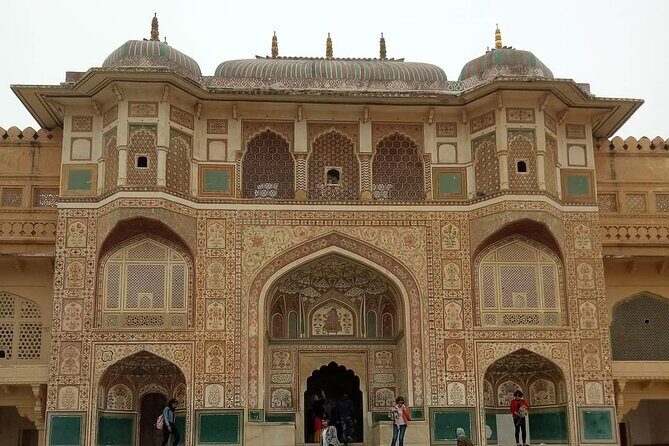
Agra is where Golden Triangle trips either land like magic or get swallowed by crowds. This schedule gives you more than one face of Agra, with several sights spread across a full day drive from Delhi.
The drive itself is about 4 hours from Delhi to Agra, so you’ll want a good start: water, sun protection, and a solid plan for when you arrive. Then the day shifts into monument mode.
Taj Mahal: The Main Event, With Time to See It Properly
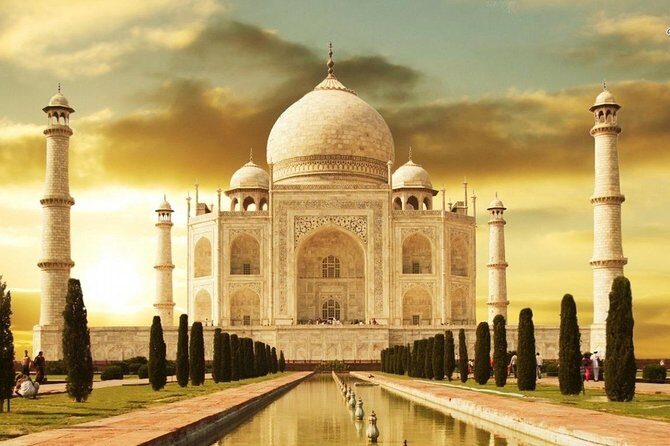
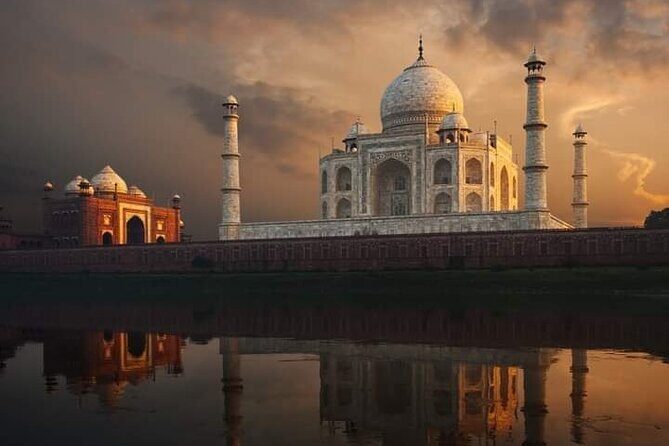
The Taj Mahal is the headline for a reason. It’s a white marble mausoleum built by Shah Jahan in memory of Mumtaz Mahal, completed in 1653.
But here’s my practical note: entry is not included, so plan for that ticket cost. Also, give yourself breathing room around the Taj rather than treating it like a 15-minute photo stop.
Agra Fort and Itmad-ud-Daula: When You Want Less Crowded Detail
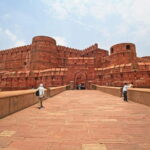
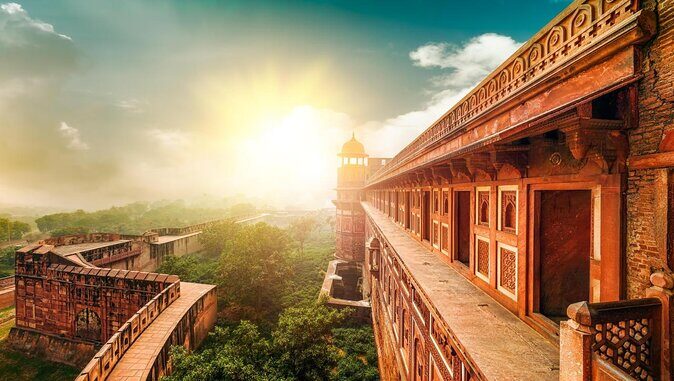
Agra Fort is the Mughal fortress that once served as a main residence when the capital moved to Agra. It’s about 1.5 hours on the schedule and offers a more grounded view of palace-fort life.
Then you get Itmad-ud-Daula, often called the Baby Taj. The key value for this stop is that it feels more intimate and decorative than the big name mausoleum, and you get time to appreciate the workmanship.
Again, monument tickets aren’t included. If you’re the type who hates surprise costs, treat this as a day where the tickets are the main extra line item.
Mehtab Bagh: The Garden Perspective Across the River
Mehtab Bagh, the Moonlight Garden, sits across the Yamuna River. Even if you don’t focus on the poetry of the name, it’s a useful stop because it changes your viewing angle and lets you absorb the Taj setting without being jammed right next to the main complex.
It’s scheduled for about an hour. That’s usually enough to walk slowly, take photos, and still have time for the next stop.
Marble Art Palace: A Craft Stop That Adds Texture to the Day
You also stop at a marble art workshop-style stop (Marble Art Palace). It’s connected to Agra’s handicraft world, including Zardozi embroidery—where metallic threads (gold and silver) decorate fabric.
I like this kind of stop because it helps you understand what you’re looking at when you see decorative work in India. Your schedule includes about 30 minutes here, and entrance is not included, so don’t treat it as a museum visit. Treat it as a chance to learn how one local craft gets made.
My Take on Guide Quality in Agra: Mohammed’s Photo Help
In a real example from the service experience, the guide Mohammed was praised for knowledge and photography help. That’s not just a nice-to-have. A good guide makes the difference between random photos and photos where you understand what you’re actually capturing.
Abhaneri and Chand Baori: The Detour That Breaks the Usual Route
If you only do the classic Golden Triangle stops, it can start to blur together. That’s why I like the inclusion of Abhaneri and Chand Baori.
Chand Baori is a famous stepwell with intricate architecture. The point of this stop is not just to see depth and symmetry, but to understand how ancient engineering shaped daily life and water access.
The schedule frames this as a detour on the way to Jaipur, around a 2-hour drive from Agra. You’ll get a full block here, about 8 hours in the overall itinerary section, which gives enough time to actually explore the village feel rather than racing through the main structure.
One more note: the route mentions Fatehpur Sikri sightseeing as part of the day. Since that’s included in the schedule text, you can expect an extra historic stop on that travel day, not just stepwell time.
Jaipur Masterclass: Amber Fort, City Palace, Hawa Mahal, Jantar Mantar
Jaipur is where the Golden Triangle starts to feel like a stage set, but it can still be deeply meaningful if you go beyond the quick photos. This schedule covers the core big sights and keeps room for a structured flow.
Amber Fort: Hilltop Views and Fort-Architecture Focus
Amber Fort is the hilltop fortress overlooking Maota Lake. It’s a major stop, scheduled for about 1.5 hours, and you’ll likely head up by elephant or jeep ride option as part of the experience.
This part of the day is where your comfort planning matters most. Wear shoes you trust, and keep an eye on weather and crowding. If the ride options change due to conditions, your guide can help you pick what works best.
City Palace and Hawa Mahal: Two Icons, Two Different Reasons to Stay
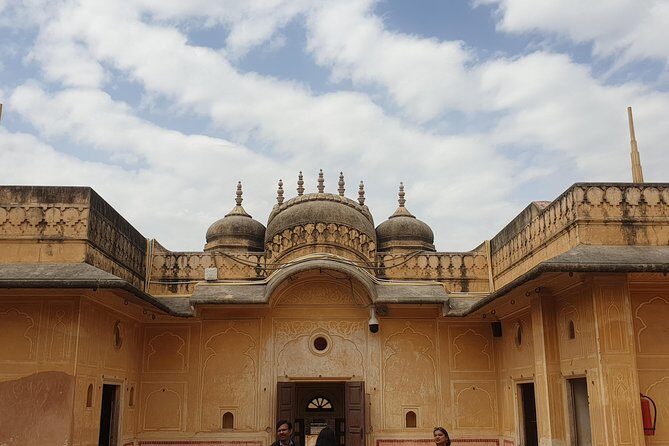
City Palace is the seat of Jaipur’s Maharajas, built in the early 18th century. It’s a complex, not just a single building, so the scheduled time gives you a chance to wander without feeling crushed by time pressure.
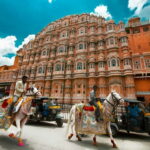
Then Hawa Mahal, the Palace of Breeze, gives you that instantly recognizable honeycomb façade. Even if you don’t study architecture, it’s a great stop for understanding why Jaipur became known for design that mixes beauty with function.
Jantar Mantar: The Astronomy Stop That Often Becomes a Favorite
Jantar Mantar is an astronomical observatory built in the early 18th century by Maharaja Sawai Jai Singh II. It’s one of five similar observatories, and the main value is that it turns science into something you can walk around.
If you like when a city adds a surprising side to what you expected, this is usually that moment.
Jaipur Gems & Jewellery: Short, Optional-Feeling, and On-Route Easy
There’s also a 30-minute stop for Jaipur gems and jewellery. It’s admission-free in the schedule, but it’s still a market-type environment, so treat it as a quick look rather than a guaranteed buying mission.
If you don’t want shopping pressure, you can use your guide to help you focus on information, not sales talk.
Driving Times, Comfort, and How to Avoid a Sore-Day Schedule
Transport is one of the strongest parts of this tour. You get a private air-conditioned car for sightseeing plus hotel pickup and drop-off each day, plus a water bottle.
That sounds basic, but on this route it’s a big deal. The Golden Triangle compresses long drives and hot sun into a few days, and comfort makes the monuments easier to enjoy rather than just survive.
One leg you can plan around
The trip from Delhi to Agra is about 4 hours. The Abhaneri detour from Agra is about 2 hours. Everything else is set up as day blocks with multiple sights, so you should expect long, active days.
Safety and driver smoothness: what Ajay’s example suggests
In a detailed service experience, the driver Ajay handled an airport pickup at 2am and got everyone through the trip safely, even with India’s traffic. That’s the kind of practical reassurance you want when you’re crossing cities by road.
Even if your arrival time is different, the big idea is the same: you’re not driving yourself, and the driver is part of the comfort and timing equation.
Price and Value: Is $215 a Smart Deal for This Route?
At $215 for about 6 days, this tour can be good value if you’ll actually use the private format. What you’re paying for is not just sightseeing. You’re paying for professional guidance across Delhi, Agra, and Jaipur, plus an air-conditioned vehicle, pickup/drop-off, and water.
However, don’t ignore what’s not included. Accommodation is on you, meals are on you (breakfast, lunch, dinner), and paid monument entry tickets are not included.
So the real budget picture looks like this:
- Your tour cost covers guide + vehicle + stated fees/taxes + water.
- Your extra costs are mostly hotels, meals, and entrance tickets.
If you split that across a small group, private transport can be cheaper than you’d expect once you add up taxis, separate transfers, and the effort of coordinating guides on your own.
Who This Tour Fits Best (and Who Might Want Something Else)
This one suits you if you want the Golden Triangle icons with a real guide and you like the idea of moving by private car instead of juggling transit.
It also works well if you prefer control over rigid group pacing. Private means you can adjust when you need a break, slow down for photos, or spend more time where your interests land.
You might consider a different style of tour if you already have your hotels locked in and you want strict freedom without day-to-day guiding. Since this is guide-led sightseeing, it’s designed to be used, not just sampled.
Should You Book This Private 6-Day Golden Triangle Tour?
I think you should book it if you want a balanced plan: major Delhi monuments, a full Agra day beyond the Taj, and Jaipur with the big four plus the astronomy stop. The added Abhaneri detour to Chand Baori is the kind of change that keeps the trip from feeling copy-paste.
My “yes” is also tied to service quality. In real examples, Mohammed’s guidance and Ajay’s driver handling showed how much comfort and clarity matter on this route.
Book with confidence as long as you’re comfortable adding separate costs for entrance tickets and meals, and as long as you’re fine with active days packed into the car between destinations.
FAQ
FAQ
What is included in the tour price?
The tour includes a professional tour guide in Delhi, Agra, and Jaipur, all fees and taxes, an air-conditioned vehicle, private air-conditioned car for sightseeing plus hotel pickup and drop-off, and a water bottle.
Are monument entrance tickets included?
No. Paid entry tickets for monuments are not included.
Do I choose my own hotel?
Yes. Accommodation is not included, so you choose the type of hotel you want in each city.
Does the tour provide hotel pickup?
Yes. Daily hotel pickup in an air-conditioned vehicle is part of the experience.
Which cities and main areas are visited?
The tour covers Delhi, Agra, Jaipur, and Abhaneri, with stops including major sites like Red Fort, Humayun’s Tomb, the Taj Mahal, Amber Fort, City Palace, and Chand Baori.
Is this a private tour or a shared group tour?
It’s a private tour/activity, so only your group participates.
Is food included?
No. Lunch, breakfast, and dinner are not included.
What are the cancellation rules?
Free cancellation is available. You can cancel up to 24 hours in advance for a full refund.