REVIEW · MUMBAI
Group Guided Walking Tour in Fort and Colaba
Book on Viator →Operated by M/s Khaki Tours · Bookable on Viator
Mumbai’s history comes with a good walking plan. This 2.5-hour guided route strings together Fort and Colaba’s most photogenic landmarks, from the Gateway of India finish to the 500-year story arc the guide keeps repeating in the best way. You’ll also get a small-group experience, with a cap of 12 people, so questions don’t get lost in the crowd.
I love that the pacing is built around recognizable sights, but the guide zooms in on what you’d normally miss while walking alone. I also love the focus on local context—how Mumbai changed from older fishing and farming roots into a modern metropolis—so the buildings start making sense instead of just looking pretty.
One thing to consider: this tour needs good weather, and you’re on your feet for about 2 hours 30 minutes. If you’re not into walking and standing in the sun, plan your timing carefully.
In This Review
- Key highlights before you go
- Why Fort and Colaba Works for a First-Time Mumbai Walk
- Town Hall Starts the Story at the Asiatic Society Area
- Town Hall to Horniman Circle: Portuguese and Victorian Clues in Plain Sight
- St. Thomas Cathedral: The Oldest Anglican Church Stop You Shouldn’t Skip
- Flora Fountain: Mumbai’s Answer to a Classic Main-Square Showpiece
- Oval Maidan: Cricket Origins and UNESCO-Era Big-City Ambition
- Rajabai Clock Tower: Learning Time by Looking at a Landmark
- Kala Ghoda Art District: Architecture Details That Start to Feel Like Stories
- Keneseth Eliyahoo Synagogue: A Jewish Enclave and Signs of Change
- Gateway of India to Taj Mahal Palace Hotel: The Finale Photo Moment
- Price and Timing: What $16.73 Really Buys You
- Practical Tips That Make the Walk Feel Easier
- Who This Tour Suits Best
- Should You Book This Fort and Colaba Walking Tour?
- FAQ
- How long is the Fort and Colaba walking tour?
- How big is the group?
- What’s the price per person?
- Where does the tour start and end?
- Is admission included for the stops?
- Do I need a printed ticket?
- Is the tour suitable for most travelers?
- What happens if the weather is bad?
- Can I get a refund if I need to cancel?
Key highlights before you go

- Max 12 travelers for real conversation instead of a passive sightseeing shuffle
- A 500-year Mumbai timeline tied directly to the streets you’re walking
- Photo-friendly flow from Fort’s civic landmarks to Colaba’s waterfront icons
- Stops with free admission at each scheduled point
- A guide who offers local recommendations so you leave with practical next steps
- A mid-walk coffee break that helps reset your energy
Why Fort and Colaba Works for a First-Time Mumbai Walk
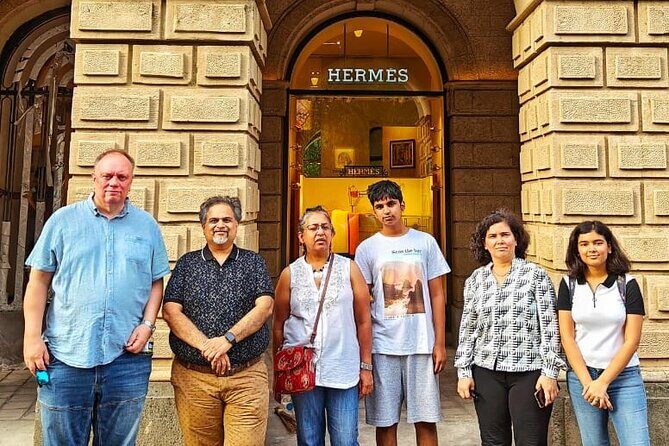
Fort and Colaba are where Mumbai shows off its layers. You can see colonial-era civic power near the waterfront, religious landmarks that signal older communities, and institutional buildings that explain why the city became a magnet for business, education, and culture.
What makes this walk especially useful is how it turns landmarks into a storyline. The route is short enough to feel manageable, but it covers enough ground to help you get your bearings fast. That’s the big win: by the time you reach the sea-facing end point, you’ll understand what you’re looking at and why it matters.
Also, if you like “street-level history” (the kind you can point at), this tour fits. You’re not staring at a plaque and guessing. You’re moving, stopping, and getting explanations that connect to the buildings right in front of you.
You can also read our reviews of more walking tours in Mumbai



Town Hall Starts the Story at the Asiatic Society Area
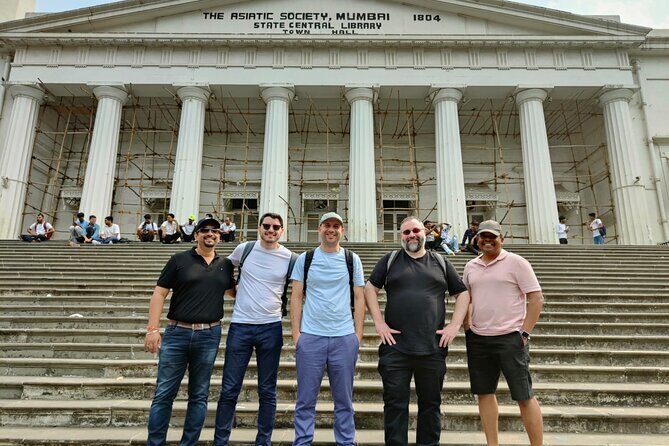
Most walks in Mumbai either start in a blur or leave you wandering until you finally figure out what you’re doing. This one begins right in the Fort core at Town Hall / Asiatic Society.
That matters because it sets the tone: you’re starting with the civic and cultural heart of the area, not with a random photo spot. You’ll spend about 20 minutes here, listening to how Mumbai’s city identity was shaped after Portuguese and British colonization. Even if you’ve heard the broad timeline before, having it tied to specific surroundings makes it stick.
You’ll also get a quick mental map. Fort’s streets can feel repetitive until someone labels the logic behind the architecture and institutions. This early stop does that job.
Town Hall to Horniman Circle: Portuguese and Victorian Clues in Plain Sight
After Town Hall, you walk into the world of 19th-century planning and public spaces. The next stop is Horniman Circle Garden, scheduled for about 15 minutes.
Here’s why this garden deserves a place on your itinerary: it’s framed by surrounding buildings with that classic Victorian feel, and it’s tied to how people used to gather and spend time in the area. The guide will point out details you might completely miss if you’re just passing through—like how this type of garden functions as a social hub in a dense city.
If you like “micro history” (the small local stories that explain daily life), this is a good stop. It’s not just a patch of green. It’s a clue to how the neighborhood worked.
St. Thomas Cathedral: The Oldest Anglican Church Stop You Shouldn’t Skip
Next up is St. Thomas Cathedral Mumbai, about 15 minutes. This is the one stop on the route where the experience clearly includes time inside.
You’ll admire memorials and the grand altar while learning about the church’s place as Mumbai’s oldest Anglican church. Even if church interiors aren’t your usual thing, this stop works because the guide connects what you see—symbols, memorials, and architecture—to the long timeline of the city.
Practical note: you’ll want to dress respectfully and be ready for a quieter pace here. The best way to get value is to slow down and actually look at what the guide highlights, not just take a photo and move on.
Flora Fountain: Mumbai’s Answer to a Classic Main-Square Showpiece
From the cathedral, the walk shifts back toward the open, city-center vibe with Flora Fountain, again around 15 minutes.
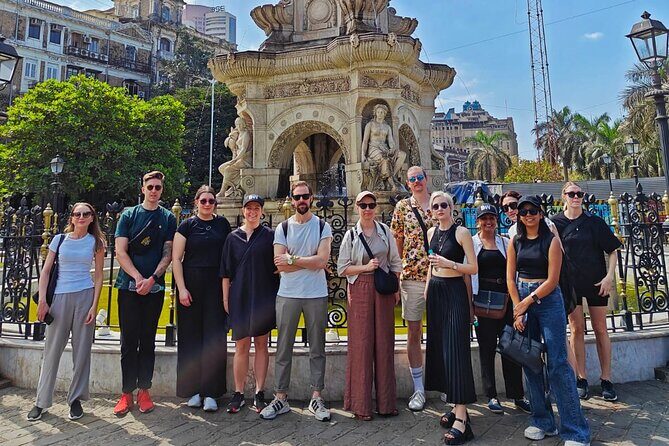
This stop is a classic “oh, I’ve walked near that before” moment—except now you know what it represents. It’s described as Mumbai’s answer to Piccadilly Circus, along with the Martyrs’ Memorial, and it sits in the main town square.
What you get here is a strong sense of the city’s public monument language: where people gather, how the city marks remembrance, and how older civic spaces remain central even as Mumbai grows outward.
If you want an easy photo stop without stopping the whole tour, this is it. The guide will also help you place the fountain in the broader layout so it doesn’t feel random.
You can also read our reviews of more guided tours in Mumbai





Oval Maidan: Cricket Origins and UNESCO-Era Big-City Ambition
Then comes Oval Maidan, about 20 minutes. This is one of those places that feels important before you even learn the story.
The guide focuses on the grand buildings around it and the fact that it’s the birthplace of Indian cricket. Even better, it’s part of a UNESCO World Heritage site, so you’re not just hearing lore—you’re standing in a protected layer of urban planning and architecture.
Why this stop matters for you: once you understand Oval Maidan’s role, you start noticing how public grounds can shape national culture. Cricket isn’t an abstract sport here; it’s tied to a specific physical place in the city.
Also, if you like photography, this is a natural “wide view” break—space around you helps reset your eyes after tighter streets and taller façades.
Rajabai Clock Tower: Learning Time by Looking at a Landmark
Next is Rajabai Clock Tower, about 15 minutes. The description is straightforward: it’s Mumbai’s answer to Big Ben, and the guide talks about the evolution of the University of Mumbai.
This stop is all about institutional architecture—how universities express authority, tradition, and ambition through design. Even if clocks and universities aren’t your thing, this is valuable because it explains how city power gets built into stone and schedules.
If you want to understand why Fort’s buildings feel so “official,” this is where it clicks.
Kala Ghoda Art District: Architecture Details That Start to Feel Like Stories
From clocks to creative neighborhoods: Kala Ghoda, about 15 minutes, is where you get a shift in tone.
You’ll marvel at diverse architecture in Mumbai’s premier art district and learn how to read what buildings “hold” in terms of design and local secrets. This is the kind of stop that rewards attention. If you look with the guide’s framing, you’ll start spotting patterns—stylistic influences, street-level details, and building relationships.
This is also a good stretch of the route if you’re the type who likes wandering a bit even after the tour ends. Kala Ghoda can be a springboard for more art and design walking on your own.
Keneseth Eliyahoo Synagogue: A Jewish Enclave and Signs of Change
Then the walk takes a more reflective turn at Keneseth Eliyahoo Synagogue, about 15 minutes.
This stop focuses on Mumbai’s Jewish enclave and the fact that signs of Jewish life in the city are now almost extinct. The guide’s job here is to help you see what’s there and understand what history has thinned over time.
You’ll likely find this emotional in a quiet, informational way—less about dramatic spectacle and more about noticing continuity and change. If you care about minority histories and how neighborhoods evolve, don’t rush this stop.
Gateway of India to Taj Mahal Palace Hotel: The Finale Photo Moment
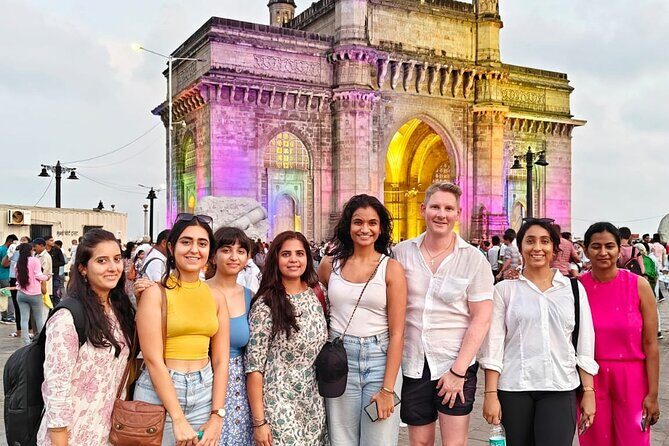
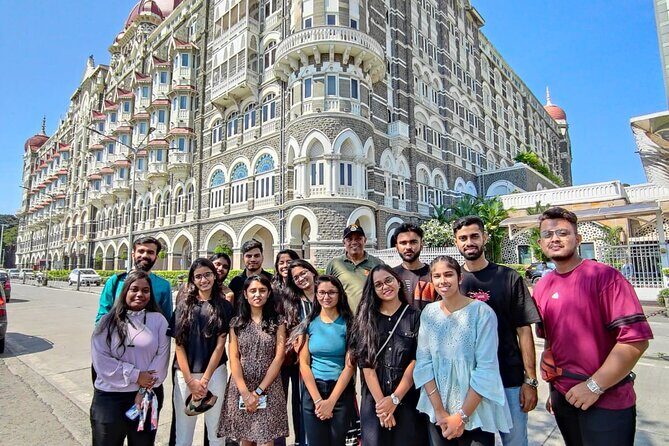
The tour ends at the Gateway of India area and includes time to see the Gateway of India and the nearby Taj Mahal Palace Hotel, about 20 minutes.
This is the best kind of finale. By now, you’ve got the city’s timeline in your head, so the icons at the waterfront don’t feel like random postcards. You understand why the city would build and center landmark power in a visible public place.
This is also where you’ll want to slow down for photos. The route is designed to get you to the sea-facing end point right as you’re ready for wide shots and skyline views. Even if you’ve seen these places in pictures, they land differently after the history and architecture context you’ve walked through.
Price and Timing: What $16.73 Really Buys You
At $16.73 per person, this tour is priced like a value-focused introduction to an important pocket of Mumbai. The real question isn’t whether it’s cheap—it’s whether you’re getting enough “use” out of it.
Here’s what you’re buying for the money:
- A 2 hours 30 minutes guided walk that covers multiple major landmarks without turning into a sprint
- A maximum group size of 12, which is big for Mumbai, where crowds can otherwise swallow your questions
- Free admission at each scheduled stop (so you’re not paying extra to enter the key points)
- A guide who can offer local recommendations and tips, which often becomes the thing you use after the tour, not during it
Also worth noting: it’s common for people to book around 6 days in advance, so if you’re traveling at a busy time, it helps to lock in your slot earlier rather than later.
If you’re spending a limited number of days in Mumbai, this is a smart use of time. It gives you a coherent “Fort-to-Colaba” picture instead of isolated stops.
Practical Tips That Make the Walk Feel Easier
A few things help you get the most from this kind of city walking tour:
- Wear comfortable shoes. You’re on the move for about 2.5 hours, and most stops include standing and looking up.
- Bring a hat and water if the day is warm. The tour needs good weather, but that doesn’t always mean cool temperatures.
- Use your guide like a resource. Ask for local recommendations while you’re still in the Fort area, not after you’ve gone too far.
- Plan your camera timing. Some stops are short (around 15 minutes), so take your wide shots early and let the guide finish their explanation before you rush off.
- Watch the pace at church and synagogue stops. These are typically calmer, and the value is in paying attention rather than speed-running sightseeing.
If the weather is poor and the tour is canceled, you’ll be offered a different date or a full refund, since the experience requires good conditions. That’s a relief because Mumbai weather can be unpredictable.
Who This Tour Suits Best
This is a great fit if:
- you want a guided overview of Old Mumbai without getting lost
- you like history tied to architecture and public spaces
- you prefer a small group (max 12) where conversation stays possible
- you want a practical orientation for planning the rest of your days in Mumbai
It’s also a good choice for first-timers who want “the highlights” but still care about meaning. The route is structured enough to feel complete, yet flexible enough to point you toward what to explore next.
Should You Book This Fort and Colaba Walking Tour?
I’d book it if you’re trying to understand Mumbai quickly and thoughtfully. For about $16.73, you get a tight, well-sequenced route with free-entry stops, a small group size, and a guide who connects buildings to the city’s long transformation.
Skip it only if you strongly dislike walking in general, or if weather-sensitive days will wreck your schedule. Otherwise, this is one of those tours that pays you back immediately: you finish with better photos, clearer context, and a more confident sense of where you are in Mumbai.
FAQ
How long is the Fort and Colaba walking tour?
The tour lasts about 2 hours 30 minutes (approximately).
How big is the group?
The group size is limited to a maximum of 12 travelers.
What’s the price per person?
The price is $16.73 per person.
Where does the tour start and end?
It starts at Town Hall (Asiatic Society Library) in Fort and ends at the Gateway of India area in Apollo Bandar, Colaba.
Is admission included for the stops?
The tour lists admission as free for each scheduled stop.
Do I need a printed ticket?
No. The tour uses a mobile ticket.
Is the tour suitable for most travelers?
The tour indicates that most travelers can participate.
What happens if the weather is bad?
The experience requires good weather. If it’s canceled due to poor weather, you’ll be offered a different date or a full refund.
Can I get a refund if I need to cancel?
Yes. You can cancel for free up to 24 hours in advance for a full refund.