REVIEW · NEW DELHI
4-Day Ranthambore Tiger Safari Tour to Agra and Jaipur from Delhi
Book on Viator →Operated by Hire Taxi India · Bookable on Viator
Early mornings, big icons, and a real tiger chance.
This 4-day route hits Delhi landmarks, the sunrise Taj Mahal, and then drops you into Ranthambore for two tiger safari drives. I like that you get a professional guide and a driver who keep the logistics tight; names like Mr. Singh and Ravi show up in the feedback for making the day-by-day pace work. I also love the value angle: entry fees, monuments, transfers, and most meals are handled, so you’re not constantly budgeting on the fly.
One thing to plan around: the schedule is time-sensitive. Taj Mahal sunrise depends on conditions, and Ranthambore has fixed seasonal closures, so your exact dates matter.
In This Review
- Key Highlights You’ll Actually Feel in Your Day
- The Big Picture: A Tight 4 Days Across North India
- Delhi Half-Day: Qutub Minar, India Gate, and a Government-Building Drive Past
- Practical note
- Agra: Sunrise Taj Mahal by 6am, Then Agra Fort’s Fortress Power
- The drawback to watch
- Ranthambore Tiger Safari: Two Shared Drives With a Naturalist
- Season matters: Ranthambore closure
- What you should know about expectations
- Jaipur: Amber Fort First, Hawa Mahal for the Facade Charm, Then City Palace
- Price and Logistics: Why This Feels Like Value at $261
- Guides, Drivers, and the Real Reason It Works
- A useful photo tip
- Who This Tour Is Best For
- Should You Book This 4-Day Ranthambore Safari + Agra and Jaipur Tour?
- FAQ
- Where does this tour start and end?
- How long is the tour, and what is the price?
- Is pickup offered from the airport or outside central Delhi?
- What’s included in the tour package?
- Is the Taj Mahal sunrise visit always available?
- When is Ranthambore National Park closed?
- Are the tiger safaris in private vehicles?
- Do I need passport details to book?
- Is there free cancellation?
Key Highlights You’ll Actually Feel in Your Day
- Sunrise Taj Mahal with an early pickup and a golf cart ride for getting to and from the monument area
- Private city guiding in Delhi, Agra, and Jaipur, so stops feel like a story instead of a checklist
- Two tiger safari drives in Ranthambore using shared jeep/canter options plus a naturalist
- All transfers by air-conditioned private vehicle, which matters on India’s roads and long intercity stretches
- Forts and royal sites packed in a smart order: Agra Fort, Amber Fort, and City Palace, with a photo stop at Hawa Mahal
- Most meals included, including breakfast (3), lunch (4), and dinner, with water bottles on hand
The Big Picture: A Tight 4 Days Across North India
This tour is built for people who want the headline sights without the hassle of planning every jump. You’re covering four major bases—Delhi, Agra, Ranthambore National Park, and Jaipur—in about four days. That’s ambitious, but it’s also the point: you’ll see a lot of India’s most recognizable places while getting protected time buffers through included transport and guides.
The best part is that it’s not only sightseeing. You’re also getting structured access to the tiger sanctuary days, which are where most self-planning trips get messy. With a naturalist at safari time and the park entry handled, you show up prepared for the rules and rhythms of the reserve.
Still, because it’s a sprint, you’ll want to be comfortable with early departures and longer road stretches. If you like slow travel where every hour feels unhurried, this will feel more like a well-run itinerary than a flexible wander.
A few more New Delhi tours and experiences worth a look



Delhi Half-Day: Qutub Minar, India Gate, and a Government-Building Drive Past
Your Delhi day starts early with pickup from your hotel or a pickup point in Delhi (and the tour also offers airport pickup). Then you get a half-day city tour that focuses on three key stops, each with a different vibe.
Qutub Minar is the real anchor. It’s a UNESCO World Heritage Site and the 11th-century tower is the kind of monument that makes you pause even if you’ve seen other towers before. You’ll also get the context of its builder—Qutub-ud-din Aibek of the Slave Dynasty—and the significance of the site, not just the photo angle. Admission is included, which is one less thing to sort out on the day.
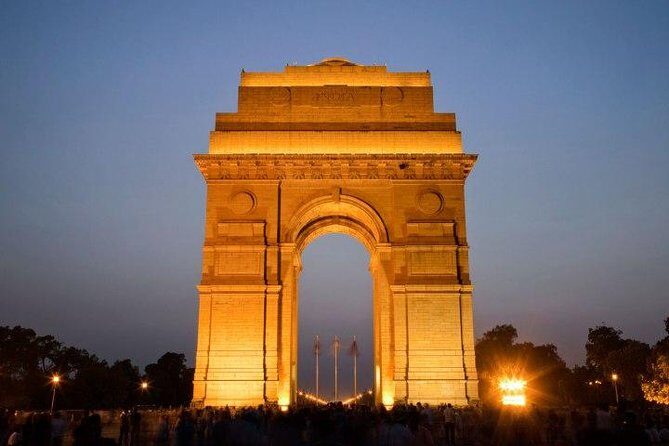
Then comes India Gate, a memorial to about 90,000 Indian army soldiers who died in World War I and later operations. It’s quick—about half an hour—but it gives you modern-country perspective right next to the older monuments.
After that you drive past Parliament House and other grand government buildings. You’re not spending long inside, but the “drive past” format is efficient. It helps you see the scale and setting of central Delhi without eating up your time before the long drive to Agra.
Practical note
This is a “half-day” block in the morning, and the afternoon is mostly road time. If you’re traveling with kids or anyone who gets car-sick, pack for short breaks. The good news: transport is by air-conditioned private vehicle, so you’re not trapped in hot, open-air conditions.
Agra: Sunrise Taj Mahal by 6am, Then Agra Fort’s Fortress Power
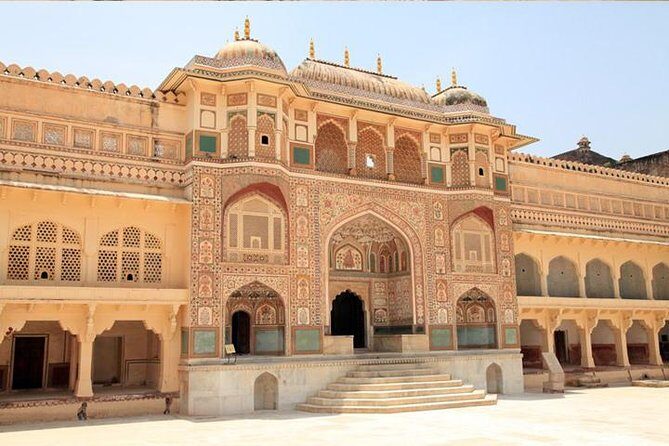
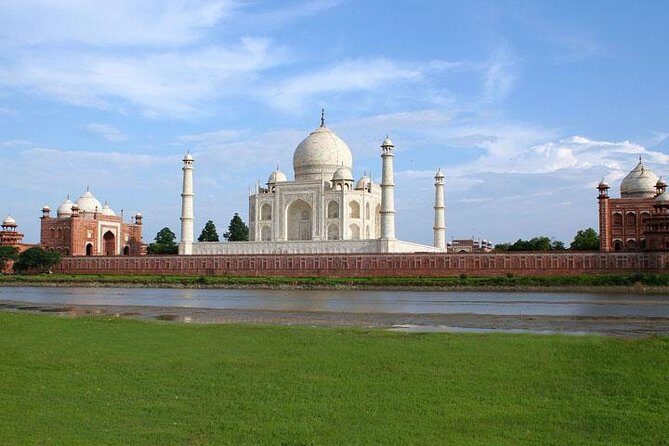
Agra is where the tour turns cinematic. The Taj Mahal visit is scheduled for sunrise, with pickup around 6am. You’ll go in early, which is usually the best way to experience this site: fewer crowds and a softer light that makes the marble details pop.
The Taj Mahal is listed as closed on Friday for this sunrise visit, so if your dates land on a Friday, plan for an adjustment.
You get about two hours at the Taj Mahal with admission included. There’s also a golf cart ride to and from the Taj area, which is a small thing that adds up—less walking under the early sun and more time to actually enjoy the monument. You’ll see it as India’s crown jewel, but also as an engineering and design statement. The tour framing emphasizes the scale and effort behind it: the memorial took 20,000 men over 17 years.
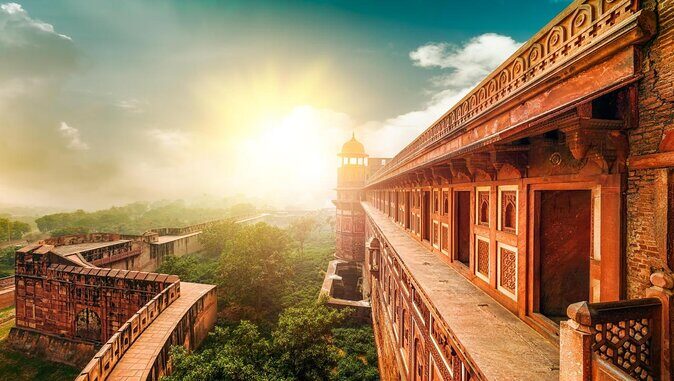
After Taj Mahal, you move to Agra Fort, another ticket-included stop. This fort isn’t just walls. It’s described as enclosing an imperial city of the Mughal rulers, with fairy-tale palace spaces inside the 2.5-km-long enclosure walls. Expect about an hour here. You’ll get the feel of power and control—thick fortifications, inner palaces like Jahangir Palace and Khas Mahal mentioned in the itinerary description.
Then there’s a pause for Sanskriti’s Imperial Gems, a shopping stop focusing on marble inlay work, carpets, Zari and embroidery, and leather goods. It’s optional in the sense that you can browse at your own pace, but it’s built into the flow. Two hours is enough time to look around without turning into an all-day detour.
Finally, after Agra sightseeing you drive roughly five hours to Ranthambore National Park. That’s a long transit day segment, so treat the evening as recovery time.
The drawback to watch
Sunrise Taj Mahal is subject to weather conditions. If visibility is poor, your experience may shift from magical to merely beautiful—which is still great, but it won’t be the exact moment you imagined.
A few more New Delhi tours and experiences worth a look



Ranthambore Tiger Safari: Two Shared Drives With a Naturalist

Day 3 is the wildlife core. You’ll head to Ranthambore National Park and take two safari drives—one in the morning and one in the afternoon—each about three hours. The safaris use a shared jeep or shared canter, which means you’re not getting an empty-park fantasy ride. You’re in real game-reserve logistics with other groups.
What makes this part strong is the support: the park entry is included, and a naturalist joins during safari time. That matters because tiger spotting is part patience, part reading the reserve. A naturalist can help you understand the terrain and what to watch for, and it reduces the “I’m just waiting” feeling.
The itinerary’s framing is clear: Ranthambore is one of the most iconic wildlife sanctuaries in the world, and the chance to see majestic predators in their natural setting is the main reason you’re here.
Season matters: Ranthambore closure
Ranthambore National Park is not open from 01 July to 30 Sept each year. If you’re planning for summer, you’ll need a different month or a different itinerary entirely. This is one of the few hard schedule realities that can’t be fixed on the spot.
What you should know about expectations
Safari time is controlled by the reserve’s rhythm. You get set hours, and you’re looking for animals that don’t follow your timetable. If you’re the type who gets frustrated when nature doesn’t perform on command, you may find yourself wishing for more freedom. But if you can enjoy the drive itself—birds, tracks, terrain, and the tension of scanning for movement—this is where the tour earns its reputation.
Jaipur: Amber Fort First, Hawa Mahal for the Facade Charm, Then City Palace
You reach Jaipur after the Ranthambore transfer (about three hours). Day 4 is the royal-site roundup, and it’s structured well: start with Amber Fort, then do Hawa Mahal, then finish with City Palace and related viewpoints.
After breakfast you check out around 8am and go to Amber Fort. You’ll have about two hours here, with admission included. Amber Fort is described as the old capital of the Kachhwaha clan until Jaipur became the official capital in 1727. That historical detail matters because the fort isn’t just scenic. It’s a political snapshot.
Then you stop at Hawa Mahal, the Palace of Wind. This is a short stop—about 30 minutes—with admission not required per the itinerary. The tour frames it correctly: it’s now mostly a façade, famous for delicate screens and carved balconies. If you like architecture, it’s a quick win because you can get the whole idea in one look.
Next is City Palace of Jaipur. Admission is included, and you’ll get about two hours. The City Palace is described as the principal residence of the ruling family, with part of it now a museum. You’ll also see Jantar Mantar, the 18th-century stone observatory, which helps break up the fort-and-palace loop with something different: science and timekeeping made visible.
If you have time, there’s also a stop at a Carpet And Textile House, focused on hand-woven carpets and textiles and how silk carpets are made by hand. It’s included as “time permitting,” so it’s not guaranteed—but it’s a useful way to understand craft rather than just shop for souvenirs.
After Jaipur, you drive back to Delhi for drop-off at your hotel or airport.
Price and Logistics: Why This Feels Like Value at $261
At $261, the tour’s value comes from what’s already included and how the day structure reduces decision fatigue.
You’re getting:
- Air-conditioned private vehicle transfers and sightseeing transport
- Professional private live guide
- Monument entrance fees
- Ranthambore park entry and safari planning basics
- Naturalist during safari
- 3 nights accommodation on twin sharing when the hotel option is booked
- Breakfast and lunch and dinner as specified
- Water bottles throughout
- Golf cart rides linked to the Taj Mahal visit
You’re not getting:
- Drinks (so plan on paying for beverages)
- Gratuities (recommended)
- Any extra gala dinner on Christmas and New Year’s Eve if those dates apply (charged extra)
- Personal shopping costs
If you’ve ever done an India trip where you spend hours juggling tickets, entry lines, and transport timing, you’ll feel the difference here. The included entries matter because Qutub Minar, Taj Mahal, Agra Fort, Amber Fort, and City Palace add up quickly when you’re paying one by one. Also, having a single guide rhythm across multiple cities can save you time and stress.
One more logistic plus: pickup is offered from Airport or any desired location in Delhi, Noida, or Gurugram. That’s helpful if you’re arriving by flight or want to start from a hotel that isn’t in the center.
Guides, Drivers, and the Real Reason It Works
A lot of tours have the same itinerary on paper. What separates a good experience is who runs the car and who gives you context at each stop.
In the feedback you provided, drivers such as Mr. Singh and Mr. KK and a standout driver named Ravi are praised for day-to-day organization and for handling India traffic with confidence. That isn’t a minor detail. On a multi-day route, the driver’s skill is what keeps you on time for early starts like Taj Mahal sunrise.
For guides, the important thing is consistency: you’re getting a professional private live guide across the trip’s sightseeing blocks. That helps you avoid the “here’s a monument, good luck” feeling. You get explanations of what you’re seeing—like the historical background behind Qutub Minar and the fort-city idea inside Agra Fort—without needing to read a guidebook for every stop.
A useful photo tip
One piece of practical advice in the feedback: for Taj Mahal, ask your guide to handle photos rather than relying on the professional photographers on-site. Your guide can take cleaner shots without you worrying about angles while you’re trying to enjoy the moment.
Who This Tour Is Best For
This is a strong fit if:
- You want to cover Delhi, Agra, Ranthambore, and Jaipur in one organized package
- You like a mix of monuments and wildlife, not just one or the other
- You value convenience: transport, entries, most meals, and guidance are handled
- You’re okay with early departures and longer car days
It may feel less ideal if:
- You hate tight schedules or early alarms
- You need lots of free time in each city to wander independently
- You plan travel during 01 July to 30 Sept, when Ranthambore is closed
Should You Book This 4-Day Ranthambore Safari + Agra and Jaipur Tour?
Yes, you should book it if you want a well-run route with real structure—especially if this is your first time juggling northern India highlights. The inclusion set is what makes it attractive: entrance fees, safari essentials, private guiding, and most meals are already built in. The safari day with a naturalist and two drives is also a big deal if tiger spotting is on your bucket list.
But book with eyes open. Pick travel dates that avoid Ranthambore’s closure window, and remember that sunrise Taj Mahal is weather dependent and Taj has a Friday closure note for sunrise visits. If you can handle those timing realities, this tour is a smart way to see a lot of iconic India without the logistical burden chewing up your vacation.
FAQ
Where does this tour start and end?
It starts in New Delhi and ends back at the meeting point. After the Jaipur sightseeing, you drive to Delhi for drop-off at your hotel or the airport.
How long is the tour, and what is the price?
The duration is approximately 4 days, and the price is listed as $261.
Is pickup offered from the airport or outside central Delhi?
Yes. Pickup is offered from the airport or from other desired locations in Delhi, including Noida and Gurugram.
What’s included in the tour package?
Included items are things like air-conditioned private vehicle transfers and sightseeing, a professional private live tour guide, monument entrance fees, Ranthambore park entry, naturalist support during safaris, water bottles, and most meals as specified (breakfast, lunch, and dinner). Accommodation is included for 3 nights on twin sharing when the option with hotels is booked.
Is the Taj Mahal sunrise visit always available?
The Taj Mahal sunrise visit is subject to weather conditions, and it is noted as closed on Fridays.
When is Ranthambore National Park closed?
Ranthambore National Park is not open from 01 July to 30 Sept each year.
Are the tiger safaris in private vehicles?
No. The safari rides are in shared jeep or shared canter options.
Do I need passport details to book?
Yes. Passport name, number, expiry, and country are required at booking for all participants (passport photo copy).
Is there free cancellation?
Yes. Free cancellation is available up to 24 hours in advance for a full refund. If you cancel within 24 hours, the amount paid is not refunded.