REVIEW · NEW DELHI
6 Day Golden Triangle Tour with Amritsar from Delhi
Book on Viator →Bookable on Viator
Delhi to Amritsar in six days is a fast lesson in India. I love the sunrise Taj Mahal timing and the way this route also gives you the Sikh heart of Amritsar with the Golden Temple langar. One thing to plan for: the schedule moves early and often, and monument entrances and most meals aren’t included.
What makes this trip feel practical is how much is handled for you: airport/hotel pickup, air-conditioned car transfers, city guides, and AC chair car trains between Delhi and Amritsar. I also like that some reviews highlight guides such as Sanjay, praised for smart, kind on-the-ground recommendations for what’s worth your time.
The main consideration is stamina and timing. You’ll do a sunrise start (around 5:45 AM), a morning train to Amritsar (around 6:00 AM), and you’ll spend real hours in transit, even with comfortable transport.
In This Review
- Key highlights to know before you go
- Golden Triangle with Amritsar: what you’re really buying in 6 days
- Day 1 in Delhi: Jama Masjid, Qutub Minar, and photo stops that make sense
- The outside-of-Red-Fort strategy and why your timing matters
- Day 2 in Agra: sunrise Taj Mahal and a second look at Agra Fort
- Why the Taj Mahal sunrise stop is worth planning around
- Day 3 Jaipur: Forts, palaces, and the geometry of Jantar Mantar
- Day 4: the Delhi return day that protects your Amritsar time
- Day 5 to Amritsar: train time saved, then Wagah Border energy
- Day 6 in Amritsar: Golden Temple, Jallianwala Bagh, then the ride back
- Hotels, guides, and the value of being handled for you
- Price and logistics: is $629 good value for this route?
- Who this tour fits best (and who might want a different pace)
- Should you book the 6 Day Golden Triangle with Amritsar tour?
- FAQ
- FAQ
- What cities are included in this 6-day tour?
- How long is the tour?
- Is pickup from the airport or hotel included?
- Which train routes are included?
- Is the Taj Mahal included, and when do you visit it?
- Do I need to pay for monument entrances?
- What’s included in Amritsar besides the Golden Temple?
- What meals are included?
Key highlights to know before you go
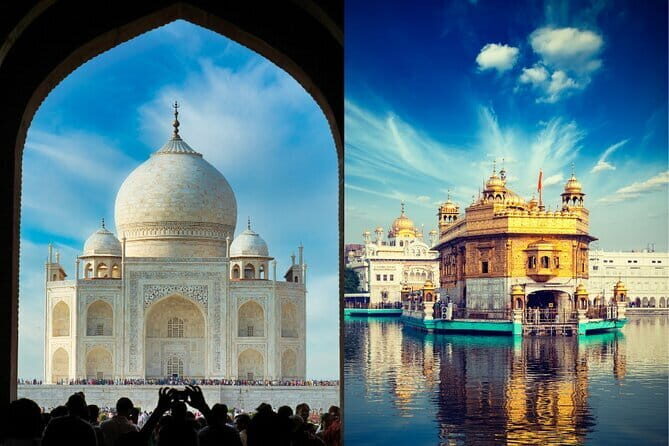
- Sunrise Taj Mahal with the pink-leaning light that morning brings
- Golden Temple visit plus time to understand the langar community kitchen
- Wagah Border ceremony: a high-energy flag retreat experience
- Delhi essentials in a tight, photo-friendly route (Jama Masjid, Qutub Minar, India Gate)
- Two AC train rides (Delhi → Amritsar and Amritsar → Delhi) to save time
- Mixed emotions day in Amritsar with Jallianwala Bagh included
Golden Triangle with Amritsar: what you’re really buying in 6 days
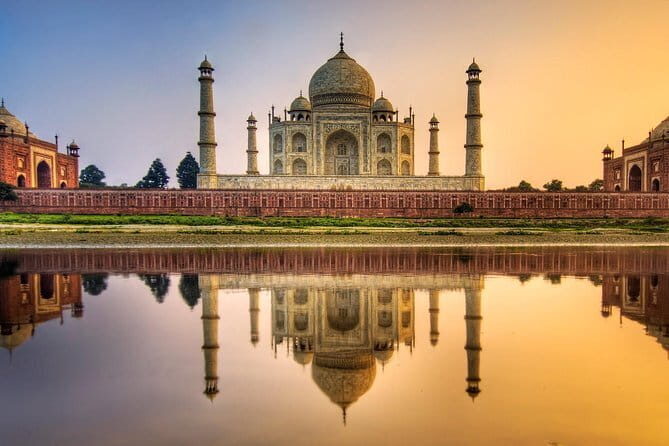
This is a classic North India sampler: Delhi, Agra, Jaipur, then Amritsar—but with two big religious/cultural anchors. One is the Taj Mahal early in the morning. The other is Amritsar’s Golden Temple and the daily community kitchen, the langar, where meals are served to visitors as an expression of Sikh values.
You’re also getting a tour structure that’s meant to keep things simple: a driver with you for transfers, local guides in each city, and hotel stays in the 3/4/5-star range you choose. For a first trip—or for a trip where you can’t afford to lose time figuring out routes—this setup is a real time-saver.
Just know the trade-off: you’ll see a lot, but you won’t linger for hours in every place. If you like slow travel and long cafe hangs, you may find the pace a bit intense.
A few more New Delhi tours and experiences worth a look

Day 1 in Delhi: Jama Masjid, Qutub Minar, and photo stops that make sense
Your Delhi day starts with pickup and a city tour that mixes major sights with smart practicality. You’ll begin at Jama Masjid, commissioned by Shah Jahan, and it’s one of Old Delhi’s most important congregational mosques. You’ll get about half an hour there—enough to orient yourself, admire the scale, and take photos at a respectful pace.
Next comes Red Fort from the outside. This matters because the inside area is largely occupied by the Indian Army, so the tour keeps your viewing realistic: you see the fort’s exterior and can still get those iconic shots. It’s also the kind of stop that doesn’t demand tickets or a long time window.
Then you’ll move through a set of national landmarks that help you understand modern India’s story. Raj Ghat is the black marble memorial platform on the Yamuna’s banks for Mahatma Gandhi’s cremation site. You’ll also pass India Gate, the 140-foot war memorial for soldiers of the British Indian Army who died in World War I, and snap photos at Parliament House and Rashtrapati Bhavan.
Finally, you’ll visit Qutub Minar, a UNESCO World Heritage site tied to Indo-Islamic architecture. The minaret’s height and conical form make it hard to ignore, even if you’re only spending about an hour.
Practical tip: this day is partly “seeing” and partly “learning the map.” If you’re jet-lagged, don’t worry—you’re mostly building context for the rest of the route.
The outside-of-Red-Fort strategy and why your timing matters
This tour makes a clear choice: you don’t lose time chasing access rules. By focusing on Red Fort exterior views, you get the visual landmark without the hassle of not being able to fully enter. It’s a good model for tight itineraries.
The same idea applies to other photo stops, like Parliament House and Rashtrapati Bhavan. They’re quick, and you’re not pushed into long waits. If you’re the type who likes photos but also wants time for meaningful visits, you’ll probably appreciate this balance.
Day 2 in Agra: sunrise Taj Mahal and a second look at Agra Fort
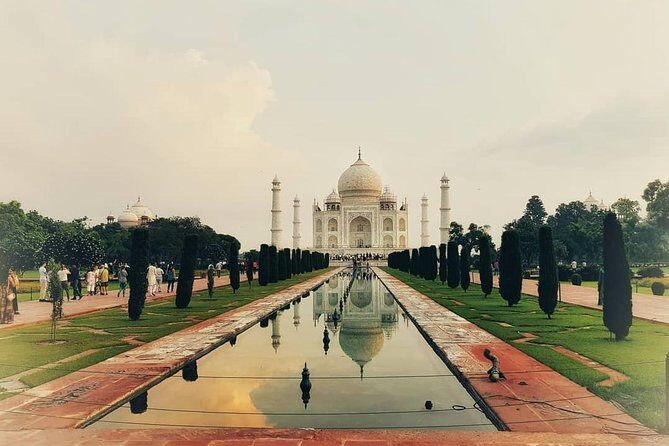
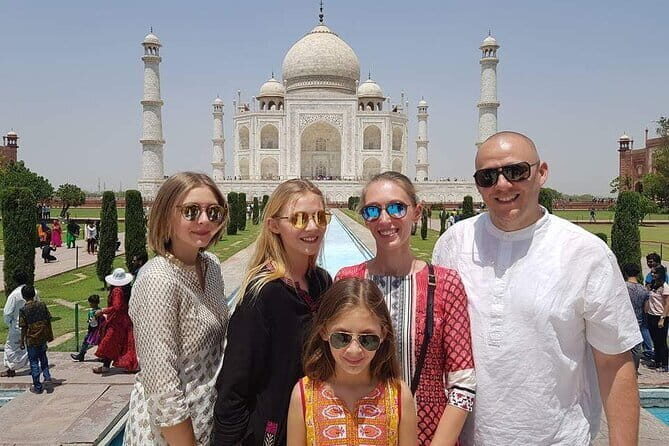
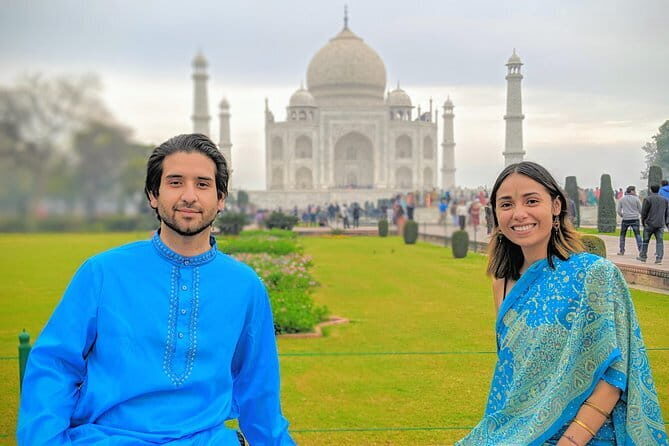
Agra’s best moment is the early start. You’ll meet your guide around 5:45 AM at the hotel lobby, then head out for the Taj Mahal at sunrise. The big benefit of sunrise isn’t just the romance—it’s the light. The tour description calls out that Taj Mahal hues shift through the day, with a pink shade at sunrise, and that’s exactly the kind of lighting that makes photos look less flat.
You’ll spend about two hours at the Taj Mahal itself. After that, you’ll return to the hotel to freshen up and have breakfast, then check out and drive to Agra Fort. This is a fortress-city in red sandstone built by Emperor Akbar, often described as a walled city and tied closely to the Mughal period.
A one-hour visit at Agra Fort is enough to understand the scale, soak up the architecture, and still keep you moving toward the next city—Jaipur. The trade-off is that you won’t cover every corner. If you’re a serious fort person, you may wish for more time, but for most people the pacing works.
Why the Taj Mahal sunrise stop is worth planning around
Sunrise requires discipline. The reward is better than “being early.” You’re seeing the Taj Mahal in a softer light that changes its look fast, and you’re doing it before the day gets crowded. Even if you’ve seen photos already, the real thing at that hour tends to feel more personal because the day hasn’t fully kicked in.
The tour’s timing also sets the tone for the day: once you’ve done the main event at the start, everything else feels lighter.





Day 3 Jaipur: Forts, palaces, and the geometry of Jantar Mantar
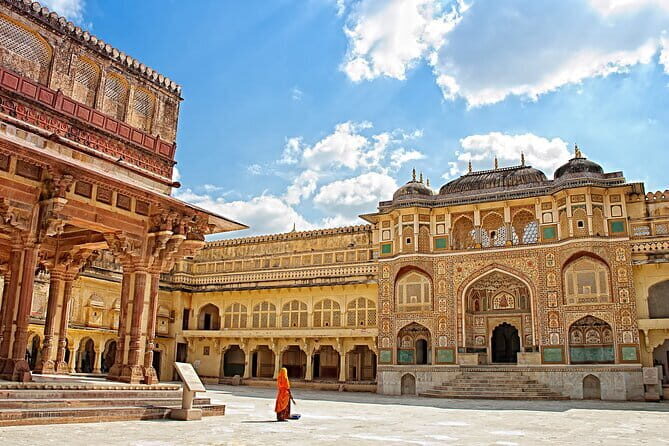
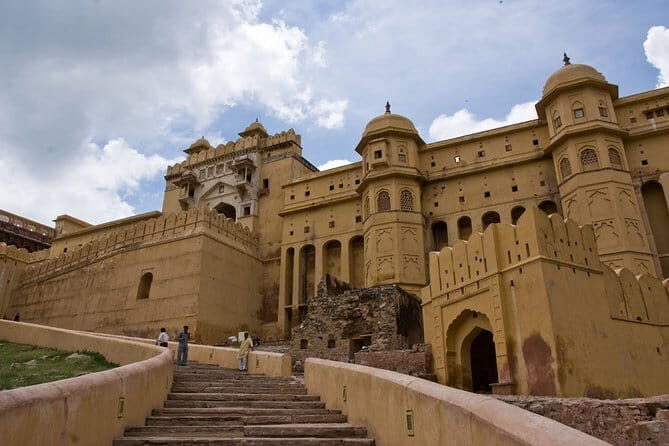
Jaipur is where your trip shifts from Mughal grand architecture into Rajput splendor and desert-city color. After breakfast, you’ll meet your guide and start with Jaipur Fort, a Rajput fort complex rising from rocky ground. The visit includes time to see the palace complex built from sandstone and white marble—an impressive mix of defensive and royal life.
From there, you’ll get a photo stop at Jal Mahal, the Water Palace on Man Sagar. This is not a long “tour,” but it’s a useful break because it shows you Jaipur’s skyline feel and how water features connect to the city’s aesthetics.
Next is the City Palace of Jaipur, the royal family’s residence in the old city. What I like about this stop is that you’re not only looking at buildings—you’re looking at courtyards, gardens, and a blend of Rajasthani and Mughal architecture. It gives you a fuller sense of how royal life was organized.
You’ll also do Hawa Mahal as a photo stop. The “Palace of Winds” rises in a honeycombed five-story pink facade designed so royal women could observe street processions. Even from outside, it’s a landmark that instantly anchors Jaipur in your mind.
Then comes Jantar Mantar, a UNESCO World Heritage observatory of curving geometric forms built to track stars and planets. You’ll have about 40 minutes here, which is enough to appreciate the design logic without turning it into a science marathon.
Practical tip: Jaipur can feel hot and bright, especially if you’re moving fast between stops. Dress for sun, and plan on carrying water.
Day 4: the Delhi return day that protects your Amritsar time
Day 4 is essentially a repositioning day. After breakfast, you’ll drive back to Delhi (around 5 hours), check in, and overnight in Delhi. You’re not losing a sightseeing day here so much as protecting the tight rhythm of the rest of the trip.
This matters because it sets up your Day 5 plan: the early train to Amritsar. By the time you reach the Amritsar leg, you’re already in the right place for an efficient transfer instead of adding extra city friction.
Day 5 to Amritsar: train time saved, then Wagah Border energy
On Day 5, you’ll be transferred to Delhi railway station around 6:00 AM for the AC chair car train to Amritsar (about 6 hours). This is one of the ways the tour keeps your schedule realistic—trains move you between regions quickly and with less stress than trying to drive the full distance.
In Amritsar, you’ll meet your driver and guide, check in, then head out toward the Wagah Border ceremony. You’ll have a short window to freshen up before the experience, and then you’ll spend about an hour at Wagah.
The Wagah ceremony is described as a daily high-energy flag-lowering event between India and Pakistan, performed by the Border Security Force (BSF) and Pakistan Rangers. If you’re expecting a quiet, formal moment, you might be surprised. This is more about intensity and spectacle than subtle museum history—and that can be exactly what you want after days of forts and temples.
Day 6 in Amritsar: Golden Temple, Jallianwala Bagh, then the ride back
Your final full day in Amritsar is built around two kinds of remembering: welcome and mourning.
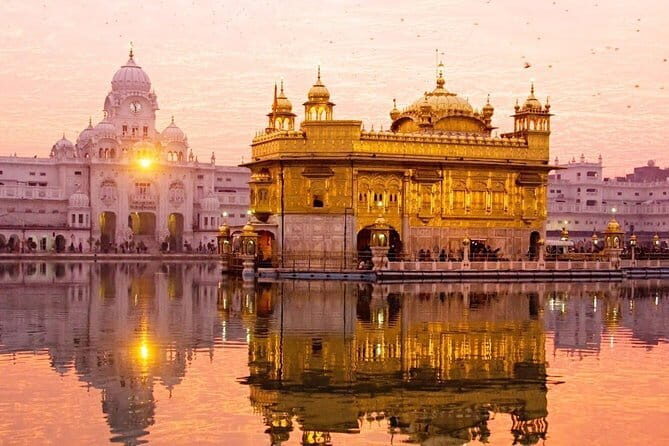
First up is the Golden Temple (Sri Harmandir Sahib) at around 8:00 AM. You’ll spend about two hours here, with time for the gold-plated architecture, the holy Amrit Sarovar (Pool of Nectar), and the langar community kitchen. The tour notes that the langar serves meals to thousands daily and reflects Sikh principles of selfless service and inclusivity.
This stop is powerful because it’s not just sightseeing. You’re stepping into an active religious space. Even if you’re not Sikh, you’ll feel the rhythm of community life because the kitchen isn’t a staged exhibit—it’s functioning all the time.
Next you’ll visit Jallianwala Bagh, the memorial site for the tragic massacre in 1919. You’ll have about 45 minutes. It’s included because it adds essential context to India’s independence story and to the site’s continuing meaning.
In the evening, you’ll drive to the Amritsar railway station for the AC chair car train back to Delhi, around 6 hours. The tour also includes a complimentary dinner aboard the train, which is a nice touch because it saves you from hunting for food right after a long day.
Hotels, guides, and the value of being handled for you
This tour includes hotel accommodation in the 3/4/5-star range you choose, plus government-approved tour guides in each city. That’s not just a nice-to-have. Good guides help you prioritize, explain what you’re seeing, and keep you from wasting time in places that look impressive but don’t connect to your day.
One highlight from past guests is the guidance style. In reviews, guides like Sanjay are praised for being generous and kind, and for recommending great places to eat and visit so the route feels complete rather than checklist-like. Another review mentions organizer Sonia and the team’s responsiveness before arrival. That matters because for many people, India travel is as much about confidence as it is about landmarks.
You’ll also have an air-conditioned vehicle with a professional chauffeur for sightseeing days. That’s a quality-of-life factor in North India, where road time can be long.
Price and logistics: is $629 good value for this route?
At $629 per person for a roughly 6-day route, you’re paying for a lot of “invisible work.” The included items are meaningful: hotel nights, city guides, AC chair car trains (Delhi ↔ Amritsar), airport/hotel pickup and drop, transfers in an air-conditioned vehicle, and five breakfasts.
What’s not included is just as important for your budget. Monument entrances aren’t included (and that includes the Taj Mahal and many others in the descriptions), plus lunch and most dinners are also on you. There’s one exception: a complimentary dinner aboard the return train.
So the value question is really this: if you’d otherwise spend your time piecing together trains, private guides, and hotel stays, this package usually wins. If you’re comfortable planning and you don’t mind navigating on your own, you might save money—but you’d likely spend more time managing details.
For a first-time Golden Triangle visitor, the biggest win is time and confidence.
Who this tour fits best (and who might want a different pace)
This tour is a solid match if you:
- Want a first-trip Golden Triangle with a built-in Amritsar ending
- Prefer guided context over self-planning
- Like seeing major landmarks even if you can’t go deep everywhere
- Want efficient AC train travel instead of long drives
It may not suit you if you:
- Want lots of free hours in each city
- Hate early starts (sunrise Taj and morning train days are key)
- Expect entrance fees and full meals to be included (they aren’t)
If you’re a solo traveler, this style can feel comforting because you’re not carrying the whole planning load. And since it’s described as private for your group, you’re not stuck sharing your day with strangers’ pacing.
Should you book the 6 Day Golden Triangle with Amritsar tour?
If you want a guided, efficient route that hits the big emotional moments—sunrise Taj Mahal, the Golden Temple langar, Wagah ceremony, and Jallianwala Bagh—then yes, this is worth serious consideration. The trip’s structure protects your time with trains and transfers, and the inclusion of city guides is where many “value” tours fall short.
Before you book, do two reality checks. First, make sure you can handle early mornings and long travel days. Second, budget for monument entrances and meals since they’re not included, even though many of the key experiences are.
If that sounds doable, you’ll likely come away with the feeling that you didn’t just “see India”—you understood it a little more, city by city.
FAQ
FAQ
What cities are included in this 6-day tour?
The tour covers Delhi, Agra, Jaipur, and Amritsar, with transfers between each city and guided sightseeing in the main stops.
How long is the tour?
It runs for about 6 days.
Is pickup from the airport or hotel included?
Yes. The tour includes hotel airport pick up and drop, plus driver pickup to start the Delhi day.
Which train routes are included?
You get AC chair car train tickets from Delhi to Amritsar and from Amritsar to Delhi.
Is the Taj Mahal included, and when do you visit it?
Yes. You visit the Taj Mahal at sunrise (around 5:45 AM in Agra), with time to see it in morning light.
Do I need to pay for monument entrances?
Monument entrances are not included, and the tour lists several sites as admission ticket not included.
What’s included in Amritsar besides the Golden Temple?
You’ll also visit Jallianwala Bagh and attend the Wagah Border ceremony on a separate day.
What meals are included?
Breakfast is included for five days. There is also a complimentary dinner aboard the return train from Amritsar to Delhi.