REVIEW · NEW DELHI
From Delhi: 4 Day Golden Triangle and Tiger Safari Private Tour
Book on Viator →Operated by Lumina Holidays · Bookable on Viator
Four days, three cities, and a tiger chance. This private tour strings together Delhi, Agra, and Jaipur with a morning Ranthambhore safari in one smooth, guided loop. I especially like the sunrise Taj Mahal focus and the fact that you’re not left to figure things out alone.
Two more things I like: pickup and drop in Delhi, plus a professional guide who can switch languages to match your group. One drawback to plan for is that some monument entry fees are not included unless you choose the option that covers them, so you may need extra cash at gates (and you also need to watch closure days like Taj Mahal on Friday).
In practice, the trip feels easiest when you treat it like a well-run highlights tour: start early, wear the right shoes, and go with the flow. If your guide is one of the names people often mention like Rahil Khan, Azhar, or Anil Sharma, you’ll get more than basic facts—you’ll get helpful, on-the-ground context while you move between places.
In This Review
- Key things that make this tour worth your time
- How the Delhi–Agra–Jaipur loop actually feels in 4 days
- Delhi monuments in one long day: Red Fort, Jama Masjid, Humayun’s Tomb
- Qutub Minar and the Delhi landmarks that break up the day
- Lotus Temple and Akshardham: a calm reset (and a closure-day warning)
- Agra at sunrise: Taj Mahal without the midday rush
- Agra Fort and Itimad-ud-Daula: red sandstone and the Baby Taj effect
- Ranthambhore tiger safari: shared jeeps, big expectations, real limits
- Jaipur palaces and viewpoints: Amer Fort to Hawa Mahal
- Car rides that matter: AC transport, timing, and less decision fatigue
- Guides and the small details that make it feel professional
- Price and value check for $259 per person
- Who should book this tour, and who might want a different pace
- Should you book this Golden Triangle and Tiger Safari Private Tour?
- FAQ
- FAQ
- How long is the Delhi, Agra, Jaipur, and Ranthambhore tour?
- What is the price per person?
- Is this a private tour?
- Are monument entry tickets included?
- Is the Taj Mahal included, and is it closed on any day?
- What happens if Lotus Temple and Akshardham are closed?
- Do I need anything for entry at monuments?
Key things that make this tour worth your time

- Private group only: you’re not sharing your day with strangers.
- Sunrise Taj Mahal timing: a quieter start for one of India’s most visited monuments.
- AC car plus door-to-door pickup/drop in Delhi for a low-stress start.
- Shared jeep or canter safari option in Ranthambhore, run through the national park system.
- Multilingual guide with live interpretation and site-by-site explanations.
- Closure-aware swaps on certain weekdays (Lotus Temple/Akshardham, and Taj Mahal on Friday).
How the Delhi–Agra–Jaipur loop actually feels in 4 days
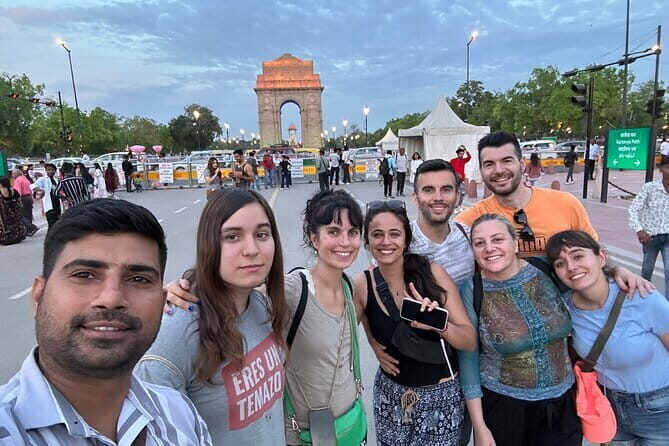
This is a classic Golden Triangle route, but with a big twist: you add Ranthambhore so the trip isn’t just buildings and photos. The pacing is fast, yet it’s built around a simple rhythm: a heavy sightseeing day in each city, then you move on by private car.
The tour is listed as private, meaning it’s only your group. That matters because you can keep your pace realistic—questions, bathroom breaks, and timing around monument checks—without the usual “everyone split up” chaos.
You’re also covered for the stuff people forget to plan: parking fees, tolls, fuel, and interstate taxes are included. That doesn’t sound exciting, but it prevents that annoying moment where you’re asked to pay for something you assumed was handled.
You can also read our reviews of more private tours in New Delhi


Delhi monuments in one long day: Red Fort, Jama Masjid, Humayun’s Tomb
Day 1 is a full sweep through central Delhi: Red Fort, Jama Masjid, Humayun’s Tomb, plus several major landmarks after lunch. You’ll see UNESCO-listed Mughal-era architecture up close, and you’ll notice a pattern: huge courtyards, grand symmetry, and lots of people praying or photographing, depending on the site.
Here’s what to expect and how to make it easier:
- Red Fort: you’ll spend about an hour here. Since entry is marked as not included by default, confirm whether your package option covers the ticket before you go.
- Jama Masjid: a very large mosque complex built under Shah Jahan. It’s a strong stop if you want to understand Delhi beyond the usual tourist photos.
- Humayun’s Tomb: about an hour, and this is a great “bridge” between old empire styles and later Mughal design.
A practical note: most entrances at sacred places involve shoe rules. You should wear comfortable shoes because you’ll be asked to remove them before entering.
Qutub Minar and the Delhi landmarks that break up the day
After the Mughal monuments, Day 1 adds a mix of iconic Delhi landmarks: Qutub Minar (the tall brick minaret), Rashtrapati Bhavan (President House exterior/area), and India Gate (a war memorial). You’ll also pass through the political center area around Parliament House, even if you’re not entering.
What I like about this mix is that it gives you two kinds of context:
1) the historical Delhi of the Mughal period, and
2) the modern Delhi shaped around British-era planning and India’s capital role.
Also, India Gate is marked as admission free, so it’s an easy win for time and photos if your legs are getting heavy.
Lotus Temple and Akshardham: a calm reset (and a closure-day warning)

Day 1 includes a serene change of pace with Lotus Temple. It’s listed as free and usually works well when your morning is already packed with intense, historic sites. The design is distinctive: a quiet building that almost feels like a pause button.
Then the tour goes to Swaminarayan Akshardham, which is not included by default for entry. The big thing you need to know is timing: Akshardham and Lotus Temple remain closed on Monday. On Monday, the plan switches to Iskcon Temple and Shri KalkaJi Temple instead.
So if your travel dates fall on a Monday, don’t panic. It’s built into the schedule logic—you’ll just see different temples rather than the two original stops.
Agra at sunrise: Taj Mahal without the midday rush

Day 2 starts with the highlight of Agra: Taj Mahal at sunrise. You’re given a long window (about three hours) which is exactly what you want for a monument like this. Sunrise also helps because light changes fast, crowds can be lighter, and you have a better chance of getting clear views without feeling like you’re in a photo queue.
Two key things to keep in mind:
- Taj Mahal remains closed on Friday. If your trip includes a Friday, the Taj experience can’t happen the normal way.
- Tickets are marked not included by default, so double-check whether your selected package covers entry fees.
Why sunrise is worth caring about: you’re not just seeing the building—you’re seeing how the color shifts across the white marble as the day warms up. A good guide will point out details you’ll miss if you just wander with your phone.
A few more New Delhi tours and experiences worth a look






Agra Fort and Itimad-ud-Daula: red sandstone and the Baby Taj effect

After the Taj, you get Agra Fort and Itmad-ud-Daula on the same side of town, which helps reduce travel time. Agra Fort is marked as about two hours and tickets are not included by default.
This is where the tour becomes more satisfying than a simple checklist:
- Agra Fort adds the power-and-security story. It’s built from red sandstone and gives a different mood than the Taj’s calm romance.
- Itmad-ud-Daula, often nicknamed the Baby Taj, is about an hour. Even if you’ve heard comparisons, it’s still worth it because it gives you another angle on marble craftsmanship along the Yamuna.
If you’re the kind of person who likes to understand how styles evolved, these stops help you read the city like a timeline instead of separate attractions.
Ranthambhore tiger safari: shared jeeps, big expectations, real limits

Day 3 is where the tour earns its name: a morning tiger safari in Ranthambhore National Park. Your safari is described as shared on a jeep or canter if you choose that option.
Here’s the honest way to think about that:
- Shared vehicles are about efficiency and access.
- You also lose some control over exact viewing spots.
That said, the morning timing is a smart choice in general. You get the best chance for active wildlife behavior, and you still have energy left afterward.
You’ll also visit Ranthambhore Fort (listed around one hour). This gives you a cultural and historical “breather” after the safari, with views over the park area from an elevated position.
Jaipur palaces and viewpoints: Amer Fort to Hawa Mahal

By Day 3 afternoon, you’re in Jaipur. Day 4 then turns into a full Royal Rajasthan circuit: Amer Fort, Jal Mahal, City Palace, Hawa Mahal, and Jantar Mantar.
Amer Fort is a top pick because it’s a UNESCO-listed Rajput stronghold. Expect about two hours, and entry is not included by default unless your option covers it. This is the place where you’ll feel how Jaipur’s power came together—fortifications, courtyards, and palace spaces.
Then you get Jal Mahal, a palace set on the lake. The tour budget gives you about 30 minutes. It’s a quick stop, so the trick is to arrive with an idea of what you want: a lakeside photo angle, a relaxed pause, or just a moment to shift gears.
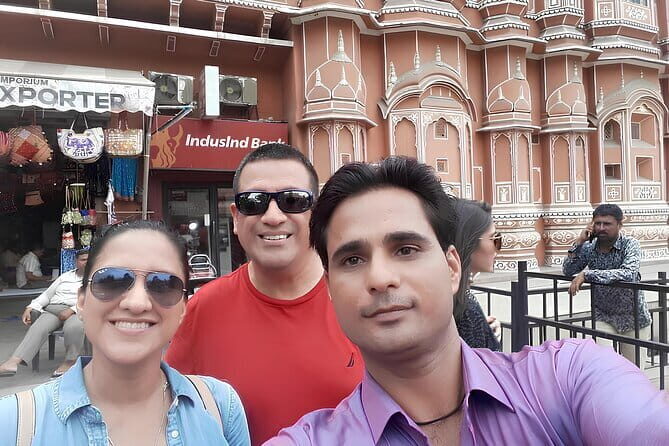
Next comes City Palace (around an hour) and Hawa Mahal (about 30 minutes). Hawa Mahal is short and visually striking; it’s the kind of stop that works best when you don’t rush—look at how the facade is designed for light and viewing.
Finally, Jantar Mantar gives you the science side of Jaipur’s royal culture. You’ll spend about 45 minutes, and it’s one of those places where a guide’s explanations can make the shapes feel purposeful instead of random stonework.
Car rides that matter: AC transport, timing, and less decision fatigue
This tour uses private AC car or tempo traveler for sightseeing movement, plus pickup and drop in Delhi from your airport or accommodation. You also have parking, tolls, fuel, and taxes handled, which keeps your day from turning into a series of small payments and arguments.
The ride times listed are helpful for planning your energy:
- Delhi to Agra: about 3 hours 30 minutes
- Agra to Ranthambhore: about 3 hours
- Ranthambhore to Jaipur: about 2 hours
- Jaipur back to Delhi: about 3 hours 30 minutes
Those are real travel blocks. If you hate long road segments, this trip might feel rushed. If you’re okay with “move smart, see a lot,” it works.
Guides and the small details that make it feel professional
This tour includes a live tour guide with foreign language options. That’s a big deal on monuments where context matters—especially the Taj, Agra Fort, and the Mughal-era sites in Delhi.
From the kind of feedback this company receives, names like Rahil Khan and Azhar come up for Taj Mahal and Agra guidance. Anil Sharma is also specifically mentioned for hospitality and service. You can’t guarantee the exact person, but it signals that the guides are a real part of the product, not an afterthought.
Two other small details you’ll be glad are included:
- Mobile tickets are part of the package, which reduces paper hassle.
- You need a valid photo ID for monument entry checks, so bring it even if you hate carrying documents.
Price and value check for $259 per person
At $259 per person for a 4-day private tour, the main value isn’t just the route—it’s what you avoid. You’re paying for organized movement between cities, a private guide, AC transport, and (depending on your selected option) entry fees and the safari itself.
Here’s where value depends on your choices:
- Entry fees for monuments are listed as included only if you choose that option.
- The tiger safari is also listed as shared jeep or canter if chosen.
So before you lock it in, confirm what you selected. If your package already covers monument tickets and the safari vehicle, you’re looking at a very straightforward deal for a tight schedule. If not, you’ll likely pay some fees on the spot, which can add up fast during a Golden Triangle sprint.
Also remember the tour includes hotel stays if you choose 3 or 5 star accommodation with breakfast. That’s a real cost you avoid planning yourself, especially across three cities.
Who should book this tour, and who might want a different pace
This works best for:
- First-time visitors who want the Golden Triangle highlights done with less confusion
- Families and friends who want private time but still want expert help
- People who care about getting the Taj at sunrise and still want a safari day
This may be less ideal if you:
- Want lots of free hours for independent exploration in each city
- Dislike early starts and road travel blocks
- Prefer a fully flexible itinerary with minimal structure
For most people, the best way to enjoy it is to treat it like a “guided sprint” through India’s icons, then use your time well at each stop instead of trying to do everything slowly.
Should you book this Golden Triangle and Tiger Safari Private Tour?
If your must-dos include Delhi’s Mughal monuments, the Taj at sunrise, Jaipur’s big palace sights, and a Ranthambhore safari, this is a sensible pick. The private guide + AC transport combination is what makes the schedule workable, and the safari add-on means you get more than temples and forts.
Book it if you’re comfortable with a tight pace and you can handle monument ticket checks and shoe rules. If you’re planning travel on a Friday (Taj closure) or a Monday (Lotus/Akshardham closure), plan around those date realities before you expect the original temple lineup.
FAQ
FAQ
How long is the Delhi, Agra, Jaipur, and Ranthambhore tour?
The tour runs for about 4 days.
What is the price per person?
The price is $259.00 per person.
Is this a private tour?
Yes. It is described as a private tour, with only your group participating.
Are monument entry tickets included?
Entry fees for monuments are included only if you choose that option. Some stops are marked as admission not included, so you may need to pay at the gate depending on your selection.
Is the Taj Mahal included, and is it closed on any day?
The tour includes Taj Mahal at sunrise as part of the plan. Taj Mahal remains closed on Friday.
What happens if Lotus Temple and Akshardham are closed?
Lotus Temple and Akshardham remain closed on Monday, and you’ll be taken to Iskcon Temple and Shri KalkaJi Temple instead.
Do I need anything for entry at monuments?
You should bring a valid photo ID for monument entry checks. Also, wear comfortable shoes because you may have to remove them before entering temple or sacred places.