REVIEW · NEW DELHI
Private Golden Triangle Tour 3 Night/4 Days – All Inclusive
Book on Viator →Operated by Driver India Private Tours · Bookable on Viator
Golden Triangle in four days, minus the stress. This private 3-night/4-day tour turns Delhi, Agra, and Jaipur into a smooth, guided loop with a pickup option and an air-conditioned car doing the heavy lifting. Two things I really like: the way it groups Mughal and Rajputana sights into one logical route, and how the guiding is practical rather than a nonstop lecture.
One thing to consider: you are on the move, and some stops are brief (like 15 minutes at Jal Mahal and Hawa Mahal). Also, accommodation is not included, so the $175 price is for the tour and transport—not your hotel.
In This Review
- Key takeaways before you go
- A private Golden Triangle route where the car does the work
- Delhi’s Mughal landmarks and Old Delhi rides you actually feel
- Taj Mahal day: the classic must-see plus Fatehpur Sikri and a stepwell
- Jaipur’s fort-to-palace flow: Amber, City Palace, Jantar Mantar
- Short stops that still matter: using the 15–30 minute windows well
- Value check: what $175 includes (and what it does not)
- Comfort and pacing on road days: WiFi, water, and an air-conditioned car
- Who this Golden Triangle tour suits best
- Should you book this 3-night/4-day Golden Triangle?
- FAQ
- FAQ
- Is accommodation included in the Golden Triangle tour price?
- What’s included in the tour besides sightseeing tickets?
- Are entrance tickets to monuments included?
- Is this tour private or shared with other groups?
- How long is the tour, and where does it end?
- What is the cancellation window?
Key takeaways before you go
- Private vehicle, not public transit: You get a safe, comfortable air-conditioned car for the drives and city excursions.
- WiFi and bottled water on board: Small comfort perks that matter on long road days.
- Most admission tickets are included: Many major sites list admission included, while at least one stop is free.
- Photo-friendly guiding style: Guides like Vikram (Agra) and Raj (Jaipur) are praised for giving just enough context and helping with photos.
- Time is tight at some monuments: Quick hits mean you should care about picking what you want most.
A private Golden Triangle route where the car does the work
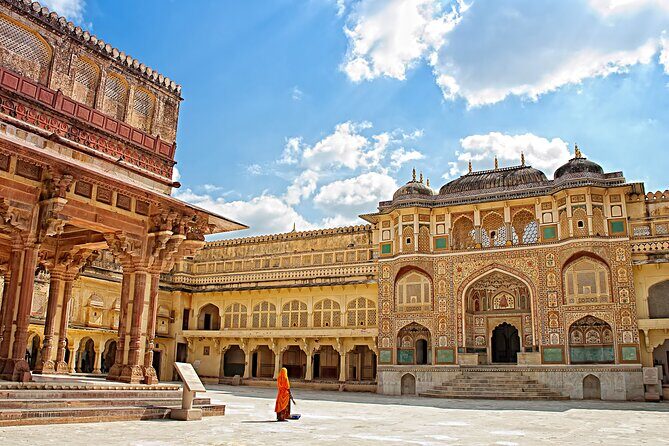
The big idea here is simple: you get a private, all-inclusive style Golden Triangle loop—Delhi → Agra → Jaipur → back to Delhi—with transportation handled and site access baked in for most stops. The tour also frames the region through Mughal and Rajputana phases, which helps the three-city sweep feel connected instead of random driving.
What I like most is that the tour isn’t asking you to “figure it out.” You have a driver and on-the-ground guidance while you move from monument to monument. You also get comfort basics that keep your day from feeling like pure logistics: WiFi on board, mineral water bottles in the car, and all fees and taxes covered for the included parts.
The trade-off is pacing. A 4-day loop can’t spend an hour at every single place you see on a postcard. Some scheduled visits are clearly quick—think 15 minutes here, 30 minutes there—so it works best if you’re happy collecting highlights and learning the story behind them, without expecting deep time at each stop.
You can also read our reviews of more private tours in New Delhi


Delhi’s Mughal landmarks and Old Delhi rides you actually feel
Day 1 starts by anchoring you in Old Delhi and the Mughal era. You begin at Jama Masjid, built by Mughal Emperor Shah Jahan during 1650–1656. It’s described as the largest mosque in India and sits on a hill near the Red Fort area—so even before you get inside, you’re already in the right setting.
Next you head to Chandni Chowk (Pasar Chandni Chowk), where the tour includes a ride or walk through Old Delhi’s “crazy markets.” A fun detail: the rickshaws have a fold-able soft top and can carry two persons at a time, aiming for comfort rather than pure jostling. This is one of those stops where the value isn’t just the building—it’s the feeling of being in the heart of the city.
Then there’s Swaminarayan Akshardham, a Hindu temple and spiritual-cultural campus near the border with Noida. You get about 50 minutes there, with admission included. It’s a good contrast to the older Mughal setting, and it helps break the day into different “modes” rather than repeating the same kind of sight.
Finally, Day 1 includes Mehtab Bagh, a char bagh garden complex north of the Taj Mahal complex, across the Yamuna River in the flood plains. The listing notes it’s a square-shaped garden area. I like this stop because it’s not just the Taj front-and-center. It’s more about setting up the geography of the Taj area—how the Yamuna and the garden layout create that famous “view from across” feeling.
Practical note: Delhi is a big city, and you’ll be transferring between distinct zones. If you prefer one neighborhood per day, this first day may feel like multiple worlds in one bundle.
Taj Mahal day: the classic must-see plus Fatehpur Sikri and a stepwell
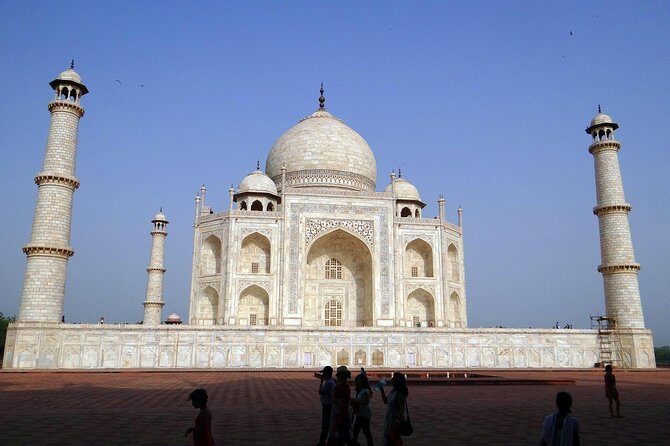
Day 2 is built around the headline monument: the Taj Mahal. It’s the Islamic ivory-white marble mausoleum on the right bank of the Yamuna, commissioned in 1632 by Emperor Shah Jahan to house his tomb. You get about 2 hours here with admission included, which is enough time to see it properly without racing.
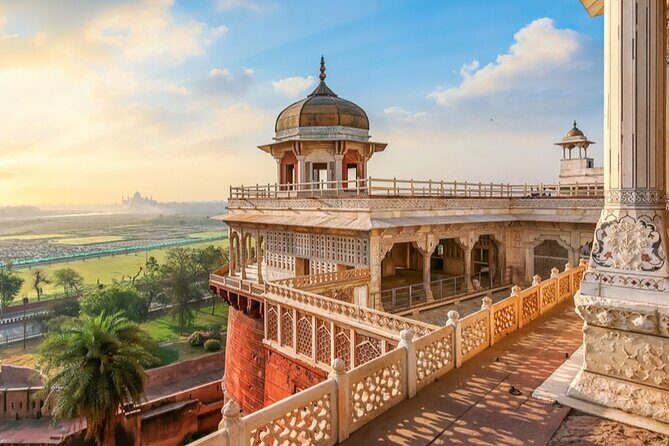
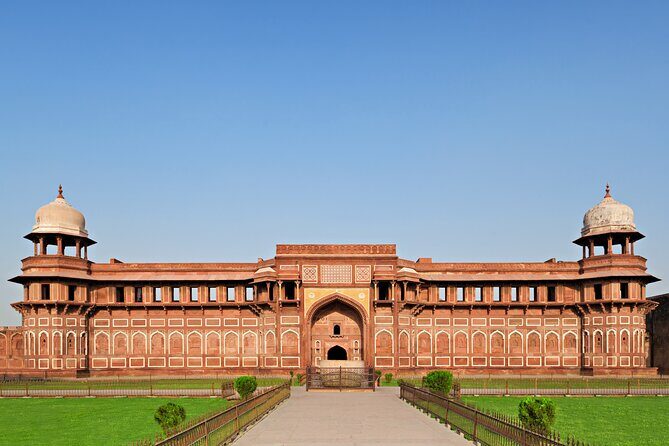
After that, you visit Agra Fort (the stop references the Agra Fort railway station, but the included description is about the fort itself). The listing says the fort was built during 1565–1573 for Mughal Emperor Akbar, and it served as the main residence of the Sikarwar clan of Rajputs until the Mughals occupied it.
Then comes Fatehpur Sikri, described as a small city founded by a 16th-century Mughal emperor, with red sandstone buildings around its center and the Buland Darwaza gate at the entrance to Jama Masjid. The tour schedules about 1 hour here and lists it as free admission in the schedule.
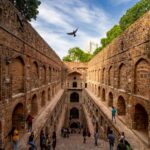
To round the day, you stop at Chand Baori, an ornate stepwell from the 8th & 9th centuries reached by 3,500 steps. You get about 30 minutes with admission included. This is the kind of sight that’s easy to skip if you’re only chasing the famous “one photo spot” monuments. I like adding it because stepwells are a different kind of architecture puzzle—you look at it and realize there’s real engineering and design thinking behind the sight.
A small consideration: this is a day with several major sites. If you tend to get monument-fatigue, focus your attention on one or two “must understand” places (Taj and Agra Fort, for example) and let the others be bonus context.
Jaipur’s fort-to-palace flow: Amber, City Palace, Jantar Mantar
Day 3 shifts into Rajasthan. Your first big stop is Amber Palace (Amer Fort), located in Amer, which the listing places about 11 kilometers from Jaipur. You get around 2 hours here with admission included. Amber Fort is the kind of place where time is earned: you need a bit of walking and looking to appreciate how it’s laid out, and that 2-hour window gives you breathing room.
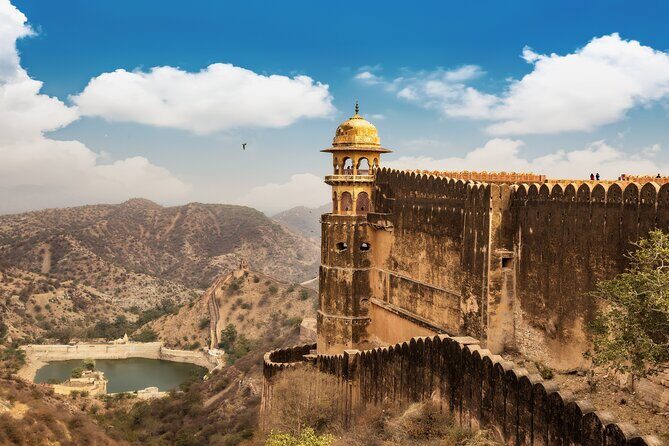
Next, you have Jal Mahal, the palace in the middle of Man Sagar Lake. The listing says it was originally constructed in 1699, with the building and lake area renovated later. Your scheduled time is short—about 15 minutes—with admission included. This is a quick photo-and-look stop, so if you love long views and slow waterfront time, you may want to linger outside the scheduled window when possible.
Then it’s on to the City Palace in Jaipur, established around the founding of Jaipur. The listing highlights Maharaja Sawai Jai Singh II moving his court to Jaipur from Amber in 1727. You get about 1 hour with admission included, which is a solid fit for palace interiors and courtyard impressions without turning it into all-day work.
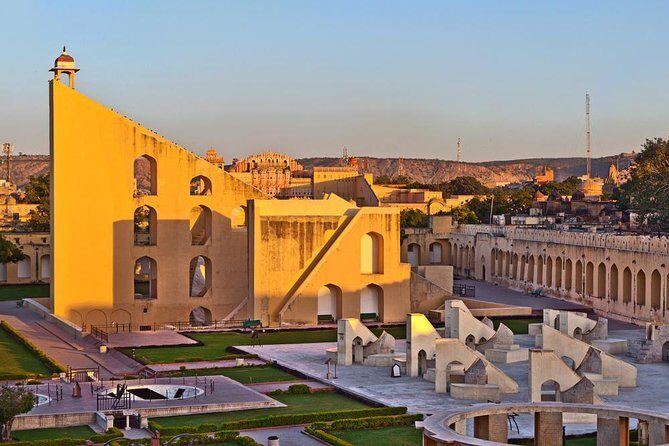
After that, you visit Jantar Mantar, the collection of 19 astronomical instruments built by Sawai Jai Singh II, completed in 1734. You get about 1 hour with admission included. I like this stop because it’s not “just another palace.” It’s science made visible, with tools designed for measuring the sky. If you’ve ever wondered how people learned astronomy before modern tech, this gives you a tactile sense of the approach.
Finally, you finish with Hawa Mahal (Palace of Breeze). The listing says it was built from red and pink sandstone and sits on the edge of the City Palace, extending to the zenana (women’s chambers). Your scheduled time is about 15 minutes with admission included—another quick hit that works well if your main goal is to capture the look and move on.
Short stops that still matter: using the 15–30 minute windows well
A pattern in this tour is quick visits: Jal Mahal (15 minutes), Hawa Mahal (15 minutes), and several 30-minute windows in Delhi and Agra. That doesn’t make them less valuable, but it does change how you should experience them.
Here’s how I’d approach it: decide what you need from each short stop. If you want a photo and a sense of where it sits in the city, 15 minutes is fine. If you’re hoping for a slow, detailed “read every wall” experience, you’ll want more time than the schedule provides.
The upside is that the short windows let you cover a lot of ground. You get a mash-up of mosque, temple campus, Mughal gardens, royal forts, palaces, a science site, and a stepwell without needing to plan separate days. For many people, that’s exactly the point of a Golden Triangle loop.
You can also read our reviews of more evening experiences in New Delhi



Value check: what $175 includes (and what it does not)
At $175 per person, the value mostly comes down to what you don’t have to arrange yourself. The tour includes:
- Pickup offered and transport in a safe, comfortable air-conditioned car
- WiFi on board and bottles of mineral water in the car
- All fees and taxes
- Admission tickets for many listed stops (and one stop noted as free)
What’s not included is just as important:
- Accommodation
- Tips, laundry, telephone bills, and beverages
- Medical and baggage insurance
So when you price it out, the real question is whether you already have hotels lined up and whether you want the admissions + driving + guiding packaged. If yes, this tour can be a good deal because it reduces planning time and avoids the risk of missing ticket access.
Also, this is a private tour/activity, meaning you’re not sharing the schedule with other groups. That usually feels calmer—especially when the day includes several sites and city transfers.
One more practical note: the schedule requires good weather. If weather is bad, the tour can be canceled and you’re offered a different date or a full refund.
Comfort and pacing on road days: WiFi, water, and an air-conditioned car
Even when the sightseeing is the headline, the in-between time is what can make or break your mood. This tour covers that with an air-conditioned car and practical comfort extras like WiFi and water bottles. It’s a simple setup, but it helps during long transfers between Delhi, Agra, and Jaipur.
You also get mobile ticket support and group discounts (useful if you’re traveling with friends). The listing notes confirmation at booking and a free-cancellation window of up to 24 hours before the start time, with full refund if canceled in that window.
Finally, the tour is designed for typical participation: the info says “most travelers can participate,” and it’s noted to be near public transportation. That doesn’t mean you’ll avoid walking, but it signals this is meant to be workable for a wide range of people.
Who this Golden Triangle tour suits best
This works especially well if you:
- Want a private guided loop across Delhi, Agra, and Jaipur
- Like having transport plus most site admissions handled
- Prefer “highlights with explanations” over fully independent planning
- Are okay with some stops being short (15–30 minutes) while still seeing the main monuments
It might not be the best fit if you:
- Hate tight schedules and want long, unhurried time at every site
- Want accommodation handled for you by the tour price (it’s not included here)
- Are sensitive to weather-driven changes, since the tour requires good weather
Should you book this 3-night/4-day Golden Triangle?
If you’re the type who wants to focus on seeing and understanding—rather than coordinating cars, tickets, and timing—this is a strong way to do the Golden Triangle. The best part is the combination: private transport, guided stops, and mostly included admissions, with comfort perks like WiFi and bottled water.
Book it if your hotel is already planned and you’re comfortable with a fast but well-structured tour pace. Don’t book it if you know you’ll resent short visits and want a slower “one city at a time” approach.
FAQ
FAQ
Is accommodation included in the Golden Triangle tour price?
No. Accommodation is specifically not included. You’ll need to arrange your own hotel for the 3 nights.
What’s included in the tour besides sightseeing tickets?
You get pickup offered, an air-conditioned car for drives and city excursions, WiFi on board, bottled mineral water available in the car, and all fees and taxes.
Are entrance tickets to monuments included?
Most admission tickets are included for the listed stops. One stop, Fatehpur Sikri, is marked as free in the schedule.
Is this tour private or shared with other groups?
This is a private tour/activity, so only your group will participate.
How long is the tour, and where does it end?
It’s listed as about 4 days. The final day includes a drive back to New Delhi and drop-off in Delhi.
What is the cancellation window?
You can cancel for a full refund up to 24 hours before the experience’s start time. If you cancel less than 24 hours before, the amount paid is not refunded.