REVIEW · NEW DELHI
14 Days Golden Triangle with Wildlife Safari & Heritage Rajasthan
Book on Viator →Operated by Golden Triangle Tours India · Bookable on Viator
Fourteen days across Rajasthan, with tiger odds. I love the private door-to-door, air-conditioned transfers that keep your days from turning into logistics puzzles, and I love that Ranthambore is built in with both morning and evening safaris. The only real catch is how full the schedule is, plus monument entry fees are mostly not included.
This trip also has smart time-savers: you get the battery bus ride to and from the Taj Mahal parking area, and if you choose the hotel option you’ll have daily breakfast to fuel early starts. If you’re the type who hates long drives, make sure you’re okay with the big road legs (Delhi–Agra, then later Udaipur, Jodhpur, and Pushkar).
In This Review
- Key moments that shape the whole experience
- Price and value: what $835.72 buys you (and what it doesn’t)
- Delhi start: temples, tombs, and markets on day one and two
- Agra: Taj Mahal sunrise, then the other “must-sees”
- Fatehpur Sikri, Chand Baori, and the long ride into Ranthambore
- Ranthambore safaris: two goes at tiger country
- Jaipur beyond the Golden Triangle buzz: temples, forts, and a second safari
- Udaipur, Jodhpur, Pushkar, Mandawa: Rajasthan’s quieter, human side
- Udaipur: lake views and old-palace atmosphere
- Jodhpur: forts, museums, and a village day
- Pushkar: Brahma Temple and riverside ritual energy
- Mandawa: painted havelis and a slower finish
- Tickets, entries, and the Taj Mahal battery bus detail you should plan for
- Getting around in a private vehicle: what the group size change means
- Who this tour suits best (and who might want a lighter plan)
- Should you book this 14-day Golden Triangle with wildlife safari route?
- FAQ
- What’s included for transport on this tour?
- Are hotels included in the price?
- Is breakfast included?
- Are monument entrance fees included?
- Does the Taj Mahal visit include special transportation?
- Is wildlife safari included?
- What kind of rooms are provided?
- Can I cancel for a full refund?
Key moments that shape the whole experience
- Two safari days, not just one: Ranthambore in the morning and evening, plus Jhalana Safari Park in Jaipur
- Taj Mahal at sunrise, plus guided interior time: you’re not just taking photos from outside
- Stepwell sightings across the route: Agrasen ki Baoli, Chand Baori, and Panna Meena ka Kund
- Golden Triangle, extended: Udaipur, Jodhpur, Pushkar, and Mandawa turn it into real Rajasthan depth
- Private guide throughout: local perspectives at the places that matter most
- Food plan that’s simple: breakfast included with the hotel option, while lunches/dinners stay flexible
Price and value: what $835.72 buys you (and what it doesn’t)

At $835.72 per person, the value depends on one decision: are you booking the option that includes hotels? With the hotel option, you get 13 nights of accommodation plus daily breakfast and a private air-conditioned vehicle with a driver. That can add up fast in Rajasthan, where transfers between cities take real time.
You’re also paying for a very specific kind of convenience: a private tour means only your group rides together in the vehicle size that matches your headcount (4-seater sedan for 1–2 people, 6-seater wagon for 3–4, 10-seater minivan for 5–10). Combine that with hotel/airport pickup and drop-off, and you lose a lot of the usual “where’s the bus, who has the tickets” stress.
What’s not in the core price is equally important. Monument entrance fees are not included in the standard inclusions list. Some stops are free, but several of the big-name sights aren’t. The safari entries for Ranthambore (canter/jeep) and Jhalana Safari Park are included, which helps a lot, because safaris are a major line item.
So, think of this as a “guided route with smart transport and safari access,” not a fully packaged entry-fee ride.
You can also read our reviews of more historical tours in New Delhi



Delhi start: temples, tombs, and markets on day one and two
You begin in New Delhi with an airport welcome at Terminal 3, then you’re transferred straight to your hotel. If you like arriving and getting moving immediately, this format is great.
On day one, you hit Gurdwara Bangla Sahib and then Agrasen ki Baoli. I like these because they don’t feel like cookie-cutter tourist stops. The gurdwara experience gives you a human, everyday side of Delhi’s religious life, while Agrasen ki Baoli is a protected stepwell site that rewards even a short visit. Stepwells are one of those things that look almost simple until you realize how engineered and communal they were.
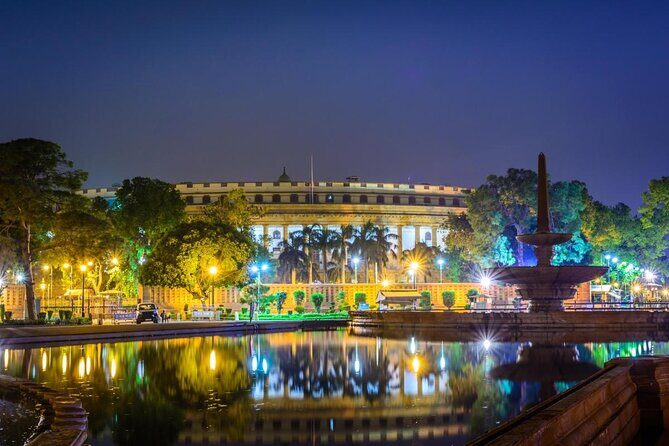
Day two leans into “Delhi’s greatest hits” with a mix of monumental architecture and street energy. You’ll see Qutub Minar (the UNESCO tower), the Lotus Temple (free and open to everyone), India Gate, Parliament House (Sansad Bhavan), Jama Masjid, Humayun’s Tomb, and then Chandni Chowk. I especially like the pacing here: temples and tombs first, then a market zone for your senses to catch up.
One practical consideration: Delhi days can run long because you’re moving through multiple neighborhoods. Wear shoes you can walk in, and don’t plan anything tight for the evening unless you’re used to Indian-city traffic rhythm.
Agra: Taj Mahal sunrise, then the other “must-sees”

Agra is where the itinerary gets serious. You drive roughly 222 km in about 4 hours, then check in, and the rest of the day is focused on major Mughal-era sites.
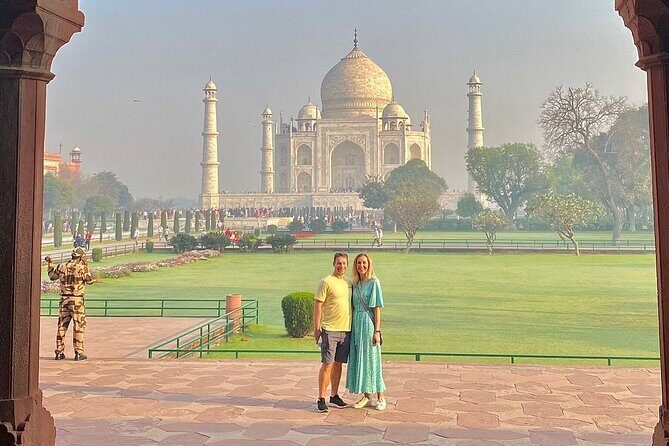
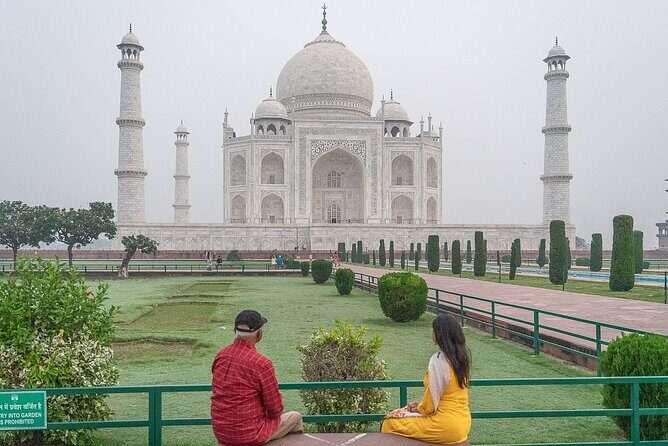
There are two Taj Mahal moments built in. On day three, you visit it later in the circuit, paired with other Agra anchors like Agra Fort, Itmad-ud-Daula (often called the Baby Taj), and Mehtab Bagh for a sunset-side view option. On day four, you go back for sunrise Taj Mahal and include a guided tour inside for about two hours.
That double Taj plan is smart because it gives you different light and different photo opportunities—without you needing to guess or rearrange your own timing. Sunrise also usually means cooler air and fewer crowds, which makes the walking much more tolerable.
The “other” sites are where this route earns extra points. Itmad-ud-Daula is smaller than the Taj but often more rewarding if you enjoy details, and Agra Fort connects the broader Mughal story into one place rather than scattering it.
If you’re sensitive to crowds, note that the Taj is still a Taj. The early start helps, but it won’t turn it into a private museum.
Fatehpur Sikri, Chand Baori, and the long ride into Ranthambore
After the early Taj experience, you head to Fatehpur Sikri, the Mughal “City of Victory,” built in the late 1500s and once a capital for about a decade. This is one of those stops where a guide really matters—otherwise you just have a pile of impressive stone.
Then comes Chand Baori in Abhaneri, one of India’s famous stepwells. It drops about 30 meters into the ground and is known for being one of the largest and deepest stepwell structures. If you’ve already been seeing stepwells in Delhi, you’ll notice the theme: water engineering, community space, and architectural drama.
In the afternoon/evening, you shift gears toward Ranthambore National Park, check in, and set up for the safari-focused days.
This is a transition day, so keep expectations simple: you’ll see sights, but the main goal is getting positioned for wildlife the next morning.
Ranthambore safaris: two goes at tiger country
Your Ranthambore wildlife time is set up as two safari slots—morning and evening. Entrance into Ranthambore Safari Park is included, and the safari is done in a canter or jeep.
I like the two-safari setup because wildlife visibility changes with light and animal behavior. Morning can bring more movement, while evening can bring a different mood entirely. Even if you’re not chasing tigers as a guaranteed outcome, you’re buying the odds.
One more reality check: safari success depends on conditions you can’t control. The best way to enjoy Ranthambore is to go into it with a patient mindset and an eye for tracks, birds, and the smaller action around the forest edge.
Pack for sun and dust. Bring a hat, sunglasses, and something to cover your shoulders if you burn easily. And yes, you’ll want a camera ready, but also accept that the best sightings often come when you’re watching with your own eyes, not through a screen.
A few more New Delhi tours and experiences worth a look






Jaipur beyond the Golden Triangle buzz: temples, forts, and a second safari
Jaipur is where the route balances postcard icons with local texture. You start with Galtaji Temple, also called Monkey Temple, known for its complex structure and three sacred pools. It’s a quick stop, but it adds personality right away.
Then you visit Birla Mandir, perched on elevated ground at the base of Moti Dungri. From there you move into Jaipur city and check in.
The big wildlife moment returns in the evening with a safari at Jhalana Safari Park, which is included. This is a different setting than Ranthambore, but it keeps your wildlife momentum going instead of turning your days back into only forts and museums.
Your main Jaipur sightseeing day focuses on royal architecture and city planning:
- Panna Meena ka Kund (stepwell)
- A guided look at palaces, squares, and monuments around the old seat of power
- Jal Mahal for a photo opportunity at the palace on Man Sagar Lake
- City Palace (built from 1721, with its ceremonial and administrative role)
- Jantar Mantar (UNESCO, built in 1734 with nineteen astronomical instruments by Sawai Jai Singh II)
- Hawa Mahal (the Palace of Breeze), made from red and pink sandstone and designed as a five-storey pyramidal structure
Hawa Mahal is the classic stop, but I’d treat Jantar Mantar as the one that surprises people. It’s a different kind of Jaipur craft—science turned into architecture—and it’s usually more interesting when you let your guide explain how the instruments work.
Udaipur, Jodhpur, Pushkar, Mandawa: Rajasthan’s quieter, human side
After Jaipur, the itinerary expands beyond the classic Golden Triangle, and this is where it becomes more than a checklist.
Udaipur: lake views and old-palace atmosphere
You travel early to Udaipur (an 8-hour drive). After check-in, you get help with local markets and dinner is left to your choice.
At Lake Pichola, you can take in the scenery from the water (a private boat ride is not included), then explore City Palace, Jagdish Temple, and optionally Bagore Ki Haveli Museum. I like that you can say no to the haveli stop without derailing the day—flexibility matters when your feet are tired.
Jodhpur: forts, museums, and a village day
You go from Udaipur to Jodhpur in an early 6-hour drive, then check in and head to the Clock Tower Market and the blue-city area. It’s a good mix of sights and atmosphere.
Daytime anchors include:
- Mehrangarh Fort (a 15th-century former palace museum with weapons, paintings, and royal palanquins)
- Umaid Bhawan Museum (tied to a huge private residence story)
- Jaswant Thada, often described as the Taj Mahal of Jodhpur
Then you get an excursion to Bishnoi village, marked as highly recommended. That’s the kind of day that can feel less controlled than forts, because you’re dealing with real local life rather than timed monument gates.
Pushkar: Brahma Temple and riverside ritual energy
In Pushkar, you visit Brahma Temple, famous because there is only one Brahma temple in the world. You also spend time around Pushkar Lake and Brahma Ghat, where prayers and rituals happen, including offerings connected to happiness and remembrance.
This is one of the most meaningful-feeling cultural segments on the route, especially if you’re the type who pays attention to ceremony and daily life rather than only architecture.
Mandawa: painted havelis and a slower finish
On day thirteen, you drive to Mandawa and visit the Francisco-painted havelies. Then you explore the village area later in the day.
Mandawa is a good way to end the trip because it’s visually distinct from Delhi’s scale and Jaipur’s palace geometry. It also gives your body a small break before the final return drive to Delhi.
Tickets, entries, and the Taj Mahal battery bus detail you should plan for

A lot of the route includes famous monuments where admission tickets are not included, even when the stop itself is listed. You’ll see plenty of entries marked as free, but many major sights like the Taj interior, Qutub Minar, and other named monuments aren’t included in the standard inclusions.
The big helpful exception is that you do get battery bus rides to and from the Taj Mahal parking lot up to the Taj Mahal monument. That’s a real quality-of-life benefit. It reduces walking time and cuts down on how long you’re dealing with the parking lot setup.
Also, bring some cash or be ready to use cards where available for entrance fees. Your guide can’t remove the fact that gate prices exist, but planning for them makes the trip feel smooth instead of surprise-expensive.
Getting around in a private vehicle: what the group size change means
This tour is private, which affects comfort and pacing more than most people expect. A solo or couple will ride in a 4-seater sedan, small groups in a 6-seater wagon, and 5–10 people in a 10-seater minivan. That matters for legroom, luggage space, and how crowded your “in-between travel” feels.
Every day is built around hotel-to-sightseeing-to-hotel flow with air-conditioned transport and bottled mineral water during journeys. Those little comfort details matter in India, where heat and traffic can sap energy.
And yes, you’ll want to keep an eye on timing. Several days are built around morning starts (like sunrise Taj), plus long road segments between cities.
Who this tour suits best (and who might want a lighter plan)
This works best if you want:
- A private guide at major sights in Delhi, Agra, and Jaipur
- Wildlife time that’s actually scheduled (Ranthambore plus Jhalana)
- A route that goes beyond the Golden Triangle into Udaipur, Jodhpur, Pushkar, and Mandawa
It may not fit you as well if you:
- Hate long drives and prefer one base city
- Don’t want to think about entrance fees for multiple monuments
- Prefer a slower pace with more free evenings
If you like structure but still want some flexibility, this strikes a decent balance. Also, a booking-company rep like Mr. Gopal has been known to reach out when travelers wanted adjustments, which is a nice sign the team isn’t completely rigid.
Should you book this 14-day Golden Triangle with wildlife safari route?
I’d book this if you’re aiming for a first-time Rajasthan trip that mixes the big icons with real wildlife and isn’t interested in self-planning every leg. The private vehicle, guided monuments, and included safari access are the backbone of the value.
I wouldn’t book it if you want a relaxed vacation with minimal gate fees and minimal driving. This route is active, and the best experience comes when you show up ready to move.
If you’re on the fence, your decision is basically this: do you want two safari chances plus an expanded Rajasthan circuit, or do you want fewer transfers and more downtime?
FAQ
What’s included for transport on this tour?
You get transport by private, air-conditioned vehicle with a driver, plus hotel or airport pickup and drop-off. There’s also bottled mineral water during journeys.
Are hotels included in the price?
Hotels are included only if you book the option that includes accommodations: 13 nights total. The alternative is that you’ll need your own lodging.
Is breakfast included?
Yes. If you book with hotels, you’ll have daily hotel breakfast for the trip.
Are monument entrance fees included?
In general, monument entrance fees are not included. Some stops are listed as free, while others are marked as not included.
Does the Taj Mahal visit include special transportation?
Yes. You’ll get a battery bus ride to and from the Taj Mahal parking area up to the Taj Mahal monument.
Is wildlife safari included?
Yes. Ranthambore Safari Park entrance is included for a canter or jeep safari, and Jhalana Safari Park entrance is also included.
What kind of rooms are provided?
Rooms are generally twin-sharing. If you book three people, rooms are generally provided on triple-sharing by default unless you pay for 2 rooms instead.
Can I cancel for a full refund?
The policy listed allows free cancellation up to 24 hours in advance for a full refund. If you cancel less than 24 hours before, the amount paid is not refunded.