REVIEW · MUMBAI
Full-Day Agra Tour with Taj Mahal From Mumbai By Air
Book on Viator →Operated by Mystical Mumbai · Bookable on Viator
Agra in one day sounds crazy, but it’s doable. This Mumbai-to-Agra plan strings together flights, a private car, and timed sightseeing so you can hit the big Mughal sites without losing a full vacation week.
What I like most is the way it packs the essentials: the Taj Mahal plus Agra Fort (with entry tickets included), and a quick pass through other iconic Mughal-era spots. There’s also a strong people factor—names like Shailesh, Kushi, Wasim, and Nick show up because the day runs on coordination. The main trade-off: it’s an early start and a long day, with food not included and a strict dress code for places of worship.
In This Review
- Key Takeaways Before You Go
- Why This Mumbai-to-Agra Day Tour Actually Works
- The Real Logistics: Flights, Private Car, and a 4:00 am Start
- Taj Mahal: 2 Hours That You’ll Want to Spend Slowly
- Agra Fort: Mughal Power Beyond the Postcard
- Moti Masjid and Diwan-i-Khas: Short Visits, Smart Variety
- The Tomb of I’timad-ud-Daulah: A Key Mughal Add-On
- Price and Value: What You’re Paying For at $620
- The Real Challenge: A Long Day, Early Wake-Ups, and How to Handle It
- Who This Tour Suits Best
- A Quick Reality Check on Timing and Expectations
- Should You Book This Agra Day From Mumbai?
- FAQ
- What time does the tour start from Mumbai?
- Is this tour private?
- Does the price include flights?
- How do you get around once you reach the Agra area?
- Are entrance fees included?
- Are food and drinks included?
- What dress code is required?
- Is a mobile ticket accepted?
- What information do I need to provide when booking?
- What happens if the weather is poor?
Key Takeaways Before You Go

- 4:00 am start means you’ll spend more time on the road than you do sitting. Pack like you’re going to win a marathon.
- Taj Mahal (2 hours) + Agra Fort (1 hour) gives you real time, not a photo-stop drive-by.
- Moti Masjid and Diwan-i-Khas add variety with shorter, focused visits (and Moti Masjid is free).
- Flights + private air-conditioned vehicle + guide are bundled, so logistics are largely handled for you.
- Dress code matters: no shorts or sleeveless tops at worship sites.
Why This Mumbai-to-Agra Day Tour Actually Works

The whole point of this experience is simple: the Taj Mahal is famous, but it’s also hundreds of miles from Mumbai. If you’re short on time, the usual alternatives (fly on your own, sort transport, chase tickets) can eat up your energy fast. This tour solves that by arranging the travel rhythm for you—fly out, drive in, sightsee, then return to Mumbai for the night.
The value here is not just the sights. It’s the structure. You’re not left figuring out which gate, which driver, or which ticket desk to deal with while you’re tired. That matters because the Taj Mahal day is intense on the senses, and you want your brain focused on what you’re seeing, not on running logistics.
Two things help the day feel manageable. First, you’re not paying extra for the heavy-hitters’ entry tickets—Taj Mahal and Agra Fort are included. Second, the tour’s guide-and-car setup reduces the chances of time-wasting delays. In the feedback I saw, people specifically praised on-time pickup and staff who stayed present via WhatsApp if anything needed clarification.
Still, I want to flag the drawback honestly. This is a full-day sprint. One traveler described it as about a 22-hour run end to end. Even if your exact schedule varies, plan for fatigue. If you’re the type who gets cranky after early mornings, sleep habits matter.
A few more Mumbai tours and experiences worth a look



The Real Logistics: Flights, Private Car, and a 4:00 am Start
This starts at 4:00 am, with pickup from your hotel (or seaport/airport/train station) and drop-off back in Mumbai. That early start is the engine that makes the day possible. You’ll be traveling between Mumbai and the Agra region by air, then doing the road segment with an air-conditioned private vehicle.
What you get with the private car is comfort and control. You won’t be bouncing between shared vans mid-day. The trade-off is you’re committed to the schedule: when the departure time is fixed, you can’t casually wander off to grab one last snack “just because.”
Also keep your luggage realistic. Excess luggage charges apply if baggage goes over 15 kg, and if carry-on exceeds 5 kg. Food and drinks are not included, so if you don’t want to hunt for a meal while you’re tired, plan small snacks or hydration where you can.
One more small practical note: this is a private tour/activity, meaning only your group participates. That usually means fewer awkward waits for other parties, but it also means you’ll want everyone to be ready on time at pickup.
Taj Mahal: 2 Hours That You’ll Want to Spend Slowly

The Taj Mahal is the star, obviously. It was commissioned in 1632 by Mughal emperor Shah Jahan to house the tomb of his wife, Mumtaz Mahal. It’s the kind of place where the scale and symmetry hit you fast—then the details keep rewarding you as you move.
You’re given 2 hours, including admission. That’s a good chunk of time because the Taj isn’t just one view. You’ll want time for the main exterior perspectives, then the inside experience, and you’ll likely end up re-positioning yourself a few times for lighting and crowds. The best way to use that time is to avoid rushing between “must-photo” spots. Instead, pause often—let your eyes reset.
Dress code matters here. For places of worship you can’t wear shorts or sleeveless tops. Even if the Taj rules are more about general expectations than strict enforcement at every moment, you don’t want to risk delays or discomfort. Wear breathable layers you can stick with for the day.
If you care about getting good photos, don’t just think about your camera. Think about your stance. The Taj’s views shift as you move along the permitted routes. Two hours is enough to do that without feeling like you’re being chased out the door.
Agra Fort: Mughal Power Beyond the Postcard
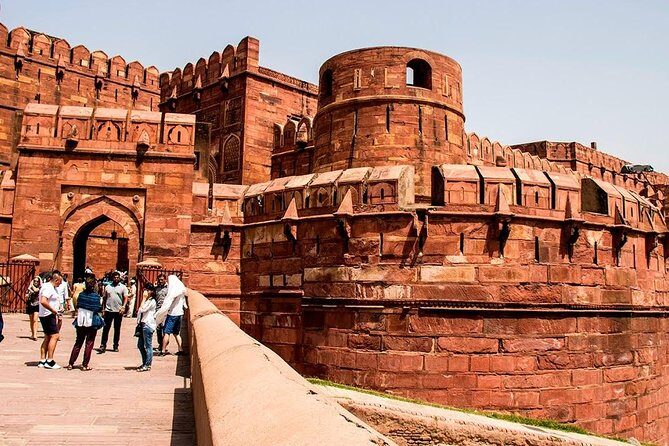
Next is Agra Fort, with 1 hour and admission included. The fort is tied closely to Mughal rule and served as the main residence of emperors in Agra until the capital moved to Delhi in 1638. That context helps you look at the fort differently. You’re not just seeing walls and courtyards—you’re standing in a site meant for authority, administration, and control.
This is where the trip earns its balance. Many one-day Taj plans turn into Taj only, and then you leave without understanding the bigger Mughal framework. Agra Fort gives you that broader sense of power and place. It also tends to feel a bit less overwhelming than the Taj itself, so your brain has a chance to breathe.
With only one hour, the key is to pick what to prioritize: the main views, the fort layout, and any signature buildings you’re most curious about. A tight time window is why having a guide helps. Even if you’re not buying big “history lessons,” a good guide helps you notice what matters.
Moti Masjid and Diwan-i-Khas: Short Visits, Smart Variety

You’ll also stop at Moti Masjid, sometimes called the Pearl Mosque. It’s noted as one of Agra’s oldest mosques and is described as shining like a pearl, which is a poetic way of saying it’s visually striking even on a busy day. Admission here is free, and the stop is about 30 minutes.
Then there’s Diwan-i-Khas, described as a hall of private audiences—a Mughal-era space used for receptions and receptions of courtiers and state guests. Your time here is also about 30 minutes, with admission included.
Why do these two shorter stops matter? Because they prevent the day from turning into a one-note parade. Taj Mahal is emotional and iconic. Agra Fort is contextual and political. Moti Masjid and Diwan-i-Khas add a different texture—faith and ceremony—so you leave with more than a single impression.
They’re also practical. Short stops help you recharge between major sights. If you’re trying to keep your energy up for the return flight, those 30 minutes can be exactly what you need: enough to see something meaningful without draining your day.






The Tomb of I’timad-ud-Daulah: A Key Mughal Add-On

This tour’s overview also includes the Tomb of I’timad-ud-Daulah, often considered a crucial Mughal landmark on the way to appreciating the later scale of the Taj. Even if the day focuses on the headline sights, this stop is a strong way to understand how Mughal architecture evolved—especially if you like noticing details rather than only chasing big silhouettes.
Because the schedule time isn’t spelled out in the details you provided, you should mentally plan for it as a “must-see” moment within your flow. If you like stepping back and comparing design choices across sites, this is one of the places where your brain will feel rewarded for paying attention.
Price and Value: What You’re Paying For at $620
At $620 per person, you’re not just paying for the monuments. You’re paying for the entire machine that makes a long-distance day possible: round-trip flights, private air-conditioned transport on the ground, a professional guide, and admission for the Taj Mahal and Agra Fort.
That matters because the alternative—booking flight + hiring a driver + buying tickets yourself—often ends up costing close to this once you account for time, coordination headaches, and the risk of mismatched schedules. Here, the selling point is reduced friction. You get a plan that’s meant to run.
What’s not included is also clear. Food and drinks are not included, and excess luggage can cost extra. That’s typical, but it’s the part you control. If you want this day to feel smoother, bring a water plan and a snack strategy. Even a simple backup snack can save you when timing gets tight.
One other value signal: the average booking time is 42 days in advance. That suggests demand, and it also means booking earlier can help you lock in the date you want rather than scrambling last minute.
The Real Challenge: A Long Day, Early Wake-Ups, and How to Handle It
This is where you should be honest with yourself. The start is 4:00 am, and you’re flying and driving all day, then returning to Mumbai for the night. One person even described the experience as very long—around 22 hours end to end. That’s not a reason to skip it. It’s a reason to plan smart.
Here’s how I’d make it easier on you:
- Sleep like it’s part of the itinerary. Don’t treat the day before as normal.
- Dress smart for worship rules: no shorts or sleeveless tops.
- Carry light to avoid baggage charges and to move quickly at airports.
- Plan food expectations: since meals aren’t included, you’ll want a practical way to handle hunger.
The good news is that the staff side seems built for stress reduction. People mentioned smooth pickup, cars waiting at arrival points, and guides such as Kushi and Shailesh helping identify needs quickly. If you’re traveling solo or you just hate uncertainty, that human support is a big part of the value.
Also, one feedback thread praised an extra craft stop where people bought souvenirs. If your day includes a craft workshop area, treat it like a bonus, not a requirement. Go in with a budget and a mindset: buy small, buy good, and don’t let shopping chew up your stamina.
Who This Tour Suits Best
This fits best if you’re:
- Short on time in Mumbai but determined to see the Taj Mahal
- Worried about doing complex logistics on your own
- Happy to trade a relaxed pace for a tightly packed day of major sights
It’s also a solid pick if you like having a guide to help you understand what you’re looking at while still keeping the day moving. If you’re traveling as a group, the private setup can make the schedule feel even smoother.
If you’re the type who needs lots of downtime between activities, this might feel exhausting. But if you’re realistic about the early start and pace, you’ll likely feel like you got your money’s worth.
A Quick Reality Check on Timing and Expectations
The time slots are clear for key stops: Taj Mahal (2 hours) and Agra Fort (1 hour), plus shorter 30-minute blocks at Moti Masjid and Diwan-i-Khas. That means you’re not touring the entire city of Agra like a week-long plan. You’re doing the best-of list—with enough time to appreciate each site.
So set expectations accordingly. Think of it like a focused museum day, not a slow roam. You’ll probably come away with strong visuals and a solid “Mughal big picture” feeling—especially if you’re the kind of person who likes comparing architecture and symbolism across sites.
Should You Book This Agra Day From Mumbai?
I’d book it if the Taj Mahal is your top priority and you’re willing to handle a long day for it. The combination of flights + private car + guide + entry tickets gives you a value-and-comfort mix that’s hard to beat when you’re short on time.
Skip it if you’re easily wiped out by early mornings, you can’t follow the dress rules, or you prefer meals and breaks to be built into the plan. Also, this experience needs good weather, so keep an eye on that—especially in shoulder seasons.
If you want the Taj Mahal experience without turning your Mumbai trip into a logistics project, this is one of the cleaner ways to do it.
FAQ
What time does the tour start from Mumbai?
It starts at 4:00 am.
Is this tour private?
Yes. It’s listed as a private tour/activity, so only your group participates.
Does the price include flights?
Yes. It includes round-trip flights from Mumbai to Agra (economy class).
How do you get around once you reach the Agra area?
You use a private, air-conditioned vehicle for transport between sights.
Are entrance fees included?
Yes for Taj Mahal and Agra Fort. The tour also specifies free admission for Moti Masjid and includes admission for Diwan-i-Khas.
Are food and drinks included?
No. Food and drinks are not included.
What dress code is required?
For places of worship, no shorts or sleeveless tops are allowed.
Is a mobile ticket accepted?
Yes. You can present either a paper or an electronic voucher, and there is also a mobile ticket option.
What information do I need to provide when booking?
You need the passport name and age for all participants. If you’re a cruise passenger, you must provide vessel name and docking and re-boarding times.
What happens if the weather is poor?
This experience requires good weather. If it’s canceled due to poor weather, you’ll be offered a different date or a full refund.