REVIEW · CHENNAI
Mahabalipuram walking tour by certified travel company
Book on Viator →Operated by Wonder tours · Bookable on Viator
Rock temples make great instant wow. In this short Mahabalipuram walk, you hit the big 7th-century sights with a certified guide and clear commentary, so the place makes sense fast. You’ll bounce through sculpted rock-cut temples, massive reliefs, and even a gravity-defying boulder, all on a tight route that fits a half-day plan.
I especially love the way the itinerary stays focused: you get to see major landmarks like Shore Temple and Arjuna’s Penance without getting stuck in long transfers. I also like that the tour includes entrance fees, so you’re not doing math at every ticket booth. One drawback to plan for: each stop is timed (often 15–30 minutes), so if you’re the type who wants to linger for ages at every carving, you may feel a bit “on the clock.”
In This Review
- Key highlights worth your attention
- Where the tour starts: the Shore Temple viewpoint
- Pancha Rathas: five monolith “chariots” carved from stone
- Arjuna’s Penance: the relief that’s basically a long sculpture
- Krishna’s Butter Ball: the boulder that steals the show
- Varaha Cave Temple: granite carving with patience built in
- Pancha Pandava Cave: the largest cave-temple stop
- Mahishasuramardini Cave: impressive artwork with a focused look
- Ganesh Ratha Temple: the chariot carved from one stone
- The Mahabalipuram Lighthouse: a rare finish with a 640 date
- Price and time: why $47 can feel fair for a ticketed route
- Footsteps, rickshaws, and how to stay comfortable
- The guide factor: Rajesh and Basha’s impact
- Who this tour is best for
- Should you book this Mahabalipuram walking tour?
- FAQ
- How long is the Mahabalipuram walking tour?
- Where does the tour start and end?
- How much does it cost?
- Is the entrance fees included?
- Do I get a certified guide?
- Is the tour private or shared?
- Do I need paper tickets?
- Is rickshaw travel an option during the tour?
- Can I cancel for a full refund?
- Does this tour work for most people?
Key highlights worth your attention
- UNESCO Mahabalipuram in a half-day: a concentrated route with 9 major stops.
- Entrance fees included: fewer surprises, more time looking.
- Certified guide + commentary: context for the Mahabharata scenes and Pallava-era sites.
- Real photo-friendly stops: guides like Rajesh and Basha are praised for taking plenty of pictures.
- Foot or rickshaw option: you can choose how fast and how comfortable you want to move.
- Old-school landmark finisher: the walk ends near Krishna’s Butter Ball, with the option to keep exploring after.
Where the tour starts: the Shore Temple viewpoint

You begin at the Shore Temple area, right by Beach Rd in Mahabalipuram. From the start, the setting does half the work. The Shore Temple looks out over the Bay of Bengal, and it was tied to the Pallavas when Mahabalipuram served as an important port.
What I like here is the way this stop frames everything that comes next. The rock-cut temples you’ll see later don’t feel random once you understand the shoreline role—this wasn’t just a temple cluster. It was part of a working city and trade world.
You also get an admission ticket included, which matters because multiple stops are ticketed. Fewer extra payments = less friction, especially if you’re doing this as a first visit.
You can also read our reviews of more walking tours in Chennai


Pancha Rathas: five monolith “chariots” carved from stone
Next up are the Pancha Rathas, five rock-cut monolith temple structures from the 7th century. Each of the rathas is linked to major characters from the Mahabharata: Draupadi, Arjuna, Nakul-Sahadeva, Bhima, and others. It’s a clever way to mix devotion with storytelling—stone built like a cast of characters.
These are often where first-timers get their bearings. Even if you don’t know much about the epic scenes, the guide can connect names to stone details. And since each ratha is a separate visual “panel,” you can compare them quickly without feeling overwhelmed.
Potential drawback: because the stop is short (about 30 minutes), you should focus your attention. Pick one or two rathas to scrutinize, then move on. If you try to read every carving like a textbook, you’ll run out of time.
Arjuna’s Penance: the relief that’s basically a long sculpture
Then you reach Arjuna’s Penance, one of India’s most impressive ancient art works in bas-relief. The scale is the point here: it’s about 100 feet long and 45 feet tall. That size turns it from a “temple stop” into a full visual experience.
This is also where the commentary really earns its keep. When you have context for the Mahabharata scenes carved into the relief, you start spotting patterns instead of seeing random figures. The guide’s job is to help you connect the story beats to the stone details.
At roughly 20 minutes, you’ll want a simple plan: look wide first, then narrow. Take in the entire length for a minute, then choose a section to study more. You’ll get more out of the stop than if you sprint from scene to scene.
Krishna’s Butter Ball: the boulder that steals the show
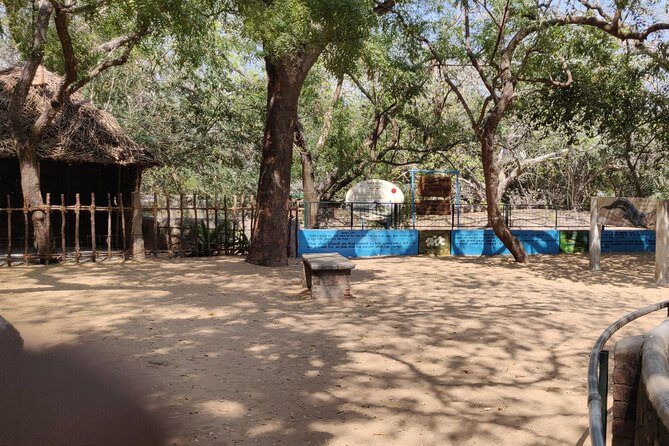
After the big relief, you’ll hit the famous Krishna’s Butter Ball. This is the curious boulder that looks like it should slide, yet it hasn’t moved in a very long time. The site is basically a local physics lesson disguised as a landmark.
Here’s the practical appeal: it’s a quick, memorable stop. About 15 minutes fits perfectly into a walking schedule, and it gives you that “I can’t believe this is real” reaction that makes a short tour feel worth it.
If you’re planning photos, be ready. People love this one. Having a guide who knows where to stand (and how to get good shots) is a real advantage—Rajesh and Basha get repeated praise for helping with pictures.
Varaha Cave Temple: granite carving with patience built in
Next, you visit the Varaha Cave Temple, carved out of a large granite mass. It dates back to the 7th century, and the site took several decades to complete. That last detail changes how you should look at it. You’re not just seeing a monument. You’re seeing the result of long effort.
Because the tour time for this stop is about 15 minutes, aim for “big picture” again. Look at how the cave form meets the carved temple space. Then notice the features the guide points out—those tend to be the details that turn “a cave” into “a crafted sacred environment.”
This is a good pause point if you feel the walk is moving quickly. It’s compact, dramatic, and not dependent on you knowing tons of background. The guide can do the translation.



Pancha Pandava Cave: the largest cave-temple stop
Then you’ll see Pancha Pandava Cave, described as the largest cave-temple at Mahabalipuram. The structure is supported on six pillars and two pilasters, which makes it easier to “read” the architecture even in a short time.
This is one of those places where I’d rather have 15 minutes guided than 45 minutes alone. The reason is structural: pillars and pilasters give you reference points. With commentary, you’re more likely to notice what those elements are doing and why the cave looks the way it does.
If you’re sensitive to time pressure, this is the moment to slow down a touch yourself. You can spend an extra minute standing still and letting the space register. It’s not a place that rewards constant movement.
Mahishasuramardini Cave: impressive artwork with a focused look
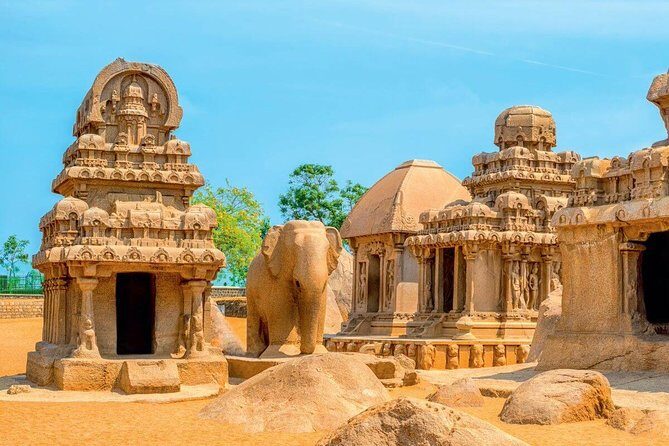
After that comes the Mahishasuramardini Cave Temple. The key detail here is that two of the most impressive works of art at Mahabalipuram sit in this cave. Since the stop time is about 15 minutes, you’ll want to trust the guide’s selection and focus on the key art panels they point to.
This is also where you should let yourself be a little flexible. Some caves and reliefs are best understood by slowing your gaze and letting shapes settle. If you rush, you’ll still see “cool carvings,” but you won’t get that satisfying recognition of what you’re looking at.
Ganesh Ratha Temple: the chariot carved from one stone
Then you visit the Ganesh Ratha Temple, an imposing chariot carved out of a single stone. Originally, it was dedicated to Lord Shiva, and it now has the deity of his son, Lord Ganesh. That mix of original dedication and later focus is part of why Mahabalipuram feels like it lived through time, not like a frozen museum set.
This stop is about 15 minutes, so again: pick your moment. Look at the overall chariot shape first, then switch to details. The guide can help you notice transitions in the carving and explain why the temple’s identity evolved.
This is also a great stop for your group’s energy level. After several cave and relief-heavy sites, a clear, single-form monument often helps people reset.
The Mahabalipuram Lighthouse: a rare finish with a 640 date
The final stop is the Mahabalipuram Lighthouse, built in 640. It’s described as India’s oldest lighthouse and one of the oldest in the world. That’s a big claim, and whether you’re a “history dates” person or not, the point stands: you’re ending at a landmark that ties Mahabalipuram’s heritage to the sea.
This stop works well as a tour ending because it’s visual and open. After hours of stone carvings, a wide horizon view helps your eyes and your brain.
It’s also practical. The tour ends around Krishna’s Butter Ball, so you’re in the right area to keep wandering on your own if you want more time with the boulder or nearby sights.
Price and time: why $47 can feel fair for a ticketed route
At $47 per person for roughly 2–3 hours, this tour is priced like a good “value block” rather than a long, expensive day. The key is that entrance fees are included, and you’re visiting multiple major monuments where tickets normally add up quickly.
It’s also built for time efficiency. If you only have a half-day in Chennai area and you want the Mahabalipuram highlights without getting lost in logistics, this format makes sense. You’re paying for planning, pacing, and a guide to connect what you see to why it matters.
One more detail that affects value: the tour uses a mobile ticket and is near public transportation. That’s minor on paper, but in real life it reduces the hassle when you’re moving around a historic site.
Footsteps, rickshaws, and how to stay comfortable
The tour is designed as a walking route, but you have flexibility. The experience description notes that you can explore sights either on foot or by rickshaw, depending on what you choose.
My practical take: pick your mode based on your pace, not your pride. If it’s hot or humid (and it often is in this region), rickshaw segments can keep the day enjoyable. You’ll still get the sightseeing; you just won’t feel like you’re grinding through stone.
Also, remember the itinerary stop times. Many sites run 15 minutes. That’s great for coverage, but you should come with water, wear comfortable shoes, and expect a brisk rhythm.
The guide factor: Rajesh and Basha’s impact
The biggest repeated theme in the feedback is guide quality. Guides such as Rajesh and Basha are praised for doing a fantastic job, being funny, and providing good context. There’s also mention of help with photos—so if you want pictures without turning the day into a selfie scramble, this can be a real win.
Even if you’re not obsessed with ancient architecture, you’ll benefit from commentary because the sights are story-based. Mahabharata characters are carved into temple forms. Dravidian rock-cut designs aren’t just decoration. They’re structured storytelling.
For me, that’s the difference between seeing Mahabalipuram and understanding why it’s famous.
Who this tour is best for
This works best if you want major highlights fast and you like having someone else handle the sequencing and background. It’s a good pick for first-time visitors who don’t want to figure out the order of sights on their own.
It’s also a strong option if you’re traveling with a small group. The activity is set up as private for your group, so you won’t be stuck matching your pace to strangers.
If you’re the type who wants slow museum-style time and long photo sessions at every corner, you might feel constrained by the 2–3 hour format. But if you’re open to a quick, well-guided sweep, you’ll likely feel satisfied instead of rushed.
Should you book this Mahabalipuram walking tour?
Book it if:
- You want the core Mahabalipuram sights in a short time window.
- You like having entrance fees included and a guide to connect the carvings to the story.
- You’d rather get a clean, efficient route than spend your limited time hunting down tickets and best angles.
Skip it (or consider another style of tour) if:
- You want to linger far longer than 15–30 minutes at individual monuments.
- You plan to treat this as a self-guided wandering day. The best value here comes from the structure and commentary.
If you’re balancing time and meaning, this is a practical way to experience UNESCO-listed Mahabalipuram without turning your day into a logistical puzzle.
FAQ
How long is the Mahabalipuram walking tour?
It runs about 2 to 3 hours.
Where does the tour start and end?
It starts at Mahabalipuram Shore Temple, Beach Rd and ends near Krishna’s Butter Ball, E Raja St.
How much does it cost?
The price is $47.00 per person.
Is the entrance fees included?
Yes. Entrance fees are included.
Do I get a certified guide?
Yes. The tour includes a certified guide.
Is the tour private or shared?
The description says you can choose a shared tour or upgrade to a private tour, and the activity is presented as private for your group only.
Do I need paper tickets?
No. You get a mobile ticket.
Is rickshaw travel an option during the tour?
Yes. The experience notes that you can explore on foot or by rickshaw.
Can I cancel for a full refund?
Yes. You can cancel up to 24 hours in advance for a full refund.
Does this tour work for most people?
The details say most travelers can participate.