REVIEW · MUMBAI
Victorian Gothic Heritage Quarter and Art Deco Walking Tour
Book on Viator →Operated by Cityscape Mumbai Tours · Bookable on Viator
Mumbai’s architecture tells one long story. This walk threads together Victorian Gothic and Art Deco-era Mumbai through major landmarks, from the Mumbai GPO’s early 1900s grandeur to the classic skyline views near the sea.
I love that the pace is built around landmark stops with free admission tickets at each listed site, so your money goes to the guide and time walking—not entry fees. I also like the small group size, up to 15 people, which makes it easier to ask questions and keep moving without feeling herded.
One thing to consider: it’s a walking route with no private transportation, so you’ll want to be ready to get to the start point near Regal Cinema and finish at Churchgate on your own.
In This Review
- Key highlights worth your attention
- Why this Gothic-to-Art Deco walk makes sense in Mumbai
- Where it starts: Regal Cinema to an easy finish at Churchgate
- Stop 1: Mumbai General Post Office and the 1913 Indo-Saracenic look
- Stop 2: Town Hall and the Asiatic Society Library (1804)
- Stop 3: Horniman Circle Garden for a breather in the middle of it
- Stop 4: St. Thomas Cathedral, Mumbai’s oldest Anglican church
- Stops 5 and 6: Bombay High Court and the Rajabai Clock Tower
- Stop 7: Oval Maidan and where Victorian Gothic meets Art Deco edges
- Stop 8: Kala Ghoda precinct and the King Edward II statue vibe
- Stops 9 and 10: Gateway of India and the Taj Mahal Palace photo finish
- Price and value: is $18.88 actually a good deal?
- The guide makes or breaks it, so pick your expectations
- Who should take this tour (and who might skip it)
- Should you book this Victorian Gothic Heritage Quarter and Art Deco walking tour?
- FAQ
- How long is the Victorian Gothic Heritage Quarter and Art Deco Walking Tour?
- How much does the tour cost per person?
- Where does the tour start and end?
- Is admission included for the stops on the route?
- What’s included in the tour ticket?
- Is private transportation included?
- How large is the group?
- What is the cancellation policy?
Key highlights worth your attention
- A tight “heritage quarter” route that connects major Gothic Revival landmarks with Art Deco-era city edges
- Free entry at every named stop, so you can budget confidently
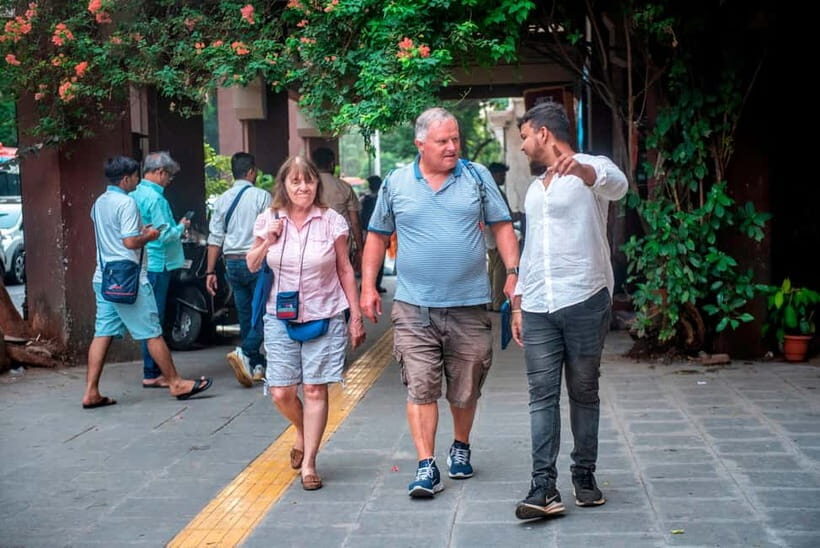
- Small groups (max 15) that fit a focused, question-friendly walking pace
- A guided mix of famous icons and photo stops, from the Gateway of India to the Taj Mahal Palace
- Mobile ticket + bottled water, simple and practical for a 2-hour outing
Why this Gothic-to-Art Deco walk makes sense in Mumbai

This tour works because Mumbai’s architecture is not random. You can see it in layers: British-era institutional buildings in Gothic Revival style, earlier colonial-era power and administration, and then later city-shaping aesthetics that show up around open spaces and precincts.
The route also has a smart “gear shift.” You start with official buildings tied to communication and public life, then you move into places of learning and worship, and you finish with the grand public-facing waterfront landmarks. If you like history that you can actually point at with your camera, this format is satisfying.
And because it’s a walking tour rather than a bus loop, you get close enough to notice details you’d miss from a distance—arched windows, clock-tower silhouettes, and the way the streets and squares shape what you see next.
You can also read our reviews of more walking tours in Mumbai



Where it starts: Regal Cinema to an easy finish at Churchgate
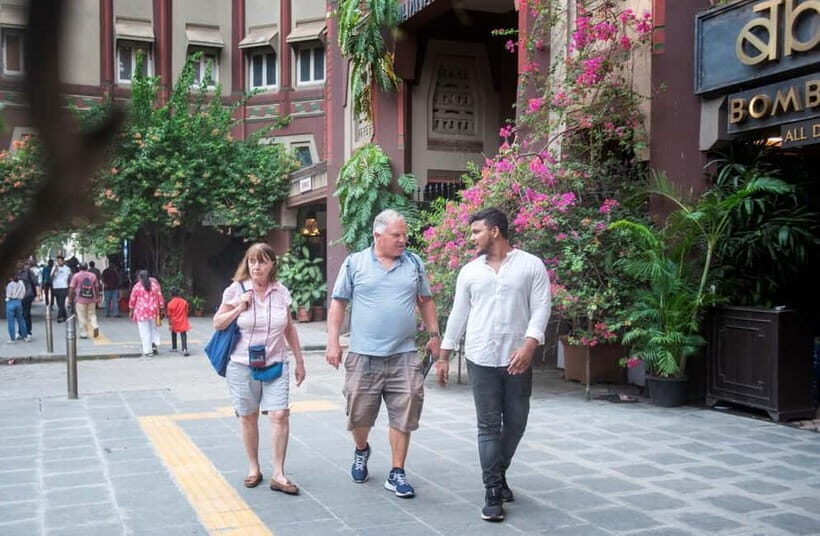
You begin near Regal Cinema in Colaba (Apollo Bandar area), then end near Churchgate Station. That matters because you can plan your day with less backtracking. If you’re staying around South Mumbai, you can pair this with other sightseeing nearby without turning your schedule into a complicated shuffle.
The tour is listed at about 2 hours, which is a sweet spot: long enough to cover multiple landmark clusters, but not so long that you’ll feel like you’re walking all day. Still, expect it to feel like a real city walk. This isn’t a “sit and look” experience.
You’ll also want to keep your ticket handy on your phone. The tour uses a mobile ticket, which is convenient if you’re already juggling transit tickets and museum admissions.
Stop 1: Mumbai General Post Office and the 1913 Indo-Saracenic look
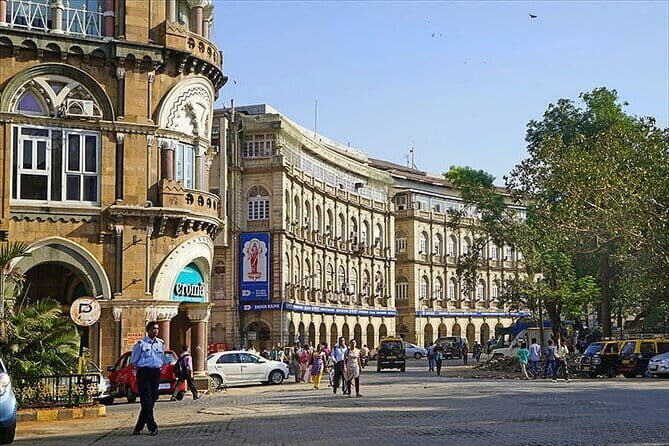
The morning (or afternoon) opener is the General Post Office (Mumbai GPO). Built in 1913, it’s described as an architectural marvel with Indo-Saracenic grandeur—so you’re not just looking at a European style copied in India. You’re seeing a hybrid that signals how the city’s colonial-era design language evolved.
The guide’s job here is to help you understand why a post office can feel monumental. This building wasn’t only a place to mail letters; it sat at the center of Mumbai’s communication and mail systems. That context makes the exterior feel more meaningful when you’re standing in front of it.
Practical note: this is one of the stops where quick attention pays off. You’ll get about 15 minutes, so come in ready to look up as well as across.
Stop 2: Town Hall and the Asiatic Society Library (1804)
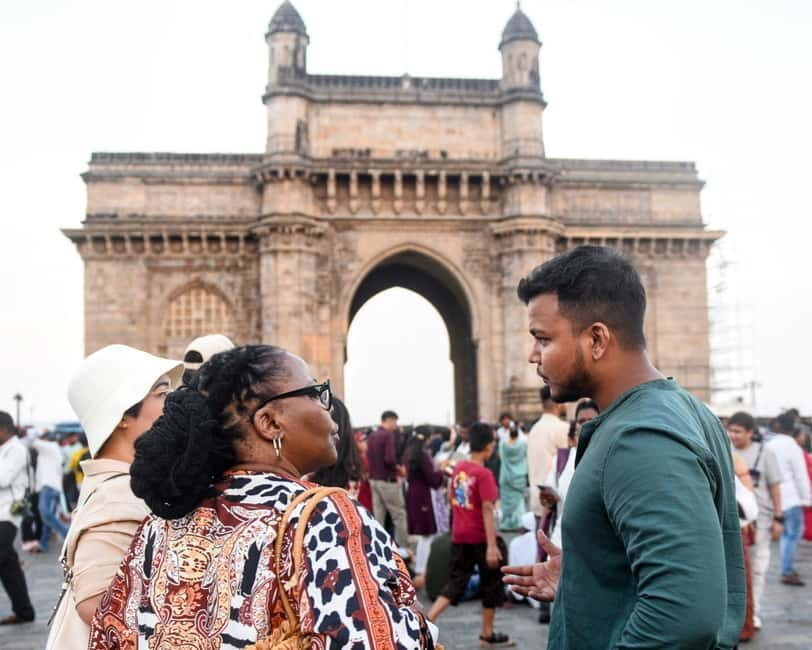
Next comes Town Hall, also known through its association with the Asiatic Society Library. The library is founded in 1804, and it’s known for neoclassical architecture, plus rare manuscripts and ancient texts.
What I like about this stop is that it’s not just a pretty façade. It’s a chance to shift your mindset: from buildings as monuments to buildings as containers of knowledge. Even if you’re not a manuscript person, the point is that this is where serious collections were built into Mumbai’s public culture long ago.
You’ll have about 15 minutes here, and the value is in the guide’s storytelling—why the neoclassical look mattered, and what the library represents in the broader city picture.
Stop 3: Horniman Circle Garden for a breather in the middle of it
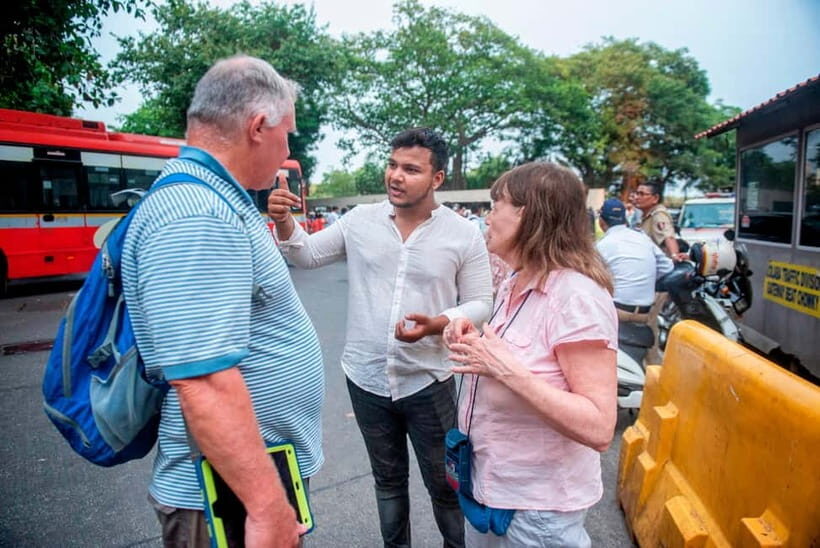
Then you step into Horniman Circle Garden, built in 1860. The tour frames it as a historic garden surrounded by grand colonial buildings, and the practical win is that you get a reset between heavier institutional architecture.
This is also where you can notice how open spaces shape the “view lines” of a heritage area. Gardens like this don’t just exist for leisure; they change how you move, how buildings face the street, and how the whole neighborhood feels.
The time slot is another 15 minutes, which means you’ll enjoy it most if you slow down. Look at the surrounding façades before you move on.
You can also read our reviews of more historical tours in Mumbai



Stop 4: St. Thomas Cathedral, Mumbai’s oldest Anglican church
St. Thomas Cathedral is one of those stops that gives the tour a spiritual and architectural anchor. The church is the city’s oldest Anglican church, consecrated in 1718, and it’s presented as a key part of Mumbai’s religious architecture under British rule.
The best way to get value from this stop is to let your eyes adjust to details that don’t scream from across the street. In older churches, design shows up in proportions and symmetry, plus the way light hits stone.
You’ll have 15 minutes. That’s enough to appreciate the exterior and absorb the main points without turning it into a rushed photo contest.
Stops 5 and 6: Bombay High Court and the Rajabai Clock Tower
Now the tour leans into institutional power and Gothic Revival style with High Court of Bombay and then the Rajabai Clock Tower.
The Bombay High Court is described as an iconic Gothic Revival structure inaugurated in 1879. Then the Rajabai Clock Tower—completed in 1878—sits at the University of Mumbai and is designed by Sir George Gilbert Scott, funded by Premchand Roych. When you see these back-to-back, you start to recognize a pattern: Gothic Revival wasn’t only for churches. It worked for law schools and courts too, because it projects gravity and authority through stone and geometry.
What you should watch for here is how the tower silhouette dominates the skyline and how the court building’s Gothic details signal function. A courtroom is not a cathedral—but visually, the style shares the same language of formality.
You’ll get about 15 minutes at each stop. If you like architecture explanations, this is one of the best stretches of the entire walk.
Stop 7: Oval Maidan and where Victorian Gothic meets Art Deco edges
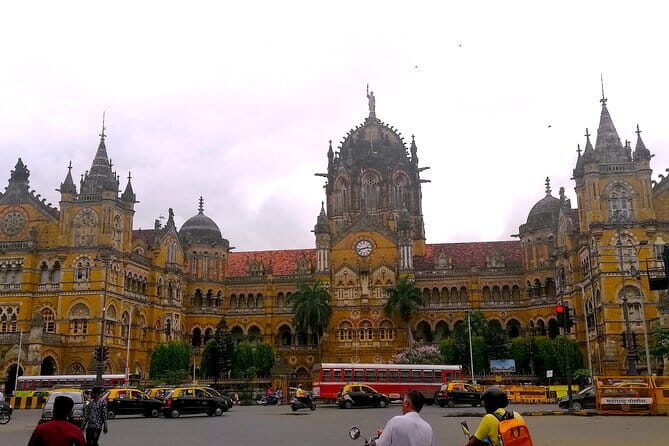
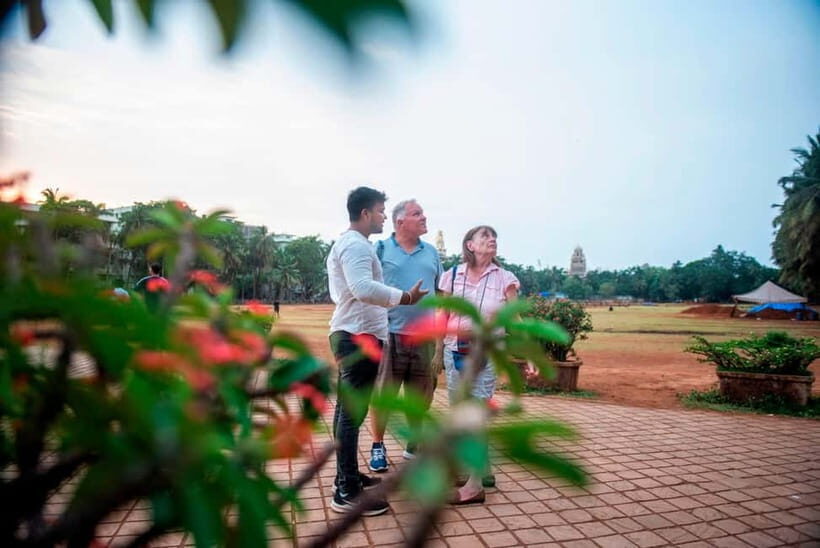
Oval Maidan is the transition point where the tour title starts to feel more literal. The open ground is historic, established in the 19th century, and flanked by Victorian Gothic buildings plus Art Deco architecture.
This is the big “aha” moment for many people: the city doesn’t move in straight chronological lines. It layers. You can stand in an open space and see multiple eras speaking to each other at once—Gothic Revival formality beside later Art Deco city shapes.
There’s about 10 minutes at Oval Maidan. That’s short, so use it well: take one wide view to catch the setting, then zoom in on the stylistic differences you can spot on the surrounding façades.
Stop 8: Kala Ghoda precinct and the King Edward II statue vibe
Next is Kala Ghoda, named after the Black Horse statue associated with King Edward VII. The tour positions Kala Ghoda as a cultural precinct with art galleries, museums, and street art, plus a strong arts calendar in the area.
Even if you don’t plan to enter galleries, this is an important context stop. It shows how “heritage architecture” doesn’t only live in quiet museums. It also becomes part of a neighborhood identity where creative culture plays a role in day-to-day life.
Time here is about 5 minutes, so think of it as a quick orientation beat: you’re learning where to look next, not getting a full neighborhood tour.
Stops 9 and 10: Gateway of India and the Taj Mahal Palace photo finish
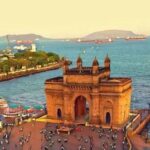
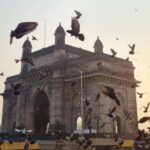
The walk then points you to Gateway of India, an iconic arch monument built in 1924. It commemorates the visit of King George V and Queen Mary to India. This is one of the most recognizable symbols of Mumbai, and it’s powerful because it’s both history and a public landmark.
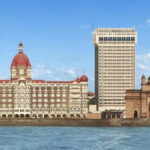
Finally, you end at The Taj Mahal Palace. It’s described as a historic luxury hotel built in 1903, known for architectural beauty and heritage overlooking the Arabian Sea. Ending here makes sense because it’s a visual capstone to the day’s architecture theme: you started with communication infrastructure, moved through law and learning, and finished at a landmark that represents Mumbai on the world stage.
You’ll get around 10 minutes at the Gateway and 5 minutes at the Taj Mahal Palace stop. That means don’t wait until the end to get your best wide shots. If you care about photos, grab them in the first half of the finale stretch.
Price and value: is $18.88 actually a good deal?
At $18.88 per person for about 2 hours, the value depends on what you usually pay for guided experiences in Mumbai. For this specific tour, the deal comes from two practical things you can feel immediately:
First, each listed stop has free admission ticket noted. That means your total cost isn’t inflated by entrance fees during the walk. Second, you get bottled water included, which is small but helpful on a city outing.
The small group cap (up to 15) also affects value. You’re paying for guided interpretation, and smaller groups tend to make the guide’s attention more usable.
The only real “cost” isn’t money. It’s time and walking. If you’re someone who wants private transport or a slower pace, you may feel constrained. And if you’re picky about architecture depth, you should mentally prepare for a guide-led style that may lean more storytelling than technical analysis.
Also consider timing: the tour is often booked around 13 days in advance on average. If you’re traveling during popular weeks, booking earlier helps you lock in a slot.
The guide makes or breaks it, so pick your expectations
From what’s shared about the experience, the guide quality can vary by person, even within the same tour format. Some guides have been praised for friendly, fluent English and clear answers to questions. Others were described as not strong enough in architecture detail or presentation for what the price promised.
So here’s my practical advice: go in expecting a guided walk that explains what you’re looking at, not a full architecture lecture. If you want deep technical breakdowns, plan to ask specific questions as you go—what to look for in façades, what style elements signal the era, and why these buildings matter to how Mumbai grew.
If you enjoy real conversations while walking—asking, looking up, comparing styles—this tour can feel like an efficient way to get your bearings.
Who should take this tour (and who might skip it)
This is a strong fit if you want:
- A short walking window to connect major Gothic Revival landmarks with the Art Deco-era feel around Oval Maidan
- A route that covers a lot of visible architecture without you doing heavy planning
- A guided introduction that helps you read buildings like clues
You might skip it if:
- You hate walking and prefer a car-based sightseeing day
- You’re looking for lots of indoor time or museum hours (this is mostly a landmark route)
- You need private transportation and don’t want to manage start and end points yourself
Should you book this Victorian Gothic Heritage Quarter and Art Deco walking tour?
I’d book it if you’re staying in South Mumbai and want a compact, high-impact architecture day. The combination of free admission stops, a small group, and a route that finishes at iconic waterfront landmarks makes it good value for your money.
I’d pause before booking if you’re expecting a deep dive into architectural theory or you’re uncomfortable with walking between multiple city landmarks. Also, if you’ve had bad luck with guided tours before, this one is only worth it if you’ll actively engage—ask questions and use the short time slots to look closely.
If that’s your style, you’ll leave with a clearer sense of how Mumbai’s Gothic-era institutions and later Art Deco touches sit side by side on the same streets.
FAQ
How long is the Victorian Gothic Heritage Quarter and Art Deco Walking Tour?
It lasts about 2 hours (approx.).
How much does the tour cost per person?
The price is $18.88 per person.
Where does the tour start and end?
It starts at Regal Cinema, Apollo Bandar, Colaba, Mumbai and ends at Churchgate Station (near Maharshi Karve Rd).
Is admission included for the stops on the route?
Yes. Each listed stop shows admission ticket free, and the tour includes the time to visit those sights.
What’s included in the tour ticket?
The tour includes bottled water.
Is private transportation included?
No. Private transportation is not included.
How large is the group?
The tour has a maximum of 15 travelers.
What is the cancellation policy?
You can cancel for a full refund if you cancel up to 24 hours in advance. If you cancel less than 24 hours before the start time, the amount paid is not refunded.