REVIEW · MUMBAI
South Mumbai: Cultural Heritage Walking Tour
Book on GetYourGuide →Operated by Amaze Tours · Bookable on GetYourGuide
Mumbai tells its story on foot. This South Mumbai heritage walking tour ties together colonial landmarks, Indian institutions, and the UNESCO-listed CSMT, with time for a cup of chai. I like how the pacing mixes quick guided moments with real street-level wandering, and I really like that chai is part of the experience, not an afterthought. Guides such as Loki and Dawood are repeatedly praised for making the architecture and place names click.
The main thing to plan around is that it’s built for walking and tight timing: it’s only 2.5 hours, and it’s not suitable for wheelchair users (and baby strollers aren’t allowed). If you’re hoping for lots of stops where you can linger at leisure, this route is more about seeing clearly, then moving on.
If you want a fast way to understand why South Mumbai looks the way it does, you’ll get that—starting by the Gateway of India, passing the Taj Mahal Palace Hotel, and finishing with a guided look at Chhatrapati Shivaji Maharaj Terminus. With a small group limited to 6 and live English guidance, it’s easy to ask questions and keep your bearings without feeling lost in a crowd.
In This Review
- Key Things to Know Before You Go
- Why South Mumbai Heritage Works Best on a Walking Route
- Meeting at Pizza Express Next to the Gateway of India
- Gateway of India to the Taj Mahal Palace: The Classic South Mumbai Entrance
- From Police Headquarters to Elphinstone College: Reading Power on the Streets
- Kala Ghoda and Oval Maidan: Where Names and Styles Interlock
- Asiatic Society of Mumbai and a Planned Chai Break
- The Short Bus Ride to CSMT: UNESCO Finishes With Impact
- Price and Logistics: Is $16 Good Value?
- Who Should Book This Tour (and Who Might Skip It)
- Final Thoughts: Book or Skip?
- FAQ
- Where is the meeting point?
- How long is the tour?
- Is the tour walking all the way?
- Does the tour include chai?
- What language is the guide?
- How big is the group?
- Is hotel pickup included?
- Is the tour suitable for wheelchair users?
- What ID do I need to bring?
- Where do you get dropped off at the end?
- Are baby strollers allowed?
- Can I cancel for a full refund?
Key Things to Know Before You Go
- Small group (max 6): more time for your guide’s explanations and questions.
- Chai is included: a planned break that fits the walking rhythm.
- Gateway to CSMT route: big landmarks plus the in-between institutions that explain the city.
- Mix of guided and pass-by stops: some sights get deeper attention, others are quick context.
- Short bus ride to CSMT: you’ll connect two heritage zones without burning the whole afternoon on transport.
- Meeting point is precise: Pizza Express entrance next to the Gateway of India.
Why South Mumbai Heritage Works Best on a Walking Route
South Mumbai can look like a postcard version of itself—until you start noticing the details. This tour is built to help you read the city the way locals do: not just by pointing at famous monuments, but by showing you the systems around them. You’ll move through areas shaped by trade, empire, law, education, and public culture, all within a short radius.
I like that the tour design keeps your focus on contrasts. You’ll see the formal grandeur of places like the Gateway of India and the Taj Mahal Palace Hotel, then you’ll pivot to civic and educational buildings where power and learning were on display. That shift matters because Mumbai’s story isn’t only monuments—it’s also institutions, streets, and the way people used public spaces.
And because it’s small-group, the guide can keep the narrative straight. You’re not just collecting photos. You’re building a mental map of South Mumbai: who built what, why it mattered, and how the architecture tells that story.
You can also read our reviews of more walking tours in Mumbai


Meeting at Pizza Express Next to the Gateway of India
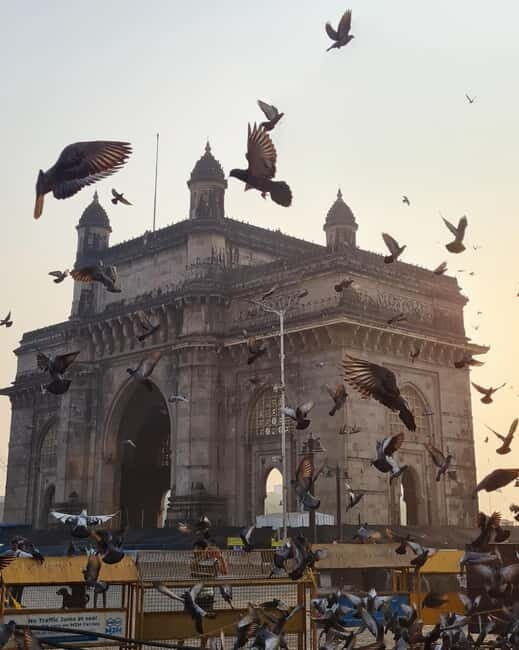
Your day starts at a very specific spot: the entrance of Pizza Express next to the Gateway of India. That sounds simple, but in a place with lots of foot traffic, a clear landmark meeting point is what saves time and stress.
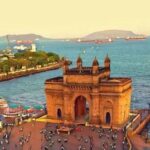
From there, you’ll head straight to the Gateway area for a guided segment. Expect the guide to set context right away—what the Gateway represents and why it became such a symbol of arrival and identity along this shoreline. Even if you’ve seen photos, having someone put the building into a timeline helps the rest of the walk feel less random.
Also, plan for a typical walking tour setup:
- You’ll want comfortable footwear because you’re on foot for much of the tour.
- You’ll need a valid ID card, and a copy is accepted.
- This is not set up for baby strollers, so travel light if you’re coming with kids.
The nice part is that the meeting point is so close to your first major stop that you don’t spend your morning “commuting” in circles.
Gateway of India to the Taj Mahal Palace: The Classic South Mumbai Entrance
The tour hits Gateway of India first with about 20 minutes of guided time. This is your orientation anchor. The guide typically frames the Gateway not just as a landmark, but as part of the city’s relationship to the sea, arrivals, and the era that shaped these public spaces.
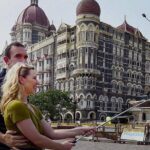
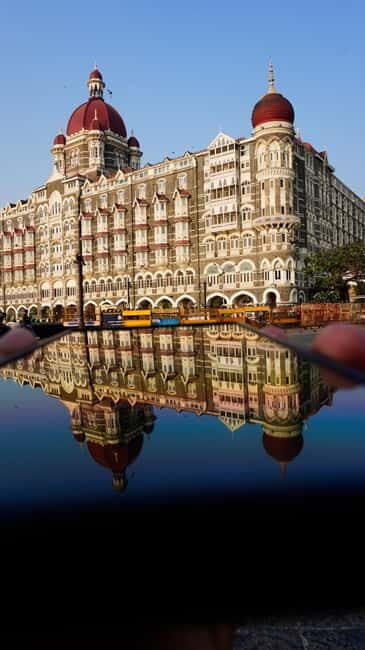
Right after that, you’ll pass the Taj Mahal Palace, Mumbai for about 5 minutes. You won’t be doing a long deep look inside (this is a walking route, not a ticketed museum), but passing the Taj Hotel makes a key point: South Mumbai’s heritage isn’t only religious or administrative. It also includes high-status hospitality and architecture built to project prestige.
You’ll also move through the Royal Bombay Yacht Club area (walk time around 5 minutes). Even when you’re just passing by, the guide’s job is to connect the dots—why these kinds of establishments appear along the same corridor and what they signal about the city’s past.
This is a good stretch if you like architecture and street theater. You’ll see how quickly the vibe shifts as you leave the most photographed frontage and start walking toward civic buildings and learning institutions.
From Police Headquarters to Elphinstone College: Reading Power on the Streets
After the famous shoreline icons, the tour moves into the “working city” side of South Mumbai. The walk includes several short segments where you’re mostly moving, but the guide is there to give meaning to what you’re seeing.
Here are the stops and what they help you understand:
- Maharashtra Police Headquarters (walk about 5 minutes): this gives you a window into how authority and colonial-era planning echo through later institutions.
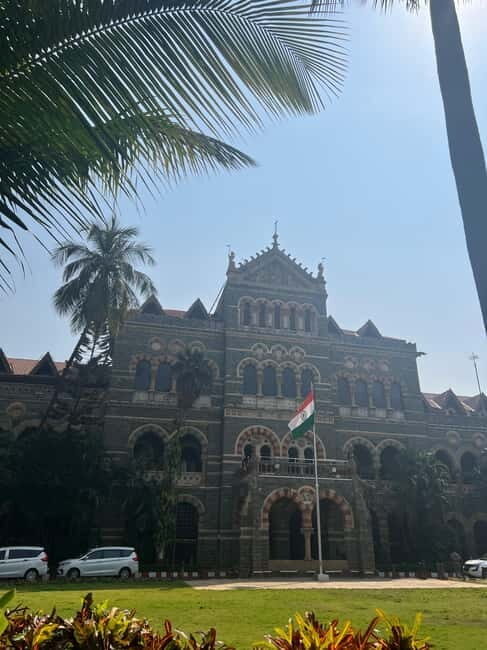
- Elphinstone College (walk about 5 minutes): education buildings show up in the city’s heritage story again and again, and this stop helps explain why.
- David Sassoon Library (walk about 5 minutes): libraries are often overlooked by tourists who only chase the big names. On this route, the guide keeps them in focus.
These segments are short by design. You’re not meant to stand there all day. You’re meant to develop a “pattern recognition” skill. Once you start seeing how public buildings sit in relation to each other—how streets, squares, and façades create order—the rest of South Mumbai becomes easier to navigate on your own later.
If you enjoy small architectural details (arches, layouts, stylistic cues), this part of the tour is surprisingly rewarding. You’ll get context so your eyes know what to look for.
Kala Ghoda and Oval Maidan: Where Names and Styles Interlock
Next comes Kala Ghoda, with about 15 minutes of guided time. This area is famous for its blend of heritage and institutions, and the guide’s explanation is what turns it from a “nice neighborhood” into a structured story. If you like architecture terms and why they matter, this is where the tour starts to feel more analytical.
After Kala Ghoda, you’ll head to Oval Maidan for around 10 minutes guided. Oval Maidan is one of those places where public space is part of the city’s identity. The guide likely ties it back to how South Mumbai’s major buildings relate to open ground—how planners carved breathing room into a dense urban fabric.
This is also a stretch where you’ll see the city’s Gothic and Art Deco ensembles referenced in the broader framing of the tour. Even when you’re not stopping for a ticketed interior, the style mix is visible in the façades, and the guide helps you interpret those cues quickly.
My practical takeaway: if your time in Mumbai is short, these two stops (Kala Ghoda + Oval Maidan) are the ones that help you feel like you understand the layout, not just the landmarks.
You can also read our reviews of more historical tours in Mumbai




Asiatic Society of Mumbai and a Planned Chai Break
You’ll spend about 10 minutes walking near the Asiatic Society of Mumbai. This is another institution stop, and the reason it belongs here is simple: in South Mumbai, culture and scholarship often share the same physical footprint as civic life.
And yes, you’ll get chai during the tour. It’s included, and it’s not random. A chai break matters because it gives your brain a rest while you’re still in motion. You also get to slow down and notice more: street activity, how people pass the buildings, and what the area feels like at walking speed.
From a value standpoint, chai included for a relatively low price is the kind of small detail that makes the whole experience feel human. It stops the tour from feeling like a checklist.
A quick tip for enjoying this segment: keep your expectations practical. This is time with sights and explanations, not a long sit-down break. Think of it as a reset, not a café tour.
The Short Bus Ride to CSMT: UNESCO Finishes With Impact
Here’s the turning point: after the Asiatic Society area, there’s a short bus/coach ride (about 10 minutes) to Chhatrapati Shivaji Maharaj Terminus (CSMT). The point is efficiency—without the bus ride, you’d lose too much time covering distance between heritage zones.
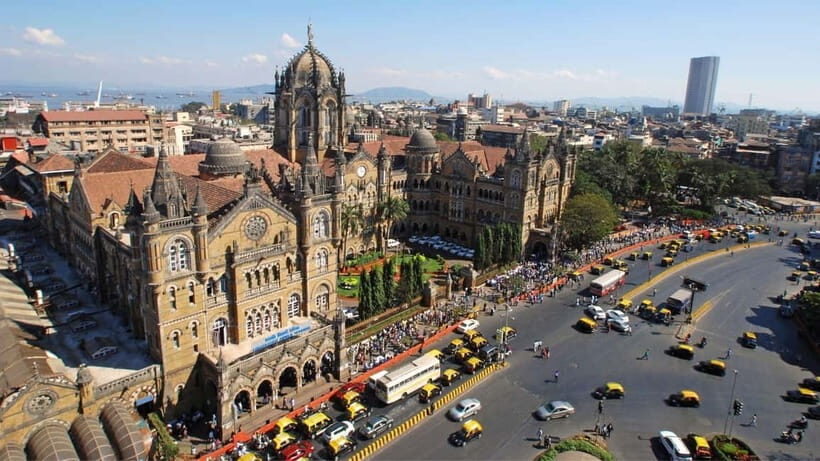
At CSMT, you’ll get about 10 minutes guided. This is the UNESCO World Heritage Site segment, and you’ll want to pay attention to how the guide frames the structure. Train stations of this scale often function like civic monuments—places built to impress, to organize arrivals, and to broadcast status.
Even with only a short guided visit, CSMT tends to hit hard visually because of its scale and architectural presence. If you’ve been photographing Mumbai landmarks all morning, this is a strong place to end your “big landmark run” with something that feels architectural and historic at the same time.
You’ll finish at one of three drop-off locations: Mumbai Cruise Pirs, CSMT Viewing Stage, or Mumbai port. That’s helpful because it lets you match your next plan—whether you’re continuing on to the waterfront or repositioning for the rest of your day.
Price and Logistics: Is $16 Good Value?
At $16 per person for 2.5 hours, this is a seriously budget-friendly way to get guided context in one focused area of South Mumbai. What makes it feel fair is that the price isn’t only “walking around.” You’re paying for a local guide who connects the stops, plus chai and a small-group format limited to 6 participants.
In other words, you’re buying a translator for the city’s architecture. If you’ve ever toured a place where the guide mostly says the same basic facts you can read on a plaque, you’ll appreciate the difference here—especially because the route includes institutions that many visitors skip.
Logistics are also straightforward:
- Live English guide
- No hotel pickup or drop-off
- Meeting point is clearly marked at Pizza Express by the Gateway of India
- You’ll walk most of the time, with one short bus ride to CSMT
- ID card is required, with a copy accepted
One consideration: because the tour is short and not meant for strollers or wheelchair users, you should plan to move at a walking pace. If you have mobility needs or require stroller access, this is likely not the best match.
Who Should Book This Tour (and Who Might Skip It)
This tour is a great fit if you:
- want an overview of South Mumbai’s heritage without spending a whole day on multiple tickets
- enjoy architectural context more than museum-style time
- like asking questions and getting answers from a guide in a small group
- want a route that covers both the famous shoreline landmarks and the quieter institutional side of the city
You might choose something else if:
- you need fully accessible logistics (this one is not suitable for wheelchair users)
- you want longer stops at each monument
- you’re traveling with a baby stroller
For most people, though, this is a smart “first pass” tour. You’ll finish with a stronger sense of where things are and why they matter—so your later self-guided wandering feels easier.
Final Thoughts: Book or Skip?
I’d recommend booking this one if your goal is to understand South Mumbai fast and fairly. The combination of Gateway of India, passing iconic landmarks like the Taj Mahal Palace, institutional stops that teach you how the city works, and a UNESCO finish at CSMT makes the route feel efficient and well matched to the 2.5-hour format.
If you’re set on taking your time at every stop or need stroller/wheelchair-friendly pacing, you might be happier with a different style of tour. But if you’re comfortable walking and want guided context in a compact plan, this is a strong value for the money—and chai included just feels right.
FAQ
Where is the meeting point?
You meet at the entrance of Pizza Express next to the Gateway of India.
How long is the tour?
The duration is 2.5 hours.
Is the tour walking all the way?
It’s mainly a walking tour, with a short bus/coach ride (about 10 minutes) to reach Chhatrapati Shivaji Maharaj Terminus.
Does the tour include chai?
Yes. A cup of chai is included.
What language is the guide?
The live tour guide speaks English.
How big is the group?
The group is limited to 6 participants.
Is hotel pickup included?
No. Hotel pickup and drop-off are not included.
Is the tour suitable for wheelchair users?
No. It’s not suitable for wheelchair users.
What ID do I need to bring?
You should bring an ID card; a copy is accepted.
Where do you get dropped off at the end?
You end with drop-offs at three locations: Mumbai Cruise Pirs, CSMT Viewing Stage, and Mumbai port.
Are baby strollers allowed?
Baby strollers are not allowed.
Can I cancel for a full refund?
Yes. You can cancel up to 24 hours in advance for a full refund.