REVIEW · RISHIKESH
Rishikesh: Beatles Ashram Art & Meditation Walking Tour
Book on Viator →Operated by Rishikesh Day Tour · Bookable on Viator
Beatles mystique meets real-life ashram culture. In about 3 to 4 hours, this private walking tour helps you hit the key spiritual spots without losing time on detours. I like that it focuses on recognizable stops like the Beatles Ashram and Ram Jhula, then ties them to how Rishikesh’s meditation and temple world actually works, from riverfront ashrams to the forest edge near Rajaji Tiger Reserve.
Two things I really like: you can choose a morning or afternoon slot, and you get a professional English-speaking guide who explains customs as you walk. In practice, that kind of guidance matters in Rishikesh, where temple rules and ashram routines can be easy to miss if you’re wandering on your own.
One consideration: the Beatles Ashram area involves extra entry costs, and foreign nationals may need a passport for access. One guest also ran into an added Tiger Reserve fee connected to the protected area around the ashram, so it’s smart to plan for that possibility and double-check current amounts before you go.
In This Review
- Key highlights and what they mean for you
- Why this half-day Rishikesh walk works when your schedule is tight
- Getting oriented fast with a private, English-speaking guide
- Beatles Ashram: the story, the setting, and the fees to plan for
- Swarg Ashram: a quick look at the engine room of yoga and meditation
- Parmarth Niketan: Ganga riverfront calm with Himalayan context
- Ram Jhula: a landmark bridge with a 450-foot sense of scale
- Gita Bhawan: a spacious riverbank complex tied to Guru Shri Ram Sukh Daasji
- The Rajaji Tiger Reserve buffer zone walk: a calmer change of scene
- Price and value: what $20 covers and what can cost extra
- Tips that help you get the most from a short guided walk
- Who this tour suits best, and who might want a different plan
- Should you book this walking tour?
- FAQ
- How long is the Rishikesh Beatles Ashram Art & Meditation Walking Tour?
- Do I get to choose the tour timing?
- Is this tour private?
- What’s included in the $20 price?
- Are entry fees included?
- Do foreign nationals need a passport?
- Cancellation
- Can I cancel for a full refund?
Key highlights and what they mean for you
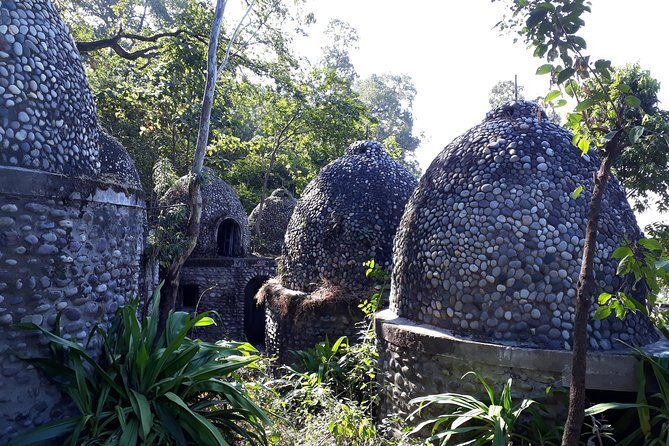
- Beatles Ashram (about 2 hours): See where the band stayed with Maharishi Mahesh Yogi, then get context so it’s more than a selfie stop.
- Easy timing choice: Pick a morning or afternoon tour when your day plan needs flexibility.
- Swarg Ashram + Parmarth Niketan: Short, focused visits to major yoga and meditation hubs on the Ganga.
- Ram Jhula crossing: A quick look at a 450-foot iron suspension bridge over the holy river.
- Gita Bhawan on the riverbank: A large ashram complex tied to Guru Shri Ram Sukh Daasji, with a riverfront feel.
- Rajaji Tiger Reserve buffer-zone walk: Forest views during the stroll add a calmer change of scene.
Why this half-day Rishikesh walk works when your schedule is tight
Rishikesh has a way of swallowing time. Temples are close together, signage can be confusing, and suddenly you’ve spent an hour just figuring out which lane leads where. This tour is built for the opposite: you get a guided route that hits the most meaningful highlights in a 3 to 4 hour window.
I also like the pacing logic. The stops are mostly “short and intentional,” which is ideal when you’re here for a broader trip and don’t want a half-day turning into a full-day commitment. You’ll still get time at the most famous site, and then quicker visits to other major ashrams and river landmarks.
And because it’s private for your group, you’re not stuck waiting on people who want to linger at one photo spot. If you’re the kind of visitor who prefers to ask questions and keep moving, this format fits well.
You can also read our reviews of more walking tours in Rishikesh


Getting oriented fast with a private, English-speaking guide
In Rishikesh, even the places that look straightforward often have unspoken rules: where to stand, how to behave near devotees, and when a quiet walk should stay quiet. A good guide helps you avoid awkward moments and helps you understand what you’re seeing while you’re still in the scene.
This tour includes an English-speaking guide, and that matters for the ashram stops. Rishikesh’s spirituality is not just decorative. It’s connected to meditation practices, temple customs, and the daily rhythm of ashrams. When your guide can explain customs on the move, you get the “why,” not only the “what.”
In recent experiences shared by customers, guides like Aaditya and Om have been described as punctual, friendly, and willing to answer questions. That’s exactly the vibe you want for a short tour: start on time, keep the route moving, and make the explanations land instead of feeling like a lecture.
Beatles Ashram: the story, the setting, and the fees to plan for
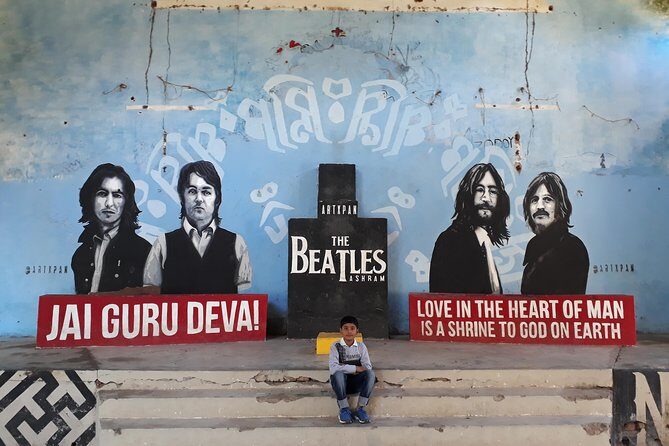
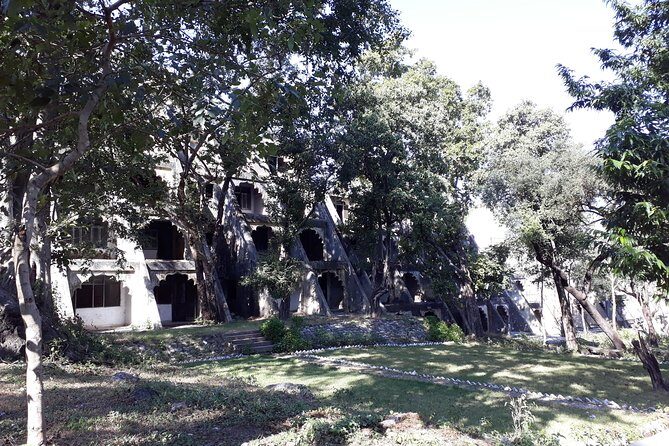
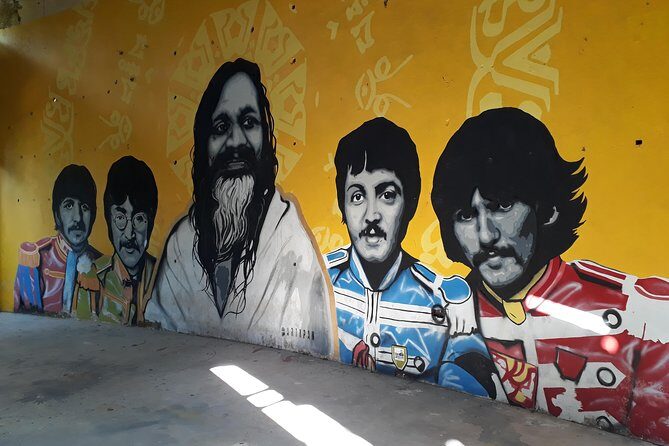
Let’s talk about the main magnet: the Beatles Ashram. In February 1968, the Beatles followed Maharishi Mahesh Yogi to Rishikesh to stay at his ashram, and they wrote dozens of songs there while in town. Even if you aren’t a die-hard fan, that connection gives the place a built-in storyline.
What makes this stop worth your time is the guidance around it. Without context, the Beatles Ashram can become only a landmark you pass through. With a guide, you get the thread linking popular music, Maharishi Mahesh Yogi, and the broader idea of transcendental meditation that drew many visitors to Rishikesh.
Now for the part you should plan for: entry fees are not included. The Beatles Ashram requires payment on-site, listed as INR 1,200 for foreign nationals and INR 200 for Indian nationals. Foreign nationals also must carry a passport (hard copy or soft copy) to enter.
And here’s the practical heads-up: one guest reported an additional Tiger Reserve-related fee tied to the protected area around the Beatles Ashram. I can’t promise what you’ll be charged, but I strongly suggest you budget for possible extra charges connected to the reserve boundary. If you’re traveling with a tight budget, this is the one place where math can surprise you.
My tip: before you reach the ticket area, ask your guide to confirm what fees you’ll face for your nationality. It saves time and keeps the rest of your walk smooth.
Swarg Ashram: a quick look at the engine room of yoga and meditation
After the big draw, the tour moves into a different kind of spiritual energy. Swarg Ashram is described as the epicenter of Rishikesh’s yoga and meditation centers, with hundreds of rooms and a hall with facilities.
This isn’t a place built for quick staring. It’s more like a living cluster where you can see how meditation culture scales up. Even with a shorter stop, you can still read the vibe: people here are focused on practice, and the space reflects that.
The stop is about 20 minutes and the admission is listed as free, which makes it a good balance. You get to experience Swarg Ashram without losing the rhythm of your half-day schedule.
A drawback to keep in mind: because your time at each non-anchor stop is shorter, you’ll get more out of this stop if you keep your questions targeted. Ask what’s special about the routines or the layout—then you’ll leave with real understanding instead of rushing through impressions.
Parmarth Niketan: Ganga riverfront calm with Himalayan context
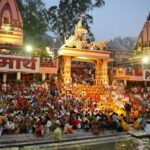
Next up is Parmarth Niketan Ashram, a true riverfront spiritual space on the holy banks of Mother Ganga, described as set in the lap of the Himalayas. That phrasing matters because it gives you a sense of what people come for: a quieter setting where the river and the mountains are part of the mental atmosphere.
This stop is also around 20 minutes, with admission listed as free. In a short tour, that’s the right amount of time. You’ll get a feel for the ashram setting and the Ganga-side atmosphere without needing a long break in your day.
What I like about including Parmarth Niketan is that it widens the tour beyond the Beatles story. The Beatles Ashram is historically famous, but Parmarth Niketan represents the continuing role of ashrams in modern meditation culture. You’ll likely leave with a better sense of how the fame connected site fits into a much bigger spiritual landscape.
If you’re sensitive to crowds, come ready for busier riverfront moments. Rishikesh can be active, even when you’re aiming for calm.





Ram Jhula: a landmark bridge with a 450-foot sense of scale
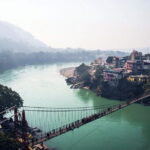
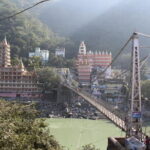
Then you hit Ram Jhula, an iron suspension bridge over the Ganga. It’s about 450 feet long, which makes it more than a small walking bridge. It’s a landmark that shapes how people move and how the riverfront is experienced.
This stop is brief—about 15 minutes and free. The value here is not only photos, but orientation. Once you’ve seen Ram Jhula, you can better picture how Rishikesh’s spiritual centers are strung along the river and how people connect between different sides.
One practical note: bridges attract camera stops, and it can get busy at certain times. If you want clean shots, aim to wait for a gap in foot traffic. Your guide can help you time it without turning your short stop into a standstill.
Gita Bhawan: a spacious riverbank complex tied to Guru Shri Ram Sukh Daasji

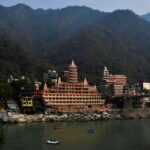
Finally, the tour ends at Gita Bhawan, also known as the Guru Shri Ram Sukh Daasji ashram complex. It’s described as a vast and spacious site on the banks of the Ganga, and it’s also referred to as the most beautiful ashram in Rishikesh.
That’s a strong claim, but it helps explain why it makes sense as a closing stop. You’re not finishing at some tiny corner temple that only works as a quick photo. Instead, you’re finishing in a more “complex” environment—roomy, river-facing, and visually structured.
The stop is about 15 minutes and free. In that short time, you’ll mostly be absorbing the setting: the scale, the river relationship, and the sense that this is built for sustained practice rather than just passing visits.
My tip: use your last stop to ask one or two broad questions. Something like how these ashrams relate to each other in daily life, or what visitors typically misunderstand. That way, your tour ends with clarity instead of only impressions.
The Rajaji Tiger Reserve buffer zone walk: a calmer change of scene
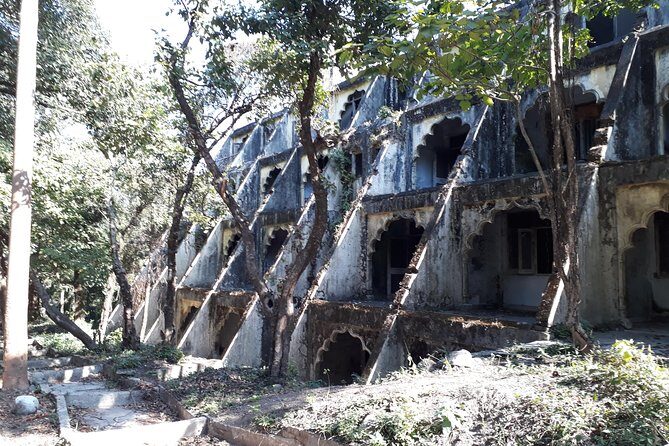
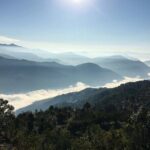
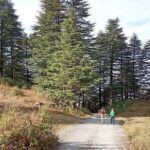
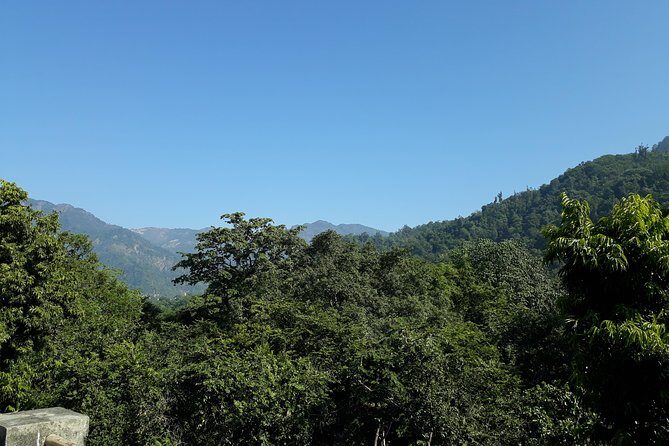
One of the tour’s more interesting ingredients is the time spent strolling along the buffer zone of Rajaji Tiger Reserve. You’ll get forest views as you walk, which is a welcome contrast to the temple-and-ashram intensity.
Even if you’re not planning a wildlife-focused trip, that change of scenery matters. It helps you breathe between spiritual sites. It can also make the whole half-day feel less like a checklist and more like a real walk through varied parts of Rishikesh.
In a short tour, you probably won’t see wildlife, and you shouldn’t count on it. The value is the scenery and the rhythm: walk, pause, understand, move on. That’s where guided tours quietly outperform solo plans.
Price and value: what $20 covers and what can cost extra
The listed price is $20 per person, and it’s clearly positioned as a budget-friendly way to see major highlights fast. The tour includes all taxes, fees, and handling charges, plus a professional English-speaking guide.
That’s the value part: for one guided half-day, you’re paying for route planning, interpretation, and time efficiency. In places like Rishikesh, those things can matter as much as the attractions themselves, especially if you want to spend your money on experiences instead of chasing directions.
But here’s the key part of the value math: entry fees are not included for at least the Beatles Ashram. It’s listed at INR 1,200 for foreign nationals and INR 200 for Indian nationals.
If you’re a foreign national, also plan for the passport requirement. And based on reported experiences, you may also encounter additional fees tied to protected reserve access around the Beatles Ashram area. That can affect your total spend more than the $20 tour price.
How to think about it: if you’re comfortable budgeting for one major paid attraction, the tour price is a smart add-on. If you’re trying to keep total daily costs extremely low, you’ll want to confirm current Beatles Ashram and reserve-related charges before you book.
Tips that help you get the most from a short guided walk
This kind of tour goes best when you travel prepared. Here’s how I’d set yourself up.
What to wear: the dress code is listed as smart casual. You don’t need formal wear, but do avoid very beachy or overly casual outfits that can look out of place at religious sites.
What to bring: for foreign nationals, bring your passport in a way you can show it quickly (hard or soft copy). Even if you have it somewhere in your bag, make it easy to access.
How to ask questions: for a short tour, ask one question per stop that you can apply immediately. For example, at the Beatles Ashram ask what practices or ideas attracted visitors there. At the ashrams, ask what a typical day of meditation or learning looks like. You’ll get more out of the time you’re given.
Pace expectations: the flow is designed to be manageable, with shorter stops like Swarg Ashram, Parmarth Niketan, Ram Jhula, and Gita Bhawan. If you want a slower, longer deep visit at just one site, this might not be your best fit.
Who this tour suits best, and who might want a different plan
This tour is ideal if you:
- Want a half-day orientation to Rishikesh’s spiritual centers
- Appreciate music-related history and cultural storytelling tied to the Beatles Ashram
- Like meditation and religion as living practices, not only as tourist sights
- Prefer a guide to explain customs so you feel respectful and confident
It may be less ideal if you:
- Want to spend lots of time inside one single site with minimal movement
- Are looking for a pure photography tour with minimal explanation
- Have a strict budget and can’t handle potential extra fees around the Beatles Ashram protected area
If you’re the kind of traveler who likes to return later on your own to the one stop you liked most, this is a strong “first pass” tour.
Should you book this walking tour?
If you’re coming to Rishikesh for a limited number of days and want to understand what you’re seeing, I’d say yes. The route is built for speed with meaning: Beatles Ashram for the famous story, major ashrams for the meditation context, then river landmarks and a bit of forest scenery.
Just go in with two smart expectations. First, treat the Beatles Ashram as a paid highlight, not an included-in-the-$20 stop. Second, for foreign nationals, make sure your passport is ready, and don’t ignore the possibility of additional reserve-area fees.
If you want, tell me your travel month and whether you’re visiting from India or abroad, and I can help you estimate a realistic all-in budget for the key paid sites before you book.
FAQ
How long is the Rishikesh Beatles Ashram Art & Meditation Walking Tour?
It lasts about 3 to 4 hours.
Do I get to choose the tour timing?
Yes. You can choose between morning and afternoon tour timings.
Is this tour private?
Yes. It’s described as a private tour/activity, so only your group participates.
What’s included in the $20 price?
The tour includes a professional English-speaking guide and all taxes, fees, and handling charges.
Are entry fees included?
No. Beatles Ashram entry is not included. The entry fee is listed as INR 1,200 for foreign nationals and INR 200 for Indian nationals. Admission for the other listed stops is listed as free.
Do foreign nationals need a passport?
Yes. Foreign nationals must carry their passport (hard or soft copy) to enter the Beatles Ashram.
Cancellation
Can I cancel for a full refund?
Yes. You can cancel up to 24 hours in advance for a full refund. Canceling less than 24 hours before the start time isn’t refundable.