Two hours on a quiet forest path. This walk is all about Mussoorie on foot: a non-commercial jungle trail under tall deodars and oak trees, then a plateau with wide Doon Valley views and far-off Himalayan peaks. It’s the kind of outing where you notice details because the trail stays calm.
I love the way the hike mixes simple nature time with human stories. With guides such as Yash, Dheerender, and Sagar, you get clear explanations of what you’re seeing, from local vegetation to places you’d likely miss without someone pointing things out. I also like the small comforts: snacks are included, and some guides even keep you going with hot chai at the top.
One consideration: the walk is listed for moderate physical fitness, so if you struggle with uphill hiking or uneven ground, you might want to pace yourself. Also, private transportation isn’t included, so plan how you’ll reach the start point.
In This Review
- Key things to know before you go
- Why the School Boy Walk feels like Mussoorie before the crowds
- Starting at Convent Of Jesus & Mary and planning your morning
- The jungle trail rhythm: deodar and oak to a high plateau
- Stop for Doon Valley views: why the plateau matters
- The Lambi dehar mines stop: a haunted-feeling pause
- Tibetan temple architecture stop: small details, big contrast
- Guide-led storytelling with Yash, Dheerender, and Sagar
- What’s included, what isn’t, and what you should bring
- Price and value: why about $10.78 feels fair for a guided forest walk
- Who should book the School Boy Walk
- Should you book it? My quick decision guide
- FAQ
- How long is the School Boy Walk?
- What time does the tour start?
- Where does the walk begin?
- Is pickup included?
- What stops are included during the walk?
- What’s included in the price?
- Is private transportation included?
- What’s the cancellation policy?
Key things to know before you go
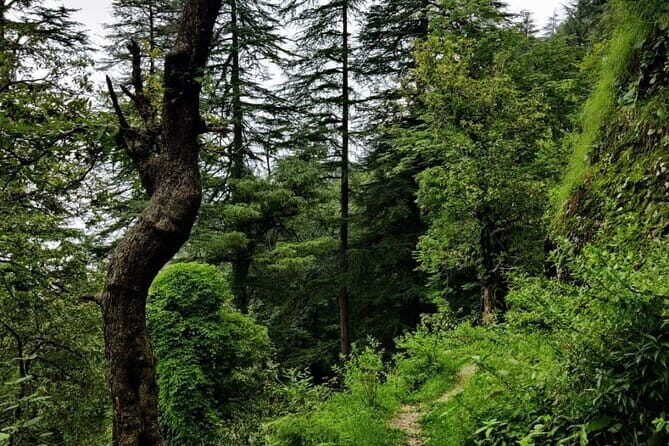
- Old-growth feel in the forest: tall deodars, oak, and a mostly untouched jungle trail rhythm.
- A payoff plateau viewpoint: wide Doon Valley sightlines and peaks like Kedarnath, Swarga Rohini, and Badrinath on clear days.
- The Lambi dehar mines stop: a haunted-mine style stop that adds drama to an otherwise peaceful walk.
- A Tibetan temple architecture moment: you’ll see distinctive temple details during the trek.
- Guide-led storytelling that changes the walk: with guides like Yash, Dheerender, and Sagar, it’s more than just walking.
- Snacks included: plus a chance you’ll be treated to a warm cup of tea at the top.
Why the School Boy Walk feels like Mussoorie before the crowds
If you like Mussoorie when it’s quiet, this is a strong pick. The point of the School Boy Walk is simple: get you into the woods early, slow down, and let the trail do the talking. You’re not touring shops or riding for hours—this is forest time, with viewpoints that feel earned.
The route leans into the classic Uttarakhand feel: tall trees overhead, cool shade under the canopy, and occasional open patches where you can look out toward the valley. The “school boy” part of the name suits the vibe—casual, curious, and light on pressure—so you’ll feel comfortable taking pauses for photos and photos of birds.
Just know that a walk like this works best when you’re okay with nature at a steady pace. You’ll be moving for about two hours, and the payoff is spread across the journey rather than saved for a single big stop.
You can also read our reviews of more walking tours in Rishikesh



Starting at Convent Of Jesus & Mary and planning your morning
The walk starts at 8:30am at Convent Of Jesus & Mary (F375+64C), Waverley, Mussoorie, Dehradun, Uttarakhand. The experience ends back at the same meeting point, so you’re not left figuring out how to get yourself out of the woods.
Two practical notes. First, the tour indicates pickup is offered and you’ll have a mobile ticket, so you should expect everything to be fairly straightforward once you confirm your pickup details. Second, your listing info includes Rishikesh, but the meeting point is clearly in Mussoorie—so double-check your confirmation message so you show up in the right town.
Because it’s morning, you’ll want to go in with the right mindset: less rush, more looking. I’d treat this as your “reset” activity. It’s also a good way to balance Mussoorie, since the same trip can include busier viewpoints later.
The jungle trail rhythm: deodar and oak to a high plateau
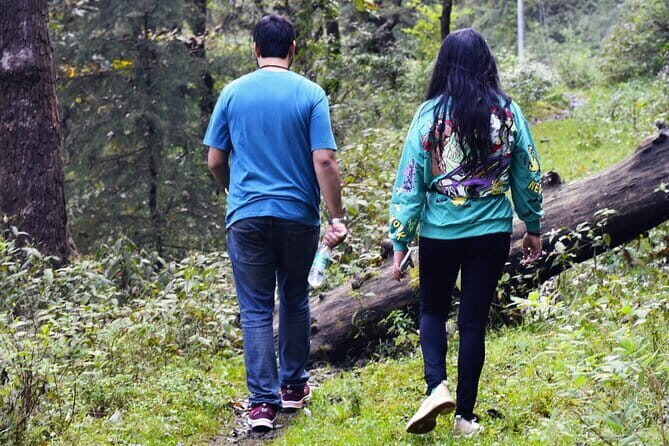
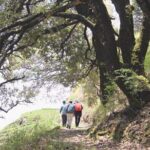
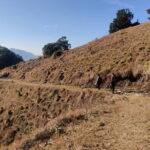
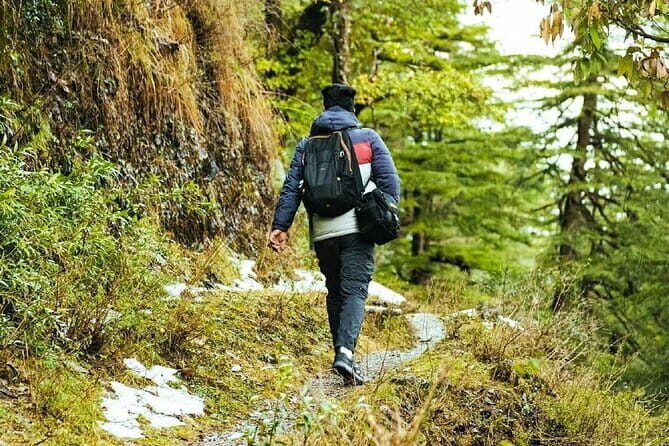
The trail begins with tall old deodars, then continues through an oak forest feel as you move upward. Even without technical hiking, you’ll feel the climb, and the forest coverage helps make it comfortable—more shade, less harsh sun, and more chances to catch birdsong.
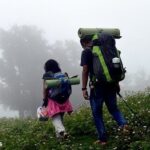
The hike is designed to feel accessible, but it still asks for some basic stamina. It’s marked for moderate physical fitness, which in practice means you should be comfortable walking uphill for stretches and stepping over the natural unevenness that comes with any jungle path.
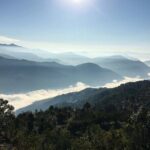
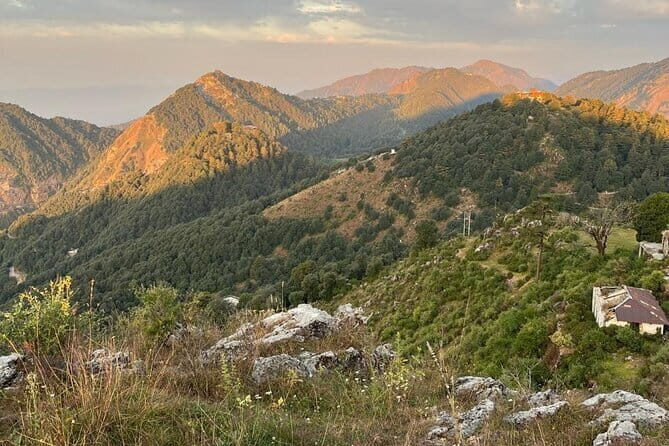
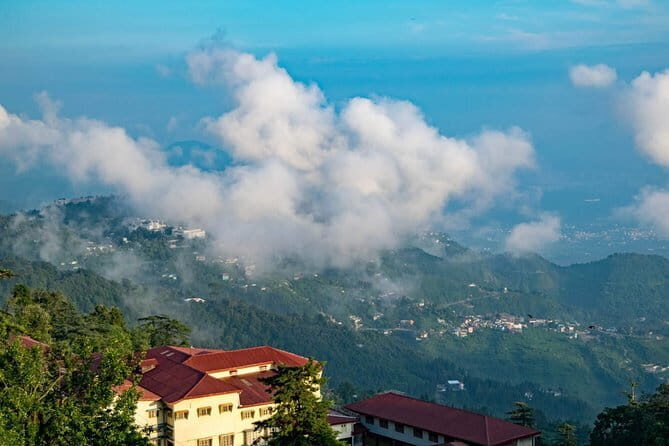
Then comes the moment you’ll remember: the top is a plateau. This is where the views open up over the Doon Valley, and on clear days you may also see far-off peaks like Kedarnath, Swarga Rohini, and Badrinath. The plateau is also perfect for group photos and selfies because the viewpoint is broad rather than narrow.
If you’re going for photos, plan to slow down at the open stretches. Your best shots will come when the light hits the valley without you rushing between positions.
Stop for Doon Valley views: why the plateau matters
One of the smartest things this tour does is make the big view feel like a sequence, not a single moment. As you reach that plateau area, the Doon Valley opens up, and your eyes naturally start sorting the valley shapes and mountain lines.
This isn’t just for picture-taking. A wide view helps you understand Mussoorie’s position—why the town sits above the valley and why the horizon matters here. It also makes the walk feel longer in a good way, because the climb turns into a gradual reveal.
If the weather cooperates, you get an extra layer: those distant Himalayan peaks are mentioned as visible from the summit area. In real life, visibility can change quickly in the hills, so don’t stress if you can’t identify every peak. Look for the big idea: the valley spread and the mountain silhouettes in the distance.
And yes, it’s a great spot for portraits and group photos. Just be mindful of wind and keep your phone secure if it’s breezy.
The Lambi dehar mines stop: a haunted-feeling pause
About partway through, you’ll make a stop to spot the haunted mines of Lambi dehar mines during the jungle walk. This is the kind of moment that changes the tone of the hike—from quiet forest to something a bit eerie and story-driven.
It’s also a reminder that these hills have human history layered over the natural one. The mines add context to how people used to work the land. You’ll likely want to listen closely to your guide’s explanation, because that’s where the meaning lands.
Practical advice: keep your footing careful around any mine-area terrain. Even if the stop is short, these places can be uneven and not set up for lingering. Treat it like a quick look-and-learn stop, then move on.




Tibetan temple architecture stop: small details, big contrast
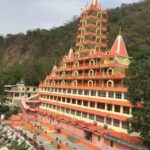
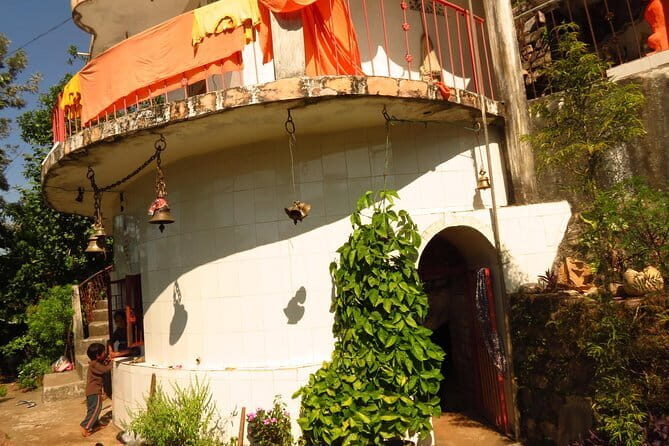
Another highlight is the Tibetan temple architecture stop during the walk. It adds a cultural contrast right in the middle of a forest trek, so you go from tree shade to structured stone-and-design details.
This kind of stop makes the experience feel more complete. You’re not only seeing nature—you’re seeing how local life and religious architecture coexist with the hills. It’s also one of those moments where taking a few minutes to look closely beats rushing for the next photo.
If you’re traveling with family, this stop tends to work well because it’s visually clear and easy to understand without a museum-style explanation. Still, your guide’s narration can turn it from scenery into a story you’ll remember.
Guide-led storytelling with Yash, Dheerender, and Sagar
The reviews point to the guides as a major reason this walk gets a 5-star track record. Names you might hear include Yash, Dheerender, and Sagar, and the common thread is how they connect the trail to real hill knowledge.
Here’s what that usually looks like on the ground:
- Your guide explains local vegetation and what you’re passing—so the forest becomes a learning walk, not just scenery.
- You get small, memorable moments that make the trek feel personal. One review mentions hot tea at the top, and it’s hard to beat chai with a mountain view.
- Some guides also add extra nature moments like birdwatching. With Sagar Bhandari, for example, people mention seeing birds such as Himalayan Bluetail and Blue-fronted Redstart on the trails.
Even if birdwatching isn’t the focus on your particular day, expect your guide to slow the group down at the right spots. That’s what makes the walk feel worth doing early in the morning rather than squeezing it between other activities.
What’s included, what isn’t, and what you should bring
Included: you’ll have a guide and snacks. You’ll also receive a mobile ticket. Pickup is offered, but private transportation isn’t included, so you’ll want to confirm how you’ll get to the meeting point and whether pickup covers your exact location.
Bring:
- Comfortable walking shoes with grip (you’re on a forest path, not a treadmill).
- A light layer for morning air, plus something for wind at the plateau.
- Water for the trek. Snacks are included, but water keeps you comfortable.
- A camera or phone with enough battery for valley views and plateau photos.
Also plan your schedule. Since the hike is about two hours, it pairs nicely with other Mussoorie activities later that day without knocking out your whole morning.
Price and value: why about $10.78 feels fair for a guided forest walk
At $10.78 per person, this isn’t priced like a full-day expedition. It’s priced like what it is: a focused guided walk with a natural setting and multiple meaningful stops.
That value comes from three places:
- You get more than just walking; you get interpretation from a guide, often including story-driven stops.
- The route includes several “worth getting out of bed” moments: Doon Valley viewpoint, the mines stop, and the Tibetan temple architecture stop.
- Snacks are included, which matters on a short trek. You don’t want to think about food logistics mid-hike.
Could it be even better with transport included? Sure. But since pickup is offered and the start/end point are fixed, the cost still feels reasonable if you’re already staying nearby or you plan your morning start smartly.
Who should book the School Boy Walk
This is a good fit if you want:
- A short hike (about two hours) that still feels like a real outing.
- A guided experience where local knowledge changes how you see the forest.
- Views worth chasing without committing to an all-day trek.
It’s private, too—so only your group participates. That can be a real advantage for families or anyone who doesn’t want to manage a larger crowd.
If you have moderate hiking ability and you’re okay with uneven natural paths, you’ll likely be comfortable. If you’re looking for a flat, stroller-friendly walk, this probably won’t match that expectation.
Should you book it? My quick decision guide
I think you should book the School Boy Walk if you’re in Mussoorie and want one morning that feels calm, local, and surprisingly meaningful. The combination of an old deodar and oak forest, a plateau viewpoint, and stops like the Lambi dehar mines and a Tibetan temple architecture moment gives you variety without making it complicated.
Skip it only if you strongly prefer easy, flat walks or if you don’t want to handle morning logistics without guaranteed private transport. Otherwise, this is the kind of activity you can finish feeling like you truly saw the hills—not just passed through them.
FAQ
How long is the School Boy Walk?
It runs for about 2 hours.
What time does the tour start?
The start time is 8:30am.
Where does the walk begin?
It starts at Convent Of Jesus & Mary (F375+64C), Waverley, Mussoorie, Dehradun, Uttarakhand, India.
Is pickup included?
Pickup is offered, and you’ll receive a mobile ticket.
What stops are included during the walk?
You’ll visit viewpoints and stops such as the beauty of Doon Valley, the haunted mines of Lambi dehar, and the extraordinary architecture of a Tibetan temple.
What’s included in the price?
A guide and snacks are included.
Is private transportation included?
No, private transportation is not included.
What’s the cancellation policy?
You can cancel for a full refund if you cancel up to 24 hours before the experience start time. If you cancel less than 24 hours before, the amount paid is not refunded.