REVIEW · MUMBAI
Private Mumbai Jewish Heritage Tour: Baghdadi & Bene Israel
Book on Viator →Operated by No Footprints · Bookable on Viator
Mumbai has layers. This tour follows one of them.
In a few hours you’ll connect iconic landmarks to the story of Mumbai’s Bene Israel and Baghdadi communities—how traders, prayer, learning, and commerce shaped the city. I love that it mixes famous views with quieter, tucked-away places, so you don’t just get names on a map—you get a sense of how Jewish life fit into the wider Mumbai that you see today.
Two things I especially like: the focus stays on real places (docks, a library, and two synagogues) rather than just quick photo stops, and the guide—Nasreen Mehta—brings the story to life with humor and strong context, including connections between Indian, Jewish, and global history. One thing to consider: the schedule is short and includes active street time in busy areas, and the Chabad House visit is based on availability, so you’ll want to keep your expectations flexible.
In This Review
- Key highlights to look for
- Why this tour works (even if you only have half a day)
- Getting oriented at Gateway of India’s Jewish connection
- Sassoon Dock: where community history meets Mumbai’s economy
- David Sassoon Library and Reading Room: reading as part of community life
- Keneseth Eliyahoo Synagogue: seeing a Baghdadi synagogue in the art district
- Magen David Synagogue: architecture and prayer in the same frame
- Chabad Center Bombay (Chabad House): resilience with present-day meaning
- How the private format changes the experience
- Logistics that actually matter on the day
- Who this tour fits best
- Price and value: $96.03 for a focused, guided heritage route
- Should you book? My practical take
- FAQ
- How long is the Private Mumbai Jewish Heritage Tour: Baghdadi & Bene Israel?
- What does the tour cost?
- Is hotel pickup and drop-off included?
- What stops are included on the tour?
- Are tickets included for the sites?
- Is it free for young children?
- Is the tour affected by weather or major events?
Key highlights to look for
- Nasreen Mehta’s storytelling ties local Mumbai details to wider historical context
- Two synagogue visits show different architectural styles and how tradition is practiced
- Sassoon Dock and the Sassoon Library area link community history to trade and city life
- Gateway of India connection gives you a fresh lens on a landmark most people already know
- Chabad House stop if available, adding meaning through the lens of resilience
- A private group means you can ask questions and move at a human pace in traffic-heavy streets
Why this tour works (even if you only have half a day)
This is one of those rare tours that feels built for understanding, not just ticking boxes. You start with a place almost everyone recognizes—Gateway of India—then the route shifts toward the Jewish footprint that’s harder to spot unless someone points it out. That approach is practical: you get orientation first, then the details actually stick.
The pacing also makes sense for Mumbai. You’re out about 3 to 4 hours, with multiple stops that are brief but purposeful. Because it’s private, you’re not stuck in a long line waiting to be herded. And yes, you’ll be dealing with city streets—so it helps that the tour includes a guide who handles real-world movement, including safe crossing in heavy traffic (a point that shows up again and again in the feedback).
Value matters too. At $96.03 per person with hotel pickup and drop-off, transport, and a professional guide included, it’s not trying to squeeze extra money out of you at each turn. The few items that are not included (like extra North Mumbai pickup costs, or a language guide besides English) are the kind of add-ons you can plan for rather than surprises.
You can also read our reviews of more private tours in Mumbai


Getting oriented at Gateway of India’s Jewish connection
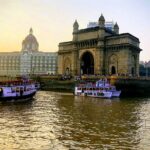
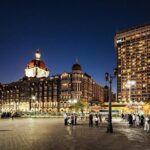
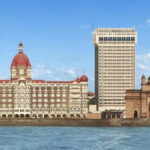
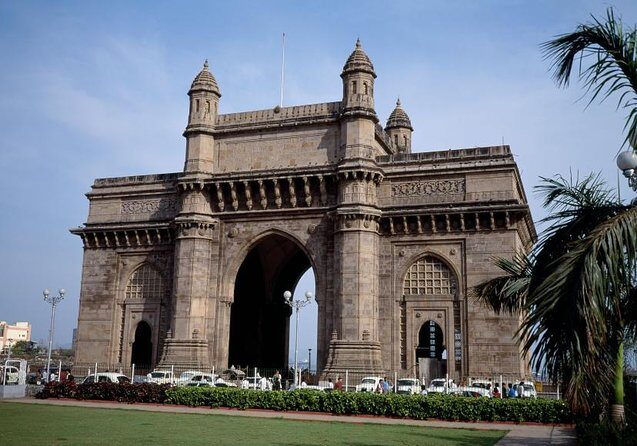
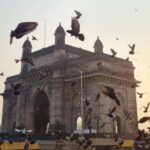
Gateway of India is one of those monuments that people photograph without thinking too hard about what else is going on around it. Here, you get a different way to read the waterfront and the flow of people that brought global communities into Mumbai’s orbit.
What I like about starting here is the time-saving logic. You get an iconic view, a sense of where the action is, and then the tour uses that location to frame Jewish community presence in the city’s broader story. Even if you’ve already been to the area, you’ll likely walk away with a clearer “why this matters” feeling.
Time is short at this stop—about 20 minutes—so you shouldn’t expect a long sit-down lecture. Instead, think of it as a launchpad: you’re building context before the route heads into places where the heritage is more literal.
Sassoon Dock: where community history meets Mumbai’s economy
Next up is Sassoon Dock, tied to the Sassoon family—well known in Mumbai for their roles in commerce and shipping. This stop is more than genealogy. It helps you understand how the Jewish community’s presence connected with the economic engine of the city.
In practical terms, docks are one of the best places to learn “how cities work.” Trade hubs don’t stay symbolic for long. They shape jobs, patterns of movement, and the daily reality of living near the waterfront. When your guide connects the Sassoons to Mumbai’s economy, the story doesn’t float—it has weight.
This stop is also designed to be readable without special preparation. It’s about 20 minutes, and entry is included, so you don’t need to hunt for ticket details on the day. The broader takeaway is that you’re learning Jewish heritage through the places where livelihoods were built.
David Sassoon Library and Reading Room: reading as part of community life
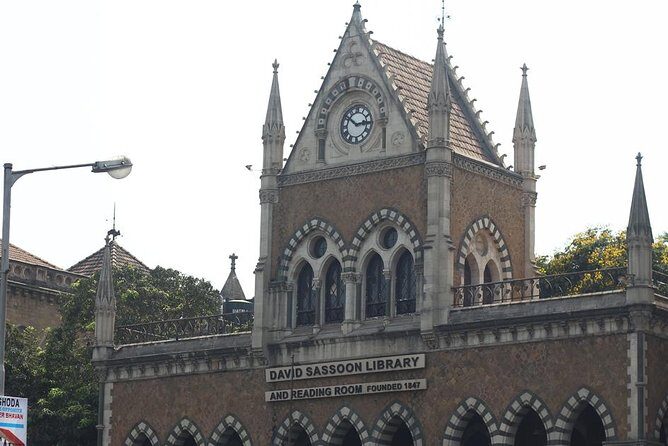
Then you move to the David Sassoon Library and Reading Room area. The setting has a “you might miss this” feel—an earlier mechanical institute turned into a library. And the location adds an extra layer: it looks out toward Kalaghoda, one of those city districts where arts and history overlap.
Why I like this stop: libraries aren’t just quiet rooms. In communities that faced displacement and change over time, learning spaces become social glue. They keep language and tradition active, and they create a public face for education and civic life.
Here, your time is short—around 10 minutes—but it’s enough to make you look up from the street and notice the mix of older architecture and ongoing use. It’s also free admission, so you get the setting and the explanation without extra cost.
Keneseth Eliyahoo Synagogue: seeing a Baghdadi synagogue in the art district
Now you’ll step into one of the tour’s best “wow, I didn’t know that existed” moments. Keneseth Eliyahoo Synagogue is described as hidden away in the Kalaghoda art district, which is exactly the kind of context that makes this heritage tour worth doing.
Visually, you’re looking for a synagogue that feels like an anchor—something that has stayed present while Mumbai changed around it. The guide frames it as a Baghdadi Jewish synagogue and an “insignia” of the heritage that’s not always obvious at street level.
This stop is about 20 minutes, with free admission. It’s long enough for you to hear the story and still not drag. The setting is quieter than the main roads nearby, which helps the experience land. Just remember: synagogues tend to have strict expectations around respectful behavior and movement, so dress and attitude matter.
You can also read our reviews of more historical tours in Mumbai

Magen David Synagogue: architecture and prayer in the same frame
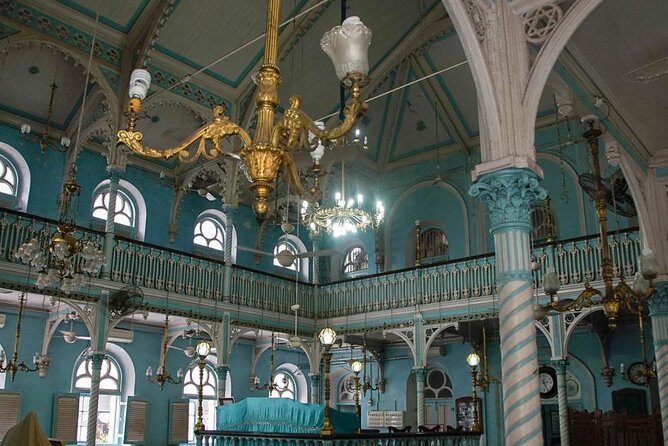
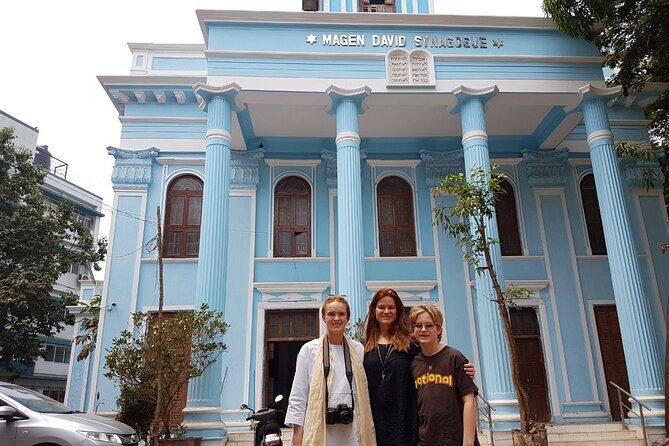
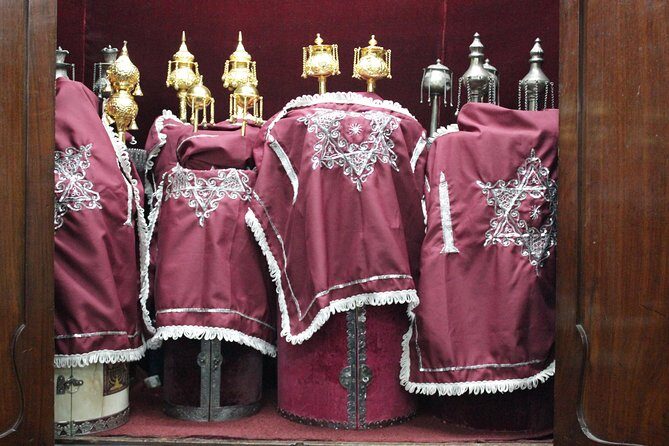
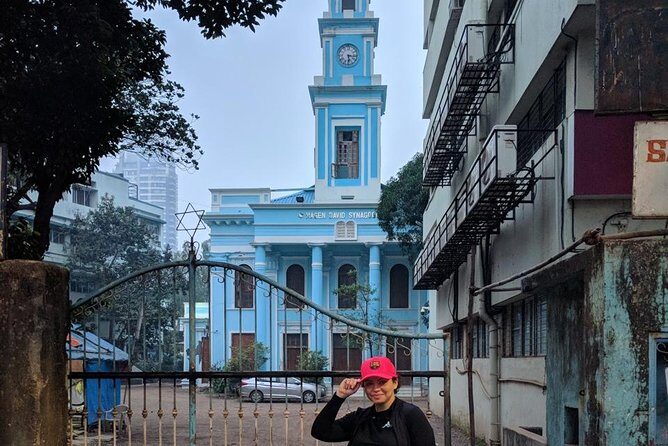
The tour then shifts to the Magen David Synagogue, framed as an architectural masterpiece where traditions are preserved and prayers are part of the space’s living rhythm. Even if you’ve visited houses of worship elsewhere in the world, Mumbai’s Jewish synagogues carry their own tone—some of it architectural, some of it emotional, and a lot of it about how community memory is kept alive.
This is another about 20 minutes stop, again free admission. If you’re the type who likes to compare: this is where you may start noticing differences in style and how each congregation’s identity shows up in the details.
I also like that the tour doesn’t treat synagogues like museum pieces. The explanation ties the physical place to the ongoing human practice of faith. That makes the stops feel less like sightseeing and more like understanding.
Chabad Center Bombay (Chabad House): resilience with present-day meaning
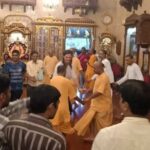
The final meaningful waypoint is the Chabad Center Bombay, connected to the Chabad House and referenced in connection with the famous terrorist siege in Mumbai. The tour notes that this stop depends on availability, which is important. You’re not guaranteed access every day, so it’s best to treat it as a bonus with high emotional weight if it happens.
If you do make it here, expect a shift in tone: less “architecture and layout,” more “what did this community carry forward.” The way the tour frames it—resilience and unity—matches the theme of the entire route: Jewish heritage in Mumbai isn’t just about what’s old. It’s about what endured and what communities rebuilt.
The time here is about 15 minutes, with free admission. That’s enough to absorb the significance without turning it into a long memorial speech. Still, it’s the stop that often stays with people because it connects place to lived tragedy and recovery.
How the private format changes the experience
Because this is private, the tour feels less like a script and more like guided conversation. That matters in a heritage tour, where questions often come fast: Why did different groups arrive at different times? How did the city shape community life? What stayed the same, and what changed?
The feedback around Nasreen Mehta highlights exactly this: she’s not only sharing dates. She’s connecting stories and keeping things engaging. People specifically mention her traffic control and care, like watching out for you when crossing streets in Mumbai traffic. That sounds small, but it’s the difference between feeling relaxed and feeling rushed.
Also, the “near public transportation” note is helpful even if you’re using hotel pickup. In a city where things can change quickly, having options is smart.
Logistics that actually matter on the day
A few practical notes help you enjoy the tour instead of working around it:
- Pickup and drop-off are included as part of the cost, but North Mumbai pickup can add extra transport cost. If your hotel is far north, confirm in advance so you don’t get a surprise.
- The tour is described for moderate physical fitness. This doesn’t mean marathon walking, but you should expect standing, short walks, and moving through busy streets.
- The tour is marked as dependent on good weather. If conditions are poor, it can be canceled and you’ll be offered a different date or a full refund.
- There’s a scheduling note about the Mumbai Marathon day, when the tour isn’t conducted. If you’re traveling around that time, plan around it.
None of these points are dramatic, but they’re the kind of details that shape comfort.
Who this tour fits best
This is a strong pick if you want Mumbai through a specific lens—Jewish heritage—not just through viewpoints and general city facts. It’s also a good choice if you like structure: a clear route, a handful of meaningful places, and explanations that build on each stop.
You’ll likely enjoy it if:
- you like history tied to real locations (docks, synagogues, libraries)
- you prefer guided context instead of reading everything yourself
- you want a short tour that still feels complete in 3–4 hours
It might be less ideal if:
- you want a long, slow museum-style experience
- you dislike being out in traffic-heavy areas
- you’re hoping for a guaranteed Chabad House visit every time (since it’s based on availability)
Price and value: $96.03 for a focused, guided heritage route
At $96.03 per person, this tour sits in a reasonable range for a private guide plus transport and hotel pickup. The key value isn’t just the guide—it’s that you’re getting a compact route that hits multiple heritage anchors: Gateway of India, Sassoon Dock, David Sassoon Library area, two synagogues, and optionally Chabad House.
Also consider what’s included: driver, professional guide, private transportation, and all fees and taxes. That reduces the “nickel-and-dime” feeling many travelers hate. The only predictable extra costs are if you need a language guide besides English, or if your hotel pickup location requires additional transport.
If you’re short on time in Mumbai but don’t want a generic overview, this price feels more justified. You’re paying for direction and interpretation—especially the kind Nasreen Mehta is praised for.
Should you book? My practical take
If you care about seeing Mumbai as a layered city—where different communities shaped the streets you already want to visit—this is an easy yes. The route is tight, the stops are meaningful, and the guidance stands out for turning history into something you can actually picture.
I’d book it if you:
- want a private experience with time to ask questions
- plan to enjoy synagogues, architecture, and city-linked storytelling
- are traveling with someone who appreciates history with a human tone
If you’re very weather-sensitive or you want guaranteed access to the Chabad House stop, keep flexibility in your planning. Otherwise, this tour is a smart way to understand Mumbai’s Jewish heritage without spending days on research.
FAQ
How long is the Private Mumbai Jewish Heritage Tour: Baghdadi & Bene Israel?
The tour runs about 3 to 4 hours.
What does the tour cost?
The price is $96.03 per person.
Is hotel pickup and drop-off included?
Yes. Hotel pickup and drop-off are included, with a note that North Mumbai pickup may cost extra.
What stops are included on the tour?
The tour includes stops at Gateway of India, Sassoon Dock, David Sassoon Library and Reading Room, Keneseth Eliyahoo Synagogue, Magen David Synagogue, and Chabad Center Bombay if available.
Are tickets included for the sites?
The tour lists admission ticket pricing per stop, and overall includes all fees and taxes. Several stops are noted as free admission in the schedule.
Is it free for young children?
Yes. Children under 5 can do the tour free of cost.
Is the tour affected by weather or major events?
Yes. The tour requires good weather. It’s also noted that it does not run on the day of the Mumbai Marathon. If canceled due to poor weather, you’ll be offered a different date or a full refund.