REVIEW · GOA
CULTURAL & HISTORIC DAY TOUR ATTRACTIONS – Churches, Temples & Spice Plantation
Book on Viator →Operated by Crossmiles Travel Pvt. Ltd. · Bookable on Viator
Goa’s story hits you fast and hard in one day. This 6–8 hour tour strings together Portuguese-era streets, major Hindu temple life, and a tropical spice plantation where you eat and taste the plants.
I really like how it covers both sides of Goa in one loop: the colonial capital area with Panjim and the Latin Quarter feel, then the older church sites of Old Goa. I also like that the spice stop is not just a quick photo break; it comes with a lunch and herbal tea, plus a guide’s explanation from people who love telling the story of how spices and local food actually work.
One consideration: it’s capped as a small group (max 15), so you’re sharing time and attention with others, and the pace depends heavily on the guide keeping a tight schedule. If you get motion-sick easily, plan for some driving between sites too.
In This Review
- Key takeaways before you go
- Why this Goa circuit makes sense for limited time
- Getting picked up: comfort, pacing, and small-group reality
- Panjim heritage walk: cobblestones, the Mandovi River, and city origins
- Fontainhas: the Portuguese Latin Quarter you can actually enjoy walking
- Old Goa (Velha Goa): where Portuguese power shows up in stone
- Mangeshi Temple: the Hindu counterpoint that keeps Goa honest
- Tropical Spice Plantation: herbal tea, local lunch, and the plant-to-plate story
- Guides and drivers: why the human touch keeps this tour fun
- Price and value: what $100 buys in a day
- Who should book this tour (and who should consider alternatives)
- Should you book this churches, temples & spice plantation day tour?
- FAQ
- How long is the Goa Churches, Temples & Spice Plantation tour?
- Is pickup offered, or do I need to get there on my own?
- How many stops are included in the tour?
- Is admission included at the churches and temples?
- What’s included at the spice plantation?
- Can I cancel for a full refund?
Key takeaways before you go
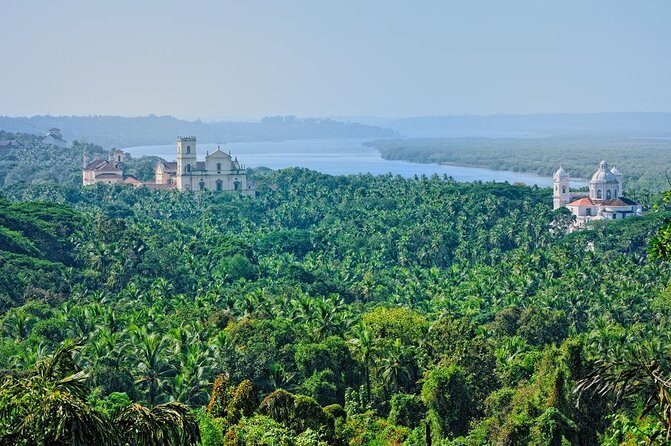
- Five distinct Goa stops in one outing means less guessing and more time seeing the different “eras” side-by-side.
- Guides can make or break the day, and this tour is consistently praised for guides who talk with energy and answer questions.
- Spice plantation lunch + herbal tea turns the last stop into a real break, not just a showroom visit.
- Short walking stretches through Panjim and Fontainhas keep things manageable even if you’re not a long-distance walker.
- Your spice-plant expectations should be flexible: some parts feel brief, and much of your time may shift to food and the shop.
- Bring a little patience for timing, especially if you’re trying to catch a cruise departure.
Why this Goa circuit makes sense for limited time
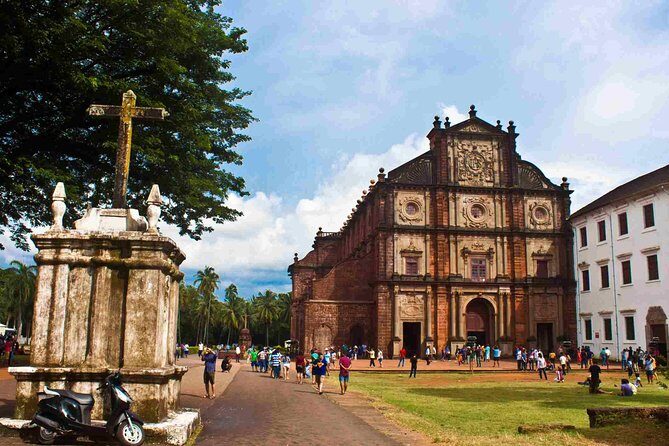
Goa can feel like two different places: the coastal, colonial-era towns with church bells and tiled facades, and the older temple-and-village rhythms inland. This tour’s value is that it puts those worlds in the same day, so you stop trying to “choose the right Goa” and just see how the mix works.
The 6–8 hour format is also practical. You get enough time to walk, learn, and eat without burning your whole holiday on transfers. And because several major sites are close enough to pair together, you avoid the day becoming a long bus ride with a few quick photo stops.
You can also read our reviews of more historical tours in Goa



Getting picked up: comfort, pacing, and small-group reality
Pickup is offered, and the tour runs with a driver plus a guide, with most days handled in a comfortable car. Reviews repeatedly mention newer, air-conditioned vehicles and calm, careful driving, which matters in Goa where road conditions and traffic can turn unpredictable fast.
Because the group size is limited to 15 travelers, you usually get a more personal experience than the big-bus option. Still, you should expect the social part of a group day: you’ll hear other languages, you’ll share timing, and you won’t get total control over linger-time at each stop.
If you’re someone who hates rushing, do yourself a favor and use your tour time wisely at each site. The stops are around an hour each, so when a guide says something is worth a couple photos now, it usually is.
Panjim heritage walk: cobblestones, the Mandovi River, and city origins
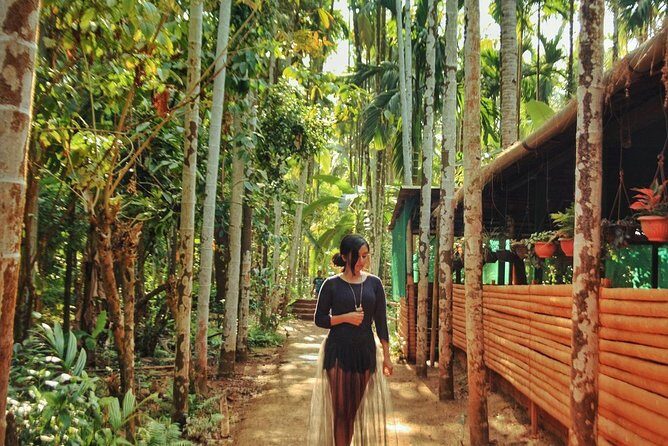
The tour starts in Panjim (also spelled Panaji), Goa’s state capital, sitting along the Mandovi River. This is where you get the “city first” orientation—what the river port life looked like, and why this town mattered during the Portuguese period.
What I like about starting here is the way it sets context. You’re not walking into Old Goa and wondering why the architecture looks the way it does. In Panjim, you can spot the mix of Portuguese-era buildings and local life, and you get a sense of how the city’s layout shapes your photos and your walking routes.
The walk itself is paced for a day tour. You’re not stuck on mile after mile of sidewalks, and the tour keeps things practical—enough to feel the place, not so much that you need a recovery day.
Fontainhas: the Portuguese Latin Quarter you can actually enjoy walking
Next comes Fontainhas, the old Latin Quarter in Panjim known for Portuguese influence—especially through its architecture. Expect narrow streets, colorful buildings, and a neighborhood feel that’s easy to see up close since this part is a walking stop.
Fontainhas works well for visitors who want an atmospheric stroll without committing to a full-day urban wandering plan. You’ll be able to slow down for pictures, then move on without feeling trapped.
One note to keep in mind: some local areas are sensitive to crowds. If you go, be mindful with how you photograph and how you pass through narrow lanes. It keeps your experience smoother—and helps you stay welcomed.
Old Goa (Velha Goa): where Portuguese power shows up in stone
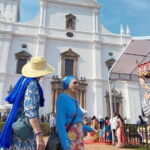
Old Goa is where the tour leans more historic and more dramatic. This former Portuguese capital area sits near the Mandovi River and is known for Portuguese-era monuments, including the Basilica of Bom Jesus.
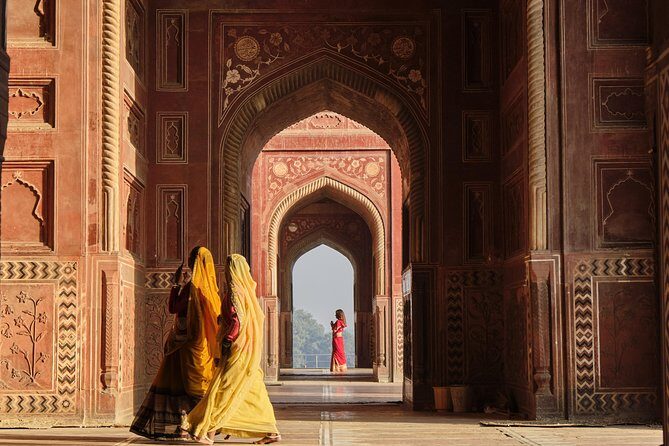
This stop is valuable because it changes the mood from “walking streets” to “standing in places built to last.” You’re seeing the kind of monumental religious architecture that shaped Portuguese Goa’s identity for centuries. It also gives you a clear anchor point for the next contrast: Hindu temple culture that you’ll see later the same day.
If you care about details, this is a good place to ask your guide questions. Guides often connect architectural choices to the history of the region and the way different communities lived side-by-side, which makes the visit feel more like understanding than sightseeing.



Mangeshi Temple: the Hindu counterpoint that keeps Goa honest
After the churches, the tour shifts gears with Mangeshi Temple in Mangeshi Village (Priol, Goa). It’s described as one of the largest and most frequently visited temples in Goa, which matters because it means you’re not just looking at a random roadside stop—you’re seeing a living center of worship.
This part of the day is one of the best ways to understand Goa as a cultural crossroads. You go from Portuguese colonial religious monuments to a Hindu temple that reflects local faith traditions and ongoing community life.
For many visitors, this is the most memorable emotional contrast of the day: the church stop can feel formal and stone-heavy, while the temple visit tends to feel active and community-centered. Dress and behavior should match temple norms, and if you’re unsure, follow your guide’s lead.
Tropical Spice Plantation: herbal tea, local lunch, and the plant-to-plate story
The final big stop is a tropical spice plantation, where the tour includes an admission ticket and wraps with herbal tea and freshly prepared food. The experience is presented as a blend of nature and tradition, with a welcome that fits the setting.
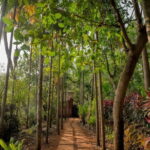
This stop is where the day turns from “history and architecture” into “smell and taste.” You can learn how spices grow and how they become part of local food culture. One review specifically pointed out seeing cashew nuts grow, and mentions watching a range of spices such as cinnamon, vanilla, and pepper—so if plant visuals matter to you, this is a strong fit.
Food is also a major piece of value here. The tour includes lunch, and people mention buffet-style meals along with drinks like ginger and lemongrass. That means you’re not hunting for food after several stops—you’re given a proper break.
That said, here’s the tradeoff to know: some visitors find the plantation portion of the walking tour short, with more emphasis on the buffet meal and the shop. If you’re expecting a long guided walk through every spice bed, you might feel the time is tight. If you like a guided highlights tour plus good food, you’ll probably enjoy it more.
Guides and drivers: why the human touch keeps this tour fun
The best days on this kind of tour come down to the guide. A standout theme in the feedback is that guides bring energy, practical explanations, and real enthusiasm for Goa. Names that come up include Joaquim, Jonas, Xavier, Stanley, Cesar, Sachin, Anthony, Cleo, and Adnelo Ferrao.
What that translates to for you: you’re more likely to understand why each site looks the way it does, and how to connect Panjim’s Portuguese influence with Old Goa’s church legacy and the Hindu traditions you’ll see at Mangeshi Temple. Good guides also keep the group moving without making it feel like a frantic dash, which is especially important in a 6–8 hour window.
Drivers also matter. Multiple reviews call out careful, safe driving and smooth handling of the route between stops. If you’re sensitive to uncomfortable rides, that matters more than you’d think.
Price and value: what $100 buys in a day
At about $100 per person, you’re paying for a lot of real logistics bundled together: pickup, transportation, a guided day across multiple key sites, and an included plantation admission with lunch and herbal tea. Some other stops have free admission, so the money isn’t just going to entry fees.
The value calculation is simple: you’re spending money to compress time and reduce decision fatigue. Instead of figuring out routes between Panjim, Fontainhas, Old Goa, Mangeshi Temple, and a spice plantation, you get a structured day with transport and a guide.
Is it worth it? If you want an organized “Goa sampler” that covers Portuguese colonial architecture, Hindu temple culture, and local food/spice traditions, the price is reasonable for what you get. If you only want one or two sites and you plan to roam independently, you could do it cheaper—but you’d spend more of your day planning and less of it enjoying.
Who should book this tour (and who should consider alternatives)
This tour is ideal if you:
- want a short time in Goa day plan that still feels like you saw multiple sides of the region
- enjoy guided storytelling while walking through neighborhoods and religious sites
- like the idea of ending with lunch and a spice-focused experience
- appreciate a small-group size (max 15)
It may be less ideal if you:
- hate shared group pacing and want absolute privacy
- expect a long, deep plantation walk with hours of plant-by-plant detail
- are extremely sensitive to food timing and upset stomach risks from a buffet-style meal (rare, but it can happen)
Should you book this churches, temples & spice plantation day tour?
I’d book it if you want your Goa day to feel organized, varied, and worth the money. The biggest win is the mix: Panjim and Fontainhas set the scene, Old Goa gives you the Portuguese church anchor, Mangeshi Temple provides the Hindu counterpoint, and the spice plantation turns the final hours into a food-and-taste reward.
Just be smart about expectations. Treat the day as a highlights route with learning built in, not a slow, private, deep-specialty tour. And if you have a tight ship-or-flight deadline, use an early morning start and give yourself buffer time for traffic.
If that sounds like your kind of day, this is a solid way to get a real slice of Goa in one pass.
FAQ
How long is the Goa Churches, Temples & Spice Plantation tour?
It runs about 6 to 8 hours.
Is pickup offered, or do I need to get there on my own?
Pickup is offered, and you’ll also return after the tour. It’s designed for a day outing.
How many stops are included in the tour?
The tour includes five varied sites: Panjim Heritage Walk, Fontainhas, Old Goa, Mangeshi Temple, and a Tropical Spice Plantation.
Is admission included at the churches and temples?
For the listed church and temple stops (Panjim Heritage Walk, Fontainhas, Old Goa, and Mangeshi Temple), admission is free. The spice plantation stop includes admission.
What’s included at the spice plantation?
At the Tropical Spice Plantation, the tour includes a traditional experience with freshly prepared food and herbal tea, plus the plantation visit itself.
Can I cancel for a full refund?
Yes. You can cancel up to 24 hours in advance for a full refund. If the experience is canceled due to poor weather, you’ll be offered a different date or a full refund.