REVIEW · MUMBAI
Mumbai: Private tour for Kanheri Caves and Golden Pagoda
Book on GetYourGuide →Operated by Beautiful Bombay Tours · Bookable on GetYourGuide
Mumbai hides a couple of serious spiritual stops. I love the Kanheri Caves carved from basalt and the Golden Vipassana Pagoda glowing in late light; it’s the kind of day where religion and archaeology meet. The only real drawback is crowds, because weekends can turn the park roads and ferry crossings into a slow, noisy lesson in patience.
I also like that the pacing works: you get a focused guided walk through the caves, then a quieter hour at the pagoda with sea views. And yes, guides make the difference here—names like Nikheil and Aryan show up for a reason: they connect what you’re seeing to why it mattered.
Plan around comfort and logistics. You’ll want firm shoes (you’re in a national park), and entry tickets aren’t included, so you’ll still budget for that on the day.
In This Review
- Key things to know before you go
- Kanheri Caves in Sanjay Gandhi National Park: Basalt, Chaityas, Viharas
- The Buddha Hall, Avalokiteshwara, and Those 100+ Inscriptions
- Meditation Cells and the Human Scale of Monk Life
- Golden Vipassana Pagoda in Gorai: Golden Exterior, Relics, and Pillar-Free Design
- Ferry Crossing and Local Transfer: How to Keep the Day Smooth
- Price and Tickets: Is $21 Good Value for This Combo?
- What to Bring, What You Can’t Bring, and Shoe-First Thinking
- Who This Private Tour Fits Best
- Should You Book This Kanheri and Golden Pagoda Day?
- FAQ
- How long is the tour?
- Is hotel pickup and drop-off included?
- Where do I meet the guide?
- Is the tour guide in English?
- How many caves do we visit at Kanheri?
- Are entry tickets included?
- How do you get from Kanheri to the Golden Vipassana Pagoda?
- What should I bring?
- Are large bags or luggage allowed?
- Can I cancel or pay later?
Key things to know before you go
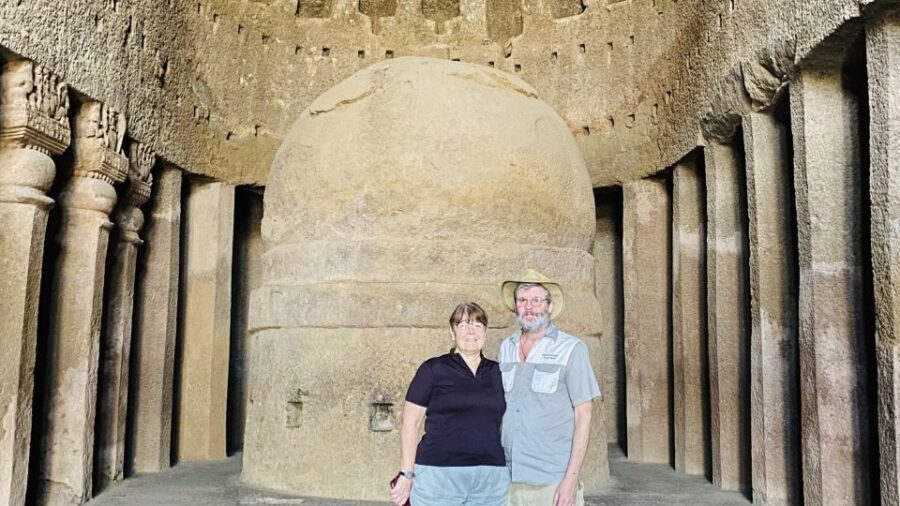
- Basalt carved by hand: 109 caves carved from one massive rock outcrop, with viharas (resting) and chaityas (worship).
- Five caves with real focus: the guided portion targets five of the most significant caves, not a rushed blur.
- Inscriptions in multiple scripts: about 100 inscriptions across scripts like Brahmi and Devanagari, plus Pallavi and Sanskrit.
- A monumental Buddha hall: a 7-meter Buddha figure, 34 carved pillars, and the eleven-headed Avalokiteshwara.
- Pagoda access via ferry: expect a short ferry hop and then a local transfer (often by tuk-tuk) before you reach the golden structure.
- Crowd-smart timing helps: weekday mornings generally feel calmer than weekends, especially around the ferry and park entry.
Kanheri Caves in Sanjay Gandhi National Park: Basalt, Chaityas, Viharas
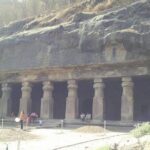
Kanheri is what I call archaeology with good posture. The caves sit inside Sanjay Gandhi National Park, so even before you start walking, the setting feels different from Mumbai traffic and tower blocks. You’re also surrounded by the kind of stonework that reminds you this wasn’t built with machines and shortcuts.
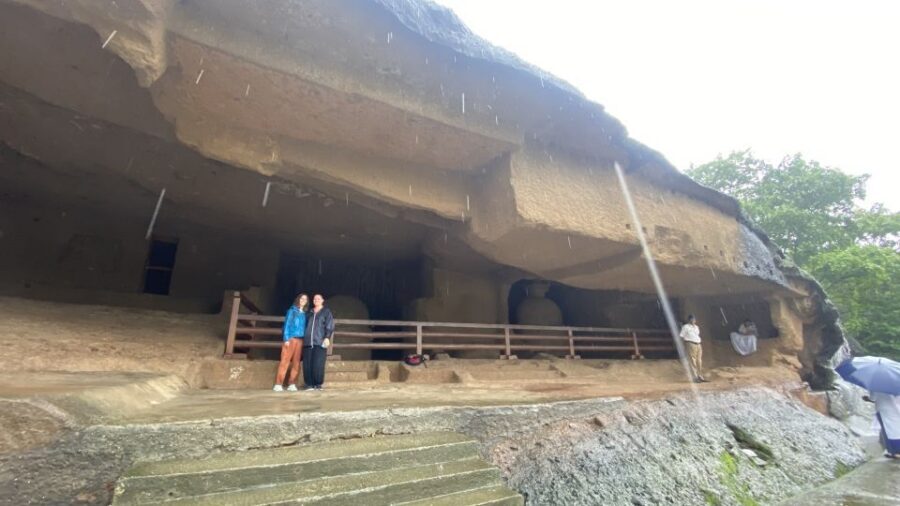
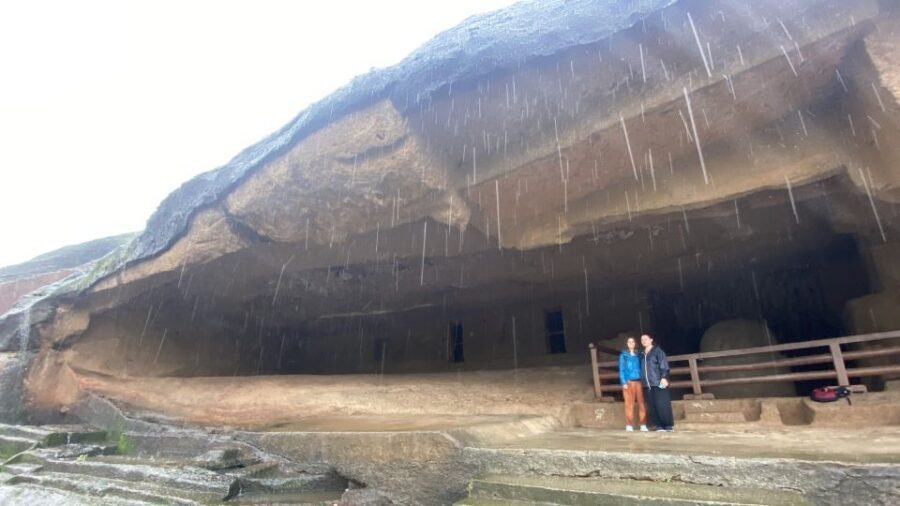
The caves themselves were carved starting around the 1st century, and there are 109 in total. The smaller caves are viharas, which served as monk resting spaces, while the larger chaityas were designed for worship and feature Buddhist sculpture. That basic layout helps you understand what you’re seeing as more than random holes in rock.
You’ll travel to Kanheri first, typically about 1 to 1.5 hours by air-conditioned car depending on where you’re staying and the day’s traffic. Once you’re at the park, the meeting point is the main entrance, and if you didn’t select pickup you’ll head straight in with your guide.
You can also read our reviews of more private tours in Mumbai



The Buddha Hall, Avalokiteshwara, and Those 100+ Inscriptions
Your guided visit focuses on five key caves, which is a smart choice. Instead of being dumped into the whole site at once, you get direction on what’s important, and you can actually look closely.
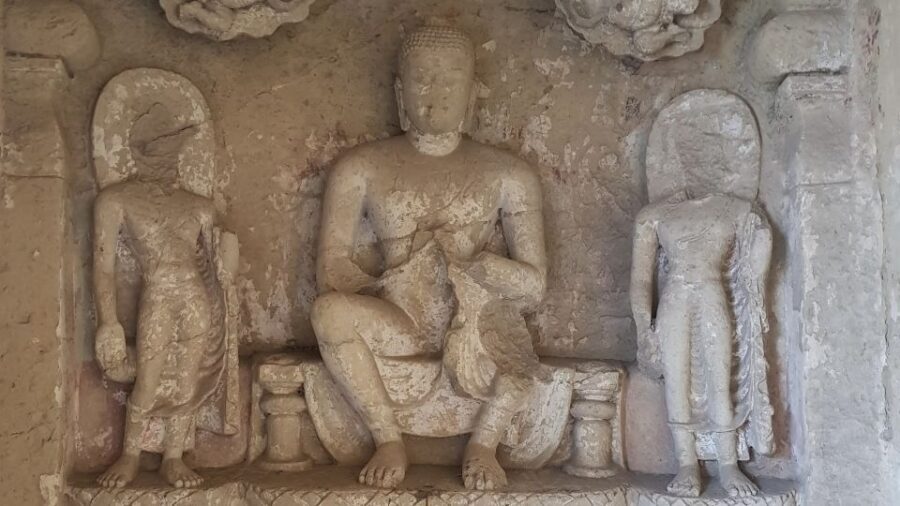
One of the headline moments is the main hall with a 7-meter-high Buddha figure. Around it is a colonnade of 34 carved pillars, so you’re not just seeing one object—you’re seeing a whole architectural idea.
Then there’s the eleven-headed Avalokiteshwara, another standout. It’s the kind of detail that makes you pause because it’s unusual, not the bland sort of icon you’ll see everywhere.
And if your brain likes puzzles, you’ll enjoy the inscriptions. There are about 100 inscriptions in different scripts, including Brahmi and Devanagari (the guide may pronounce it as Devnagri), plus Pallavi and Sanskrit. These inscriptions turn the caves into a language museum, but in a practical way: you learn that the site was lived in and interpreted by people over time.
Meditation Cells and the Human Scale of Monk Life
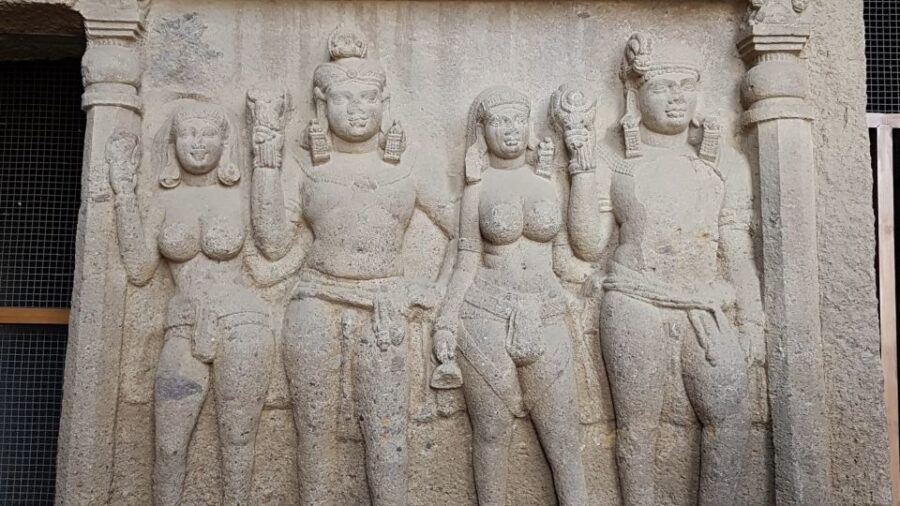
It’s easy to think of ancient monasteries as grand and distant. Kanheri doesn’t let you stay in that mindset for long, because the tour includes the serene meditation cells that hint at daily routine.
These cells matter because they shift the story from architecture to behavior. You’re looking at spaces designed for repeated quiet—small enough to feel human, and still old enough to feel unreal. That contrast is why people walk out feeling calmer than they expected.
You’ll also get context from your guide, including what viharas were for and how chaityas fit into worship. Even if you’re not chasing religious meaning, you’ll come away with a cleaner understanding of how Buddhist communities used built space.
A practical note: this is a national-park visit, so wear shoes that handle uneven ground. One review specifically flagged this, and it’s sensible advice because you’ll spend time walking around caves and pathways, not just standing in a single viewing spot.
Golden Vipassana Pagoda in Gorai: Golden Exterior, Relics, and Pillar-Free Design
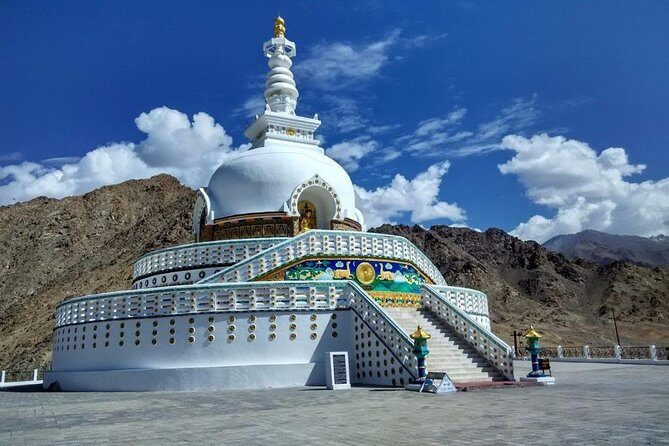
After Kanheri, you head toward the Golden Vipassana Pagoda in Gorai. The shift is dramatic in the best way: you go from carved basalt interiors to a bright, sun-catching exterior that turns into a landmark from a distance.
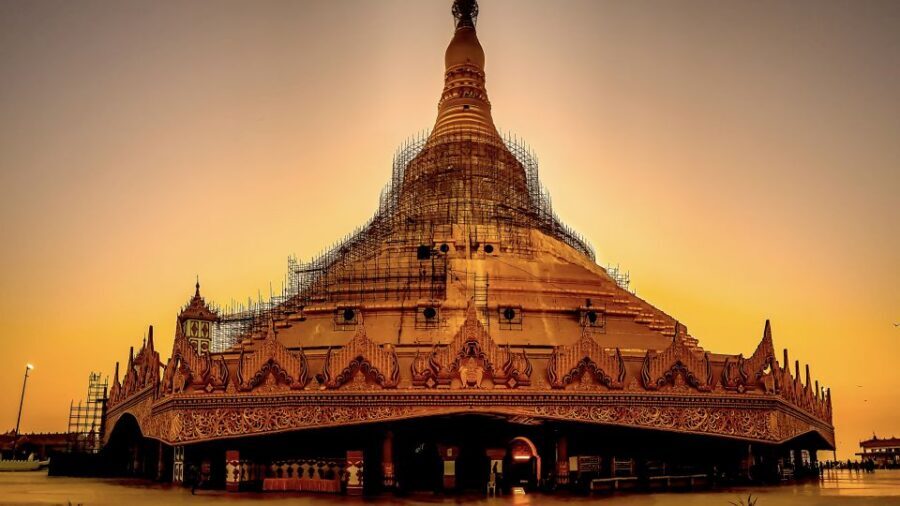
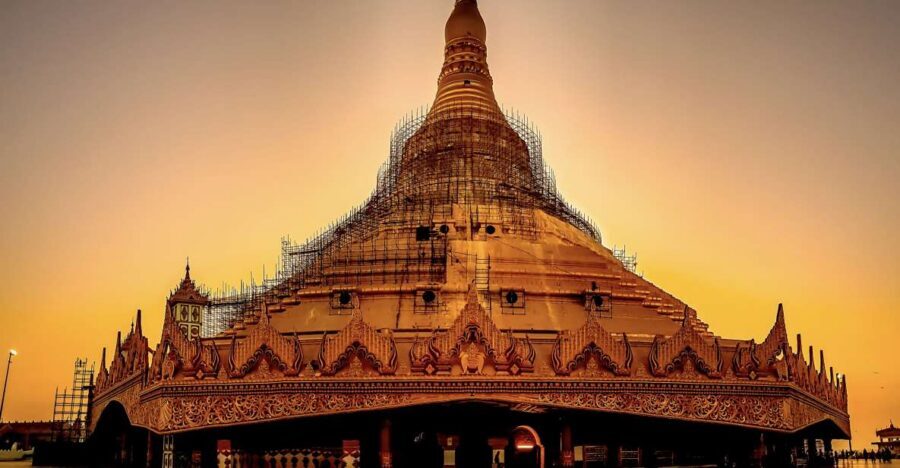
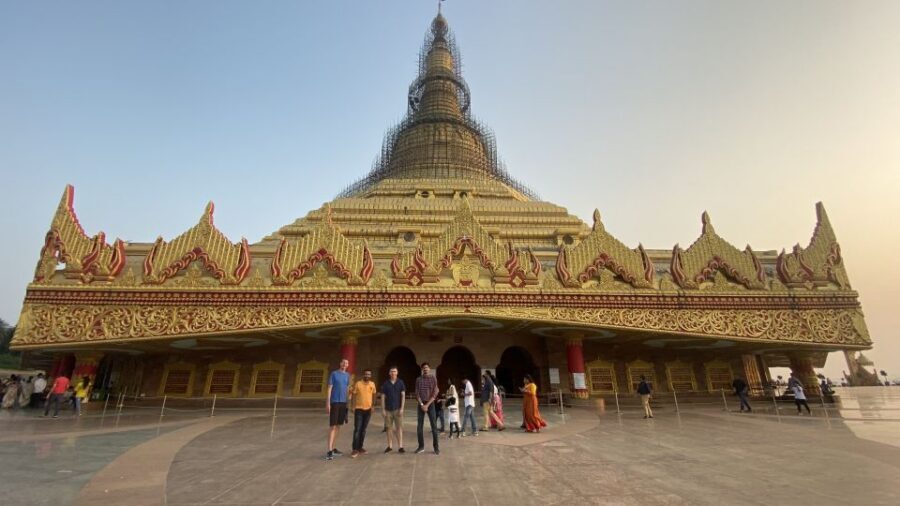
The pagoda’s golden exterior is the main visual hook. It’s designed to symbolize enlightenment and spiritual awakening, and in clear light it genuinely looks brilliant against the sky.
Inside, it houses Gautama Buddha’s relics, which is one reason it draws pilgrims and seekers. Even if you’re visiting as a sightseeing person, relic-housing sites tend to create a different atmosphere because people treat them as something more than a photo stop.
Architecturally, it’s also distinctive. The design is Burmese-inspired and notably without supporting pillars, showing off both construction confidence and the engineering logic behind the structure. Around the site there’s greenery, and you may get views toward the Arabian Sea, which helps the whole place feel like a quiet pause inside a busy city.
Ferry Crossing and Local Transfer: How to Keep the Day Smooth
This tour has a built-in rhythm: drive to Kanheri, guided cave time, then ferry to Gorai, pagoda sightseeing, and ferry back. The ferry segments are short on the timetable (about 10 minutes each way), but the experience can feel longer if the crossing is busy.
One practical detail: the pagoda side isn’t just a straight drop-off and walk. A previous visitor described that after the ferry you take a local transfer, often by tuk-tuk, because the car doesn’t go right up to the pagoda area. The takeaway for you is simple—don’t plan tight onward connections right after the tour.
Crowds are the other logistics factor. One person’s advice was blunt: avoid weekends if you can, because the park entry gets packed and the ferry crossing can be very crowded with lots of motorcycles and pedestrians. I agree with the logic even if you’re flexible—weekday mornings give you better odds of a smoother trip, especially when you’re balancing two major sites in one day.
For timing, build in a little buffer for local movement. You’re doing a lot, even if the tour duration is listed as 2.5 to 6 hours depending on the schedule.




Price and Tickets: Is $21 Good Value for This Combo?
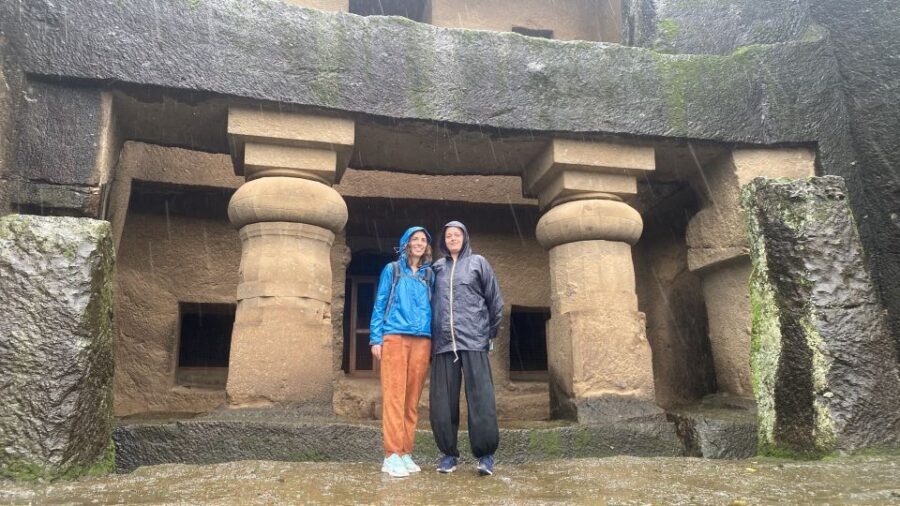
At $21 per person, this is priced like a value-focused private day. The big reason is what you get bundled: hotel pickup and drop-off, an English-speaking guide, and an air-conditioned car. That alone can remove a lot of Mumbai friction, especially if you don’t want to figure out park entry and cross-town transport on your own.
Two things aren’t included: food and drinks, and entry tickets. So the real cost for you is $21 plus whatever tickets you pay on the day, and possibly a snack if you get hungry between cave time and pagoda time. Still, skipping ticket lines is part of the experience, which can save you time when crowds show up.
Is it worth it compared to DIY? For Kanheri + Gorai in one day, I think so—because the guide’s explanation is doing real work. The inscriptions in multiple scripts, the meaning of different cave types, and the specifics like the 7-meter Buddha hall aren’t things you’d automatically piece together from signs alone.
What to Bring, What You Can’t Bring, and Shoe-First Thinking
For practical travel prep, keep it light. You’re not allowed luggage or large bags, so pack like you’re going on a walk, not a luggage-heavy city break.
Bring a passport or ID card, and a passport copy is accepted. Comfortable shoes are non-negotiable here, because national-park paths and cave areas can be uneven, and you’ll be grateful for grip.
Also, bring basic patience. When the park is busy, you’ll be walking with other people and moving through entry points. If you’re trying to get a quiet, reflective experience, go at the calmer times when possible.
Who This Private Tour Fits Best
This is a great fit if you want two very different spiritual-and-historical settings without switching guides or negotiating transport all day.
I’d especially recommend it if you:
- like sites with strong visual anchors, like the Buddha hall and the golden exterior
- enjoy the details of inscriptions and script variety
- prefer private group attention over generic group herding
- want a calmer spiritual stop after the intensity of city life
It may feel like a lot if you’re very mobility-limited. Even though this is a guided and organized day, you’re still walking around cave interiors and pathways and then making your way to the pagoda after ferry transfer.
If you’re traveling with kids, you’ll likely win with the big visual moments, like the 7-meter Buddha and the gold pagoda glow. Just keep expectations realistic about walking time and crowd conditions.
Should You Book This Kanheri and Golden Pagoda Day?
Book it if you want a day that balances architecture you can read (cave types, pillars, inscriptions) with a spiritual landmark that’s easy to appreciate even if you’re not a specialist. The combination is smart, and the guiding helps you connect the dots between carved rock, monastic routine, and relic-focused devotion.
Skip or rethink it if you’re sensitive to crowds and timing stress. If your dates land on a weekend or during a high-heat or monsoon-chaos window, consider shifting to a weekday morning if you can, because the ferry and park entry can get intense.
Overall, with air-conditioned comfort, English guidance, and a well-chosen two-stop structure, this is a strong value way to see more of Mumbai’s spiritual depth beyond the usual city highlights.
FAQ
How long is the tour?
The duration is listed as 2.5 to 6 hours, depending on available starting times.
Is hotel pickup and drop-off included?
Yes. Hotel pickup and drop-off are included. If you choose not to use pickup, you should meet your guide at the main entrance of Sanjay Gandhi National Park.
Where do I meet the guide?
Meet your guide at the main entrance of Sanjay Gandhi National Park at the scheduled time.
Is the tour guide in English?
Yes. The tour includes a live English speaking guide.
How many caves do we visit at Kanheri?
Your guide leads you to five of the most significant caves.
Are entry tickets included?
No. Entry tickets are not included, but the tour includes skip the ticket line.
How do you get from Kanheri to the Golden Vipassana Pagoda?
You take a ferry for about 10 minutes toward Gorai, then you return on a ferry for about 10 minutes at the end. A local transfer such as tuk-tuk may be used once you reach the pagoda side.
What should I bring?
Bring a passport or ID card and wear comfortable shoes. A passport copy is accepted.
Are large bags or luggage allowed?
No. Luggage or large bags are not allowed.
Can I cancel or pay later?
Yes. You can cancel up to 24 hours in advance for a full refund, and there is a reserve now & pay later option.