REVIEW · LEH
Best Of Ladakh
Book on Viator →Operated by Nishat Tours And Travels · Bookable on Viator
Altitude and turquoise water in one tight plan. This guided Ladakh circuit is built for big sights fast, from that mountain-heavy approach into Leh to the Khardung-La crossing, then down to Pangong Tso at 14,000 feet. I also like the practical side: the trip is run as a true point-to-point drive with a chauffeur and logistics handled, so you spend your energy on photos and monastery details instead of negotiating rides.
Two things I’d pick right away: you get a smooth chauffeur-driven schedule (with parking, fuel, and driver allowances handled), and the trip includes the Inner Line Permit you need for restricted-area sightseeing. One consideration: you’ll be riding in a non-air-conditioned vehicle on long, high-altitude days, and some “big fun” extras—monastery entrance fees and camel rides—aren’t included in the base price.
In This Review
- Key highlights that make this Ladakh plan work
- Landing in Leh: that big-mountain flight plus a built-in rest day
- Leh’s royal look: Leh Palace, Shey, and Thiksey’s Potala-style view
- Over Khardung-La to Nubra Valley: high pass drama and Hunder’s camel sand
- Pangong Tso at 14,000 feet: border lake color you can almost taste
- Coming back to Leh: Changla and Karoo, plus a market reset
- Price and logistics: what your $573.34 really buys
- Who this Ladakh tour fits best, and what to prep
- Should you book Best Of Ladakh?
- FAQ
- What locations does the tour cover in Ladakh?
- Where do I meet the group and when does it start?
- Is this tour private?
- What’s included in the price?
- What isn’t included?
- Can I cancel for a refund?
Key highlights that make this Ladakh plan work
- Khardung-La road time with the famous 5,602 m / 18,390 ft altitude drama
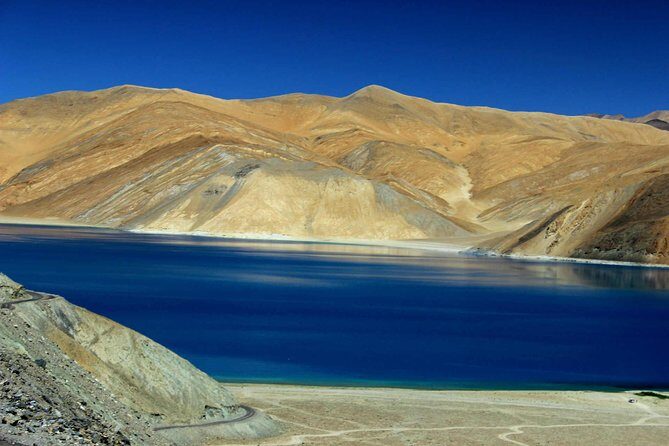
- Pangong Tso at 14,000 ft, plus early-hour color when the water turns turquoise
- Monastery day structure with Leh Palace, Shey Palace, and Thiksey Monastery (a Potala-style replica)
- Nubra dunes in Hunder, where you can do the double-humped camel ride (extra)
- A driver you’ll feel good about: Jigmet is repeatedly praised for safe handling on curves and heights
Landing in Leh: that big-mountain flight plus a built-in rest day
Your tour starts in Leh, and the arrival is half the story. On a clear day, the flight approach can offer jaw-dropping views where peaks like K2, Nanga Parbat, and Gasherbrum appear on one side, while the Nun Kun massif looks strikingly close on the other. Even if you don’t get perfect visibility, landing at Leh still feels like touching the edge of the Himalaya instead of just visiting it.
Day 1 keeps things sensible. You’ll be picked up at the Leh airport, transferred to your hotel, and given time to acclimatize—no forced sightseeing marathon on arrival day. You’ll also have a welcome tea or coffee at the hotel, a small touch that helps you settle in without rushing.
If you’re arriving from sea level, this rest-and-leisure buffer matters. Ladakh’s altitude doesn’t care about your plans. The earlier you give your body a day to adjust, the more comfortable the next drives will feel.
You can also read our reviews of more tours and experiences in Leh.

Leh’s royal look: Leh Palace, Shey, and Thiksey’s Potala-style view
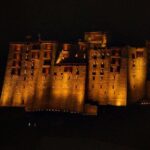
The next day is all about classic “Little Tibet” visuals, with a route that layers viewpoints, palaces, and monasteries. You start after an early breakfast and head first toward Leh Palace, sitting up above town. It’s easy to understand why people linger here: the architecture keeps pulling your eyes around, and the view from the hilltop turns Leh’s geography into a neat picture frame.
From there, the drive shifts into archaeology and spirituality mode. You’ll visit Sindhu ghat and Shey Palace, known as the ancient capital of Ladakh. There’s also a mention of the 3 Idiots Rancho school spot, which is useful if you want a pop of pop-culture among the real stones-and-stories places.
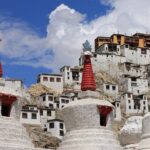
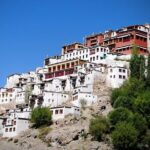
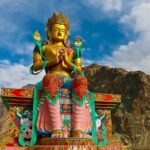
Then comes Thiksey Monastery, built as a tiered complex on a hill above the village. What I like about this stop is the immediate visual impact: it’s designed to look like Lhasa’s Potala, so you get a familiar “wow” even if you’re new to Tibetan-style architecture. It’s also one of those locations where you can take your time—walkways, levels, and viewpoints make it easy to stay engaged without feeling like you’re being herded.
Practical note: plan for walking on uneven ground. Your best photos often come from slightly higher angles, and you’ll likely be climbing in spots.
Over Khardung-La to Nubra Valley: high pass drama and Hunder’s camel sand
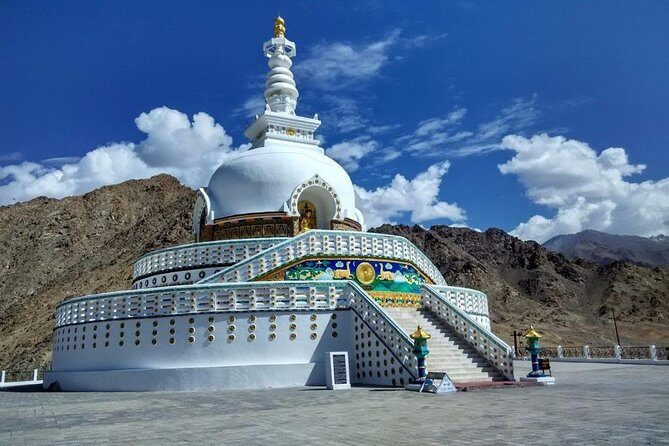
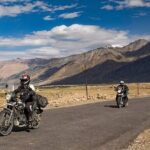
This is the day that turns Ladakh into an action movie. After breakfast, you drive from Leh toward Nubra Valley via Khardung-La, described as the highest motorable road, at 5,602 m / 18,390 ft. The pass is about 39 km from Leh, and the altitude increase is part of the experience—one minute you’re thinking about the road, the next you’re aware your lungs are doing extra work.
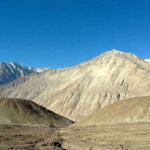
Once you enter Nubra, the vibe changes fast. Nubra is sometimes called Ldumra, and it sits between the Karakoram and Ladakh ranges. The average altitude is around 10,000 ft, which means it still feels thin, but it also feels open—wide views, stark colors, and that desert-like air.
You’ll check in at a camp in Hunder, then get time to refresh. I like that this day doesn’t end the moment you arrive. You have space to rest before the dunes outing.
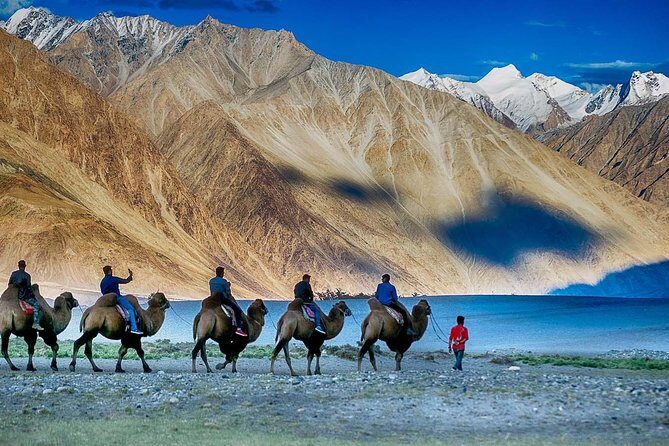
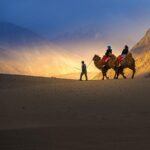
In the evening, you head back toward Hunder for the desert experience: there’s an opportunity for a double-humped camel ride amid sand dunes. One thing to flag: camel rides are listed as not included, so budget for them if you want to do it. If you skip the ride, you still get the key reward—being in a high-altitude desert setting that feels unlike most places on the planet.
Pangong Tso at 14,000 feet: border lake color you can almost taste
Pangong Tso is why people picture Ladakh in their heads. You’ll leave early for the lake via Shayok Valley, with time spent crossing the Shayok River area along the drive. The road tends to be scenic, and you’ll notice the terrain tightening as you climb.
The lake itself sits around 14,000 feet (4,267 m), and it’s also a place where geography meets politics. It’s bisected by the international border between India and China, which means you’ll often hear the sense of a “divided” place even when you’re just staring at water.
Here’s the practical reason this stop is so special: on sunny days, the lake can turn turquoise blue, with the earthy mountain backdrop making the color feel almost unreal. It’s the kind of scenery where you stop thinking and start shooting—then look again and shoot something different because the light keeps changing.
Day 4 focuses on reaching and soaking in the setting. Then Day 5 includes more lake time early in the morning, because the light and reflections can be better when the day is still waking up. If you’re the type who likes photos but hates crowds, this split schedule is a smart move.
Coming back to Leh: Changla and Karoo, plus a market reset
After the lake time, you’ll return toward Leh. The route includes Changla and Karoo, both called out in the plan, so expect more mountain road visuals and more time to watch the changing altitude feel.
You’ll also have time for a Leh market stop, and this is a good “reset” moment. It gives you a chance to switch gears from high-altitude scenery to everyday Ladakhi life—snacks, small purchases, and the chance to pick up anything you forgot before the next big pass day.
This part of the tour is also where you’ll appreciate the chauffeur approach. When you’re tired, you don’t want to add navigation stress. Here, the driving is handled, so you can focus on staying warm, staying hydrated, and enjoying the last stretch of views.
Price and logistics: what your $573.34 really buys
At about $573.34 per person for roughly 6 days, the value comes from what’s included—not just the sightseeing list. You’re getting a private tour/activity, plus a deluxe Xylo car for city sightseeing, excursions, and transfers, with parking, fuel, road taxes, and driver allowances covered.
You also get meals: breakfast (5) and dinner (5), which is meaningful in Ladakh where budgeting gets awkward once you’re stuck eating on the go. Another big win is the Inner Line Permit inclusion, which helps remove a common headache when traveling in restricted regions.
Now the trade-offs. The trip does not include domestic/international flights, and it also excludes monasteries entrance fees, camel rides, and gratuities/tips for the representative, guides, and driver. If you’re counting costs tightly, those extras can add up, especially if you plan to do every optional activity.
My practical take: this price makes sense if you want fewer planning tasks and reliable transport across remote areas. If you’re the kind of traveler who loves self-drive freedom and doesn’t mind arranging permits and taxis yourself, you might be able to DIY for less. But if you’d rather pay for comfort and time, this package structure is the point.
Also, your tickets are handled as a mobile ticket, and the meeting point is Leh Airport (8:00 am). That’s one less thing to sort on arrival day.
Who this Ladakh tour fits best, and what to prep
This trip suits you if you want a tight, high-impact Ladakh route: monasteries, desert dunes, and a border lake—without having to coordinate transport between stops. It’s also a strong fit for mixed groups, since it’s designed around driving days and scheduled sightseeing, not extreme hikes or complicated transfers.
It’s less ideal if you’re sensitive to long drives or altitude, or if you strongly prefer climate-controlled vehicles. The plan specifically lists non-air-conditioned transport. If you run hot or get annoyed by dust and road air, bring patience and smart layers.
What I’d prep based on the way the days are paced:
- Pack warm layers even in summer, because high altitude nights can feel sharp.
- Carry water and basic snacks for the road. The itinerary is structured, but your comfort matters.
- Keep camera batteries charged. Cold affects battery life more than people expect.
For food, a vegetarian option is available if you request it at booking. And if you’re traveling with kids, the plan notes that a child rate applies only when sharing with two paying adults, and children must be accompanied by an adult.
Should you book Best Of Ladakh?
If you want Ladakh’s headline hits in a few days, I think this tour is a solid choice. The combination of chauffeur logistics, permit coverage, and a route that hits Leh, Khardung-La, Nubra (Hunder), and Pangong Tso is built for travelers who want the best visuals without the stress of arranging it all.
I’d book it if:
- You value having the driving handled across long distances and high passes
- You want extra help with paperwork via the Inner Line Permit
- You’d rather spend your time watching the scenery than negotiating taxis
I’d hesitate if:
- You’re trying to minimize every optional cost (monastery entrances and camel rides cost extra)
- You need air-conditioning for comfort during long rides
FAQ
What locations does the tour cover in Ladakh?
The tour is based in Leh and includes major Ladakh highlights like Thiksey Monastery, Nubra Valley (Hunder) via Khardung-La, and Pangong Tso, with a return to Leh.
Where do I meet the group and when does it start?
The meeting point is Leh Airport, and the start time is listed as 8:00 am.
Is this tour private?
Yes. It’s a private tour/activity, and only your group participates.
What’s included in the price?
Included items are chauffeur-driven deluxe Xylo transport, parking/fuel/road taxes/driver allowances, the Inner Line Permit, and breakfast (5) plus dinner (5). Mobile ticket is also included.
What isn’t included?
Not included are flights, monasteries entrance fees, camel rides, gratuities/tips, and any other expenses not mentioned.
Can I cancel for a refund?
Yes, you can cancel for a full refund if you cancel at least 24 hours before the experience’s start time.