REVIEW · NEW DELHI
From Delhi: Taj Mahal, Agra Fort & Baby Taj Same Day Tour by Car
Book on Viator →Operated by Find My Holidays · Bookable on Viator
White marble looks totally different at first light. This same-day Taj Mahal, Agra Fort, and Baby Taj tour from Delhi is built around an early start, comfortable private driving, and skip-the-stress sightseeing.
I especially like the 2:30 a.m. sunrise timing and the fact that you get a live guide in Agra while tickets are handled. You’ll also have an air-conditioned car with a chauffeur and hotel/airport pickup.
One thing to think about: it’s a long day (10 to 16 hours), and the Taj Mahal is closed every Friday. If you hate early mornings, this tour will still work, but it won’t feel relaxing.
In This Review
- Key highlights worth planning for
- Taj Mahal Sunrise: why an early 2:30 a.m. start pays off
- The Delhi-to-Agra ride: comfortable private transport that keeps the day realistic
- Taj Mahal entry: timing, tickets, and how to enjoy it without rushing
- Agra Fort: not just walls, but a story you can walk through
- Baby Taj (Itimad-ud-Daulah): the quieter stop that feels way more intimate
- The 5-star buffet lunch and the Agra marble inlay break
- Pacing, crowds, and what makes or breaks the day
- Price and value: what $62 gets you (and what it doesn’t)
- Guides, stories, and why “live” changes the monuments
- Who this tour suits best (and who should rethink it)
- Should you book this Delhi to Agra car tour?
- FAQ
- How early do I need to start for the Taj Mahal sunrise experience?
- What’s included in the price?
- How long is the tour?
- Are the Taj Mahal, Agra Fort, and Baby Taj tickets included?
- Is the Taj Mahal open every day?
- Do I get a guide?
- Is lunch included?
- What’s the cancellation policy?
Key highlights worth planning for

- Sunrise start at 2:30 a.m.: You’ll leave so early that you’ll beat the worst crowds and get the best light.
- Paid entry tickets included for the main sights: Taj Mahal, Agra Fort, and the Baby Taj (Itimad-ud-Daulah) are covered.
- Private AC car with chauffeur plus pickup/drop-off: Delhi or Noida hotel/airport pickup is included.
- Live guide in Agra: It helps you understand what you’re seeing, not just take photos.
- Lunch at a 5-star hotel buffet: Your break is built in, so you’re not hunting for food at the worst moment.
- Marble inlay shopping stop: You’ll visit handicraft places/galleries connected to Agra’s famous work.
Taj Mahal Sunrise: why an early 2:30 a.m. start pays off
Catching the Taj Mahal at sunrise isn’t a gimmick. It’s practical. Early light softens the white marble and makes the building look less like a postcard and more like real architecture. You also avoid the day’s peak rush, which means security and entry feel more manageable than later.
This tour is designed around a sunrise experience, and the day begins very early—starting around 2:30 a.m. for the Taj Mahal sunrise sightseeing. That means you should plan to be ready for pickup before you’d usually think about leaving the hotel. Pack a small water bottle, keep your passport/ID handy for entry checks, and wear layers. Agra mornings can be cooler than you expect, and you’ll be outside at least part of the time.
Also note the simple scheduling truth: the Taj Mahal is closed every Friday. If your dates include a Friday, you’ll need a different plan.
You can also read our reviews of more tours and experiences in New Delhi.



The Delhi-to-Agra ride: comfortable private transport that keeps the day realistic

The big test for any Delhi-to-Agra day trip is whether the travel time ruins the experience. This one helps because you’re not doing the whole thing with messy public transport. You’ll get pickup and drop-off from your Delhi/Noida hotel or the airport, then drive in an air-conditioned private car with a chauffeur.
The tour duration is listed as 10 to 16 hours, and that range is basically your buffer for traffic, entry lines, lunch pacing, and how long you linger at each monument. If you’re the type who likes to plan every minute, you’ll still find this day runs on a schedule—but it won’t feel chaotic.
One more practical note: you’ll likely want to keep your phone charged. Between sunrise photos and the drive, that’s your easiest way to remember details like viewing angles and the order things are positioned (you’ll be grateful later when you’re trying to place a dome, a minaret, or a calligraphy panel).
Taj Mahal entry: timing, tickets, and how to enjoy it without rushing

You’ll spend about 2 hours at the Taj Mahal, and that’s usually the sweet spot for doing three things well: entering smoothly, walking around long enough to notice details, and getting at least a few photos you don’t hate afterward.
The tour includes admission tickets, and you’ll also have a mobile ticket. In real life, that matters because it reduces the time you spend sorting out paperwork at the entry counters. You’ll still go through security and entry checks, of course—just expect less fiddling.
What to look for:
- The symmetry and how the main gateway frames the view (stand in different spots; the perspective changes fast).
- Marble inlay and calligraphy up close, not just from the big postcard angles.
- The way the building changes with the light from pale early morning to brighter daytime tones.
If you’re routed toward the west entrance, plan for a potentially tight, crowded entry moment. Your best move is to stay patient, keep your pace steady, and don’t waste energy fighting the flow. Once you’re inside, the Taj Mahal’s layout does the work for you.
Agra Fort: not just walls, but a story you can walk through

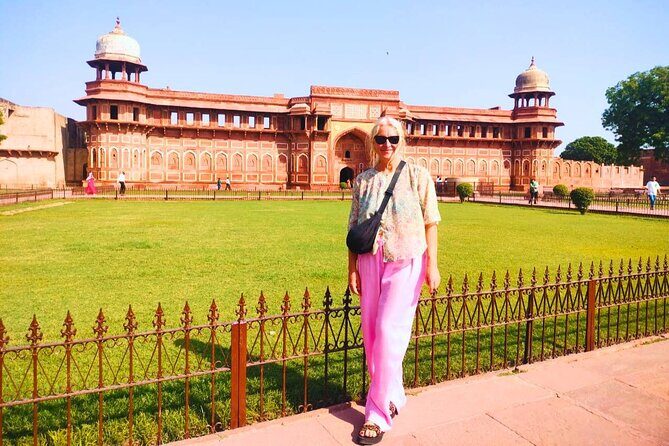
Next is Agra Fort, where you’ll have about 1 hour 30 minutes. This UNESCO World Heritage Site is known for its fortress architecture and Mughal-era significance, and it’s a smart pairing with the Taj Mahal because you see the power behind the beauty.
Agra Fort is made largely from red sandstone, so the mood shifts quickly from pale white marble to warm stone tones. That contrast makes it easier to understand the landscape of Mughal Agra: rulers, defense, and control—plus the later artistic masterpieces people associate with Shah Jahan’s era.
With a live guide in Agra, you’ll likely get context that turns the fort from a maze of stones into something you can follow. A guide can point out where to stand for key angles, where the layout hints at who lived where, and why certain sections were built the way they were.
If you’re prone to getting “monument fatigue,” this is where you can slow down. Forty-five minutes can feel long inside; set yourself a goal: notice one defensive feature and one royal/ceremonial feature before you move on.
Baby Taj (Itimad-ud-Daulah): the quieter stop that feels way more intimate
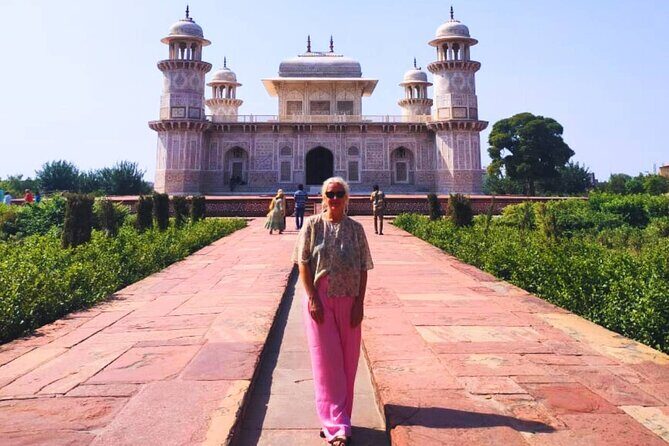
After the big hits, you’ll visit the Itimad-ud-Daulah Tomb, often called the Baby Taj. Expect about 1 hour here, with entry included.
Why this stop is worth it: it’s less about scale and more about detail. Think of it as the calmer, tighter cousin of the Taj Mahal, a monument people often connect to the evolution of Mughal mausoleum design. If the Taj Mahal feels like a dream, the Baby Taj feels like a study.
This is also a good moment to catch your breath. By the time you arrive, you’ve already been awake since the very early pickup and walked through at least two major sites. The Baby Taj gives you a chance to enjoy slower looking—especially at decorative work and the way the tomb sits within its setting.
If you like photos, bring patience here too. The lighting can be slightly different, and small positioning changes can make the craftsmanship pop.






The 5-star buffet lunch and the Agra marble inlay break
A day like this can go sideways if you don’t eat on schedule. That’s why I appreciate the built-in buffet lunch at a 5-star hotel in Agra. It’s included, and it’s the kind of meal stop that keeps energy stable for the ride back and the final sightseeing hours.
After lunch, you’ll likely get time at handicraft places or galleries where you can see Agra’s famous marble inlay work. Expect this to feel more “watch and shop” than “museum.” Plan to browse rather than bargain aggressively, unless you genuinely want to buy something. If shopping isn’t your thing, look at it as a quick cultural detour: you’ll see what kinds of labor and materials go into the decorative style you just saw on the monuments.
A small tip: if you know you want a souvenir, decide early what category you’re hunting for. Once you’re inside multiple showrooms, it’s easy to drift into random browsing and forget your budget.
Pacing, crowds, and what makes or breaks the day
This tour is built for a full day: Taj Mahal early morning, Agra Fort after, then Baby Taj, then lunch, then handicrafts, then the drive back to Delhi. The schedule aims to fit everything without turning it into a marathon sprint.
Still, crowds can show up in waves. Early morning sunrise tends to help, but entry processing and security lines can still be slow. That’s also why having tickets included and a guide’s timing help is a big deal.
For your comfort, remember:
- You’ll be in the car for hours, so keep your posture comfortable.
- Dress in layers for sunrise and indoor/outdoor temperature changes.
- Bring water and small snacks if you know you get hungry between lunch and the final stops (the tour includes lunch, but you don’t get to control how long your day stretches).
In at least some cases, guides have recommended a west selfie point, which tells you there are photo viewpoints that can add variety beyond the main Taj Mahal spreads. If photos matter to you, don’t just chase the most obvious angles—ask your guide where the less crowded viewpoint is.
Price and value: what $62 gets you (and what it doesn’t)
At $62, this tour can be strong value if you add up what’s actually included: hotel/airport pickup and drop-off, air-conditioned private car with chauffeur, monuments paid entry tickets, a live guide in Agra, and a buffet lunch at a 5-star hotel. Plus, parking, tolls, and taxes are covered.
The two clear things not included are:
- Tips for the guide and chauffeur
- Other personal expenses (shopping, extra snacks, anything you choose to buy)
So the real question becomes: do you value convenience enough to pay for it? If you’re comfortable DIY-ing, you could save money. But if you want sunrise without negotiating tickets, timing, and transport, the bundled structure is what you’re paying for.
Also, this is a private tour/activity for your group only. That helps with comfort and pace. You’re not squeezed into a “everyone move together” flow with strangers.
Guides, stories, and why “live” changes the monuments
A monument tour can be two things: walking and watching, or walking and understanding. You get a live guide in Agra, and that makes a difference fast—especially at the Taj Mahal and Agra Fort, where details are easy to miss if you only glance and move on.
In prior experiences, guides such as Raj Kumar and Jatin have stood out for sharing small stories that make the long drive feel shorter and the sites feel connected instead of random. That kind of explanation matters because it gives you a framework: what to notice, why it was built, and how the pieces fit together.
You don’t need a 30-page lecture. You just need a guide who can point you to the few things that unlock the whole experience. When that happens, you leave feeling like you saw more than the obvious.
Who this tour suits best (and who should rethink it)
This is a great fit if you want:
- A Taj Mahal sunrise experience without doing the logistics yourself
- A private car with pickup and drop-off
- Tickets and entry handled as part of the package
- A day that includes both the big monuments and an Agra handicraft look
It’s also smart for couples, small groups, and anyone who likes structure. A guide keeps the day moving, and the included lunch prevents the “hangry chaos” problem.
You might want a different approach if you:
- Struggle with very early mornings (2:30 a.m. pickup start)
- Hate long days in transit (10 to 16 hours is the reality)
- Are only interested in one site (this tour gives you multiple, so it trades depth per stop for breadth)
Should you book this Delhi to Agra car tour?
If you’re choosing between “DIY and hope” and “organized sunrise plus major sights,” I’d lean toward booking this. The value is strongest when you want the full bundle: sunrise timing, private comfort, entry tickets, a live guide, and lunch—all wrapped into one day.
Just check your dates for a Friday, because the Taj Mahal is closed then. Also be honest with yourself about the early wake-up and the long drive. If you can handle that, you’ll come away with more than photos—you’ll come away with context and a full Agra highlight reel.
FAQ
How early do I need to start for the Taj Mahal sunrise experience?
The Taj Mahal sunrise experience requires an early start, beginning around 2:30 a.m. for the tour.
What’s included in the price?
The tour price includes Delhi/Noida pickup and drop-off, monuments paid entry tickets, private air-conditioned car with driver, live tour guide in Agra, and a buffet lunch at a 5-star hotel, plus parking, tolls, and taxes.
How long is the tour?
The duration is listed as 10 to 16 hours, and it includes time for lunch and travel from the meeting point to the attractions.
Are the Taj Mahal, Agra Fort, and Baby Taj tickets included?
Yes. Admission tickets are included for the Taj Mahal, Agra Fort, and Itimad-ud-Daulah (Baby Taj).
Is the Taj Mahal open every day?
No. The Taj Mahal is closed every Friday.
Do I get a guide?
Yes. There is a live tour guide in Agra included as part of the experience.
Is lunch included?
Yes. You’ll have buffet lunch at a 5-star hotel in Agra, and it’s included in the tour.
What’s the cancellation policy?
You can cancel for a full refund up to 24 hours in advance of the experience’s start time. If you cancel less than 24 hours before, the amount paid is not refunded.