REVIEW · NEW DELHI
Kerala and Tamil Nadul Dreamscape Journey (South India)
Book on Viator →Operated by Incredible Real India Tours · Bookable on Viator
Two classical worlds, one smooth route. From Delhi’s first grand monuments to Kerala’s water-town boat rides, this trip strings together temples and palaces with backwaters in a way that feels easy to manage. I love that you get lots of landmark time without having to plan tickets all day, and I also like the balance of big sights with calmer moments like the Vembanadan-area backwater cruise. The main thing to consider: it’s a long, packed ride across many regions, so you’ll want stamina for early starts and frequent moving days.
What I like most here is the rhythm. You’re guided through major highlights—Delhi, Jaipur, Agra, Ajanta & Ellora, Mumbai, then down into Kerala’s nature zones—while someone else handles the driving and the handoffs between cities. One possible drawback is that you’ll spend plenty of time in vehicles, and a couple of the days are long by necessity, especially around the cave country.
In This Review
- Key highlights that matter before you book
- Kicking off in Delhi: Qutub Minar, Jama Masjid, and a calm start
- Jaipur’s forts and monuments: from Amer Fort views to the science of Jantar Mantar
- Agra and the Taj: letting timing do the work
- Ajanta and Ellora caves: why these days feel like the real journey
- Mumbai beyond the postcard: Elephanta, Gateway, Dharavi, Dhobi Ghat, Colaba
- Cochin to Kerala backwaters: the shift from cities to water life
- Thekkady on Periyar: spice plantations plus wildlife boat time
- Munnar’s high tea country: Eravikulam views and the Nilgiri Thar factor
- Ending back in Delhi: a practical last day buffer
- What $2,376 buys you across 16 days (and where value can slip)
- Who this trip suits best
- Should you book this Kerala and Tamil Nadu Dreamscape Journey?
- FAQ
- How long is the tour?
- Where does the tour start?
- Does the tour offer airport pickup?
- Is this a private group tour?
- Are entrance tickets included?
- Which cities and regions are included?
- What kind of travel experience level is needed?
- What happens if I cancel?
Key highlights that matter before you book
- Airport pickup with a name board in Delhi (and again in Kochi), so you’re not stuck figuring things out on arrival.
- Many admissions are included on the big-ticket stops, which helps control the day-to-day cost.
- Ajanta and Ellora are given enough time to actually look, not just walk past.
- Mumbai includes real-life stops like Dhobi Ghat and Dharavi, not only the postcard sites.
- Kerala backwaters by boat on Vembanadan Lake, with everyday village life along the shore.
- Munnar and Thekkady pair spices and wildlife time, then finish in high tea country.
Kicking off in Delhi: Qutub Minar, Jama Masjid, and a calm start
Delhi can feel chaotic, fast. Here, the trip starts with an airport pickup and a driver holding a signed board with your name, then you’re taken to your hotel so you can recover if you arrive early. If you want a first taste of the city, you have that option before the guided days really kick in.
Once the program starts, you hit two of the city’s “you have to see it” monuments. Qutub Minar is the classic start: tall, iconic, and a great way to orient yourself historically. Then you move to Jama Masjid, one of India’s largest mosques—big scale, strong atmosphere, and a reminder that Delhi isn’t only about forts and empires. You’ll also get Humayun’s Tomb, followed by the Red Fort, India Gate, Gurudwara Bangla Sahib (with its sarovar), and Gandhi Memorial Hall.
Why this works for your trip: you’re not treating Delhi like one more city stop. You’re building a mental map of eras—Mughal monuments first, then Sikh and modern history—so the rest of the journey makes more sense. The one consideration: Delhi days can involve walking and mosque/temple etiquette. Dress for coverage and keep your schedule flexible.
You can also read our reviews of more tours and experiences in New Delhi.



Jaipur’s forts and monuments: from Amer Fort views to the science of Jantar Mantar
Jaipur is made for slow looking, and this route gives you that. You start at the City Palace, which still connects the modern royal family story to the museum side of the complex. It’s a good soft landing after Delhi’s mega-monuments.
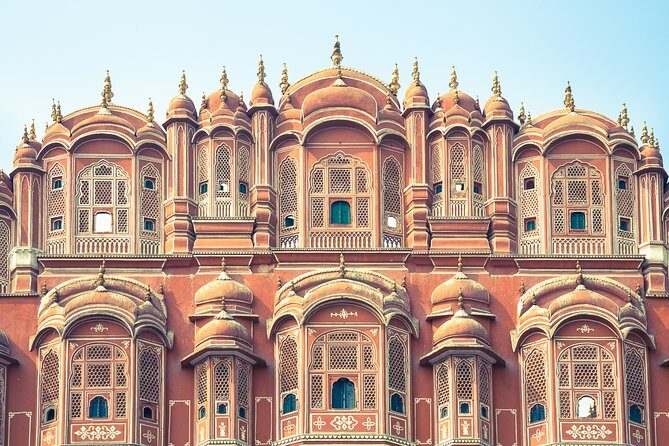
Then comes Amer Fort, with its ramparts and gate-and-courtyard feel—plus the payoff of being able to look out over Maota Lake. After that, Hawa Mahal (Palace of Winds) is a visual hit: pink and red sandstone, all about the idea of ventilation and windowed facades. It’s the kind of stop where photos are easy, but it’s even better when you take a few minutes just to look at the craftsmanship up close.
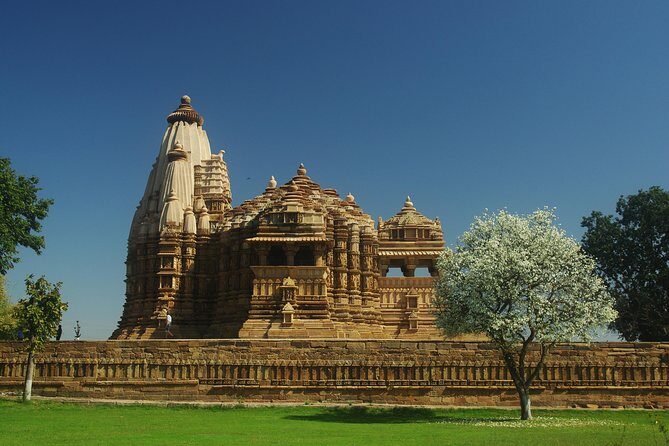
The next set of stops gives Jaipur variety beyond forts. Jantar Mantar (a UNESCO site) isn’t just pretty—it’s a working-style set of huge stone astronomical instruments, including the world’s largest stone sundial. Then you add Jaigarh Fort (fort views over the Amer area), Birla Mandir (white marble, dedicated to Lakshmi and Vishnu/Narayan), and Albert Hall Museum. The final stretch includes Nahargarh Fort and the Royal Gaitor Tumbas, tucked into a valley setting that feels different from the city core.
What you’ll enjoy: this Jaipur mix balances action (fort walking) with brainy stops (the astronomical structures) and quieter scenery (Gaitor and Nahargarh). The trade-off is time: when you stack this many sites, you’ll feel it in your legs. If you’re the type who likes to linger, bring a little extra water and plan for rest breaks.
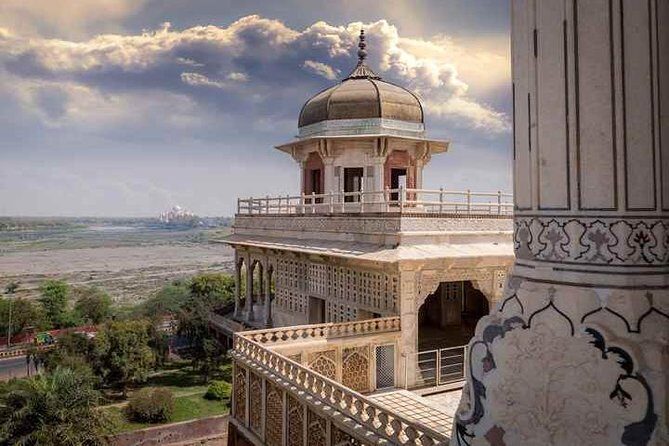
Agra and the Taj: letting timing do the work
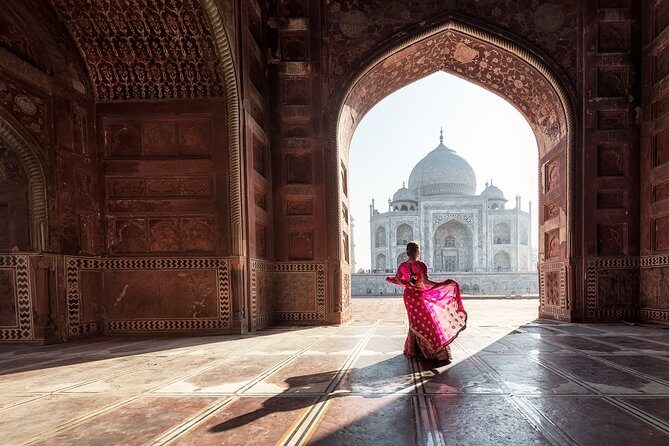
Agra is one of those places where timing matters. The Taj Mahal can be visited at sunrise, sunset, or both, and the trip guidance pushes you to plan for that if possible. That’s smart—different light changes the whole experience, and it’s easier to aim for than to figure out last-minute once you arrive.
Alongside the Taj, you also get Agra Fort and Itimad-ud-Daulah’s tomb (often called the Bachcha Taj or jewel-box style). Itimad-ud-Daulah is especially worth your attention because it’s detailed and atmospheric in a quieter way than the Taj. It gives you Mughal craftsmanship without the pressure of the largest crowd magnet.
The one consideration: Agra day energy can vary depending on when you target the Taj. If you go early or late for light, expect it to affect your sleep and the rest of your day. If you’re sensitive to early mornings, treat your first Taj plan as non-negotiable and build the rest around it.
Ajanta and Ellora caves: why these days feel like the real journey
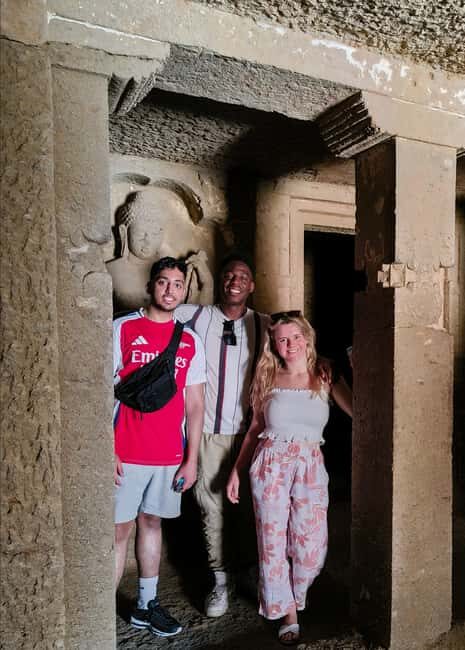
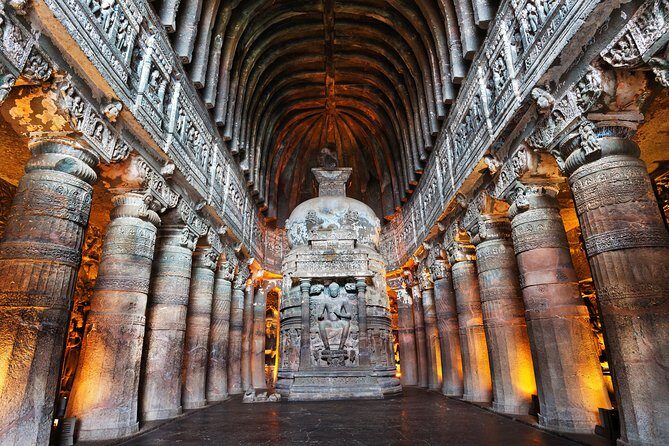
Cave country isn’t a “one quick stop” kind of outing. This route sets aside serious time for Ajanta Caves—rock-cut Buddhist monuments dating roughly from the 2nd century BCE to about 480 CE. You get enough time to notice how the caves are structured and how the artwork tells stories across centuries.
Then you move to Ellora Caves, another UNESCO World Heritage site, but far more mixed in religion and style: Hindu, Buddhist, and Jain monuments across roughly 600–1000 CE. The shift in architecture and artwork is the point. You’re not only seeing caves; you’re seeing how different communities shaped the same geological landscape.
Why it’s valuable for you: if you want one stretch of the trip that feels less like a checklist and more like “this is why South India pulls people in,” it’s these caves. The drawback is physical fatigue and long sightseeing blocks—comfortable shoes and a calm pace help a lot.
Mumbai beyond the postcard: Elephanta, Gateway, Dharavi, Dhobi Ghat, Colaba
Mumbai can be two things at once: cinematic and real-life. This program starts with Elephanta Caves (dedicated mainly to Shiva) and then heads to Gateway of India, an arch monument linked to early 20th-century British-era commemoration.
From there, you go into the city’s everyday layers. You’ll visit Dharavi, described as Mumbai’s largest slum and made famous by the movie Slumdog Millionaire. You’ll also stop at Dhobi Ghat, an open-air laundromat where dhobis wash clothes from hotels and hospitals. Then you finish with Colaba Market along the Colaba Causeway, where shopping is part of the experience—everything-from-everywhere energy in one area.
Here’s how to think about these stops: the program doesn’t only give you landmarks; it gives you context for how the city functions on the ground. That can be powerful, but it also means emotions can run high. If you’re visiting with a sensitive mindset, go slowly through Dhobi Ghat and Dharavi and keep your expectations grounded in what you can actually observe.





Cochin to Kerala backwaters: the shift from cities to water life
After Mumbai, the journey changes gear. You arrive in Kochi (Cochin) with pickup from the airport, again with your name on a board. Kochi is described as having a trading history going back at least 600 years, called the Queen of the Arabian Sea, and it’s the commercial hub of Kerala.
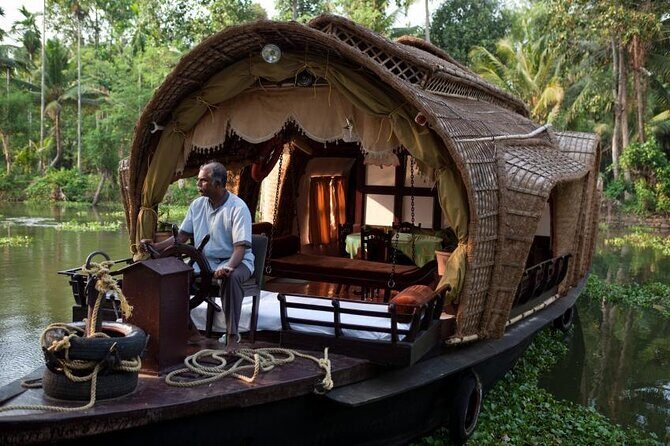
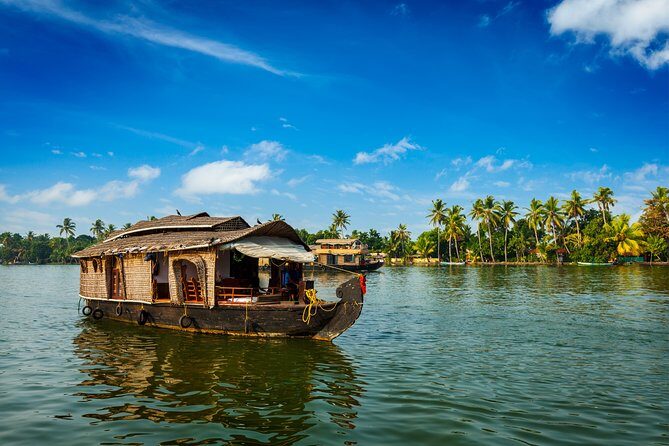
Instead of loading you with one more big city day, the trip pushes you into Kerala backwaters with a boat ride at Vembanadan Lake. This is one of the clearest “slow travel” moments: you watch fishing, see children swimming, and notice women doing daily chores along the narrow strips of land. It’s not a staged show; it’s normal life visible from the water.
What you’ll like: the backwaters day adds breathing room between urban sightseeing and wildlife/tea days. The possible consideration is that weather and daylight affect boat comfort. Bring sunscreen and plan for a bit of humidity.
Thekkady on Periyar: spice plantations plus wildlife boat time
Thekkady is where Kerala turns into scent and sound. You’ll spend a day with boating on Lake Periyar, with wildlife and animal sanctuaries in the backdrop. Then you go to spice plantations—cardamom, cinnamon, pepper, and coffee are named in the program—plus time at tea-related areas (the route mentions tea states) and shopping for natural seasonings.
A practical way to enjoy this day: treat the plantations as a sensory stop. Smell and taste are part of the value here. Shopping is also practical—you’re not just buying souvenirs; you’re buying cooking ingredients you can actually use at home.
The consideration: some days are labeled long (the Thekkady section appears twice with boating and similar components). If you tend to get “sightseeing fatigue,” pace yourself and don’t feel you need to buy everything just because the tour stops are efficient.
Munnar’s high tea country: Eravikulam views and the Nilgiri Thar factor
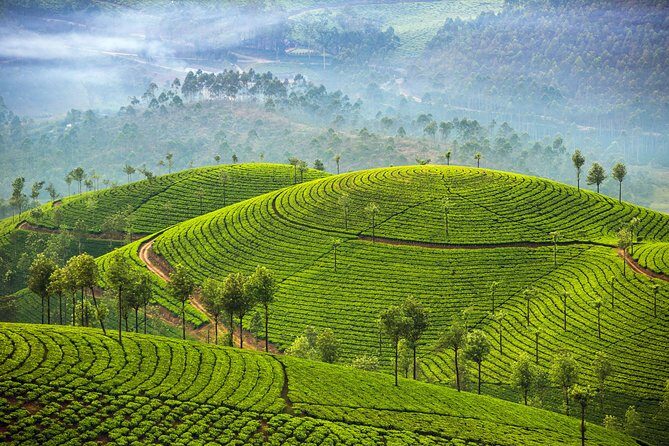
Munnar is one of those places where the air alone seems to change. The route takes you to Eravikulam National Park, with a focus on the endangered Nilgiri Thar (Ibex). Then you visit Mattupetty Dam, the Indo Swiss Dairy farm, and Kundala Lake.
This is a strong closing combination because it mixes nature with something hands-on and local. The park brings wildlife stakes; the dam and lake bring scenic water; the dairy farm adds a concrete glimpse into how people work the region.
What to plan for: the day is long (your program lists a full day here), and you’ll likely do a mix of viewpoints and guided time on the ground. If you love photos, you’ll get plenty of chances—just don’t lose the chance to listen and watch without constant camera work.
Ending back in Delhi: a practical last day buffer
The itinerary returns to Delhi for a final day where you have options. One choice is keeping things relaxed at your hotel. Another is being active and exploring Delhi markets if you still have energy.
This matters because after Kerala’s nature days, you may not want one last marathon. Having a day that can be low-key makes it easier to depart without stress. Then on the final day you’re taken to the airport based on your flight schedule.
What $2,376 buys you across 16 days (and where value can slip)
At $2,376 per person for roughly 16 days, you’re paying for more than transport. This type of route typically bundles the big moving parts: private group participation, city-to-city driving, pickups (Delhi and Kochi), and a mix of admissions listed as included and free ticket situations. You also get group discounts and a mobile ticket, which helps reduce last-minute friction.
Where the value really shows:
- You don’t have to coordinate a lot of separate bookings for major sights.
- You get long-distance cave-country time without turning it into a sprint.
- You transition from North India monuments into Maharashtra caves, then down into Kerala nature without dropping planning in your lap.
Where value can slip for some people:
- If you only want a few key sites and hate long travel days, this may feel too full.
- Some highlights are seasonal or time-sensitive (especially the Taj timing), and you’ll get the most from it if you follow the suggested light plan.
So I’d frame it like this: you’re buying convenience and structure. If that structure matches how you like to travel, the price can feel reasonable for the amount of ground covered.
Who this trip suits best
This tour fits well if you want:
- A well-structured route across Delhi, Jaipur, Agra, Ajanta & Ellora, Mumbai, Kochi, Alleppey-style backwaters, Thekkady, and Munnar.
- Guided viewing of major sights without you having to micromanage tickets.
- A balance of city icons and nature days, including boat time and spice/tea country.
It may not be ideal if you:
- Prefer slow travel with lots of downtime and minimal moving.
- Want only one region (for example, just Kerala) and don’t want the North India layers.
One more note from the guidance style: in the past, a named guide Kooldeep was praised for knowing details well and keeping the mix of temples/palaces, shopping stops, and relaxation like massages working as a real flow. That kind of pacing is exactly what makes a packed itinerary feel manageable.
Should you book this Kerala and Tamil Nadu Dreamscape Journey?
If you want a one-trip sampler that still feels real—monuments you can’t fake, caves that take time, Mumbai with both landmarks and daily life, and Kerala that slows down—this is a solid bet. The itinerary is ambitious, so you’ll get more from it if you travel with practical expectations and comfortable shoes.
Before you say yes, ask yourself one question: do you enjoy seeing many big highlights with guidance, even if it means more driving days? If that sounds like your kind of trip, book it. If your ideal journey is quiet, flexible, and mostly one area, you might find a shorter region-focused trip more satisfying.
FAQ
How long is the tour?
The tour is about 16 days.
Where does the tour start?
It starts at Indira Gandhi Intl Airport, New Delhi.
Does the tour offer airport pickup?
Yes. You get picked up from the Delhi airport at the beginning of the trip, and you also get pickup from Cochin Airport for the Kochi start.
Is this a private group tour?
Yes. It’s described as a private tour/activity, and only your group participates.
Are entrance tickets included?
Many major sites list admission ticket included in the plan, while some stops are listed as free admission. It’s a mix across the itinerary.
Which cities and regions are included?
The trip includes Delhi, Jaipur, Agra, Ajanta & Ellora Caves, Mumbai, Kochi, Kerala backwaters (including Alleppey area), Thekkady, and Munnar.
What kind of travel experience level is needed?
It says most travelers can participate.
What happens if I cancel?
The experience is non-refundable and cannot be changed for any reason. If you cancel or ask for an amendment, the amount you paid is not refunded.