REVIEW · MUMBAI
Dhobi Ghat Guided Tour A walk inside the biggest open air Laundry
Book on Viator →Operated by Mumbai Dream Tours · Bookable on Viator
You step into Mumbai’s wash-day machinery. This guided look at Mahalaxmi Dhobi Ghat is interesting because it’s a working operation, not a staged show, and you’ll see how clothes move through the day with help from hundreds of dhobis. I particularly liked the way the guide explained the process clearly, and how Rakesh set a relaxed mood without rushing. One drawback: some sections are now machine-assisted, and the time on site can feel shorter than you’d expect, depending on what’s happening that day.
If you want Mumbai beyond monuments, this one delivers. The tour meets near Mahalaxmi Station, keeps the group small (max 15), and runs about 6 hours on the schedule (though your actual time watching laundry work can be shorter). Since food and drinks aren’t included, plan to handle your own breaks while you’re out in the open.
In This Review
- Key things that make this Dhobi Ghat tour worth your time
- Mahalaxmi Dhobi Ghat: not a museum, a laundry that keeps running
- Following the day’s workflow: wash, dry, iron (and why it’s organized)
- Why an English-speaking guide changes what you notice
- How long will you really spend there?
- Meeting at Mahalaxmi Station: practical start, easy to fit in
- Price and value: is $12 the right deal for you?
- The reality check: what you’ll learn about dhobis and why it matters
- Who should book this Dhobi Ghat guided tour (and who might skip)
- Should you book Dhobi Ghat?
- FAQ
- Where is the meeting point for the tour?
- How much does the Dhobi Ghat guided tour cost?
- How long is the tour?
- What’s the group size limit?
- Is food or drinks included?
- Can I get a refund if I cancel last minute?
Key things that make this Dhobi Ghat tour worth your time

- A real working laundry yard: You’re watching a long-running service that has operated for more than a century.
- Hand work still matters: Washing troughs, line-drying, and charcoal ironing are part of what you’ll see.
- A guide who explains the system: You get an English-speaking walkthrough of how dhobi families divide tasks.
- Small-group pacing: With up to 15 people, you’re less likely to get herded through.
- It starts right by transit: Meeting at Mahalaxmi Station makes it easier to fold into a day.
Mahalaxmi Dhobi Ghat: not a museum, a laundry that keeps running

Dhobi Ghat is one of those places where the details hit you fast. You’re not looking at props. You’re watching a city service in motion, where people bring in dirty clothes from all over Mumbai and get them back washed and pressed.
What I like is that this is organized labor, not chaos. Dhobi families handle different stages of the job. One person works the washing trough. Others handle drying. Then someone irons the clothes using bulky charcoal irons, which helps you understand why this place is famous in the first place: it’s not just washing, it’s an entire workflow.
This tour also gives you context that you won’t get from wandering on your own. Without a guide, you’ll see activity but you might miss the “why” behind the setup—how the yard functions and why families keep their roles even as some parts of the process use machines.
You can also read our reviews of more walking tours in Mumbai



Following the day’s workflow: wash, dry, iron (and why it’s organized)
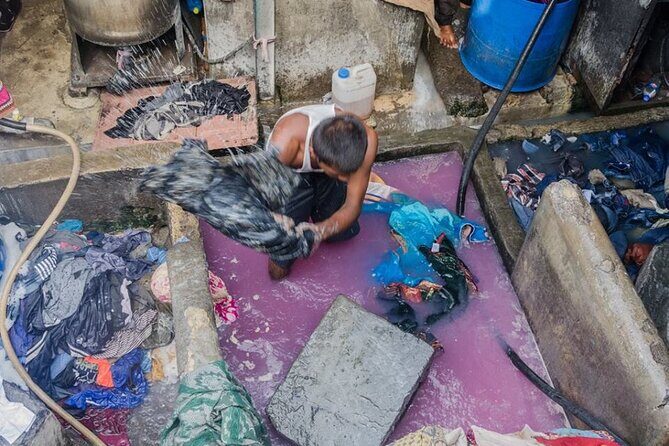
Here’s what you can expect the walk to focus on: the stages clothes go through, and how each one is handled.
First comes the washing stage, centered around the troughs where the work is done. Even if you notice machines in the background, the guide helps you connect what you see to the original hand methods that still exist here. That matters because Dhobi Ghat isn’t just a curiosity; it’s a living example of how labor has been structured over generations.
Next is drying. You’ll likely see clothes hung out to dry in open air, which is one reason Mahalaxmi Dhobi Ghat is such a distinct Mumbai experience. It’s practical, visible, and constantly in use.
Then comes the ironing stage—where charcoal irons come into play. That one detail is a big reason I think this tour works. It anchors you in the reality of the process: heat, manual effort, and time, not just water and soap.
Why an English-speaking guide changes what you notice

At Dhobi Ghat, visuals alone can be misleading. You might assume every step is either fully manual or fully automated. A guide helps you read what you’re seeing—especially the mix of old and new.
The guide is also important for keeping the experience respectful and focused. In the best moments, the guide explains the logic behind the work and answers questions clearly, at a pace that doesn’t feel like a sprint. One highlight from the experience is the way guides can create comfort for the group—Rakesh was specifically praised for being friendly, open, and calm, with no sense of being pushed along.
If you’re the kind of person who likes understanding everyday systems—labor, logistics, and how neighborhoods actually function—this guided format is the difference between watching activity and learning how it all fits together.
How long will you really spend there?

The schedule lists the tour as about 1 day 6 hours (approx.). That can sound like you’ll be standing in the laundry yard for most of the day. In practice, though, your time on the most active part of the Dhobi Ghat may depend on what’s happening when you arrive.
That’s where expectations need a little steering. One of the criticisms tied to the experience was that the tour felt very short and that much of what people hoped to see had already shifted toward machine work. On the flip side, other experiences praised the guide for a clear, unhurried walkthrough.
My advice: treat this as a guided window into a working laundry, not a long, slow “process documentary.” If you’re coming with a big-time budget for observation, plan a little buffer so you’re not disappointed if the tour segment itself is brief.
Meeting at Mahalaxmi Station: practical start, easy to fit in

The meeting point is Mahalakshmi Railway Station, and the tour ends back at the same place. That’s a big practical advantage. Mumbai is not a city where you want to waste time in complicated transfers, and starting near a railway station keeps things simple.
Because the tour is near public transportation, you can usually align it with the rest of your day without a major headache. You also won’t be stuck searching for a far-off location with no way back.
Just remember: it’s an open-air site, and it’s a working environment. Dress for standing and walking, and plan your water/snacks on your own since food and drinks aren’t included.
You can also read our reviews of more guided tours in Mumbai



Price and value: is $12 the right deal for you?

At $12 per person, this is priced like a low-cost “see it with context” experience. You’re paying for the English-speaking guide and for the time to translate what you’re watching into something meaningful.
In terms of value, this works best if you fall into one of these categories:
- You’re curious about how Mumbai’s everyday services work.
- You like human-scale processes and family-run labor systems.
- You’d rather spend a few dollars on local insight than on another landmark photo stop.
If, however, you expect a long, purely hand-done show, you might feel let down. The biggest negative point was essentially about tour length and the fact that some parts are done by machine now. That doesn’t make the site less real—it just means the experience is dynamic.
Think of it like this: you’re buying a guided orientation to an ongoing workplace. If your goal is extended observation of every manual step from start to finish, you may want to mentally adjust what that means for the time you’ll have.
The reality check: what you’ll learn about dhobis and why it matters
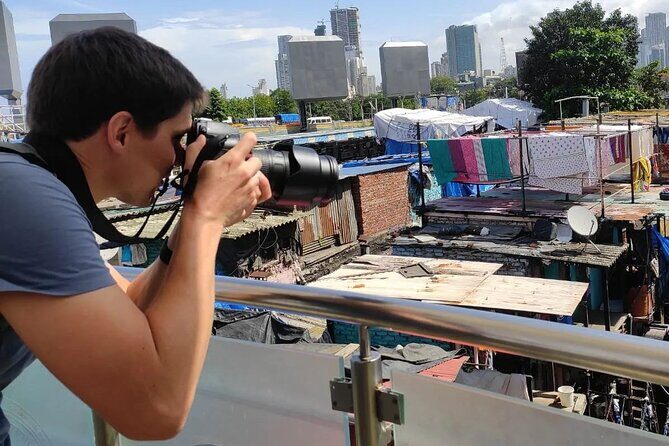
What makes this tour more than just a novelty is the social angle. The information you get centers on how dhobi families work through shifts, and how different people handle different stages. It’s a reminder that much of city life runs on systems you never see from the outside.
The fact that Mahalaxmi Dhobi Ghat is described as the world’s largest open-air laundry also explains why it draws attention. But for me, the key value is less about the superlative and more about the human organization behind the scenes: who does what, how tasks are divided, and how clothes go from dirty to crisp and spotless.
When the guide is doing their job well, you walk away understanding the “machine” of people and steps. You don’t just see labor—you see how it’s arranged to keep the service running.
Who should book this Dhobi Ghat guided tour (and who might skip)

Book it if you want:
- A close-up look at Mumbai’s working side, not just sights.
- A guided explanation of how a long-running laundry operation works.
- A small-group experience that stays flexible enough for questions.
Skip it or think twice if:
- You only enjoy tours that feel like extended, slow-paced walking with lots of time in one spot.
- You’re hoping for a fully manual, unchanged-by-machines experience. Some parts are modernized, and the tour can feel brief depending on the day.
This is a good fit for people who like cultural observation and practical storytelling. It’s also a solid add-on if you’re already in the Mahalaxmi area and want something local that doesn’t require extra travel.
Should you book Dhobi Ghat?
I’d book this if you want a low-cost, guide-led look at how Mumbai’s laundry work actually runs, with enough context to make the visuals click. The strongest upside here is the guide experience—friendly, clear, and not rushed—especially when the guide like Rakesh sets the tone.
I’d hesitate only if you need a long, drawn-out tour or you’re expecting every step to be purely hand-driven. If your mindset is flexible—more documentary-style “how it works today” than “guaranteed perfect handcraft”—then $12 is a fair price for a very unusual slice of everyday Mumbai life.
FAQ
Where is the meeting point for the tour?
The tour starts at Mahalakshmi Railway Station (Mahalakshmi Railway Station, Keshavrao Khadye Marg, Mahalakshmi, Mumbai, Maharashtra 400018, India), and it ends back at the same meeting point.
How much does the Dhobi Ghat guided tour cost?
It costs $12.00 per person.
How long is the tour?
The duration is listed as about 1 day 6 hours (approx.).
What’s the group size limit?
The tour has a maximum of 15 travelers.
Is food or drinks included?
No. Food and drinks are not included.
Can I get a refund if I cancel last minute?
Yes. You can cancel for a full refund up to 24 hours before the experience’s start time. If you cancel less than 24 hours before, the amount paid is not refunded.