REVIEW · HAMPI
Hire a Licensed Guide for Fullday Hampi visit with own transport
Book on Viator →Operated by Bangalore and Beyond · Bookable on Viator
A guide makes Hampi click. This full-day visit pairs your own transport with a Govt. licensed guide who keeps the day flowing and helps you understand what you’re seeing. It’s one of those setups that turns a pile of ancient sites into a single story you can follow.
What I like most is the Govt. licensed guidance plus the fact that the guide can revise the visits to match your pace and interests. The second big win is the itinerary itself: you hit the key temples, royal-area ruins, and viewpoints in one long day, with time set aside for the famous Virupaksha area walk and the coracle ride.
One thing to consider: this is “guiding service only.” Several major stops have separate entry fees you’ll pay on the spot (and you’ll also cover parking and shoe-keeping), so budget a bit more than the base price.
In This Review
- Key highlights worth planning around
- Why a Govt. licensed guide changes the day
- Your one-day route: what each stop feels like
- Stop 1: Sasivekalu Ganesha Temple (30 minutes)
- Stop 2: Hemakuta Hill Temple Complex (30 minutes + climb)
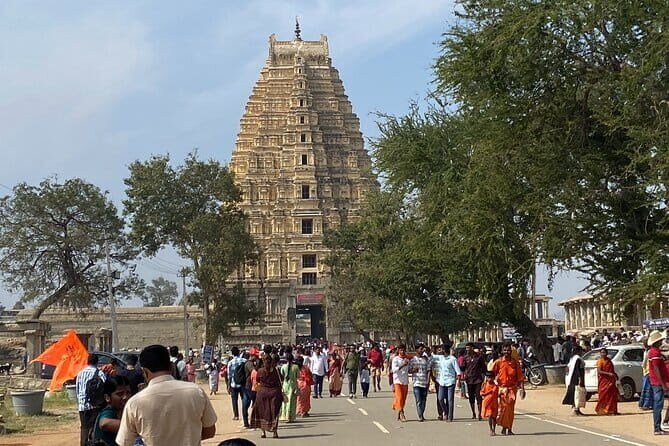
- Stop 3: Virupaksha Temple, Hampi (about 30 minutes)
- Stop 4: Hampi Coracle Ride (about 1.5 hours)
- Stop 5: Vijaya Vittala Temple (about 45 minutes)
- Stop 6: Queen’s Bath (about 30 minutes)
- Stop 7: Mahaanavami Dibba – Hampi (about 45 minutes)
- Stop 8: Hazara Raama Temple (about 30 minutes)
- Stop 9: Lotus Mahal (about 30 minutes)
- Stop 10: Elephant Stables (about 30 minutes)
- Stop 11: Shri Lakshmi Narasimha Temple (about 30 minutes)
- Stop 12: Malyavanta Raghunathaswamy Temple – Fatik Shilla (about 1 hour)
- The price that actually matters: $34 plus on-site costs
- Getting your own transport to work (without losing time)
- Fitness and comfort: what your body should be ready for
- Who this guided day suits best
- Should you book this licensed-guide day in Hampi?
- FAQ
- How long is the full-day Hampi guided visit?
- What’s included in the price?
- Do I need to pay for entry at Virupaksha Temple?
- Are Vijaya Vittala Temple, Lotus Mahal, and Elephant Stables included?
- What about the coracle ride—do I pay extra?
- Can the guide adjust the stops to my interests?
- Is this tour private?
- Does the guide ride in my vehicle?
- Where does the tour start and end?
- What fitness level do I need?
Key highlights worth planning around
- Sasivekalu Ganesha: a huge monolithic Ganesh with a memorable name (mustard-seed Ganesha)
- Hemakuta Hill: about 100 steps up, then wide-open Hampi views
- Virupaksha Temple + bazaar walk: the biggest living temple, plus a scenic circuit by the river
- Hampi Coracle Ride: a slow, hands-on way to experience the Tungabhadra river stretch
- Royal-enclosure stops: Queen’s Bath, Hazara Raama Temple carvings, Mahaanavami Dibba ruins
- Sunset viewpoint: Malyavanta Raghunathaswamy at Fatik Shilla for a hilltop finish
Why a Govt. licensed guide changes the day
Hampi isn’t hard to reach, but it is easy to walk through without understanding. Temple names blend together, ruins look similar from a distance, and some “this place matters” details only make sense when someone explains them in plain language.
That’s where the guide earns their fee. You get a licensed guide who joins you at the first stop and leaves at the last. In practice, that means you’re not stuck trying to coordinate timing, translations, and directions all day. The guide also suggests a good lunch stop based on your convenience, which matters because Hampi can burn up time if you’re searching around mid-afternoon.
The other clever bit is flexibility. The visits mentioned can be revised to fit your tastes. So if you’re temple-leaning, you can put more time into the religious sites. If you’re more into architecture and carvings, the guide can adjust the order and emphasis. That helps when you’re visiting for the first and only time and still want the day to feel personal, not like a checklist.
The one drawback is that “own transport” is exactly what it sounds like: you bring the car or bike arrangements. You’re paying for guidance, not for a driver or vehicle from the tour provider. Also, you should expect to pay entry fees for several stops directly.
You can also read our reviews of more guided tours in Hampi
Your one-day route: what each stop feels like
This day is built like a loop: start at a big icon, climb to a viewpoint, move into the living temple and river area, then work through the royal complexes and end with a hilltop sunset option.
Stop 1: Sasivekalu Ganesha Temple (30 minutes)
You start with the monolithic Sasivekalu Ganesha, set at the foothills of Hemakuta. The name matters: Sasivekalu literally points to mustard seed, connected to the way the toes/fingers are shaped on the statue.
This first stop is a strong opener because it gives you a visual anchor. When the day starts with a single, huge form you can’t miss, you’ll find it easier to orient yourself for the rest of the sites.
What to watch for: this is a relatively short stop. If you’re the type who likes to linger for photos, tell the guide early so the pacing matches your style.
Stop 2: Hemakuta Hill Temple Complex (30 minutes + climb)
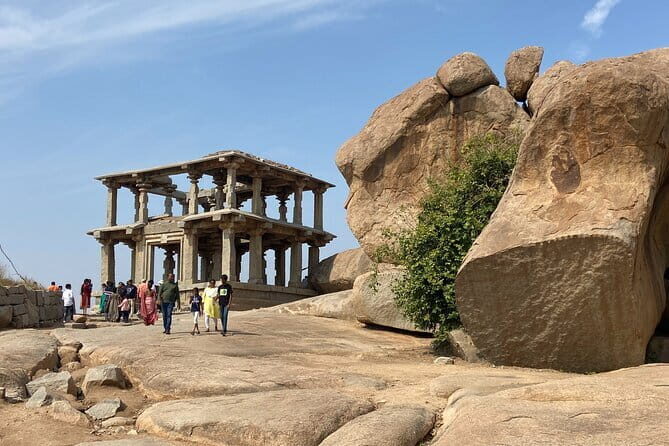
After Ganesh, you climb Hemakuta Hill—about 100 steps—to temple areas with major payoff: broad Hampi views from the top.
The climb is not a monster hike, but it does add a physical challenge. If you’re traveling in heat, go slow and drink water. The guide’s job here is also practical: keeping you at the right pace so you don’t arrive at later sites exhausted.
Stop 3: Virupaksha Temple, Hampi (about 30 minutes)
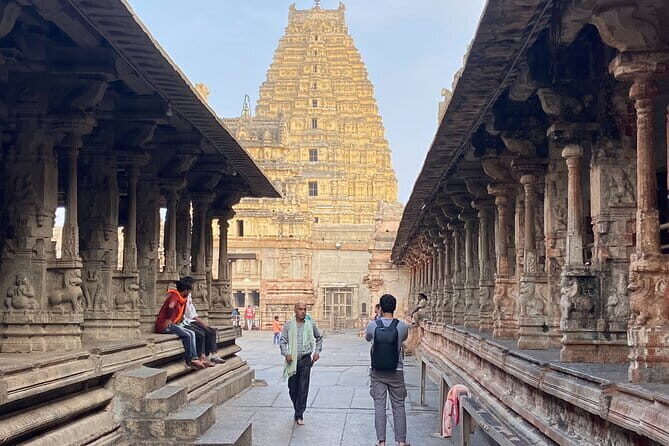
Virupaksha is the biggest living temple in Hampi, with Hemakuta hill on one side and the Tungabhadra river on the other. You’ll see the Raja gopura, the kitchen area, the kalyana mantapa, and even references like an elephant blessing devotees.
This stop has two layers:
- It’s still in use, so the mood feels active compared to the surrounding ruins.
- It’s positioned perfectly—the guide helps you notice how the temple and river relationship shapes the whole area.
Entry fee is not included for this one. You’ll pay Rs.20 per person directly.
Stop 4: Hampi Coracle Ride (about 1.5 hours)
From Virupaksha, you walk through the Hampi bazaar toward Matanga hill, then continue along the Tungabhadra river. At that point you get the coracle ride.
This is one of the most refreshing parts of a temple-heavy day. You swap stairs and stone textures for a slower, lower-energy experience on the water. Plus, you’ll see Hampi’s big boulder terrain and river bends from a different angle than you get on foot.
Note on planning: the coracle ride has no admission listed as included, so assume you’ll pay on-site as part of the activity costs.
Stop 5: Vijaya Vittala Temple (about 45 minutes)
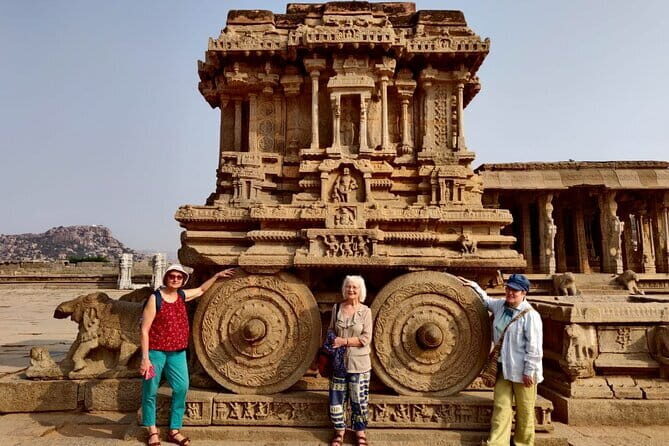
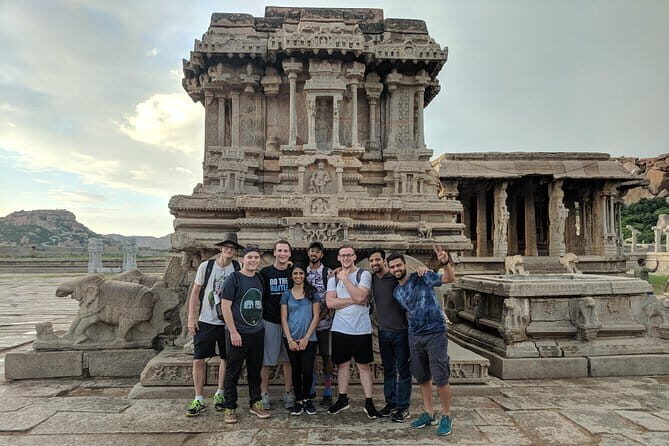
Vijaya Vittala is where Hampi’s famous architecture becomes obvious. You’ll spend about 45 minutes here, including time for the iconic Stone Chariot area and other Vijayanagara-style details.
This stop is less about one photo and more about looking closely. A guide helps you read what you’re seeing—what’s ornamental, what’s ceremonial, and why the iconic pieces got attention in the first place.
Entry fee is not included, and it varies:
- Rs.30 per person for Indian passport holders
- Rs.600 per person for non-Indian passport holders
If you’re sensitive to costs, this is the stop to decide in advance how much you want to spend time photographing vs. just absorbing the scale.
Stop 6: Queen’s Bath (about 30 minutes)
Queen’s Bath is a royal-ladies bath from the Vijayanagar period. The outside reads calm and sedate, but the inner architecture is more intricate—exactly the kind of detail that’s hard to notice without explanation.
This is a good breather stop. By now you’ve been climbing, walking, and paying attention to larger religious spaces. Queen’s Bath gives you a smaller, more tactile architectural moment.
Stop 7: Mahaanavami Dibba – Hampi (about 45 minutes)
Mahaanavami Dibba is part of the king’s enclosure, now in ruins. This is where the world-famous Dasara procession is said to have originated.
Don’t expect everything to feel complete. Instead, it’s about imagining the structure from the outlines you can still see, and understanding how the sculptures and space would have worked when it was active.
Stop 8: Hazara Raama Temple (about 30 minutes)
Hazara Raama is known for hundreds of Ramayana stories carved on the temple walls. The carvings are the point here, so you’ll want a guide who can point out what you should look for so you don’t end up staring at stone and guessing.
This is also a great choice for rainy-day mood, because even when it’s gray, the carvings keep their clarity.
Stop 9: Lotus Mahal (about 30 minutes)
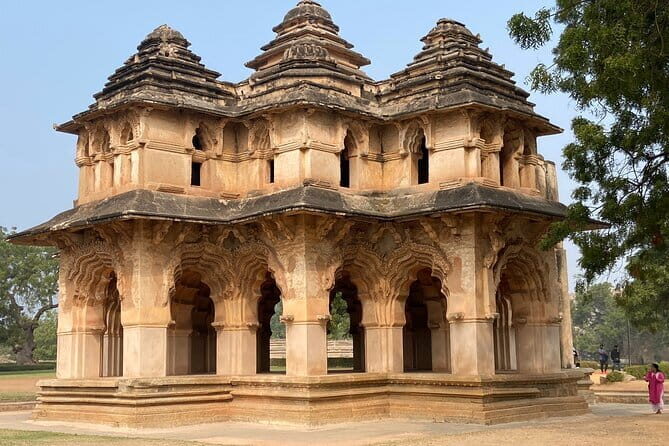
Lotus Mahal is in the zenana (royal women’s quarters) and is one of the must-see day-time palace-style structures in Hampi. You’ll get a short visit—about 30 minutes—focused on the idea of palace comfort, water, and the surprising calm of a royal space.
Entry fee is not included, and costs are the same tier as Lotus Mahal/Elephant Stables (Rs.30 for Indian passport holders; Rs.600 for non-Indian passport holders).
Stop 10: Elephant Stables (about 30 minutes)
These are stone stables built for royal elephants. Even if you’re not a “big animal” person, the facade is a visual hit because it’s so specific: stables made of stone for royal power.
Like Lotus Mahal, entry is not included:
- Rs.30 for Indian passport holders
- Rs.600 for non-Indian passport holders
Stop 11: Shri Lakshmi Narasimha Temple (about 30 minutes)
This temple’s Lakshmi Narasimha statue is described as jaw-dropping and awe-inspiring, and the Badavi Linga beside it is among the top 10 Shiva Lingas in the country.
This is another stop where the guide helps you slow down. When there’s a huge statue, it’s tempting to rush to the next photo. A guide can help you understand the symbolism and the scale of devotion.
Entry fee for this stop is free.
Stop 12: Malyavanta Raghunathaswamy Temple – Fatik Shilla (about 1 hour)
The final major stop is the hilltop sunset viewpoint at Fatik Shilla. Expect about an hour here, which gives enough time for the walk/view rhythm without feeling like you’re always behind schedule.
This end-point is smart: you leave the day on a visual note. And because you’ll already have seen temples, carvings, and royal spaces, the viewpoint becomes more than just scenery—it becomes how Hampi is meant to be read as a whole place.
Entry fee is free for this stop.
The price that actually matters: $34 plus on-site costs
At $34 per person, you’re paying mainly for the guide’s time, expertise, and pacing. Since the “included” section is guiding service only, the real cost picture depends on which paid sites you visit.
From the list, these are the ones with non-included entry fees:
- Virupaksha Temple: Rs.20 per person
- Vijaya Vittala Temple: Rs.30 (Indian) or Rs.600 (non-Indian passport holders)
- Lotus Mahal: Rs.30 (Indian) or Rs.600 (non-Indian passport holders)
- Elephant Stables: Rs.30 (Indian) or Rs.600 (non-Indian passport holders)
You’ll also cover parking fees, shoe-keeping fees, and you should plan for a tip/gratuity to the guide.
Value check: if you’re visiting Hampi for the first time, a licensed guide is often the difference between seeing structures and understanding why they’re placed where they are. In a long 7 to 8 hour day, you don’t have time to “figure it out later.” The guide helps you use the time you already paid for.
The booking trend is another clue: this kind of guided full-day setup gets booked quickly, with an average booking window of about 19 days in advance. If your dates are fixed, don’t wait.
Getting your own transport to work (without losing time)
This tour assumes you already have your transport figured out, and that you’ll let the guide ride in your vehicle. One space is made available for him.
Here’s how to make this run smoothly:
- Decide your starting point and time early so the guide can meet you at the first stop.
- Keep one person’s mind on timing. Even with guidance, Hampi rewards coordination.
- Bring cash for on-site fees. You’ll pay entry fees for certain temples directly.
- Wear shoes that handle dusty ground and stone edges. Shoe-keeping fees may apply, and you’ll be moving between multiple sites.
Also, the guide joins at the first visit and leaves at the last, meaning there’s no wasted time with “start and end” confusion. You still need to be punctual at the meet point: Sasivekalu Ganesha Temple in Hampi.
Fitness and comfort: what your body should be ready for
This day involves walking and at least one clear stair segment (Hemakuta’s ~100 steps), plus additional site-to-site movement. The tour asks for moderate physical fitness.
I’d plan for:
- Heat management (start early, take water breaks)
- A comfortable pace rather than rushing for photos
- Energy conservation for the final hilltop viewpoint
If you’re unsure, tell the guide when you book or at the start. Since the visits can be revised, you’ll have a better chance of matching the day to your comfort level.
Who this guided day suits best
This is a great fit if:
- You have your own transport and want a licensed guide to do the heavy lifting on context and timing
- You want a full Hampi highlights circuit in one day
- You’re the kind of visitor who enjoys temple architecture, carvings, and viewpoint planning
- You want one consistent person to explain the story from Ganesh to the royal-enclosure ruins to the hilltop finish
It might not be the best fit if:
- You’re hoping everything is included for a flat price. Several key stops require extra payment on-site.
- You prefer a totally self-guided experience with no guide involvement at all.
Should you book this licensed-guide day in Hampi?
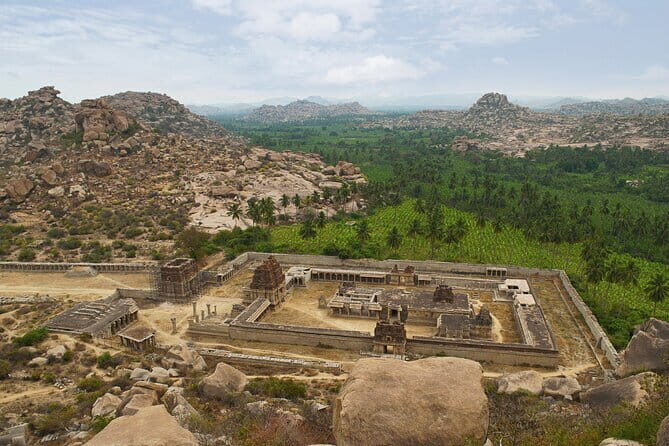
Yes, if you want Hampi to feel readable, not random. The itinerary hits major anchors: Sasivekalu Ganesha, Hemakuta’s viewpoint climb, Virupaksha’s living temple atmosphere, the coracle ride by the Tungabhadra, and the royal-complex highlights like Hazara Raama and Queen’s Bath. Add in the hilltop sunset finish, and you get a day that ends with a “now I get it” feeling.
Before you book, do one simple mental calculation: the $34 is for guidance, while several temples and palace areas have separate entry fees you’ll pay on-site. If that extra cost won’t stress your budget, this setup is strong value because it saves you time, reduces confusion, and makes the day flow.
If your dates are fixed, reserve earlier rather than later—the popularity signal is clear from the booking timing.
FAQ
How long is the full-day Hampi guided visit?
It runs about 7 to 8 hours total, and travel time is included in that duration.
What’s included in the price?
The tour includes only the guiding service. Entry fees and other on-site costs are not included.
Do I need to pay for entry at Virupaksha Temple?
Yes. Virupaksha Temple has an entry fee of Rs.20 per person, paid directly by you.
Are Vijaya Vittala Temple, Lotus Mahal, and Elephant Stables included?
Their entry fees are not included. Vijaya Vittala is Rs.30 per person for Indian passport holders and Rs.600 per person for non-Indian passport holders. Lotus Mahal and Elephant Stables have the same fee structure.
What about the coracle ride—do I pay extra?
The coracle ride is listed as an activity with admission not included, so you should expect to pay for it on-site.
Can the guide adjust the stops to my interests?
Yes. The visits mentioned can be revised to suit your tastes, and the guide can also suggest a lunch place based on your convenience.
Is this tour private?
Yes. It’s a private tour/activity, and only your group participates.
Does the guide ride in my vehicle?
Yes. One place in your vehicle is available for the guide, and the guide joins at the first stop and leaves at the last stop.
Where does the tour start and end?
It starts at Sasivekaalu Ganesha (Hampi) and ends at the Police Station – Kamalapura / Kampli road area. The guide will say goodbye at this place or another convenient spot.
What fitness level do I need?
The tour asks for a moderate physical fitness level due to walking and a climb (Hemakuta has about 100 steps).