REVIEW · VARANASI
Varanasi Ganga Arti visit and Heritage Walk
Book on Viator →Operated by Pick My Tour · Bookable on Viator
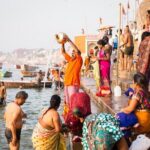
One hour before sunset in Varanasi, things get real. This Varanasi Ganga Aarti visit is built around the live ritual on the ghats, with a guide helping you understand what you’re seeing and where to stand so you don’t miss a thing. I also love how the walk strings together key places—Godowlia, Dashashwamedh Ghat, the Kashi Vishwanath corridor, and Manikarnika Ghat—so the experience feels like one connected story, not random sightseeing. The main thing to consider is timing: the Aarti starts around 6pm, so you’ll be outside along the ghats and temples as it gets busy.
The tour is also practical for a short evening: it starts at 5:00 pm at Godowlia Chauraha, includes pickup, and keeps admission linked to the stops listed as free in the plan. You’ll get a local guide, a structured route, and a mobile ticket, which keeps it simple once you’re in the city. Just be ready for walking time across multiple ghats, since the schedule is compact by design.
In This Review
- Key highlights you’ll actually feel
- A Ganga Aarti tour that’s timed like the real thing (not a rushed show)
- Meeting at Godowlia Chauraha: the easiest start point for a 5pm launch
- Stop 1: Godowlia to the ghats at the start of golden hour
- Stop 2: Dashashwamedh Ghat and the pre-art look at temples and riverfront life
- Stop 3: Rajendra Prasad Ghat for the live Ganga Aarti
- Stop 4: Kashi Vishwanath Temple corridor and Dom Raja House
- Stop 5: Kathwala (Nepali) Temple for the Nepal connection
- Stop 6: Manikarnika Ghat—burning ghat and cremation rituals explained
- Price and value: why $10 can make sense for a 3-hour live experience
- Who should book this and who might want to skip it
- Should you book the Varanasi Ganga Arti and Heritage Walk?
- FAQ
- Where does the tour start and what time does it begin?
- How long is the tour?
- Is pickup offered?
- What is included in the price?
- Do I need to pay separate admission fees at the stops?
- Where do we watch the Ganga Aarti?
- Can I cancel for a full refund?
Key highlights you’ll actually feel
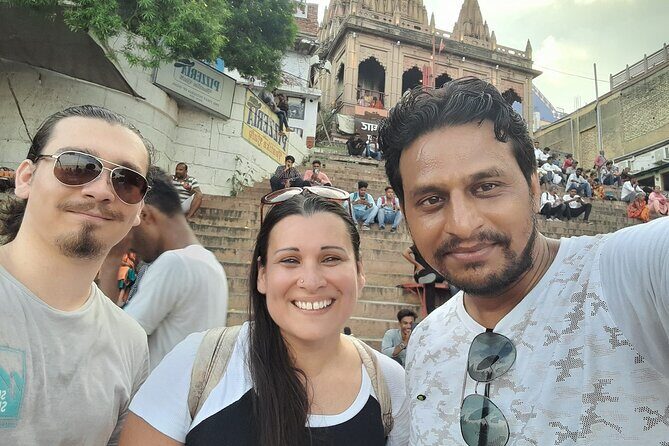
- Live Ganga Aarti viewing at Rajendra Prasad Ghat, timed for the ritual start around 6pm
- Heritage walk structure that moves you through multiple ghats and temples in about 3 hours
- Guide-led orientation at each stop, with cultural and historical explanations
- Comfort-first sightlines, with support to get a good place to sit and watch the whole arti
- Manikarnika Ghat context, including the local belief about cremation and the cycle of death
A Ganga Aarti tour that’s timed like the real thing (not a rushed show)
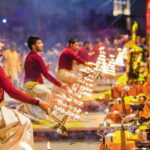
A lot of evening tours in Varanasi try to do everything. This one focuses on the heart of the experience: seeing the Ganga Aarti live at Rajendra Prasad Ghat, with the ritual starting around 6pm. What makes that important is the pacing. You’re not just arriving right when it’s over. You’re walking there, getting oriented, and then settling in as the ceremony begins.
Also, the route keeps you close to where life actually happens—on and around the ghats—so the Aarti doesn’t feel staged. You’ll get a brief window to look at local shops and temples on the way, then a longer block to watch the ceremony. It’s a simple idea, but it makes a difference if you want the moment to land instead of pass by.
You can also read our reviews of more walking tours in Varanasi


Meeting at Godowlia Chauraha: the easiest start point for a 5pm launch
The tour begins at Godowlia Chauraha, Ramapura Luxa, Varanasi, with a start time of 5:00 pm. From there, the plan is designed to get you moving quickly toward the river. That first step matters because you’re building your evening in the right order: meet, orient, walk, then watch the ritual.
If you’re choosing this, you’ll like the clear meeting location and the fact that it’s near public transportation. It helps if you’re coming from your hotel and don’t want to play phone-tag to find the group. Pickup is offered too, which is a real help in Varanasi where a “quick taxi” can turn into a longer-than-expected effort.
Stop 1: Godowlia to the ghats at the start of golden hour
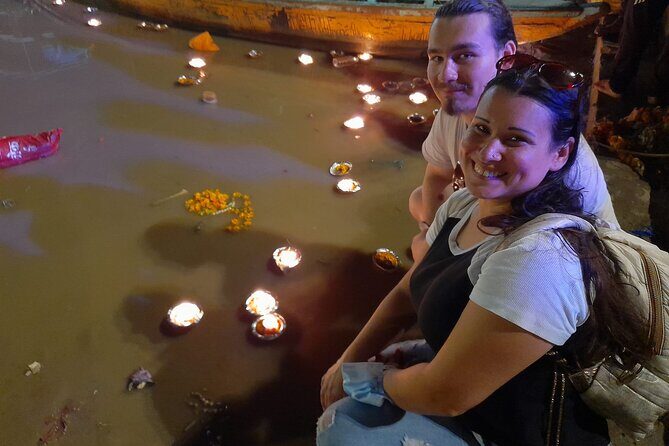
Your first stop is Godowlia, with a meet-and-greet and then a walk toward Ganga Ghat. You get about 30 minutes here, and the plan lists the ticket as free for this part.
This early segment is more than a warm-up. It’s your time to shift from street mode to river mode. The guide starts the tour and sets expectations about what you’ll see as you move along the ghats. If you’re new to Varanasi, this is the moment where you learn what to look for later—so the Aarti viewing makes sense instead of feeling like a blur.
A small consideration: since the tour is compact, you’ll want to keep your pace steady during the initial walking portion. It’s not a long march, but you are moving.
Stop 2: Dashashwamedh Ghat and the pre-art look at temples and riverfront life
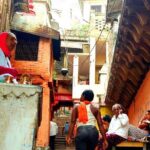
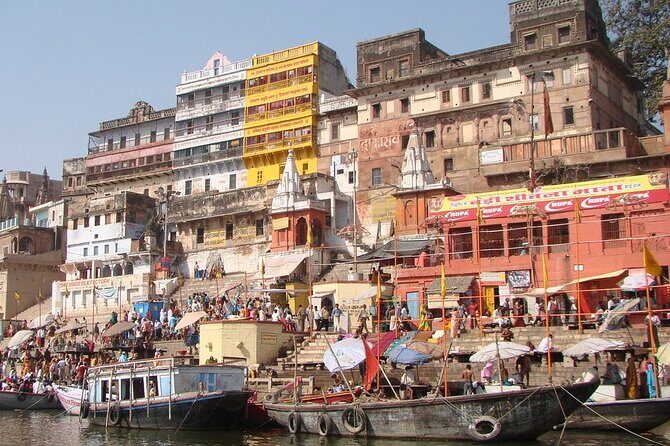
Next comes Dashashwamedh Ghat. This is where the experience starts to feel like a real heritage walk: you’ll walk from Godowlia to Dashashwamedh Ghat, passing local shops and temples, with your guide briefing you on the cultural and historical details around the places you pass.
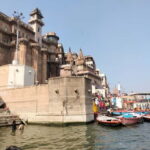
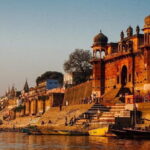
There’s also a stop at the Ganga River Ghat area before the Aarti. Think of this as your “settle in” moment—time to orient yourself to the river edge and the flow of people before the ceremony begins.
What I like about this section is the mix of explanation plus movement. You don’t just stand there until it’s time for the main event. You learn why the ghats matter, and you see how daily commerce and worship sit side by side. It’s a gentle ramp up to the ceremony.
Stop 3: Rajendra Prasad Ghat for the live Ganga Aarti
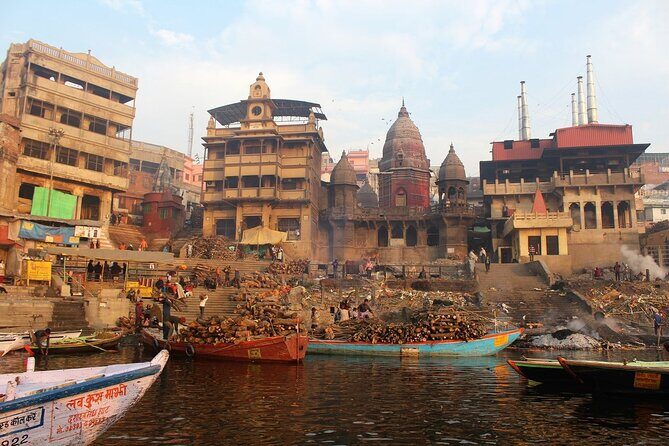
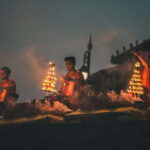
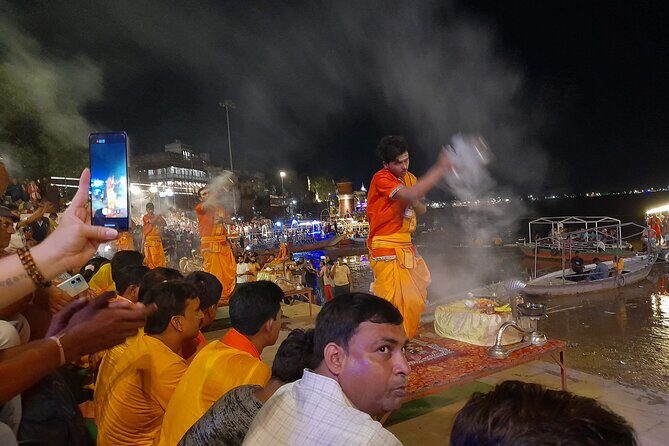
This is the centerpiece: Ganga Aarti at Rajendra Prasad Ghat. The schedule calls for about 1 hour, and the ritual starts around 6pm.
If you care about getting a good view, this is where the tour earns its strong reviews. The plan includes guidance for where to watch, and visitors have specifically highlighted that the guide arranges a place to sit and watch the whole arti. That’s huge in places where standing for long stretches can make you miss parts of the ceremony.
One more practical point: plan for the evening to feel crowded and active. This isn’t a quiet museum moment. You’ll be watching a religious ritual people come to for prayer and connection, so expect energy in the crowd. The upside is that it’s authentic.
You can also read our reviews of more historical tours in Varanasi





Stop 4: Kashi Vishwanath Temple corridor and Dom Raja House
After the Aarti, the route shifts from the river ritual to major religious landmarks along the ghats. You’ll visit the Gateway of Kashi Vishwanath Temple, described as a newly built temple corridor, plus the nearby Dom Raja House.
This stop is brief—about 20 minutes—but it adds a layer that helps the Aarti sit in context. The ghats aren’t only for ceremonies; they’re also a gateway into some of Varanasi’s most important spiritual geography. If you’ve only seen the river side before, this helps you connect the dots.
The “consideration” here is time. Since the tour is built as a 3-hour evening circuit, you’re not going to get a long temple exploration. If you want hours inside religious sites, you’ll need to do that separately.
Stop 5: Kathwala (Nepali) Temple for the Nepal connection
Next up is the Nepali Temple, also referred to as the Kathwala Temple. You’ll walk along the ghats and visit this temple, built by the King of Nepal, based on the tour description.
This is a neat detour because it reminds you Varanasi isn’t just one tradition—it has layers of cultural influence visible in architecture. The plan keeps it to about 20 minutes, and that’s enough to see the setting and learn the story without dragging your evening.
If you’re the type who likes architecture-as-evidence (how power and connections show up in stone), you’ll probably appreciate this stop more than you expect.
Stop 6: Manikarnika Ghat—burning ghat and cremation rituals explained
The last major stop is Manikarnika Ghat, known in the plan as the burning ghat and crematorium. The guide explains the place and the rituals happening there, and the tour notes a strong local belief: that people cremated here are believed to be free from the cycle of death.
This stop is only about 20 minutes, but it’s the most emotionally heavy part of the route. A heritage walk is supposed to show you more than the pretty side of a city, and Manikarnika forces that reality in a direct way.
A key consideration: if you’re sensitive to viewing cremation-related rituals, mentally prepare for a serious atmosphere. The tour is not trying to soften the meaning—it’s giving you explanation through a guide, so you understand what you’re seeing rather than guessing.
Price and value: why $10 can make sense for a 3-hour live experience
The tour price is $10.00 per person, and the inclusions are clear: all fees and taxes, guide fee, and Ganga Aarti visit. Admission tickets for the stops listed as free are included in the plan, and the duration is about 3 hours (travel time included).
Here’s how I think about value for this kind of evening:
- You’re paying mainly for the guide’s positioning and the route that gets you to the right places in the right order.
- You’re getting access to the Aarti component at Rajendra Prasad Ghat, not just passing by it.
- You’re not paying extra for each stop, since the plan marks these as free for visitors.
Is it a luxury tour? No. But at this price, you’re buying structure and local context for a short evening, which is exactly what most people want when they have limited time in Varanasi.
Who should book this and who might want to skip it
This tour fits best if you want a single evening circuit that covers the big spiritual stops without getting lost. It’s also a good choice if you like having a guide who explains the cultural and historical details while you walk.
You’ll likely enjoy it most if:
- You’re in Varanasi for a short stay and want the Aarti plus a heritage route
- You care about understanding what ghats represent, not just taking photos
- You want help finding a good viewing spot for the live ceremony
You might want a different option if:
- You want longer, slower time inside temples or on the ghats by yourself
- You strongly prefer experiences that avoid cremation-related areas like Manikarnika
Should you book the Varanasi Ganga Arti and Heritage Walk?
Yes, if your priority is the live Ganga Aarti experience done with a guided route and smart timing. The biggest selling point is practical: the guide helps you get a good viewing spot to watch the whole ritual, which turns a chaotic evening into something you can actually enjoy.
Also, at $10, the value is hard to beat for a structured 3-hour program that covers multiple named places—Godowlia, Dashashwamedh Ghat, Rajendra Prasad Ghat, Kashi Vishwanath corridor, Kathwala/Nepali Temple, and Manikarnika Ghat—without making you scramble for details on your own.
If you’re flexible, curious, and okay with a serious last stop, this is the kind of tour that leaves you feeling like you understood the city’s rhythm for a few hours, not just looked at it.
FAQ
Where does the tour start and what time does it begin?
The tour starts at Godowalia Chauraha, Ramapura Luxa, Varanasi, Uttar Pradesh 221001, with a start time of 5:00 pm.
How long is the tour?
The tour duration is about 3 hours, with travel time included.
Is pickup offered?
Yes, pickup is offered.
What is included in the price?
The price includes all fees and taxes, the guide fee, and the Ganga Aarti visit.
Do I need to pay separate admission fees at the stops?
The itinerary lists admission tickets as free for the stops described in the plan.
Where do we watch the Ganga Aarti?
The tour includes watching the Ganga Aarti live at Rajendra Prasad Ghat, with the ritual starting around 6pm.
Can I cancel for a full refund?
Yes. You can cancel up to 24 hours in advance of the experience’s start time for a full refund.