REVIEW · VARANASI
Private Half Day Mystical Varanasi Tour
Book on Viator →Operated by Banaras Travel · Bookable on Viator
Varanasi teaches fast. In just about 3 hours, this private walk through Kashi gives you a close look at daily river rituals at Dashashwamedh Ghat and the spiritual intensity around Kashi Vishwanath Temple. I like that it’s not just sightseeing—your guide helps you read what you’re seeing as part of real Hindu life.
The experience also includes time at Manikarnika Ghat, the main cremation ground on the Ganga, where you’ll get context for why cremation here matters. The main trade-off: this is sacred ground, and the subject matter can feel heavy or uncomfortable for some people.
You’ll finish back where you started, with a cup of masala tea in the narrow lanes to keep things human and grounded. If you want a concentrated taste of Varanasi without spending all day getting lost, this is a solid way to do it.
In This Review
- Key Highlights You’ll Actually Feel
- Why This 3-Hour Mystical Varanasi Tour Fits (and What You Give Up)
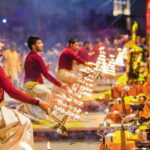
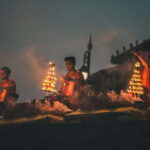
- Dashashwamedh Ghat: The Ganga Ceremonies You Can’t Fake
- Manikarnika Ghat: Cremation Ground With Explanation, Not Sensationalism
- Kashi Vishwanath Temple (Golden Temple): A Shiva Site With Real-world Security
- Satua Baba Ashram Mandir: From Centuries-Old Practice to Sanskrit School
- Domraja Palace and Kalika Gali: Power, Food, and Street-level Varanasi
- Domraja Palace: Stories Tied to Cremation Revenue and Daily Life
- Kalika Gali: Narrow Streets, Sanskrit Learning, Ayurveda, and Chai
- The Guide Experience: Why People Mention Ranjit
- Price and Value: What $30.01 Buys You in Varanasi
- Practical Tips So You Get the Most From Each Stop
- Should You Book This Half-Day Mystical Varanasi Tour?
Key Highlights You’ll Actually Feel
- Evening Ganga ritual focus at Dashashwamedh Ghat, one of the holiest ghat areas for ceremonies
- Cremation-ground context at Manikarnika Ghat, explained respectfully
- Kashi Vishwanath Temple access in a high-security zone, with time to see what matters
- Satua Baba Ashram Mandir and its link between yogic tradition and a running Sanskrit school
- Kalika Gali alleyway walking plus tea in a local setting, not a showroom stop
Why This 3-Hour Mystical Varanasi Tour Fits (and What You Give Up)
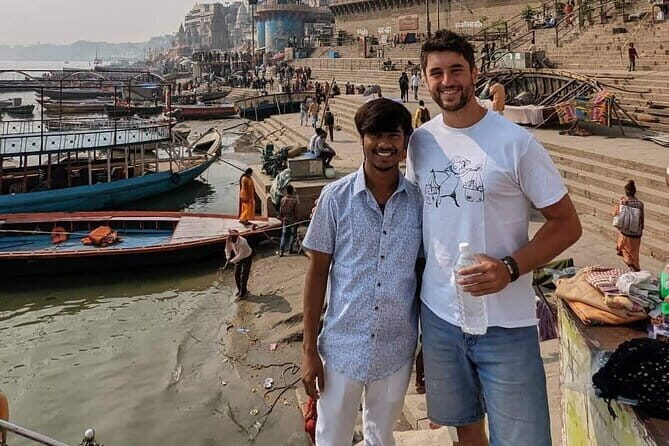
This tour is built for people who want meaning, not a long checklist. It’s private (only your group) and timed at about 3 hours, so you get fewer bottlenecks and more conversation with your guide while you move through the older parts of Varanasi.
The value also comes from what’s included. You get coffee and/or tea, and admission tickets are included for the major stops: Dashashwamedh Ghat, Manikarnika Ghat, and the temple complex areas you’ll visit (as listed). That matters because Varanasi can be pricey once you start adding ticketed sites and constant chai on top of everything.
What you give up is depth-by-volume. You won’t have hours at each place to watch everything unfold. Instead, you’ll get targeted time at six meaningful stops—enough to understand the themes, even if you don’t get every detail of every ritual.
Finally, this is a walking experience in places that can be crowded. The description notes most travelers can participate, but you should still expect uneven ground near ghats and narrow streets.
You can also read our reviews of more private tours in Varanasi
Dashashwamedh Ghat: The Ganga Ceremonies You Can’t Fake
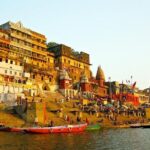
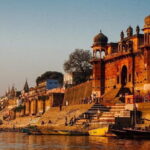
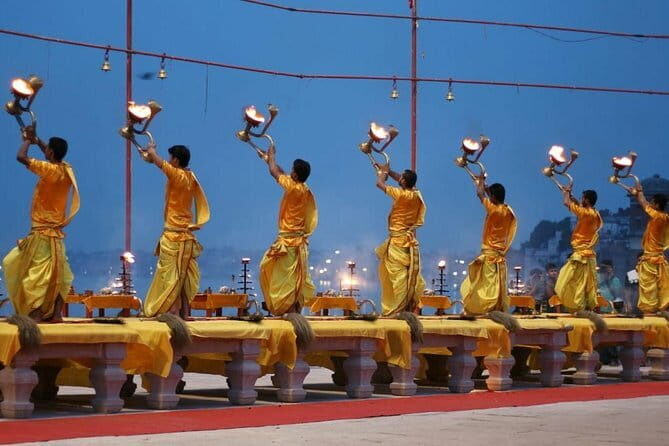
At Dashashwamedh Ghat, you’re entering a hub of spiritual activity tied to ancestor rites and daily ceremonies. The ghat is known as one of the holiest bathing and ritual areas, and the experience here is about seeing how the Ganga is treated like something living and present—part of the daily calendar, not just a landmark.
You’ll have about 30 minutes here. In that window, what helps is having a guide who can explain what you’re watching: bathing practices, ritual behaviors, and why this particular ghat matters in the larger Varanasi story (often called Kashi).
A practical note: even if your goal is photography or atmosphere, keep your attention on behavior and etiquette. Ghat areas have strong expectations about where to stand and how to move so you don’t disrupt people mid-ritual. Your guide should steer you, and it’s worth listening, even when you’re tempted to wander for a better view.
This stop is one of the easiest ways to understand why Varanasi feels different at night than it does in the daytime.
Manikarnika Ghat: Cremation Ground With Explanation, Not Sensationalism
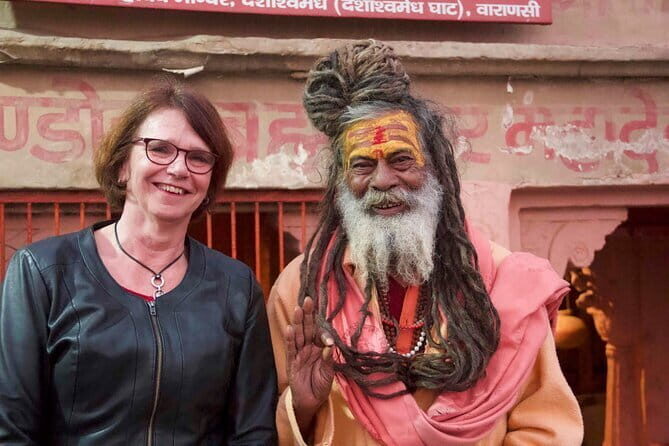
Next comes Manikarnika Ghat, described as a main cremation ground on the banks of the Ganga. The key word is context. This is not a “shock and stare” stop; it’s a place where your guide can help you understand cremation as a belief system—why people come here, how the process is seen in terms of release, and how the river factors into that meaning.
You’ll also get about 30 minutes at this stop. It’s enough time to see the basics and ask questions, but not enough for people who want to process slowly on their own. If you’re sensitive to death-related topics, plan for that. It may feel intense even with good explanations.
What I like about this structure is that it doesn’t pretend the topic is light. A guide who’s government-approved (as described) is also a good sign here, because you need someone who understands how to talk about sensitive cultural practices respectfully.
If you go, keep your focus on respectful observation and leave space for what you’re seeing. You’ll get more out of the tour by staying calm and letting the meaning land rather than trying to “solve” the experience quickly.
Kashi Vishwanath Temple (Golden Temple): A Shiva Site With Real-world Security
At Shri Kashi Vishwanath Temple, you’re stepping into one of India’s most important Shiva temples. It’s described as the Golden Temple, and the tour notes it’s in a high security zone because of the site’s perceived special energy—often explained as electromagnetic power and linked to “positivity.”
You’ll have about 30 minutes here. The security element matters because it changes how you move through the area. Expect screening and the kind of slow-and-steady flow you see around high-priority religious sites. This is one of those stops where “arrive ready” beats “arrive fast.”
What you’ll get for your time is the core spiritual focus. Even if you don’t know the theology, you’ll recognize the intensity: devotion, chanting, and people behaving like this is the center of their spiritual day. Your guide’s job is to translate what the temple means beyond the posters and postcards.
If you’re hoping for a peaceful museum-like visit, you might not get that here. This is an active place of worship, and that’s the point.
Satua Baba Ashram Mandir: From Centuries-Old Practice to Sanskrit School
The tour then moves to Shri Satua Baba Ashram Mandir, described as an ashram where a revered yogi lived and died many hundred years ago. Today, it’s still active, and it’s described as running as a Sanskrit school for brahmin students.
You’ll get about 30 minutes at this stop. What I like about including a site like this is that it connects the mystical side of Varanasi to education and daily structure. It’s easy to treat “mystical India” like a theme park. Here, the tour nudges you toward the lived reality: tradition continues through people studying, teaching, and maintaining a spiritual lineage.
You may hear stories about the yogi and the way the ashram functions today. Even if you can’t confirm every detail, you can still see the basic pattern: sacred space isn’t frozen in time. It changes form while keeping meaning.
This stop can be a nice counterbalance after the intensity of ghat visits. It’s quieter, more inward, and more about continuity.



Domraja Palace and Kalika Gali: Power, Food, and Street-level Varanasi
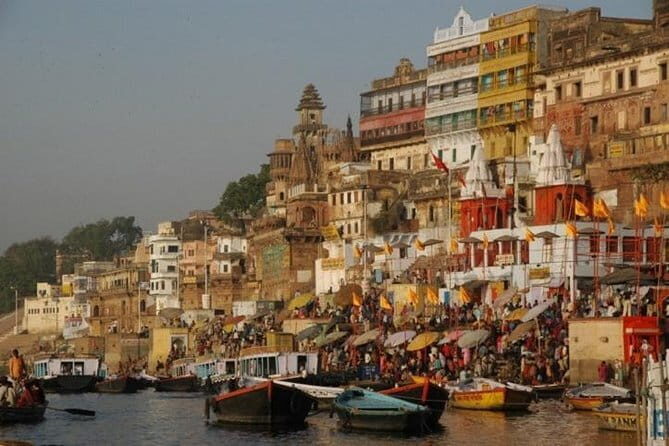
Two of the most interesting blocks of time come at Domraja Palace and then Kalika Gali.
Domraja Palace: Stories Tied to Cremation Revenue and Daily Life
Domraja Palace is described with a striking role in Varanasi’s cremation economy—linking the dom raja to cremation-related revenue. The tour also explains that their cooking uses wooden fire from cremation, and it mentions a younger successor, Om hari prasad narayan, described as 14 years old at the time of the information provided.
That’s a lot to take in, and it’s exactly why a guided stop helps. Without context, you might hear these details and dismiss them as rumor. With a guide, you can understand why older power structures are woven into the sacred systems of the city.
You’ll have about 30 minutes here. For me, the main takeaway is that Varanasi’s spirituality isn’t separate from governance, work, and daily needs. It’s all part of one human system.
Kalika Gali: Narrow Streets, Sanskrit Learning, Ayurveda, and Chai
Then you step into Kalika Gali, described as a narrow street with attractions connected to Sanskrit study, including a sanskrit collage area, plus a natural ancient ayurvedic healing centre.
Time here is also about walking and conversation—plus a local tea experience in a clay pot. The description says the tea is offered while walking in the narrow streets, and that it’s safe and well boiled. That’s a big deal in places where “street food” can be hit or miss depending on where you stand and what you’re served.
Kalika Gali’s value is the way it feels local. Instead of pulling you into one formal viewpoint, it gives you the street-level texture: old building walls, wall paintings, and everyday public spaces that make Varanasi feel real instead of performed.
The Guide Experience: Why People Mention Ranjit
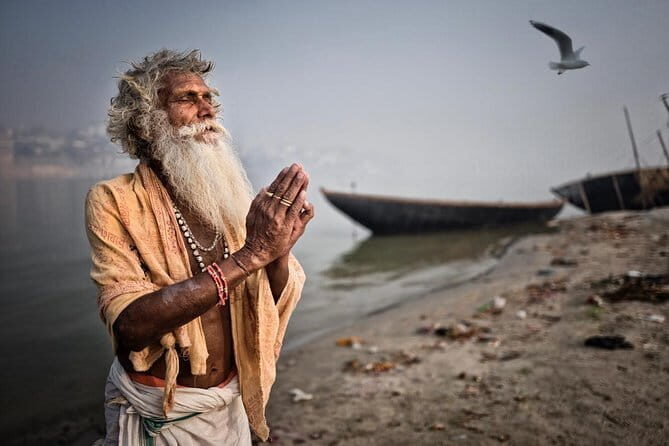
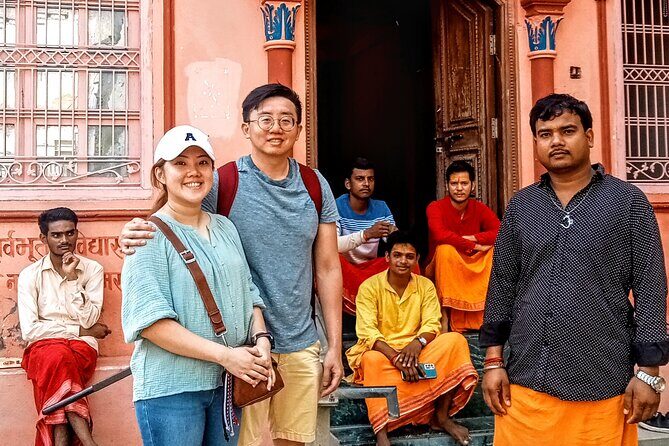
The reviews tied to this tour consistently point to one thing: the guide can turn a walk into understanding. In the feedback, Ranjit is described as having great knowledge, organizing the day perfectly, and being a gentleman with real passion for the city.
What that means for you is simple. When you’re standing in front of ritual steps or sacred architecture, it’s easy to miss what matters. A strong guide helps you notice the right details: what people are doing, what symbols mean, and how each site connects to the next.
It also helps that the tour describes guides as approved by a government department. That doesn’t guarantee your day will be perfect, but it’s a positive sign for professionalism—especially with sensitive sites like Manikarnika Ghat.
If you’re the kind of person who likes asking questions, this tour format is a good match. If you prefer to just drift on your own, you might find the explanations a bit intense. But even then, the tea stops and street walking give you room to reset.
Price and Value: What $30.01 Buys You in Varanasi
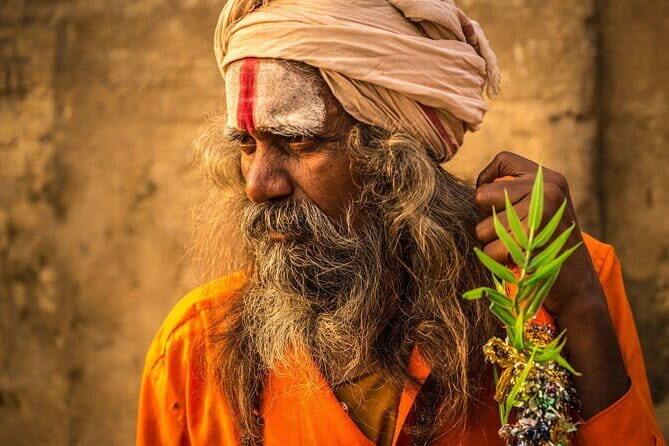
At $30.01 per person for about 3 hours, this tour competes well with the usual “either pay for a ticket or pay for a guide” problem. Here, admission tickets are included for several key stops, and you also get coffee and/or tea.
So you’re not just paying for someone to point at monuments. You’re paying for guided access and interpretation at major spiritual locations. That’s the real cost saver in Varanasi, where it’s easy to lose time and end up paying twice—once in your schedule and again in small extras.
Private also matters. For groups, privacy reduces friction: you can move as a unit, you can stop for questions, and you won’t spend half your half-day waiting for other people who are slower or distracted.
The only pricing caveat is timing. The experience description says it requires good weather. If rain or extreme conditions show up, you might have to reschedule. That’s not a money issue so much as a planning reality for outdoor ghats and walking-heavy streets.
Practical Tips So You Get the Most From Each Stop
A few small things can make the difference between a good day and a memorable one:
- Bring light layers. Even in a short tour, temperatures and the feel of ghats can shift fast.
- Wear something comfortable for walking. Kalika Gali’s streets are narrow, and you’ll be on your feet.
- Expect security at Kashi Vishwanath and plan for slower entry flow.
- Be ready for emotional content at Manikarnika Ghat. If you’re uneasy with death-related topics, think twice before booking.
- Treat tea as part of the tour, not a break. The clay-pot masala tea is there to connect you to street-level Varanasi while you move through the lanes.
If you keep these in mind, you’ll get more than photos. You’ll get a clearer sense of how Kashi works as a lived spiritual city.
Should You Book This Half-Day Mystical Varanasi Tour?
Book it if you want a private, guided sampler of Varanasi’s spiritual core in about 3 hours, with meaningful stops instead of random wandering. It’s also a strong choice if you value explanations—because the tour includes both uplifting ritual spaces and the heavier reality of cremation ground life.
Skip it if you want a purely calm sightseeing day, or if sensitive topics (like cremation) are likely to overwhelm you. Also, if you don’t like security screening or crowded sacred spaces, Kashi Vishwanath may feel stressful.
If you do book, come with a curious mindset and a respectful attitude. This tour works best when you treat each stop as part of one story—Ganga rituals, temple devotion, yogic tradition, and the street-level life that keeps Kashi moving.