REVIEW · MUMBAI
Travel 12 days in wonderful Maharashtra
Book on Viator →Operated by Akvin Tourism · Bookable on Viator
A faith-focused trip can change how you see India. This 12-day Maharashtra circuit links Hinduism, Jainism, Buddhism, Sufism and Sikhism to real places—mostly off the main tourist routes—so you get religious tolerance in action, not just in theory. Two things I really like: the tour keeps moving on a tight schedule without feeling rushed, and the guides connect each stop to everyday beliefs and local life. One possible drawback: you’ll do a lot of walking and stair climbing at temples and cave sites, so bring a moderate fitness level and wear decent, comfortable clothing.
The route also makes practical sense. You start with an airport welcome in Mumbai, then use trains between cities to see local rhythm (and save time), while buses/AC vehicles handle the short transfers. The other consideration is timing: Ajanta caves are closed on Tuesday, so the order can shift depending on your dates, and the day-by-day flow matters.
In This Review
- Key highlights you’ll feel (not just see)
- First steps in Mumbai: airport pickup and a religion-first start
- Malabar Hill, Babulnath, Haji Ali: watching faith share the coastline
- Churchgate to Dharavi: a reality check that makes the spiritual theme stronger
- A practical local-train segment: using public transport like a local
- Nashik’s temple chain: following the Ramayana through space
- Where Nashik helps: myth + daily ritual
- Panchavati and Nashik Road: street shopping meets the train north
- Aurangabad split days: Ajanta’s paintings and Ellora’s mixed faiths
- Ajanta caves day
- Ellora caves day
- Khuldabad’s Sufi sites: where tolerance becomes physical
- Nanded’s Sikh worship: seeing community energy after dark
- Two guided looks at the same gurudwara complex
- Ending the loop: back to Mumbai with options
- Price and value: what $586.43 really buys you here
- Who this tour fits best (and who should rethink it)
- COVID-era precautions: what the tour says it does
- FAQ
- FAQ
- Which religions does this Maharashtra tour focus on?
- Does the tour include time in Mumbai, and what kinds of sites are there?
- Are there UNESCO cave days on the itinerary?
- Can I choose a homestay in Aurangabad?
- How does the tour move between cities like Mumbai, Nashik, Aurangabad, and Nanded?
- What’s included in the price?
- What languages does the tour run in?
- What’s the cancellation window?
- Should you book this Maharashtra spiritual circuit?
Key highlights you’ll feel (not just see)
- A built-in interfaith flow across Mumbai, Nashik, Aurangabad, Khuldabad, and Nanded—faiths are shown side-by-side in meaningful places
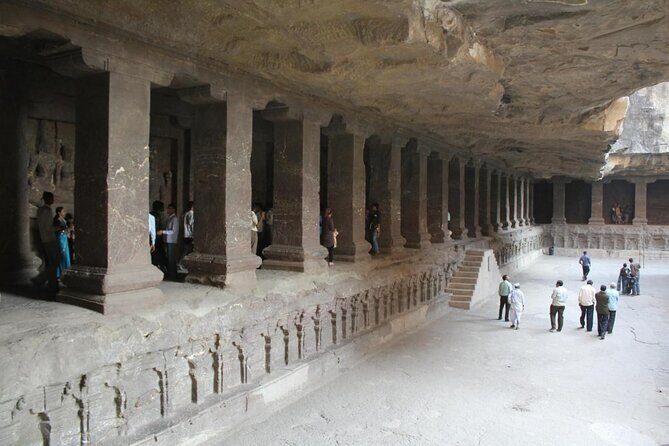
- UNESCO “wow” days at Ajanta and Ellora, including Ellora’s caves from multiple religions in one complex
- Sufi history in Khuldabad, tied to saints’ shrines and burial sites like Burhanuddin Gharib and the Burhanuddin Dargah area
- Local culture in Aurangabad, with an option for a homestay instead of only a hotel
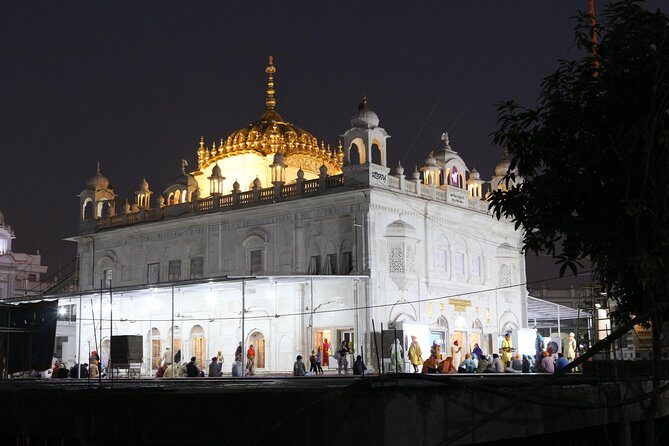
- Sikh worship in Nanded at night, so you see the community’s energy after the sightseeing pause
First steps in Mumbai: airport pickup and a religion-first start
Most India tours toss you into the city and hope you figure it out. This one begins with an airport welcome at Chhatrapati Shivaji International Airport, with a drop to your hotel. After that, the plan quickly turns religious and practical at the same time: you’re not just collecting sights, you’re learning how people live with faith layered into daily routes.
The tour then sets the tone with a short, easy intro stop at Malabar Hill. Near an ancient step-well, you get an explanation of the different religions of India. It’s a smart choice for a first day. The “story” lands before the crowds, so later temple and dargah visits feel connected rather than random.
You can also read our reviews of more tours and experiences in Mumbai.


Malabar Hill, Babulnath, Haji Ali: watching faith share the coastline
From Malabar Hill you head to Babulnath Temple, described as one of Mumbai’s older Shiva temples built in the 12th century. It’s also known for modern pop-culture visibility thanks to Sense 8. That mix is useful: even if you’re not into TV references, it makes the site feel approachable, and the guide framing helps you see past the headline.
Next is Haji Ali Mosque (Haji Ali Dargah), built in 1431 in memory of Sayyed Pir Haji Ali Shah Bukhari, tied to pilgrimage traditions. The key “experience” here isn’t only the building—it’s the setting. Since the dargah sits out in the sea, it becomes a calm walk-away from city noise, the kind of pause that makes you pay attention to silence, call-and-response rhythms, and how people behave in sacred space.
Churchgate to Dharavi: a reality check that makes the spiritual theme stronger
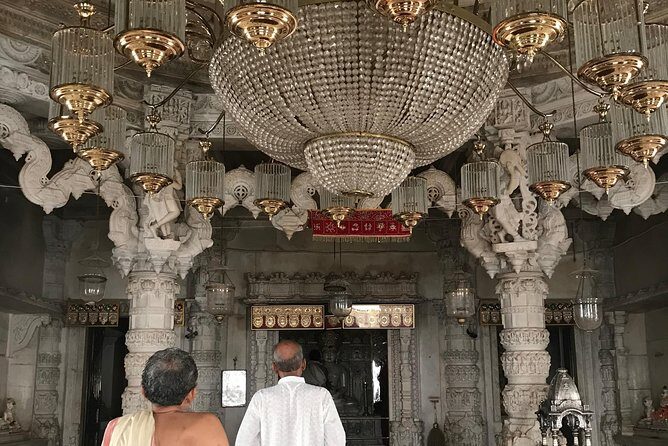
Day 3 is where this tour takes a turn that many “spiritual-only” itineraries skip: it puts you in Dharavi, described as the biggest slum area of Asia. I like that the tour frames Dharavi as an economic system and a daily-life place, not a pity spectacle. You visit, you walk through the reality of how people survive and build businesses, and it can absolutely reset your assumptions.
Then you bounce back to the polished side of Mumbai for Colaba and the Gateway of India—still with guide context. You’ll also pass through landmarks like Chhatrapati Shivaji Terminus (UNESCO) and see the Victorian architecture around it. The Cathedral of the Holy Name closes the day with a British-era presence visual you can connect to the rest of the city’s religious mix.
This day hits a useful contrast. If you come expecting India to feel only spiritual and symbolic, Dharavi adds the hard human layer: faith happens in ordinary rooms, not only in carved stone.
A practical local-train segment: using public transport like a local
The tour includes local train time to Dharavi and later train travel between cities. That matters for value. It’s not just cost control; it’s also how you get a feel for movement, station life, and how Indians navigate daily routes.
You also get a guided, structured way to do it. For example, the itinerary includes train time from Churchgate to Dharavi and later train movement toward Nashik and onward to Aurangabad. If you’re nervous about navigating on your own, this keeps the experience accessible.
Nashik’s temple chain: following the Ramayana through space
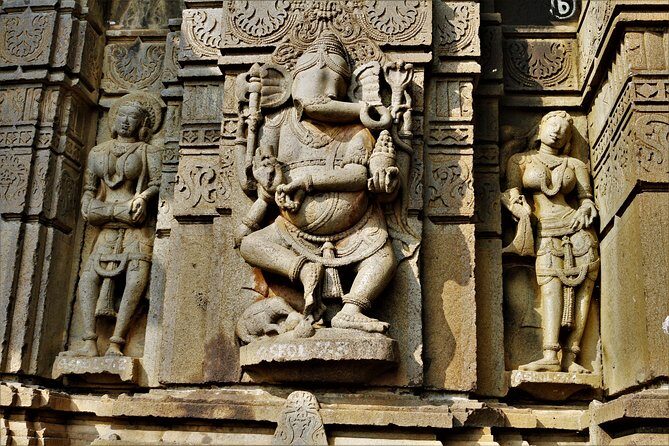
After Mumbai, the tour shifts to Nashik for a deeper Hindu thread. You’ll take the train toward Nashik, with time to experience typical train culture en route. Then the day becomes a temple walk that follows the Ramayana story beats.
You start at Shree Laxmanji Temple, tied to Laxman, Ram, and Sita traditions. Then comes Sita Agni kund Samarpan Sthal, described as the place associated with the ending of the Ramayana story. I like how the stops are linked by narrative, not only by architecture. Even if you know only fragments of the story, the guide’s explanation helps you track meaning like a route on a map.
Then you go to Naroshankar Temple for a more “heart of Hindu spirituality” feel, followed by Kalaram Temple—funded by Sardar Rangarao Odhekar and linked (through the guide’s telling) to a black statue of Rama and a dream narrative. The day also includes additional temples near the center of Nashik and ends at Ramkund, a major sacred area tied to funerals and ceremonies.





Where Nashik helps: myth + daily ritual
Nashik can feel like a standard temple circuit until you slow down mentally. The tour’s schedule pushes you to slow down through its storytelling structure: Laxman/Ram/Sita references, Agni kund significance, and the sequence toward Ramkund.
One practical note: temple-heavy days mean you’ll want decent shoes and a water plan. The itinerary covers multiple sites in one go, and it’s easier when you treat it like walking—small breaks, steady pace.
Panchavati and Nashik Road: street shopping meets the train north
Day 6 includes time around the old city market in Panchavati. It’s not an “add-on.” It’s there because it’s part of what makes temple towns feel like real places. You can do street shopping in the area, and that can be a nice change of pace from constant sites.
Then the tour takes you by train to Aurangabad. The transfer time is part of the experience: you’re not just on a bus staring out the window. When you arrive, you’re dropped at your hotel or a homestay option (based on your choice). If you care about how people live beyond the scheduled hours, the homestay option is one of the smartest ways to get that.
Aurangabad split days: Ajanta’s paintings and Ellora’s mixed faiths
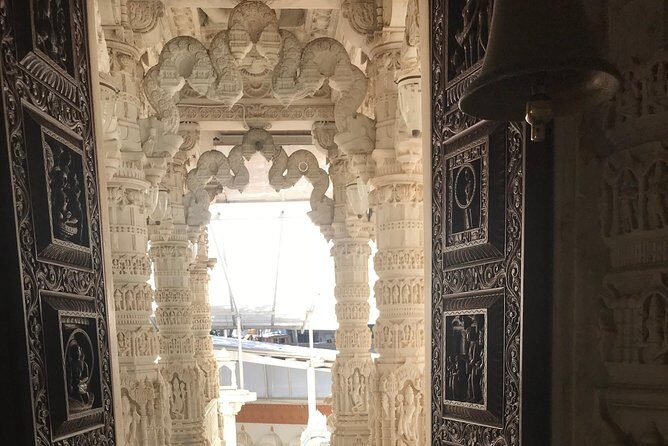
Ajanta and Ellora are the big UNESCO days, and they’re handled with good pacing.
Ajanta caves day
You’re taken by private AC vehicle to Ajanta. The tour notes Ajanta is closed on Tuesday, so it can shift the order depending on dates—good to know so you don’t wonder why the plan changes slightly.
Ajanta is described for painting and natural surroundings, with the guide emphasizing it as “marvelous man-made art.” It’s the kind of place where your brain goes quiet. The time block is set for sustained viewing rather than quick photo stops. If you’re sensitive to crowds, arriving early in your day window can help—but your exact entry time depends on the site and schedule.
Ellora caves day
Ellora is next, again with private vehicle transport to the complex. This day is structured in two parts: first you explore on your own and see the majestic Kailash temple within the Ellora complex, then you do a longer visit covering the caves.
Ellora is described as 32 caves from three religions, featuring the biggest monolithic monument in the world. That’s the practical takeaway: this isn’t one religion’s showcase. It’s multiple traditions cut into one massive rock setting, so you see how different faiths expressed themselves through similar carving ambition.
Khuldabad’s Sufi sites: where tolerance becomes physical
After Ellora, the itinerary moves to Khuldabad for Sufism. This is not vague spirituality. Khuldabad is described as the Sufism capital in the 14th century, where saints came to practice and teach. It’s still a major place for Sufi traditions today.
You visit Malik Ambar’s tomb—Malik Ambar was a slave who became prime minister of the Nizam’s sultanate, credited with creating Aurangabad and known for extreme religious tolerance. That’s the theme in a single person story: tolerance isn’t only an idea; it can be a policy choice that shapes city life.
Then you visit Aurangzeb’s Tomb, placed near his Sufi master. The day also includes Burhanuddin Gharib Dargah, tied to miracles attributed to the saint, plus a stop at Government Botanical Garden for a break and a slower pace.
Daulatabad Fort finishes the day with a history angle. The itinerary frames it as learning how a small village could become a capital associated with Sufi influence, which helps you connect the “why” behind the sacred locations.
Nanded’s Sikh worship: seeing community energy after dark
Nanded becomes your Sikh focus. The tour takes you by train from Aurangabad to Nanded, then uses a local sequence that gradually brings you into the worship sites.
You visit Hazur Sahib Nanded and then Hottal, for a temple-and-village experience. You also get time at Nanded for a night visit to the gurudwara. There’s then a dinner with locals included at Takhat Sachkhand Sri Hazur Abchalnagar Sahib, and the itinerary frames the whole setting as more than scenery—it’s about how the community works together.
This night component is a big deal. Many religious tours only show daytime rituals. Here, you get the feeling of devotion as a living social rhythm.
Two guided looks at the same gurudwara complex
Day 11 brings you back for daytime context at Gurudwara shri Nagina Ghat near the river and then again to Takhat Sachkhand Sri Hazur Abchalnagar Sahib. The guide helps connect the day visit to how the community holds strong unity and shared work.
You finish with free time in Nanded. That is smart planning: after dense religious days, you need breathing room to process what you saw and to handle personal needs without rushing.
Ending the loop: back to Mumbai with options
On the last day, you transfer from Nanded to the airport for a flight back to Mumbai. The tour notes you have an option to book a train if you do not want to fly. This flexibility matters because it gives you a choice based on comfort and budget priorities.
Price and value: what $586.43 really buys you here
At about $586.43 per person for roughly 12 days, this is priced like a thoughtful “guided circuit” rather than a DIY backpack trail. The value comes from a bundle of things you’d otherwise pay separately: professional guide, entrance fees, AC vehicle on cave days, 3-star accommodation, plus train tickets and multiple breakfasts and dinners.
You also get pickup support in Mumbai and private transportation throughout. The tour is described as private for your group only, which can raise value if you’re traveling as a couple or small group and want flexibility without sharing your guide with strangers.
One more value point: the tour emphasizes places not very touristy or offbeat. If you prefer religious sites with more local feel (and fewer mass-tour shuttles), that’s where the budget can feel justified.
Who this tour fits best (and who should rethink it)
This experience fits you if you want a faith-focused trip with structure and context. It’s also a good match if you like train travel between cities and don’t want to plan religious-site sequencing by yourself.
It may not be ideal if you dislike heavy schedules. The itinerary packs a lot into each day—temples, dargahs, cave complexes, and then back to stations. Also, the tour asks for decent dressing and a moderate physical fitness level, so if you have mobility limits, you’ll want to think carefully.
COVID-era precautions: what the tour says it does
The tour notes safety steps like regular sanitization of the car, cleaning protocols, wearing masks, and temperature checks. If you’re planning around health requirements, this is at least a clearly stated approach, which helps you feel more comfortable.
FAQ
FAQ
Which religions does this Maharashtra tour focus on?
The tour is designed to help you discover Hinduism, Jainism, Buddhism, Sufism, and Sikhism through visits to significant places in Maharashtra.
Does the tour include time in Mumbai, and what kinds of sites are there?
Yes. You spend time in Mumbai visiting Malabar Hill, Babulnath Temple, Haji Ali Mosque, and key landmarks in South Mumbai like the Gateway of India, Chhatrapati Shivaji Terminus (UNESCO), plus a cathedral and an art gallery.
Are there UNESCO cave days on the itinerary?
Yes. You’ll visit Ajanta Caves and Ellora Caves, both described as UNESCO world heritage sites.
Can I choose a homestay in Aurangabad?
You have the option of a homestay in Aurangabad for discovering Indian culture. The tour also mentions dropping you at your hotel or homestay depending on your choice.
How does the tour move between cities like Mumbai, Nashik, Aurangabad, and Nanded?
Travel between cities is mostly by train unless otherwise stated. Within cities and to cave sites, you’ll also use an air-conditioned vehicle or private transportation as scheduled.
What’s included in the price?
Included items listed are an air-conditioned vehicle, lunch, a professional guide, entrance in all monuments, accommodation in 3-star hotel, private transportation, train ticket, 10 breakfasts, and 4 dinners.
What languages does the tour run in?
The tour offers languages including English, French, Spanish, Hindi, Marathi, and Chinese. Instant confirmation is not available for languages other than English and Hindi, and guide availability affects confirmation.
What’s the cancellation window?
You can cancel up to 6 days in advance for a full refund. Cancel 2–6 days ahead for a 50% refund. If you cancel less than 2 days before the experience starts, the amount paid is not refunded.
Should you book this Maharashtra spiritual circuit?
If you want a guided trip that connects faith to place—without turning it into a checklist—this works well. The mix of Mumbai religious landmarks, Nashik’s Ramayana-linked temple sequence, UNESCO caves at Ajanta and Ellora, Sufi-focused stops in Khuldabad, and Sikh worship in Nanded (including dinner with locals) gives you a full regional picture.
I’d book it if you like structure and want your transport, entrances, and meals handled. I’d think twice if you prefer slower pacing or if you expect lots of downtime. Bring comfortable shoes, dress respectfully, and plan to walk—this tour earns its meaning by keeping you on the move.