REVIEW · NEW DELHI
From Delhi: 3 Days Private Golden Triangle India Tour
Book on Viator →Operated by Trek India Tours · Bookable on Viator
Three days is a sprint, but it works when it’s private. This Golden Triangle route strings together Delhi’s monuments, Agra’s early-morning Taj Mahal, and Jaipur’s fort-and-palace sights with friendly local guides and door-to-door transfers. Two things I really like are the early start that makes the Taj feel special and the fact that you’re not stuck figuring out logistics on your own. One consideration: monument entrance fees aren’t included, and key sites can be closed on specific weekdays.
You also get a steady rhythm: guided stops that explain what you’re looking at, breaks for meals, and time to move without the stress of public transport. In one feedback highlight, guides named Tarun, Praveen, and Anorag were described as welcoming and open to adjusting the plan for what their group wanted to see. And the driving matters too; Omveer, the driver praised for making the whole trip feel easy, is a good example of how this style of tour can reduce friction.
At $150 per person for a 3-day private experience, the value comes from what’s baked in: private transportation, hotel or airport pickup/drop-off, and 2 included breakfasts with 2 nights of accommodation when you choose that option. The tradeoff is that you’ll want to budget extra for monument entry tickets, and you should double-check which weekday you’re traveling if your dates hit closures.
In This Review
- Key things that make this tour worth your time
- A tight 3-day Golden Triangle with smart handoffs
- Day 1 in Delhi: Mughal scale, UNESCO shapes, and a calm start
- Humayun’s Tomb: where Mughal design shows its softer side
- Qutub Minar: UNESCO structure you can spot from far away
- Lotus Temple (Bahai Temple): free entry, but check the weekday
- India Gate and Parliament House: quick context stops, not long hangs
- Day 2: sunrise Taj Mahal and Agra Fort (where the pace really matters)
- Taj Mahal at sunrise: early start, big payoff
- Agra Fort: watch how a fort tells political and architectural stories
- Day 3 in Jaipur: Amber, palace life, stargazing math, and Hawa Mahal
- Amber Fort: a hilltop start that feels like a reward
- City Palace: Maharaja’s home and the city’s living heart
- Jantar Mantar: the “astronomy tools” that make sense when a guide explains them
- Hawa Mahal (Palace of Wind): quick stop, iconic facade
- Transport and guiding: the part you don’t want to get wrong
- Price: what $150 covers and where you should budget extra
- Timing gotchas: Friday Taj closures and Monday Lotus closures
- What kind of traveler should book this?
- Should you book it? My honest take
- FAQ
- What does this tour include?
- Where does the tour take place?
- How long is the tour?
- Is this a private tour or shared group?
- Are admission tickets included for monuments?
- Are any meals included besides breakfast?
- Do I get hotel pickup and drop-off?
- Which days are key sites closed?
- What kind of vehicle is used?
- What is the cancellation policy?
Key things that make this tour worth your time

- Private local guides at every major stop, so you get context fast
- Sunrise Taj Mahal timing for a calmer, more memorable visit
- Free hotel pickup and drop-off plus private transportation between cities
- UNESCO-listed highlights like Qutub Minar, Agra Fort, Amber Fort, and Jantar Mantar
- Breakfast included (2) to keep mornings moving without hunting for food
- Real flexibility with the itinerary, based on guide feedback like Tarun, Praveen, and Anorag
A tight 3-day Golden Triangle with smart handoffs

A Golden Triangle tour can either feel frantic or feel focused. This one leans focused because it’s private from start to finish. You’re not sharing buses with strangers or waiting for random parties to finish selfies. Instead, you get a driver and local guides who meet you at each stop and move you through the day’s highlights.
That’s also why the “two nights of accommodations” piece matters. It gives you a real base for Agra and Jaipur rather than constant hotel-changing with no recovery time. If you pick the option with accommodations, you’re paying for fewer hassles, not just beds.
One small reality check: entrances are not included. So while you won’t pay for the guide service and transport out of pocket, you will likely pay for tickets at places like Taj Mahal, Agra Fort, Amber Fort, City Palace, and Hawa Mahal. I like being clear on this upfront because it keeps the budget honest.
You can also read our reviews of more private tours in New Delhi



Day 1 in Delhi: Mughal scale, UNESCO shapes, and a calm start
Day 1 is built for orientation. You land in Delhi’s major landmarks, then you work up to the grand monuments—without burning your whole day.
Humayun’s Tomb: where Mughal design shows its softer side
Humayun’s Tomb is the tomb of Mughal Emperor Humayun, commissioned by his first wife and chief consort Empress Bega Begum and designed by Persian architects. The big win here is seeing the Mughal aesthetic in a way that’s less frantic than a typical “photos only” stop. Your guide helps you notice design choices instead of just admiring size.
A practical tip: if you’re sensitive to crowds, go in with patience for other visitors. Even when it’s not the busiest site, Delhi has movement.
Qutub Minar: UNESCO structure you can spot from far away
Qutub Minar is a UNESCO World Heritage site built by Qutub-ud-din Aibek. This stop feels like architectural proof: it’s tall, it’s iconic, and it immediately gives you a sense of how the city’s historic skyline formed over time.
You’ll get about an hour. That’s enough for the main sight and a guided explanation, especially if you’re trying to keep the overall pace from running away with you.
Lotus Temple (Bahai Temple): free entry, but check the weekday
The Lotus Temple—also called the Bahai Temple—has free admission, and your tour schedule includes it for about an hour. The catch is timing: it remains closed on Monday. If your trip includes a Monday in Delhi, you’ll want your guide to swap the stop or adjust the day so you’re not arriving to a closed door.
A few more New Delhi tours and experiences worth a look





India Gate and Parliament House: quick context stops, not long hangs
India Gate is a war memorial inaugurated on February 12, 1931, and it’s on the “see it, learn it, move on” track for about 30 minutes. Parliament House is also a short stop (about 20 minutes) and is described as a beautiful government building.
I like these quick stops because they give you a modern Delhi frame. You spend your energy where it counts—then you’re not stuck staring at monuments for hours just to hit a checklist.
Day 2: sunrise Taj Mahal and Agra Fort (where the pace really matters)

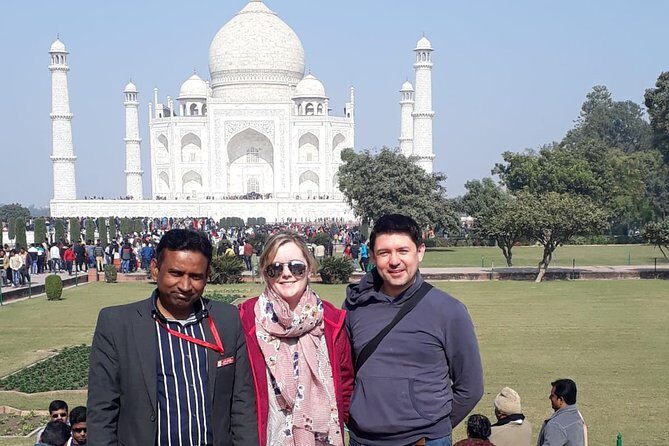
Day 2 is the day most people picture when they book Golden Triangle. The plan calls for an early start in Agra to see the Taj Mahal at sunrise, then guided time inside the Taj Mahal for about two hours.
Taj Mahal at sunrise: early start, big payoff
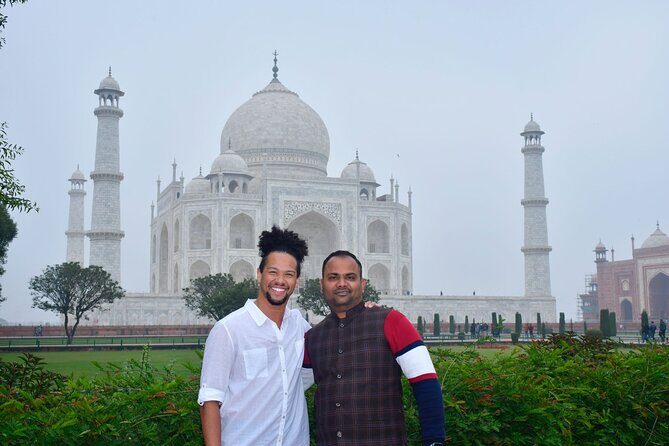
Taj Mahal remains closed every Friday, so make sure your date works. When it does, sunrise changes the feel of the site. The light is softer, and the mood is calmer than later in the day. Your guide sets the tone and helps you get meaning from what you’re seeing, not just a set of angles for photos.
Admission ticket isn’t included, so you’ll want to budget for that. But the guide time inside is exactly the sort of “included value” that turns a ticket purchase into an actual experience.
Agra Fort: watch how a fort tells political and architectural stories
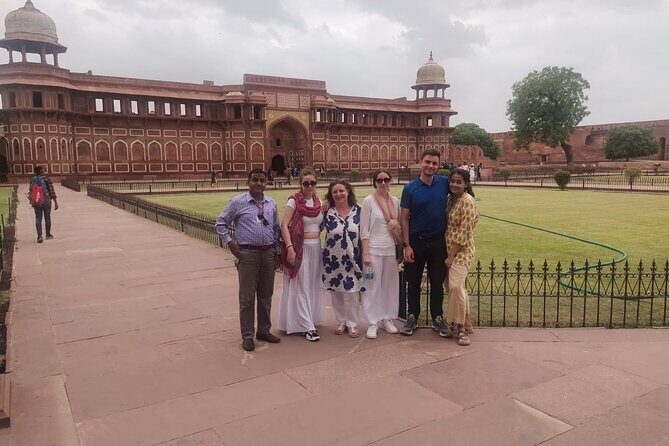
After breakfast and checking out, you visit Agra Fort with guided commentary for about an hour. Agra Fort is one of the UNESCO-listed highlights referenced for this route, and it’s a good counterbalance to the Taj Mahal.
If the Taj is about beauty and symbolism, a fort helps you understand power and planning—how rulers defended, managed space, and built for control. You’ll spend enough time to appreciate the architecture and how the fort’s apartments and structures fit together, without turning it into a whole-day history lecture.
Day 3 in Jaipur: Amber, palace life, stargazing math, and Hawa Mahal
Jaipur’s Day 3 is built around a strong sequence: fort first, then royal life, then science, then a signature exterior.
Amber Fort: a hilltop start that feels like a reward
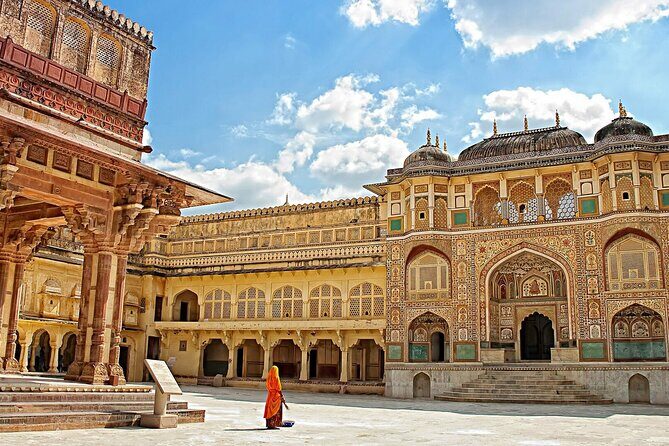
The day begins with breakfast, followed by a guided sightseeing tour of Jaipur city. Amber Fort is on top of a hill, and the tour includes about two hours here. This is where you’ll likely notice the difference between seeing a fort and understanding why it was built this way.
The guide’s job in this section is crucial: the fort looks like architecture from a distance, but up close it becomes a map of design decisions.
City Palace: Maharaja’s home and the city’s living heart
City Palace of Jaipur is your next stop, with about one hour. This is the Maharaja’s city palace, and you’ll get time to see how it functioned as a royal center rather than a museum box.
I like that the pace doesn’t slow down too much here. You get enough time to read the vibe, then you’re on to another type of sight.
Jantar Mantar: the “astronomy tools” that make sense when a guide explains them
Jantar Mantar is a collection of 19 architectural astronomical instruments built by Rajput King Sawai Jai Singh. Your stop runs about an hour.
This is a great place for guided explanation because you can’t really appreciate the instruments just by staring at them. When your guide connects the tools to how people measured the sky, it clicks.
Admission ticket isn’t included, so budget for it. Still, it’s one of those stops that can feel surprisingly fun once you understand what you’re looking at.
Hawa Mahal (Palace of Wind): quick stop, iconic facade
Hawa Mahal is described as a large structure built so royal household women could observe streets outside while remaining hidden, built in 1799 by Maharaja Sawai Pratap Singh. You’ll spend about 30 minutes here.
That short timing is intentional. It’s an exterior-you-feel type of stop more than a linger-all-day interior. After Jaipur sightseeing, you drive back to Delhi and get dropped off at your chosen end point: airport, railway station, hotel, or another location in Delhi, Noida, or Gurugram.
Transport and guiding: the part you don’t want to get wrong
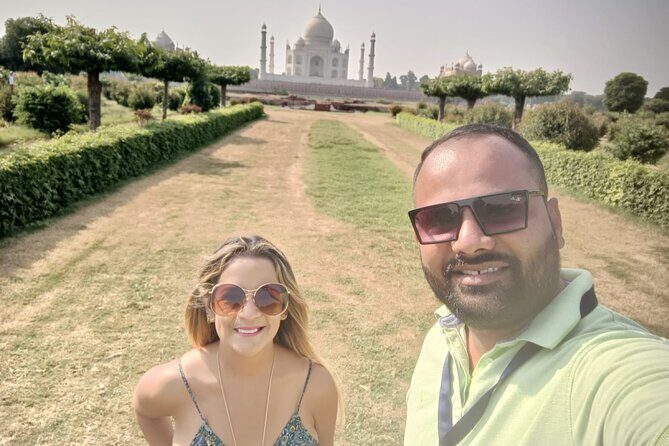
This is where private tours either shine or waste time. Here, the structure is clear: private local guides for sightseeing, private transportation between stops, and hotel or airport pickup and drop-off.
Car choice is also practical:
- 1–2 people: luxury sedan
- 3–5 people: luxury SUV
That matters because comfort affects how long you’ll enjoy the day. Long drives are part of the Golden Triangle, so having the right vehicle and a driver who can handle it smoothly helps.
The other big win is guide flexibility. In one set of feedback, guides Tarun, Praveen, and Anorag were described as welcoming and open to discussing changes to the itinerary so the group could include places they wanted to experience. That tells me the operators aren’t just reading a script; they’re watching your interests and adjusting where possible.
Price: what $150 covers and where you should budget extra
At $150 per person for about three days, the value is driven by what you avoid paying separately and what’s included in your day:
- private transportation
- hotel or airport pickup/drop-off
- private local guides for sightseeing
- breakfast included (2)
- 2 nights of accommodation when that option is selected
Where the cost can rise is entrances. The tour explicitly notes monument entrances are not included, and each major sight you’ll visit is flagged as admission not included.
So the smart way to think about price is this: you’re paying for coordination, guide time, and comfort. You’re not paying for ticket fees. If you plan ahead for those entrances, the total trip usually feels fair rather than surprising.
One more planning note: this route is described as including Fatehpur Sikri, but the day-by-day stops listed here focus on Delhi, Agra, and Jaipur. If Fatehpur Sikri is a must for you, ask how it fits into your exact schedule so you don’t end up disappointed by a simple swap.
Timing gotchas: Friday Taj closures and Monday Lotus closures
This tour has built-in flexibility, but some sites follow strict weekly schedules.
- Taj Mahal closes every Friday. If your Agra day lands on a Friday, you’ll need a swap in the plan.
- Lotus Temple remains closed on Monday. If Delhi Day 1 is on Monday, expect a replacement stop.
If you can, choose dates with fewer closures, and keep your itinerary expectations flexible. In practice, a good guide will reroute within the same theme—Mughal monuments, fort architecture, and Jaipur’s core sights—so you still leave with the key highlights.
What kind of traveler should book this?
You’ll enjoy this most if you want:
- a private Golden Triangle with less stress between cities
- guided context at major sites, not just a bus stop photo run
- early timing for the Taj Mahal experience
- pickup/drop-off included, so you’re not juggling taxis while jet-lagged or time-crunched
It’s also a strong fit for couples, small families, and anyone traveling with someone who hates the “stand in line and hope” style.
If you love totally free, do-it-on-your-own touring, you might feel boxed in. But if you’d rather spend your energy on sights instead of routing, this structure is a solid match.
Should you book it? My honest take
I’d book this if you want the Golden Triangle story arc—Delhi’s iconic landmarks, Agra’s sunrise Taj moment, and Jaipur’s fort-to-palace sequence—without the hassle of planning transport and guide transitions. The best part is that you’re paying for the coordination that makes a short trip actually enjoyable.
I’d hesitate only if you’re traveling on a Friday in Agra or a Monday in Delhi without any flexibility, or if entrance fees are a problem for your budget. Also, confirm how Fatehpur Sikri is handled in your exact schedule, since it’s referenced as part of the experience but not clearly shown in the stop list.
If you line up those details, you’ll likely come away feeling you saw the right things in the right order—while spending less time negotiating logistics and more time looking at the architecture, the symbolism, and the city life around it.
FAQ
What does this tour include?
It includes private sightseeing with local guides, private transportation, hotel or airport pickup and drop-off, and breakfast (2). Two nights of accommodation are included if you choose that option.
Where does the tour take place?
It’s based in Delhi and covers New Delhi, Agra (Taj Mahal and Agra Fort), and Jaipur (Amber Palace, City Palace, Jantar Mantar, and Hawa Mahal). Fatehpur Sikri is also described as part of the experience.
How long is the tour?
The duration is approximately 3 days.
Is this a private tour or shared group?
It’s a private tour/activity, and only your group participates.
Are admission tickets included for monuments?
No. Monument entrance fees are not included.
Are any meals included besides breakfast?
Breakfast is included for 2 days.
Do I get hotel pickup and drop-off?
Yes. Hotel or airport pickup and drop-off are included.
Which days are key sites closed?
Taj Mahal remains closed every Friday. Lotus Temple remains closed on Monday.
What kind of vehicle is used?
For 1–2 people, it uses a luxury sedan. For 3–5 people, it uses a luxury SUV.
What is the cancellation policy?
You can cancel for free up to 24 hours in advance for a full refund.