REVIEW · MUMBAI
The Colourful Early Morning Tour
Book on Viator →Operated by Amaze Mumbai Tour · Bookable on Viator
5:30am in Mumbai feels like a different city. This tour is built for the cool hours, with round-trip hotel transfers and a private vehicle that gets you to real morning life fast. I like that the start time helps you beat the heat and the worst traffic, so the sights feel human, not rushed.
The best part is the guide work: an English-speaking host (people like Alam, Ganesh, and Naynish show up often in the real-world stories) explains what you’re seeing and how it fits into everyday Hindu spirituality and Mumbai rhythms. One drawback: it’s an early wake-up, so don’t book this if you’re the kind of person who needs your sleep to be cheerful.
In This Review
- Quick hits: what makes this early-morning route work
- Why the 5:30am start is the whole point
- Dadar West flower market: garlands, fragrance, and morning hustle
- Girgaon’s Iskcon Temple: spirituality you can actually see
- CSMT (Chhatrapati Shivaji Maharaj Terminus): architecture that carries the city
- Sassoon Dock and Koli fisherfolk: 60 tonnes of fish in motion
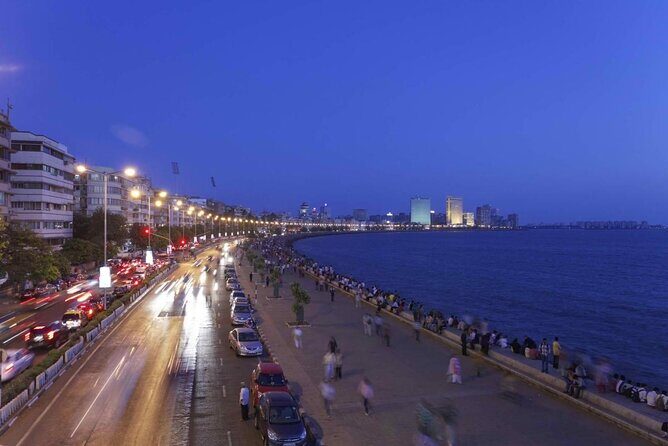
- Marine Drive at sunrise: the calm reset
- Price and value: why $35 can make sense here
- What to expect from the guide and driver experience
- Smart planning tips for a smoother morning
- Should you book this Colourful Early Morning Tour?
- FAQ
- What time does the tour start?
- How long is the tour?
- What’s included in the tour price?
- Is hotel pickup and drop-off included?
- What stops are included in the itinerary?
- Is food included?
Quick hits: what makes this early-morning route work
- A 5:30am departure means cooler air and less gridlock, especially around busy markets.
- Hotel pickup and drop-off keep this tour from becoming a puzzle of taxis and timings.
- Flower-market color at Dadar West, including saffron marigolds and red roses for garlands.
- Temple participation that includes offering flowers in the way locals do (with your guide’s lead).
- Sassoon Dock at work: you’ll see the morning arrival and grading of about 60 tonnes of fish.
- A short, calm finale along Marine Drive, after the intensity of markets and docks.
Why the 5:30am start is the whole point
Mumbai at dawn has a different tempo. The air tends to feel kinder, and roads are less crowded, which matters because the tour moves through several distinct neighborhoods and landmarks in about 3 hours.
What I like about this structure is that it doesn’t waste your time. Instead of spending the day chasing major sights when everything is crowded and hot, you get a focused morning circuit: markets, worship, transport architecture, and working waterfront.
This is also where a private setup helps. With only your group participating, you’re not squeezing in around strangers while your guide tries to explain customs. The pacing feels smoother—one of the reasons people often mention the guide keeping them safe while also giving full context.
A few more Mumbai tours and experiences worth a look



Dadar West flower market: garlands, fragrance, and morning hustle
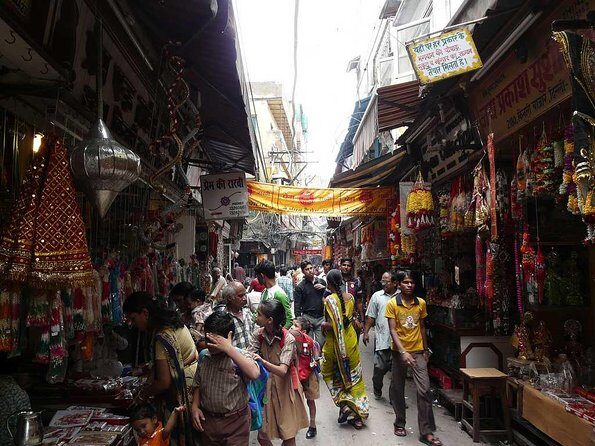
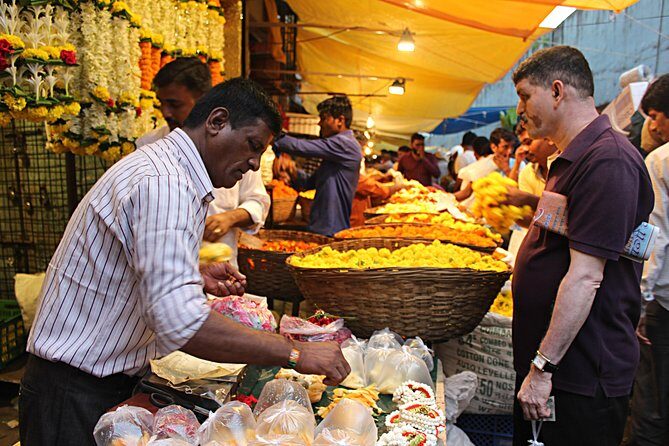
Your first stop is Dadar West, a flower market known for garlands and bright blooms, including saffron-colored marigolds and red roses. The timing is key. Early means you see the market in action while stalls are still being supplied and buyers are moving through with purpose.
What to expect here:
- Strong smells from fresh flowers and herbs (you’ll notice it fast when you step out).
- A lot of movement—people collecting, sorting, tying, and heading toward their next task.
- Close-up color that’s hard to recreate later in the day when everything is less fresh.
A practical thing to watch: this is not a quiet museum stop. It’s a working market. Wear comfortable clothing and be ready to stand and walk for short stretches. Keep your phone handy, but don’t treat the market like a filming set—let the flow of people come first.
Girgaon’s Iskcon Temple: spirituality you can actually see
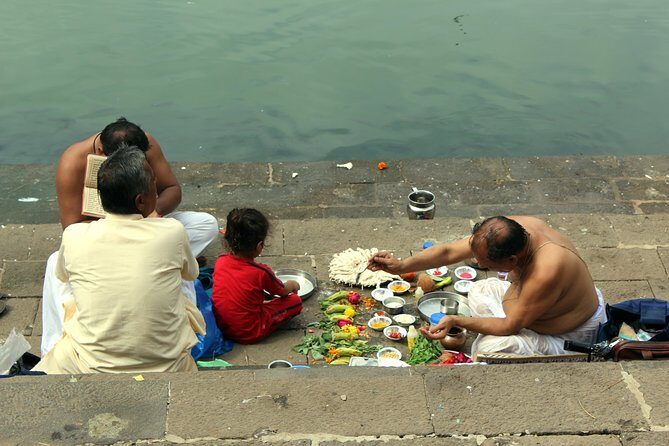
Next you head to Girgaon for Iskcon Temple (Hare Rama Hare Krishna Temple). This stop is where the tour connects places to practice. Instead of only pointing at buildings, your guide explains spirituality in everyday terms and helps you understand how worship fits into Mumbai life.
If you’re interested in Hinduism, this is one of the most practical moments of the whole tour because it gives you a framework: what people are doing, why flowers matter, and how devotion looks when you’re close to it.
The experience is also designed to include the hands-on element—offering flowers at the temples like locals do. Your guide will guide you through what’s appropriate and what to expect, but the vibe is simple: you participate respectfully, then move on.
A consideration here: temples bring steady attention from visitors, and you may see different kinds of worship depending on the moment. Keep your pace calm, follow your guide’s cues, and dress appropriately for a religious site.
CSMT (Chhatrapati Shivaji Maharaj Terminus): architecture that carries the city
After the temple, you move to Chhatrapati Shivaji Maharaj Terminus (CSMT)—a place many people recognize as the former Victoria Terminus Railway Station. Your stop is short (about 20 minutes), but it’s a memorable one because CSMT isn’t just a backdrop. It’s a functioning transport hub with serious daily foot traffic.
What I like about including CSMT in a morning tour is that it shows a different side of the city’s identity. Markets show commerce and community. Temples show belief. CSMT shows movement—how a huge city organizes itself and keeps going.
Here’s how to make the most of a quick stop:
- Walk slowly enough to notice details, then step back and take in the overall structure.
- Use your guide’s explanation to connect the building’s grandeur to its role as a major station (not just a pretty photo).
If you’re a train fan, this part can be a highlight even in a brief window. If you’re not, it still helps you understand why Mumbai feels layered: religion, labor, and transport all share the same early-morning rhythm.
Sassoon Dock and Koli fisherfolk: 60 tonnes of fish in motion
Your tour’s most intense (and most eye-opening) stop is Sassoon Dock. This is where you learn about the Koli fisherfolk, the original inhabitants associated with Mumbai’s fishing community. You’ll also witness the daily arrival and grading of about 60 tonnes of fish in the morning.
This is not a staged viewing. You’re watching work happen—sorting, handling, grading, and getting product moving. It’s an important reminder that Mumbai’s big-city life runs on logistics you don’t see from the tourist paths.
Practical expectations:
- You’ll likely notice strong smells common to working docks and fresh catch handling.
- You may stand near active areas where people are working efficiently and quickly.
- You’ll get context from your guide, not just a quick look.
To enjoy this stop, come ready to be a little uncomfortable. The payoff is understanding how “everyday Mumbai” is built. Also, because it’s a market-dock area, wear sturdy footwear and keep your bags secure.
One more note: some fish-related details can be hard to track in the moment (everything moves fast). If you hear your guide mention specifics you don’t catch, ask them to repeat—this stop is exactly the kind of place where a second sentence makes it click.

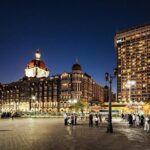



Marine Drive at sunrise: the calm reset
After the intensity of markets and docks, your route ends with a quick visit to Marine Drive, about 10 minutes. It’s a short breather—early morning calm after busy work zones.
This is your chance to slow down and absorb the city’s mood without the pressure of learning something new every minute. Even if you only take a few photos, the feeling matters: you see how Mumbai can be both active and composed within the same morning.
If you want a simple takeaway, it’s this: the tour uses Marine Drive as a palate cleanser. You don’t leave mentally exhausted—you leave with a grounded sense of place.
Price and value: why $35 can make sense here
At $35.00 per person for about 3 hours, the value comes from what’s included—not from stretching the time.
You’re getting:
- Hotel pickup and drop-off (round-trip transfers)
- Private transportation for your group
- An English-speaking guide
- Bottled water
In practical terms, that means you’re paying for early-morning organization. Without this kind of plan, you’d spend time coordinating where to go, how to get there before traffic builds, and how to make the stops meaningful instead of just seeing them from the outside.
Two other value boosters:
- This is private for your group, so the guide can adapt pace and explanations.
- It runs in a tight loop of highly different places. In one morning, you touch worship, commerce, a major transport landmark, and the working waterfront.
If you’re visiting Mumbai for the first time and want a real-feeling slice of daily life, this tour price is often easier to justify than standalone tickets plus taxis plus the time to figure it out yourself.
What to expect from the guide and driver experience
The tour’s strongest asset is the human element. People repeatedly highlight guides who:
- keep the group safe and moving,
- explain the cultural context in plain language,
- pace the morning so it feels full but not chaotic.
You might hear names like Alam, Ganesh, Dawood, Maze, Nano, and Arun tied to positive experiences. Drivers also get credit (one recurring name is Mujib), which matters because the morning timing depends on smooth pickup and efficient routing.
What that means for you: when you’re asking questions in real time—about rituals, markets, station life, or dock work—you’re likely to get answers that connect the dots.
Smart planning tips for a smoother morning
Here’s how to set yourself up for success with an experience that starts at 5:30am:
- Plan for an early wake-up. That’s the real trade-off. Build in the extra sleep the night before.
- Wear comfortable clothing—you’ll likely stand and walk a bit across markets and dock areas.
- Bring light layers if you’re sensitive to morning chill. You don’t want to start bundled and end sweaty, but you also don’t want to freeze.
- Use the bottled water early. Even though it’s cooler in the morning, you’re outside and moving.
- Be respectful at temples and working markets. This isn’t about checking boxes—it’s about seeing how people live and worship.
Also, this tour uses a mobile ticket and is often booked about a month out on average. If your dates are fixed, booking early can help you lock in the slot you want.
Should you book this Colourful Early Morning Tour?
Book it if you want Mumbai as a lived experience: flower markets, temple participation with flower offerings, the huge CSMT station energy, and Sassoon Dock’s working reality. It’s especially good for first-timers who feel overwhelmed by options and want a morning plan that makes sense.
Skip it if:
- you hate early mornings,
- you want a slow, sit-down sightseeing pace,
- you’re not comfortable around active working areas with smells and movement (especially at the dock).
If you’re in the middle—curious, flexible, and willing to get up early—this is one of the easiest ways to see a side of Mumbai that doesn’t wait for the afternoon.
FAQ
What time does the tour start?
The start time is 5:30am.
How long is the tour?
It runs for about 3 hours.
What’s included in the tour price?
It includes bottled water, private transportation, and an English-speaking guide.
Is hotel pickup and drop-off included?
Yes. Round-trip hotel transfers are provided.
What stops are included in the itinerary?
You visit Dadar West (flower market), Girgaon (Iskcon Temple), Chhatrapati Shivaji Maharaj Terminus CSMT, Sassoon Dock, and Marine Drive.
Is food included?
Food and drinks are not included unless specified.