REVIEW · MUMBAI
Mumbai : Private 2 Days Agra Taj mahal & Delhi Tours From Mumbai
Book on Viator →Operated by 707 TOURS · Bookable on Viator
Delhi and Agra in two days is a real test. What makes this trip work is the private pacing and the fact you start with context in Delhi, then move to the Taj while your schedule isn’t a sprint.
I like the way this package builds in comfort: a pre-booked 4-star hotel in Agra, plus dinner and breakfasts that let you reset for the next day. I also like the door-to-door air-conditioned transport and an English-speaking guide to translate the big-picture story behind what you’re seeing. The one thing to plan for is that monument fees aren’t included, so you’ll want to budget extra for tickets like the Taj Mahal and several Delhi sites.
This is a solid choice if you want the highlights (and the meaning) without spending your time juggling transit, buying tickets, and guessing what’s worth your limited daylight. Just keep in mind it’s fast by design, with a flight in the mix and a full day of sightseeing before the overnight in Agra.
In This Review
- Key points worth knowing
- Mumbai to New Delhi to Agra: a two-day route that keeps moving
- Qutb Minar and Jama Masjid: why these Delhi stops matter before the Taj
- India Gate, Rashtrapati Bhavan, and the Lotus Temple: the lighter side of Delhi
- The day’s end in Agra: a real overnight makes this work
- Taj Mahal: the marquee stop, built for time—not rushing
- Agra Fort: where power looks solid and practical
- Itmad-ud-Daula, also called the Bachcha Taj: the quieter masterpiece
- Fatehpur Sikri: the package description flags it, so confirm your exact route
- Price and logistics: when $681 feels like real value
- Who should book this private Agra and Delhi combo
- The final verdict: should you book?
- FAQ
- FAQ
- What is the duration of the tour?
- Where does the tour start and end?
- Is this tour private?
- Are flights included in the price?
- What meals are included?
- Do I need to pay monument entrance fees?
- What hotel accommodation do you get?
- Is there hotel pickup and transportation?
- Can I cancel for a refund?
- Is there a minimum age requirement?
Key points worth knowing
- Private, door-to-door air-conditioned transfers so you spend less time figuring out logistics
- A pre-booked 4-star Agra hotel for an easier, calmer Taj morning
- English-speaking guide who helps you connect the dots across Mughal and older Delhi sights
- Two breakfasts plus dinner so meals don’t become another puzzle
- Monument fees not included for major stops like the Taj Mahal
- Day 1 is a full Delhi day before heading to Agra, so bring energy (and water)
Mumbai to New Delhi to Agra: a two-day route that keeps moving
This tour starts with pickup and a flight from Mumbai to New Delhi. After you land, you get into sightseeing mode right away, then you transfer to Agra for your overnight stay. For many people, that combination is the whole point: you’re not just collecting photos, you’re using time efficiently.
The big value here is that you’re not doing the busy work. You don’t need to coordinate transport between sites, figure out where to stand for the best angles, or negotiate with ticket counters. Instead, you can focus on the places themselves, and your guide helps you understand what you’re looking at as you go.
The rhythm is important. Day 1 covers multiple Delhi landmarks in a row, which means you’ll likely spend more time traveling between stops than you would on a slower city break. If you hate being on the move, you’ll feel it.
You can also read our reviews of more private tours in Mumbai



Qutb Minar and Jama Masjid: why these Delhi stops matter before the Taj
The schedule puts you at Qutb Minar first, then Jama Masjid. Both are ticketed experiences at your own cost (the tour notes admission tickets for these are not included), but they’re worth planning for.
Qutb Minar sits inside the Qutb complex, tied to Delhi’s oldest fortified city area. It’s more than a tall minaret: it’s a marker of power and the early layers of the city’s story. If you take a minute to look closely at the scale and design, you get a better sense of how long Delhi’s been shaping itself through architecture.
Then Jama Masjid brings you into the Mughal era, built by Shah Jahan in the mid-1600s and inaugurated by its first Imam. Jama Masjid is a place where the setting itself does some of the teaching—courtyard space, scale of worship, and the way the building anchors Old Delhi. When you later see Shah Jahan’s work in Agra, this stop helps it click as part of the same larger chapter.
A practical note: you’ll want to dress modestly for both religious sites, and plan for brief waits or rules at entrances. Even on a private tour, these places set the pace.
India Gate, Rashtrapati Bhavan, and the Lotus Temple: the lighter side of Delhi
After the heavier historical sites, the itinerary shifts to Delhi’s famous landmarks with less time pressure. India Gate gets a quick visit, and the tour also includes a stop at the Rashtrapati Bhavan area and the Lotus Temple.
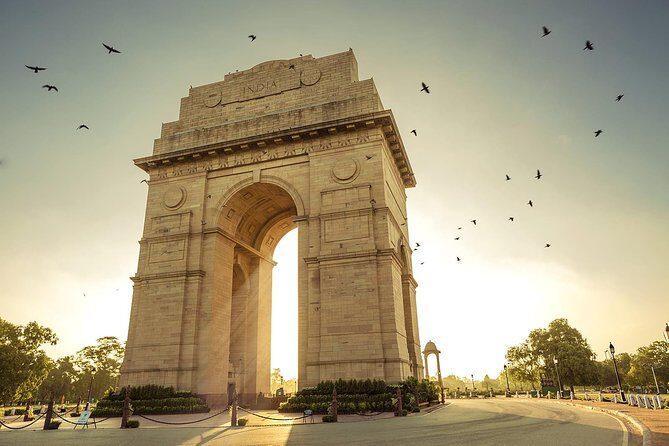
India Gate is a war memorial on the eastern edge of the ceremonial axis (the tour flags it as free). It’s a good break from the dense feeling of Old Delhi. You get open space, clean lines, and a chance to regroup before the day continues.
Rashtrapati Bhavan is listed as a stop tied to the ceremonial avenue area, also marked free. Even if you can’t linger inside (the tour doesn’t specify interior access), being there at all helps you picture the capital’s official geography.
The Lotus Temple is the spiritual palate cleanser. It’s a Baháʼí House of Worship dedicated in 1986, and the tour lists it as free. Its lotus-inspired design feels modern and calm compared to the stone monument intensity of earlier stops. If you’re traveling with someone who gets tired of constant sightseeing, this is the moment that usually brings a little breathing room.
The day’s end in Agra: a real overnight makes this work
By the time you finish Delhi sightseeing, you drive to Agra and stay overnight. This is where the package quietly wins.
Instead of rushing through Agra and trying to see the Taj Mahal as a last stop before your return flight, you get to sleep in a pre-booked 4-star hotel. Dinner and meals matter here because Agra’s day starts early enough that you don’t want to be hunting food or skipping it.
From the experience notes, the hotel breakfasts are a highlight, described as wonderful buffet-style spreads. Breakfast is included, and the overview states you get two hotel breakfasts across the trip. That matters because the Taj Mahal visit is time-based, and you don’t want to start it hungry or slow.
Taj Mahal: the marquee stop, built for time—not rushing
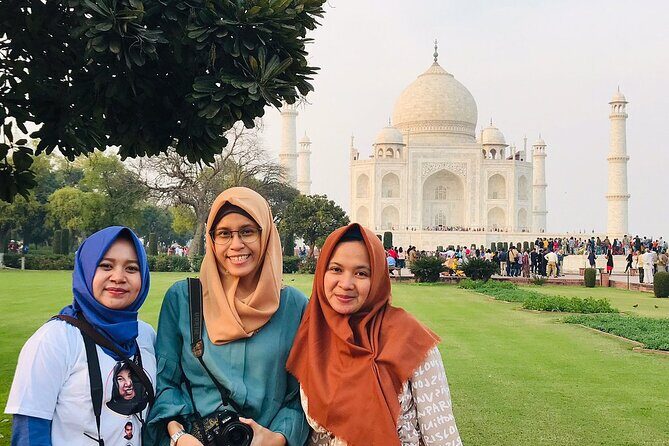
Day 2 focuses on Agra’s three headline sights: the Taj Mahal, Agra Fort, and Itmad-ud-Daula (often nicknamed the Bachcha Taj). The Taj Mahal is scheduled for around three hours, which is a helpful chunk.
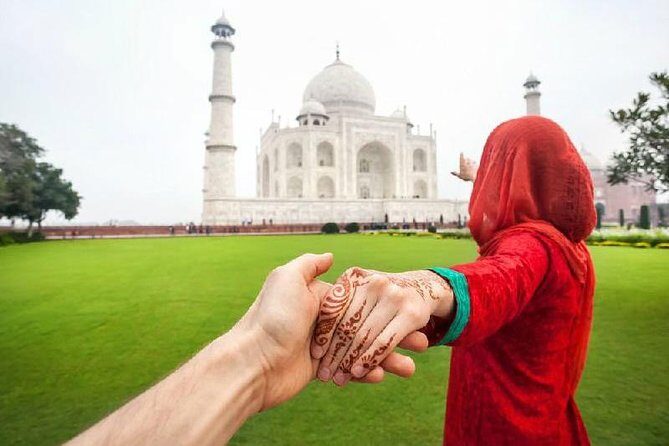
The Taj Mahal is an ivory-white marble mausoleum commissioned in 1632 by Emperor Shah Jahan on the south bank of the Yamuna. Even if you’ve seen images a hundred times, the scale and presence are the point. The marble changes look depending on light, and the setting gives you something to notice beyond the main dome.
Because monument fees for the Taj Mahal are not included, you should come prepared to pay the entry ticket yourself. That’s a common point of confusion on tours like this, so I recommend confirming ticket requirements early so you’re not scrambling at the gate.
Also, don’t treat this as a photo-only mission. Three hours sounds long until you’re standing there and realizing the details take time—arches, minarets, the surrounding geometry, and the way the gardens frame the view.
A few more Mumbai tours and experiences worth a look



Agra Fort: where power looks solid and practical
Next up is Agra Fort, listed for about one hour. Like the Taj, monument fees aren’t included for this stop, so factor that in.
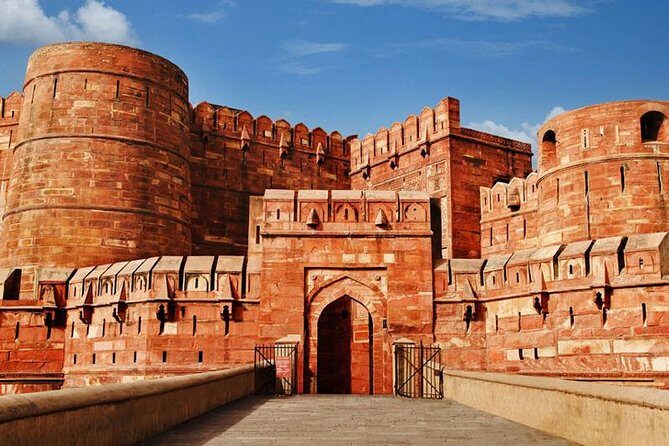
Agra Fort is described as the main residence of Mughal emperors until 1638, when the capital shifted from Agra to Delhi. That date alone gives you a clue: you’re not just walking around ruins. You’re in the kind of fortress that would have held decisions, ceremonies, and everyday governance for a ruling court.
Agra Fort is a strong counterpoint to the Taj Mahal. One is designed to feel like an eternal love monument; the other is a durable complex built for control and survival. When you pair the two, you get a fuller picture of Shah Jahan’s world and the Mughal empire’s priorities.
If you prefer deep exploration over quick highlights, you may wish it were longer than one hour. But within a two-day framework, it’s a fair balance.
Itmad-ud-Daula, also called the Bachcha Taj: the quieter masterpiece
The final major stop is Itmad-ud-Daula, scheduled for about 50 minutes. This is one of those places that rewards the “slow down” instinct.
It’s a Mughal mausoleum in Agra, often described as a “jewel box,” and the tour also notes it’s sometimes called the Bachcha Taj. That nickname is basically telling you what to expect: finer detail, a delicate feel compared to the Taj’s bigger drama.
For me, this is the best “value per minute” stop on the itinerary. The Taj is unforgettable, but the Bachcha Taj teaches you how Mughal design could be both elaborate and controlled. If you’re the kind of traveler who likes to understand how styles develop, this is where the trip makes sense beyond sightseeing.
Again, monument fees aren’t included here, so tickets are another thing to plan for.
Fatehpur Sikri: the package description flags it, so confirm your exact route
Here’s one important practical consideration. The tour overview states the package covers the ghost city of Fatehpur Sikri. But the day-by-day stop list you’re working from focuses on Delhi and then Taj Mahal and Agra sites.
That doesn’t mean Fatehpur Sikri is missing. It does mean you should confirm what’s actually included in your exact departure. If it’s added, it would naturally take extra time, and it would likely replace or shorten one of the other sightseeing blocks.
If Fatehpur Sikri is a priority for you, ask the operator what your final order of stops is and whether time is allocated for it on Day 1 or Day 2. You’ll avoid disappointment and you’ll also keep your pacing realistic.
Price and logistics: when $681 feels like real value
At $681 per person, this isn’t a cheap impulse buy. But for a private two-day itinerary starting from Mumbai, the price starts to make sense because several heavy-cost items are bundled.
You get round-trip flights between Mumbai and Delhi. You also get private transportation with an English-speaking guide and pre-booked hotel accommodation in Agra (one night). Meals are included too: dinner and hotel breakfasts.
So the money is mostly covering the big constraints of travel: flights, time, and someone else handling the schedule. For many travelers, that’s the real value—less stress, less waiting, and fewer chances to waste a half day on the wrong route.
The one cost you should not ignore is monument fees. The itinerary explicitly marks admission tickets as not included for multiple key sights (including the Taj Mahal). Your total out-of-pocket cost will be higher once those are added.
Finally, a small but useful detail: the tour offers a mobile ticket, and the operator indicates free cancellation up to 24 hours in advance. That gives you some flexibility if your plans shift.
Who should book this private Agra and Delhi combo
This tour fits best if you:
- Want a relaxed pace relative to DIY travel, but you still have limited time
- Appreciate an English-speaking guide who adds context as you move from site to site
- Like comfort upgrades such as a 4-star hotel and air-conditioned private transport
- Are comfortable with the idea that you’ll see fewer places than a longer itinerary
It may not fit if you:
- Hate long days or rapid transitions between stops
- Need lots of free time for wandering without a schedule
- Expect monument fees to be included automatically
One more simple note: the package lists a minimum age of 18, so it’s an adult-focused experience.
The final verdict: should you book?
If you want the Taj Mahal, Agra Fort, and the Bachcha Taj style mausoleum in a way that keeps logistics under control, this is a strong match. The overnight in Agra and the two breakfasts make it feel less like a sprint and more like a planned visit.
I’d book it when the extra cost of a private guide and included flights feels worth it to you. I’d hesitate only if monument fees would be a deal-breaker, or if Fatehpur Sikri is essential and you haven’t confirmed it’s in your final route.
FAQ
FAQ
What is the duration of the tour?
The tour is listed as approximately 2 days, covering Delhi sightseeing, an overnight in Agra, and Agra sightseeing before returning to Delhi.
Where does the tour start and end?
It starts in Mumbai with pickup and a flight to New Delhi, then includes travel from Delhi to Agra and back to Delhi for your return flight to Mumbai (or drop-off in Delhi).
Is this tour private?
Yes. It’s described as a private tour/activity, meaning only your group participates.
Are flights included in the price?
Yes. The package includes flight ticket Mumbai to Delhi and Delhi to Mumbai.
What meals are included?
Dinner is included, and the tour also provides hotel breakfasts. The overview notes two hotel breakfasts.
Do I need to pay monument entrance fees?
Yes. Monument fees are not included, and several major sights list admission tickets as not included, including the Taj Mahal.
What hotel accommodation do you get?
You get 1 night in a 4-star hotel in Agra, pre-booked as part of the package.
Is there hotel pickup and transportation?
Pickup is offered, and you’ll have air-conditioned private transportation for door-to-door transfers from Delhi and between sightseeing stops.
Can I cancel for a refund?
The policy provided states free cancellation up to 24 hours in advance for a full refund.
Is there a minimum age requirement?
Yes. The minimum age is listed as 18 years.