REVIEW · MUMBAI
Private Mumbai 2-Day Tour Package:City + Slum & Elephanta Island.
Book on Viator →Operated by Linda Tours Mumbai · Bookable on Viator
Mumbai shifts from icons to real life. This private 2-day tour pairs classic South Mumbai sights with a Dharavi community visit and an Elephanta Island day, guided in English/Hindi/Marathi with hotel pickup. My favorite part is how the stops connect big monuments to everyday Mumbai, and I also like that the key entries and ferry tickets are built in. The trade-off: the pacing is brisk, and the Elephanta boat day depends on good weather.
Day one is a tight loop through famous architecture and markets, with short-but-worth-it stops like Gateway of India, Mani Bhavan Gandhi Museum, Marine Drive, Chhatrapati Shivaji Maharaj Terminus, and Crawford Market. In the reviews, I saw a big pattern: guides like Mohammad on the city side help you make sense of what you’re seeing, while the Elephanta segment can run smooth and family-friendly when you have a patient guide like Manoj (facilitated by Harry). If you have limited mobility or very elderly members, you’ll want to ask for slower pacing during the quick photo-and-see stops.
The second day moves to Elephanta Caves on Gharapuri (the city of caves) with ferry time plus cave entry included. You’ll also get a local lens during the Dharavi portion with a guide born there, which changes the feel from sightseeing to understanding. If you want a relaxed, slow travel pace, this isn’t it—but if you want two focused days that actually cover the city, it works.
In This Review
- Key things I’d circle before you go
- What makes this 2-day Mumbai combo work (and when it doesn’t)
- Day One: South Mumbai landmarks in a route that makes sense
- Gateway of India: your big “arrival” moment
- Antilia: seeing Mumbai’s extreme wealth from the outside
- Mani Bhavan Gandhi Museum: where the political story gets personal
- Hanging Gardens and Marine Drive: viewpoints, not just photos
- Taj Mahal Palace: luxury next to the icon you started with
- University of Mumbai Library and Rajabai Clock Tower: education as architecture
- Chhatrapati Shivaji Maharaj Terminus (Victoria Terminus): UNESCO-scale detail
- Crawford Market: where you see city commerce up close
- Dhobi Ghat: the open-air laundry you can’t ignore
- Dharavi Slums with a local guide: what you should expect
- Day Two: Elephanta Caves, ferry time, and the 6-hour island plan
- What you’ll notice in the caves
- The smooth part matters: having the right guide on the island
- Weather is the gatekeeper
- Price and value: is $132 per person fair for what you get?
- Timing, comfort, and how to survive the pace without losing the magic
- Who this tour is best for
- Should you book this Mumbai 2-day tour?
- FAQ
- How much does the Mumbai 2-day tour cost?
- Is this tour private or shared?
- Does the tour include hotel or port pickup and drop-off?
- What’s included in the price?
- Is food included?
- How do you receive tickets?
- How long is Elephanta Caves day?
Key things I’d circle before you go
- South Mumbai in one day: Gateway of India, Mani Bhavan, Rajabai Clock Tower, and Chhatrapati Shivaji Maharaj Terminus, all in a practical route.
- Dharavi with a local guide: a guide born there turns the visit into context, not just photos.
- Elephanta Caves with ferry tickets included: the day isn’t an add-on scramble; it’s part of the package plan.
- Expert guide in English/Hindi/Marathi: helpful when facts, names, and meanings matter.
- AC vehicle + hotel/port pickup and drop-off: a real time-saver in Mumbai traffic.
- Short timed stops: you’ll see a lot, but you should expect to keep moving.
What makes this 2-day Mumbai combo work (and when it doesn’t)
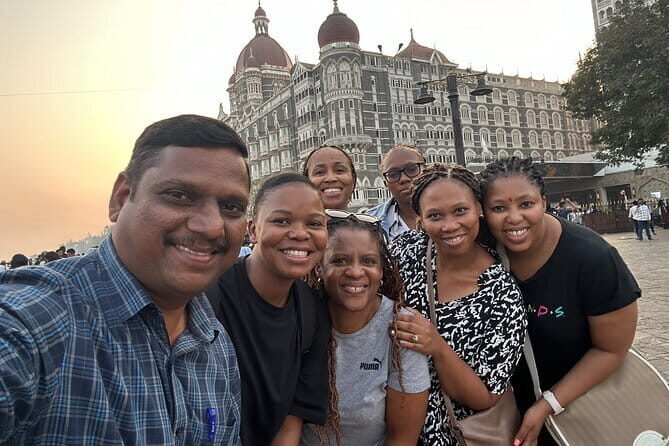
This tour is built like a smart “greatest hits + real life” pairing. Day one is focused on South Mumbai landmarks—monuments you’ve probably seen in photos—paired with places that show how people live and work. Day two simplifies the plan to one big purpose: Elephanta Caves.
What I like is that you don’t have to coordinate entry tickets and ferry logistics yourself. Mani Bhavan’s entry and the Elephanta cave fees plus ferry tickets are included, and you also get mineral water bottles along the way. That matters because in a two-day window, small coordination hassles can steal your time and energy.
The one possible drawback is the rhythm. You’ll move from stop to stop with timed visits—some are as short as 10 minutes. That’s great for coverage, but it can feel rushed if you prefer lingering. If your group includes older adults, you’ll get more value if you plan on breaks and ask your guide to keep the pace realistic.
Also note the weather dependency. Elephanta is an island trip, and the experience specifically requires good weather. If conditions are poor, you’ll be offered a different date or a full refund—so you’re not trapped with a ruined plan.
You can also read our reviews of more city tours in Mumbai



Day One: South Mumbai landmarks in a route that makes sense
Day one is basically a guided walk/drive circuit around Colaba and Fort-area highlights, finishing with Dhobi Ghat and the Dharavi Slums portion. The structure is helpful: you start at one of the most recognizable symbols (Gateway of India), then you shift into governance, education, transportation, and markets—ending with working-city Mumbai.
Gateway of India: your big “arrival” moment
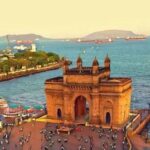
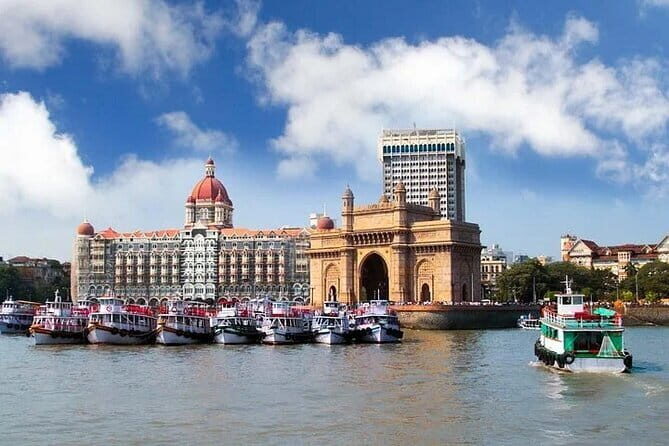
You start at the Gateway of India for about 30 minutes, with admission included. It’s a monumental arch built to commemorate the landing of King-Emperor George V and Queen-Empress Mary at Apol… (the key takeaway: it’s tied to a specific imperial-era event). Even if you’re not chasing dates, it’s a strong place to orient yourself. You can look out toward the waterfront and get your bearings for the rest of the day.
Practical note: this is also a photo magnet. Plan to use your 30 minutes wisely—quick photos, then listen for the story your guide gives you.
Antilia: seeing Mumbai’s extreme wealth from the outside
Next is Antilia, a private home in South Mumbai. It’s described as valued at about $2 billion, and it’s known for being one of the most valuable residential properties in the world. Because it’s private, you won’t treat it like a museum. What you’ll get is context—how Mumbai’s skyline includes both public landmarks and highly guarded private wealth.
The fun here is contrast. After you’ve been standing at a public monument, it’s a sharp reminder that this city holds huge differences in wealth and privacy in the same neighborhoods.
Mani Bhavan Gandhi Museum: where the political story gets personal
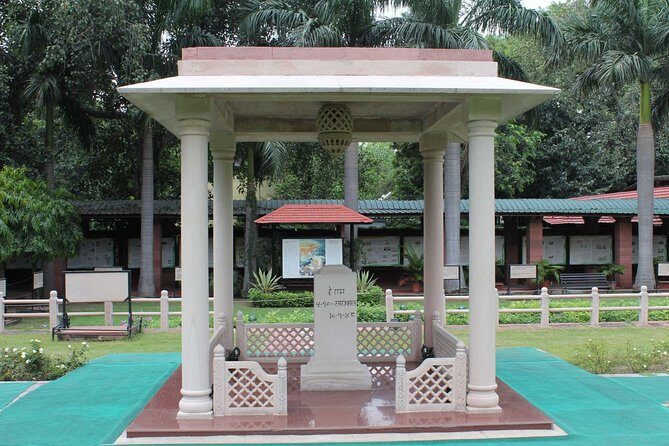
Mani Bhavan is your next anchor stop, about 45 minutes, with admission included. It’s a museum and historical building dedicated to Gandhi, located in the Gamdevi precinct. This is one of those places where you go from “famous name” to “how activism actually worked day to day.”
If you like understanding what’s behind the headlines, this is one of the strongest stops on the day. It gives you a human scale after the monumental scale of Gateway and Antilia.
You can also read our reviews of more private tours in Mumbai




Hanging Gardens and Marine Drive: viewpoints, not just photos
Then you head to Hanging Gardens (Ferozshah Mehta Gardens) for around 20 minutes. It’s a terraced garden on Malabar Hill’s western side, with views toward nearby spaces. Think of it as your “pause button.” The time is short, but the height and terraces help you see how the city sits against the coast.
After that, Marine Drive comes next. It’s a 3.6-kilometer C-shaped boulevard along the bay. This stretch isn’t about tickets or entry; it’s about atmosphere and coastline perspective. If you’re trying to understand Mumbai’s relationship with the sea, this is where you feel it.
Taj Mahal Palace: luxury next to the icon you started with
You’ll stop at The Taj Mahal Palace Hotel for about 10 minutes. It’s a heritage five-star property next to Gateway of India, built in Saracenic Revival style. You can treat this like a quick architecture moment—look for the style choices and the way it sits right in the same coastal zone as Gateway.
It’s brief, but paired with your earlier start point, it’s a clean visual comparison.
University of Mumbai Library and Rajabai Clock Tower: education as architecture
Two quick Fort-area stops follow: the University of Mumbai Library and the Rajabai Clock Tower (about 10 minutes each, with admission included). Rajabai Clock Tower stands about 85 meters tall and is part of the Fort campus.
This is the day’s “cultural geography” section. Mumbai isn’t only temples and markets. It’s also civic and educational buildings that shaped how the city grew. If you enjoy architecture, these quick stops make the rest of the day click.
Chhatrapati Shivaji Maharaj Terminus (Victoria Terminus): UNESCO-scale detail
Next is Chhatrapati Shivaji Maharaj Terminus for around 30 minutes, with admission included. It’s a historic railway terminal and a UNESCO World Heritage Site. You’ll likely want time just to look up and around. Railway stations in older cities aren’t dull transit buildings; they’re design statements.
This stop is especially valuable if your guide ties it to how Mumbai functioned as a hub—because a station like this tells you the city’s role in trade and movement.
Crawford Market: where you see city commerce up close
Crawford Market takes about 30 minutes. Originally named after Arthur Crawford, the first Municipal Commissioner of the city, it’s one of South Mumbai’s most famous markets. This stop is more about sensory reality than famous landmarks.
If you prefer shopping to sightseeing, this is useful. If you don’t, you can still enjoy it by focusing on the variety: stalls, colors, and the rhythm of commerce.
Dhobi Ghat: the open-air laundry you can’t ignore
Then comes Byculla/Dhobi Ghat (Dhobi Ghat), about 15 minutes, and it’s listed as free. This is Mumbai’s iconic open-air laundry where hundreds of dhobis wash and dry clothes using traditional methods. It’s work you can watch, and it’s a reminder that daily city systems are just as meaningful as tourist monuments.
The practical value: it’s a short stop that gives you an “ordinary Mumbai” scene before the more emotionally charged Dharavi visit.
Dharavi Slums with a local guide: what you should expect
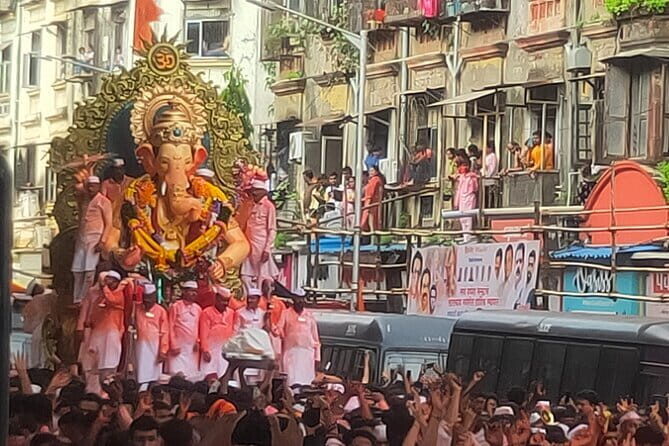
The Dharavi Slums portion runs about 2 hours, and admission is listed as free. Dharavi is known as a bustling urban hub and it’s associated with industries like calfskin and earthenware. It’s also the backdrop for the film Slumdog Millionaire, which means many people arrive with preloaded ideas.
So the best way to get value is to follow your guide’s framing—especially since this tour includes a local guide for this segment. In one review, the guide was born there, and that kind of personal connection changes the tone from documentary to explanation. You get a better read on what people are proud of, what challenges look like in daily life, and how work and community fit together.
A consideration: this area can be sensitive. Don’t treat it like a photo safari. Use the time to listen, ask questions your guide encourages, and follow any guidance on where to stand and what not to do.
If you have a family, it can be easier when the guide sets expectations early. Having someone who lives the place helps everyone stay respectful without turning it into an awkward lecture.
Day Two: Elephanta Caves, ferry time, and the 6-hour island plan
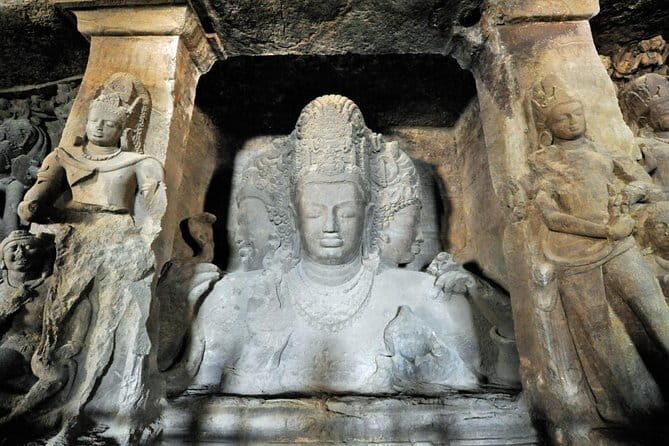
Day two focuses on Elephanta Caves with a private tour of the island. Elephanta Caves are UNESCO World Heritage and a collection of cave temples predominantly dedicated to the Hindu god Shiva, located on Elephanta Island (Gharapuri).
The stop is listed as about 6 hours, and admission and ferry tickets are included. That’s a big deal. Ferry plus caves can be a hassle to piece together on your own, so having it packaged keeps the day calmer.
What you’ll notice in the caves
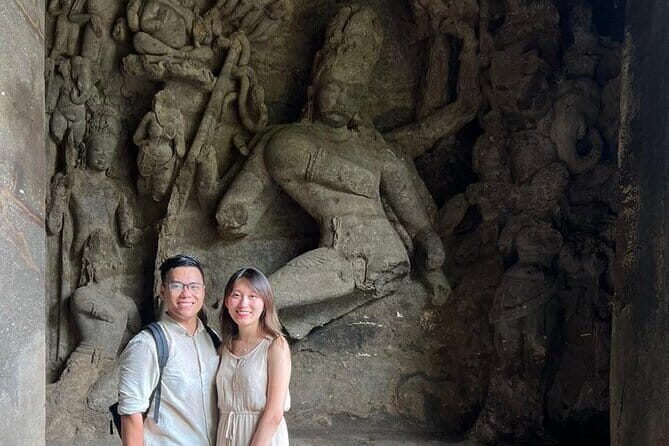
You’ll spend your time inside the caves listening to your guide and looking at sculptural details. One review specifically called out learning a lot about the gods and goddesses, which tells me the guide role is central here. If you’re the type who likes meaning—not just visuals—this portion is where you’ll get the most out of the included expert guide.
The smooth part matters: having the right guide on the island
A review described Harry facilitating the Elephanta Island tour and Manoj as the island guide, with everything smooth and nice. That lines up with what you want on a half-day island excursion: a calm schedule, clear directions, and an expert who knows how to keep groups moving without losing the story.
Weather is the gatekeeper
Elephanta is weather-driven. The experience requires good weather, and if it’s canceled due to poor weather, you’ll be offered a different date or a full refund. For your planning, treat the second day as the day that must remain flexible.
Price and value: is $132 per person fair for what you get?
$132 per person for a 2-day private package sounds like a bargain only if you understand what’s included. In this case, the included items aren’t just “a guide present.” You also get:
- Hotel/port pickup and drop-off
- Air-conditioned vehicle
- Entry/admission for Mani Bhavan and Elephanta Caves fees
- Ferry tickets for Elephanta
- Expert guide in English, Hindi, and Marathi
- Mineral water bottles
- All fees and taxes
- Mobile ticket
Food and drinks are not included, and that’s the main cost you’ll add in real life. Everything else—especially ferry tickets and cave entry—is built into the price, which is exactly what you want when time is tight.
One more small value point: the tour is private, meaning you’re not negotiating with a big group’s pace. In a city like Mumbai, that makes the experience feel more controllable, even when the itinerary is packed.
Timing, comfort, and how to survive the pace without losing the magic
This tour is designed for coverage. Some stops are quick (10–20 minutes). Others take longer (Dharavi around 2 hours; Elephanta around 6 hours). That means you’ll get a lot of impressions fast.
To make it enjoyable:
- Wear comfortable shoes. You’ll be on your feet more than you expect.
- Bring sun protection and something light for the cooler evening. Marine Drive and viewpoints can still feel bright.
- Plan your meal strategy. Food and drinks aren’t included, so either budget for meals or grab snacks where it makes sense.
- If you’re traveling with elderly family members, set expectations on pacing early with your guide.
Also, since pickup is offered, you’ll save time getting from one zone to another—an underrated part of city value.
Who this tour is best for
I think this package suits you if you want:
- A guided overview of Mumbai’s core sights in a short time
- A balance of architecture, culture, and real working neighborhoods
- A guide-led Elephanta Caves experience with ferry tickets handled
- A private setup with hotel/port pickup
It might not fit you as well if:
- You want a slow, lingering pace at every stop
- You get anxious when a plan depends on weather (Elephanta can shift)
Should you book this Mumbai 2-day tour?

If your goal is to cover both the iconic Mumbai and the everyday city story in only two days, I’d book it. The biggest reasons are practical: key entries plus ferry tickets are included, and the guide-driven format helps you understand what you’re seeing instead of just walking past it.
I’d be extra confident if your group includes people who learn best with explanations and names tied to real places. In the reviews, guides like Mohammad on the city side and Manoj on the Elephanta side made the experience feel smooth and tailored, and a local Dharavi guide born in the area adds real context.
Just go in with your expectations set: this is an active tour with short stops and one weather-dependent island day. If that matches your travel style, it’s a strong value at $132 per person.
FAQ
How much does the Mumbai 2-day tour cost?
It costs $132.00 per person.
Is this tour private or shared?
It’s a private tour/activity. Only your group participates. The listing also notes group discounts, but the experience itself is private to your party.
Does the tour include hotel or port pickup and drop-off?
Yes. Hotel/port pickup and drop-off are included. Airport pickup is available for an additional $10 charge.
What’s included in the price?
You get an expert guide (English, Hindi, Marathi), an air-conditioned vehicle, hotel/port pickup and drop-off, entry/admission for Mani Bhavan and Elephanta Caves, ferry tickets, mineral water bottles, and all fees and taxes.
Is food included?
No. Food and drinks are not included.
How do you receive tickets?
You receive a mobile ticket.
How long is Elephanta Caves day?
Elephanta Caves is listed as about 6 hours, including the island tour time.