REVIEW · MUMBAI
Mumbai: Dhobi Ghat Tour with Dharavi and Train Ride Options
Book on GetYourGuide →Operated by Mumbai Dream Tours · Bookable on GetYourGuide
Mumbai smells like soap and real life.
The Mahalaxmi Dhobi Ghat tour is interesting because you’re not just looking at laundry history—you’re watching a working system still run day after day, with dhobis handling most of the process by hand. I like that the guide explains the history and significance of the place while you move through the lanes and view the big, colorful washing areas. One thing to consider is that tour length can be a sticking point, so it’s smart to double-check your booking details before you go.
What I especially like is the human rhythm of the work: clothes get flogged in troughs, hung to dry, then pressed with bulky charcoal irons. The other big win is guidance quality—one guide named Rakesh stood out for answering questions and keeping the pace relaxed, even when the route takes you through side lanes you’d likely skip on your own. Still, if you’re expecting a long, slow stroll, be aware that one recent experience reported a much shorter visit than expected.
In This Review
- Key highlights worth planning around
- Entering Mahalaxmi Dhobi Ghat: a laundry that runs all day
- What the guide helps you understand (and what you’ll actually see)
- Photographers’ routes: where the color and patterns come from
- Dharavi option: what you’re adding and what to expect
- Train ride option: a simple add-on that changes how you see Mumbai
- Price and value: why $11 can be a bargain, and where it can disappoint
- Guide quality: the difference between seeing and understanding
- Logistics on the ground: meeting point and ending back where you start
- Who this tour fits best (and who should think twice)
- FAQ
- What is included in the Dhobi Ghat tour?
- Is the tour in English?
- Where do I meet for the tour?
- Does the tour end at the same place?
- Should I book Dharavi and the train ride options?
- What’s a key detail to watch when booking?
- Can I cancel for a full refund?
- Should you book Mahalaxmi Dhobi Ghat with Dharavi and train options?
Key highlights worth planning around
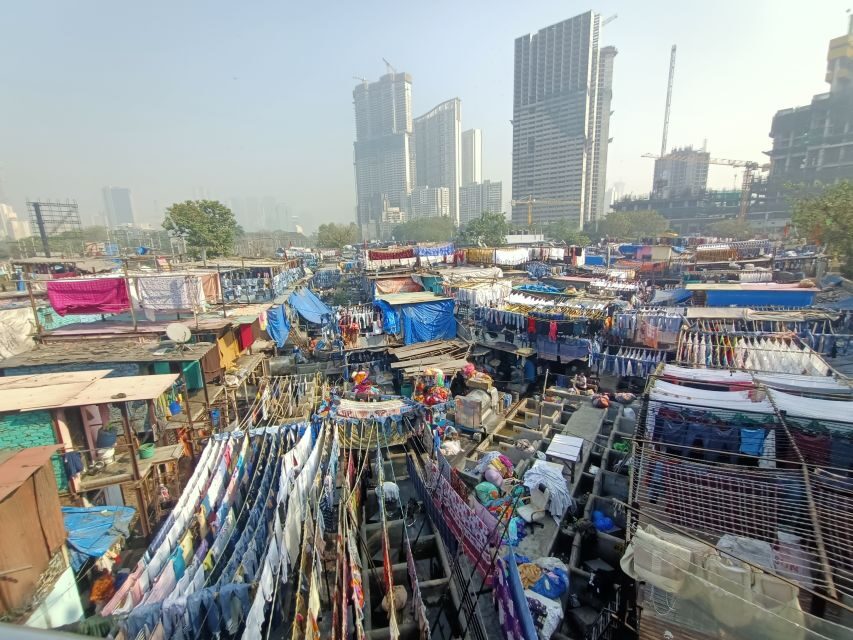
- A guided walk at Mahalaxmi Dhobi Ghat, Mumbai’s largest open-air laundry site
- Over a century of operation, with the same basic workflow still in use
- Hand-driven washing tasks (even if some families also use machines)
- Charcoal iron pressing, where bulky tools do the heavy work
- Photography-friendly rows of color, with lots of visual repetition and pattern
Entering Mahalaxmi Dhobi Ghat: a laundry that runs all day
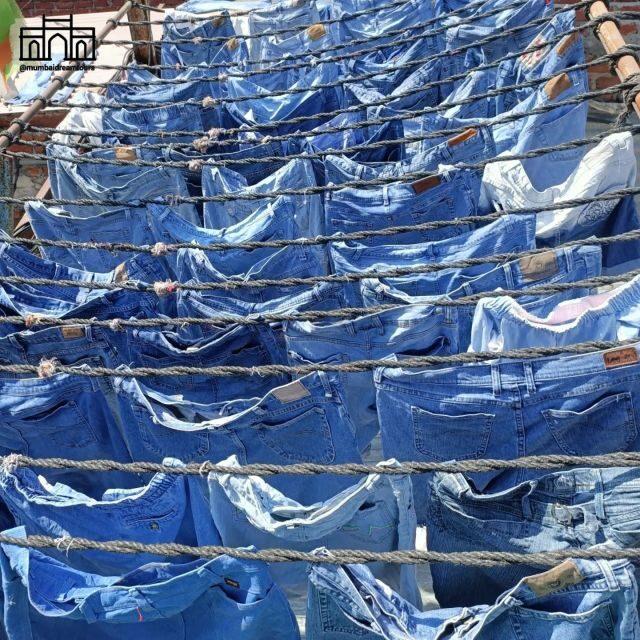
Mahalaxmi Dhobi Ghat isn’t a museum. It’s a place where people bring clothing from around Mumbai and turn it back into clean clothes through the day’s shifts. That difference matters. A museum makes you look. A working laundry makes you notice how the work is organized: who does what, where items move next, and how routines keep everything flowing.
This is also why the tour works so well for photos. You get long visual lines, bright tones from hanging fabric, and constant motion around troughs and drying racks. Even if you’re not a shutterbug, the place has that behind-the-scenes feel—like you’re stepping into an everyday machine powered by people.
And yes, it’s traditional. The basic idea stays the same: clothes move from washing to drying to pressing, with family members taking responsibility for parts of the process. That gives the tour a real structure, not just random stops.
You can also read our reviews of more tours and experiences in Mumbai.


What the guide helps you understand (and what you’ll actually see)

A Dhobi Ghat tour is usually packed with tiny details you’d miss without context. The guide’s job is to translate the scene into meaning: why the ghat exists, how the system developed, and what keeps it running.
Here’s the flow you can expect to watch as you move through the area:
- Washing trough work: one person flogs the clothes in the washing troughs. You’ll see how force and technique matter, since this is a mostly hand-driven process.
- Drying by hanging: other workers then hang clothes to dry, turning the space into a grid of fabric and color.
- Pressing with charcoal irons: after drying, workers press/mint the clothes using large charcoal irons. It looks intense because it’s labor-heavy and time-sensitive.
That’s the heart of what makes Mahalaxmi Dhobi Ghat feel alive: it’s not one job. It’s a chain of tasks done in sequence, with people covering roles within their families. You’ll also get some perspective on how modern life is mixed in. Some dhobi families also use machines, but much of the activity here is still done by hand. That’s part of the story the guide should help you connect to Mumbai’s working culture.
Photographers’ routes: where the color and patterns come from
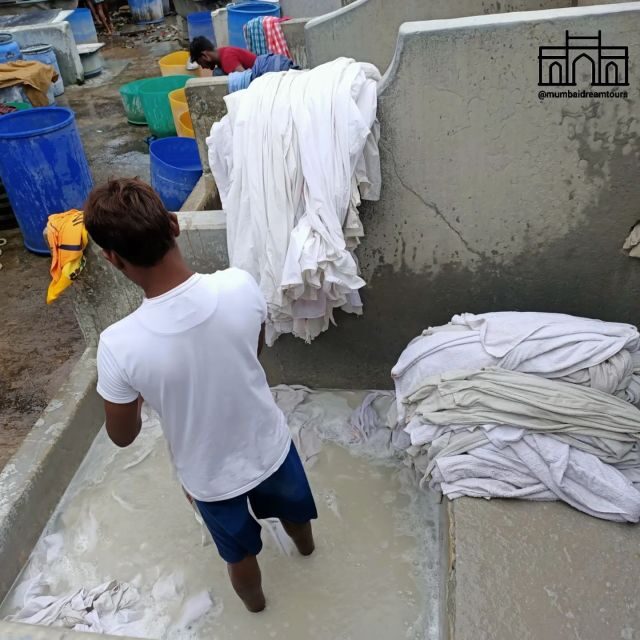
Dhobi Ghat Mumbai sightseeing is popular with photographers for a reason: the visuals are consistent and repeated. Hanging laundry forms stripes and blocks of color. Trough areas create texture. Pressing areas add heat and contrast.
You can take great photos just by being patient. Don’t chase every shot like it’s a carnival. Instead, pick one section to watch for a few minutes—watch how wet garments move to drying, then how pressed clothing changes hands. You’ll notice the rhythm, and your pictures will look less random.
Also, bring your eyes for the “quiet” moments. The best images often come when someone is waiting for the next step, not when everything is mid-motion.
Dharavi option: what you’re adding and what to expect
Some bookings include a Dharavi tour option. If you select it, you’re extending the day from a specific working site (Dhobi Ghat) into one of Mumbai’s most well-known neighborhoods.
What you can count on from the information you have is this: the experience is guided, and the route may include side lanes and darker alleys that you might never choose on your own. One guide performance called out routes through darker alleyways, and that makes sense with Dharavi add-ons—this is an urban area where guidance is often key to understanding what you’re seeing.
The value here is context. Dhobi Ghat teaches you how a work system runs. Dharavi (when included) adds a different kind of context: how dense neighborhoods function in daily life, not just what buildings look like from the street.
A consideration: you’ll be spending more time in crowded, walking-heavy areas. If you’re sensitive to tight spaces or prefer to keep your day focused on one theme, consider booking Dhobi Ghat only.
Train ride option: a simple add-on that changes how you see Mumbai
Another optional add-on is a train ride. This one tends to be a high-value choice because it’s not just transportation—it’s perspective.
With a train ride, you get:
- A shift from street-level viewing to moving city-level viewing
- A more local rhythm for how people travel between parts of Mumbai
- A chance to see how everyday life connects across neighborhoods
One positive experience specifically praised the train ride alongside the washing history. That’s a good hint: if you like a day that mixes “place” with “how the city works,” the train option can tie the day together.
If you hate crowds or standing for long periods, treat this as a question for your own comfort level. The data you have doesn’t specify timing or crowding, so it’s best to plan based on how you handle public transport.





Price and value: why $11 can be a bargain, and where it can disappoint
The headline price listed is about $11 per person, with Dharavi and train ride available only if selected. On paper, that’s strong value because you’re getting a guided walk of a working, historical-adjacent site plus add-ons that can expand your itinerary.
But value is not just price. It’s also whether the time on the ground matches what you booked.
There’s a real caution from one unhappy experience: a buyer reported paying the equivalent of 1400 rupees for a tour that was supposed to last 1 hour, but the guide said the tour was finished about 10 minutes in. That complaint is serious because it focuses on time, not the content. Even if this was an outlier, it tells you what matters most: confirm the exact duration and what’s included for your specific option.
So here’s the practical approach:
- Choose the option you truly want (Dhobi only vs Dhobi + Dharavi vs Dhobi + train ride)
- Confirm the promised tour duration before you arrive
- Be clear on what time actually covers sightseeing versus travel between stops
When it all lines up, this tour looks like a bargain. One positive experience described an overall unique experience with a helpful guide and the expected mix of Dhobi history plus the train ride.
Guide quality: the difference between seeing and understanding
Dhobi Ghat can be visually powerful even without a guide. Still, the tour’s “real value” is the explanation.
That showed up clearly in the feedback about Rakesh. The strong comments tied to him were about:
- Answering questions
- Staying relaxed at a steady pace
- Helping you navigate lanes you might not visit independently
That kind of guiding matters for two reasons. First, Dhobi Ghat has specialized roles (washing, drying, pressing), and a good guide labels what you’re seeing. Second, the place’s significance can be hard to grasp from observation alone. You might notice work and tools, but you won’t automatically understand how long it’s been operating or why families run the system the way they do.
If you get a guide who can keep the pace calm and answer questions, the whole experience feels more satisfying—even if you’re only there for a short stretch.
Logistics on the ground: meeting point and ending back where you start

Your booking should tell you the meeting point because it can vary depending on which option you chose. The tour ends back at the meeting point. That’s helpful for planning, because you won’t need to figure out a new exit point across town.
Since you’re dealing with a guided route and possibly additional stops (like Dharavi and/or a train ride), it’s smart to keep your schedule flexible afterward. Even if the finish is back at the meeting area, your exact departure time can shift based on the option mix and how long the guide spends at each part of the experience.
Who this tour fits best (and who should think twice)
This experience is a great fit if you want:
- A working cultural site rather than a staged attraction
- Clear explanations of a traditional system that still runs
- A mix of sightseeing with optional city-transport via the train ride
- Strong photo opportunities without turning it into a long production
It may be a weaker fit if:
- You need very predictable timing and don’t want any chance of a shorter-than-expected tour
- You’re uncomfortable walking through darker alleys or tight lanes (especially if Dharavi is included)
- You dislike hands-on or labor-focused visuals and prefer more relaxed stops
For families, the site can still be interesting, but it’s not designed like a hands-off exhibit. For solo travelers, the guide support helps a lot, especially for areas you wouldn’t naturally find.
FAQ
What is included in the Dhobi Ghat tour?
The tour includes the Dhobi Ghat tour. If you select add-ons, it may also include a Dharavi tour and/or a train ride.
Is the tour in English?
Yes, the tour language is listed as English.
Where do I meet for the tour?
The meeting point may vary depending on the option booked.
Does the tour end at the same place?
Yes. This activity ends back at the meeting point.
Should I book Dharavi and the train ride options?
If you want more of Mumbai in one day, selecting Dharavi and/or a train ride can add value. If you prefer to focus only on Mahalaxmi Dhobi Ghat, you can book just the Dhobi Ghat tour.
What’s a key detail to watch when booking?
Confirm the tour duration for your exact booking. One experience reported a much shorter visit than expected, so it’s worth verifying the time you’re purchasing.
Can I cancel for a full refund?
You can cancel up to 24 hours in advance for a full refund.
Should you book Mahalaxmi Dhobi Ghat with Dharavi and train options?
I’d book it if you want a guided look at a working, open-air laundry that’s been operating for over a century and you’re interested in how dhobis wash and press clothes using mostly hand-driven steps. The best part is the “how it works” feeling—especially when your guide is strong (Rakesh is one name that came up for excellent Q&A and a calm pace).
I’d think twice if you’re strict about timing. Based on at least one complaint, tour duration can matter more than the price. If you confirm the promised length and choose only the add-ons you truly want, this can be a smart, low-cost way to see Mumbai’s daily life up close.