REVIEW · JAIPUR
Jaipur: Jhalana Amagarh Leopard Safari Park Guided Tour
Book on GetYourGuide →Operated by Parikshit Tour and travels · Bookable on GetYourGuide
Wild leopards near a major city is the hook. This safari takes you into the Jhalana–Amagarh reserve forest area around Jaipur, where conservation and education happen in wide open space, not tight cages. You go out with a guide to look for big cats and the many species that share their habitat, including jackals, nilgai, hyenas, jungle cats, and peacocks.
I especially like the real reserve-forest setup and the chance to see how the park’s conservation model works in practice. I also like that the safari experience is guided in English, so you’re not just scanning trees on your own—you get help spotting what matters.
The main drawback to plan around: leopard sightings aren’t guaranteed. Money isn’t refunded if you don’t see leopards, and even when one is nearby, it can be distant, partially hidden, or the viewing area can get crowded when multiple jeeps converge.
In This Review
- Key things that make this safari worth your time
- Why Jhalana–Amagarh feels different from a typical zoo stop
- Getting to Amagarh Leopard Reserve and stepping into the safari rhythm
- Leopard safari chances: what the park says you’re working with
- The wildlife beyond leopards (and why it’s not just a consolation prize)
- What the guided experience actually adds
- Routes, crowds, and how to manage the leopard-spotting “cascade”
- Clothing, binoculars, and photo rules that actually help your day
- Price and value: is $36 worth it?
- Who this tour suits best (and who should skip it)
- Quick practical notes that prevent headaches
- Should you book the Jaipur Jhalana-Amagarh Leopard Safari?
- FAQ
- How long is the Jhalana-Amagarh guided leopard safari?
- What’s included in the tour price?
- Do I need to send my passport after booking?
- Is the safari guided in English?
- Can I skip the ticket line?
- What if no leopards are seen?
- Who is the tour not suitable for?
Key things that make this safari worth your time
- Jhalana–Amagarh is about conservation and education, with a non-profit style focus rather than a typical roadside zoo feel.
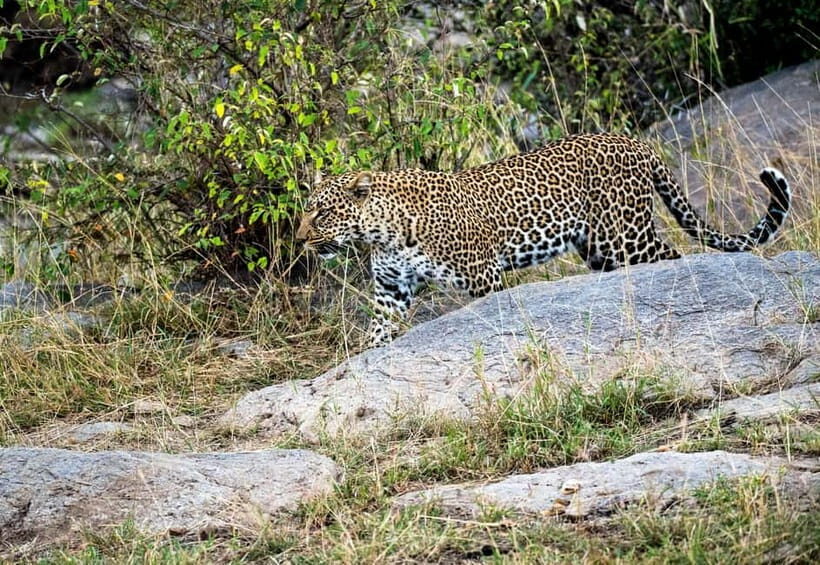
- Big-cat odds are built in, with the area home to roughly 30–35 leopards overall and around 6–7 in the tourism territories.
- You’re not only chasing leopards: jackals, nilgai, hyenas, jungle cats, deer, wild boars, and birds show up too.
- Two safari routes operate (when available), which can change what you see during your 2–2.5 hour drive.
- Bring binoculars and expect a guide’s spotting help; they can point out tracks and behavior, not just animals.
- Bumpy roads are part of the game, so travel-ready comfort matters more than you’d expect.
Why Jhalana–Amagarh feels different from a typical zoo stop
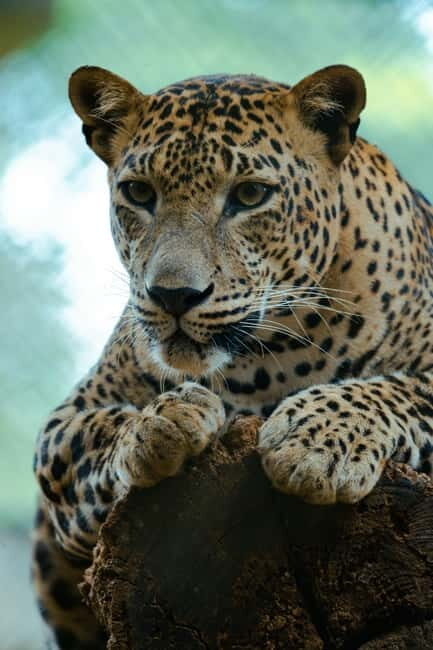
If you’ve done safaris where the main thrill is walking past fences, this one hits differently. Jhalana–Amagarh is a safari-style reserve forest area managed by the Government Forest Department, designed so visitors can observe wildlife in a more natural setting. The park sits in the Aravalli hills near Jaipur, and it covers about 23 square kilometers—big enough that you’re not constantly repeating the same short loops.
The park is often described as an intersection of human and nature. In plain terms, you’re close enough to see animals, but you’re not micromanaging them. That open-space design matters because animal behavior changes when there’s less pressure and more room. You’ll also hear and notice more—birds calling from the scrub, movement on the edges, and the quiet “pause-and-watch” rhythm a good guide follows.
There’s also a useful scale detail to keep in your head: the park hosts over 500 animals representing species from the wild. The leopards are the headline, but the supporting cast is real—this is why you can still have a good safari even if a cat stays hidden longer than you hoped.
You can also read our reviews of more guided tours in Jaipur


Getting to Amagarh Leopard Reserve and stepping into the safari rhythm
Your experience starts at Amagarh Leopard Reserve, then you head into the safari portion at Jhalana. The total time is about 2.5 hours, with the safari ride itself typically running 2 to 2.5 hours depending on availability and route conditions.
Here’s how to think about the timing. Safari viewing is not like museum time where the clock is mostly predictable. Start timing may shift by 1 to 2 hours depending on the season, so don’t plan a tight connection right after. Also keep in mind that safari operations can be impacted by bad weather, and in that case the money isn’t refunded.
Transport is part of the experience. You travel in a sharing safari vehicle, unless you choose a private or small-group option. A good safari driver matters because spotting wildlife often depends on slow, careful positioning—not just speed. In the positive feedback tied to the operation, the combination of excellent driving and local wildlife knowledge is exactly what people valued. In a place like this, that skill affects your odds.
If you have a sensitive stomach, take note: the roads can be rough. One traveler even suggested not eating too much before you go because you’ll be bouncing around.
Leopard safari chances: what the park says you’re working with
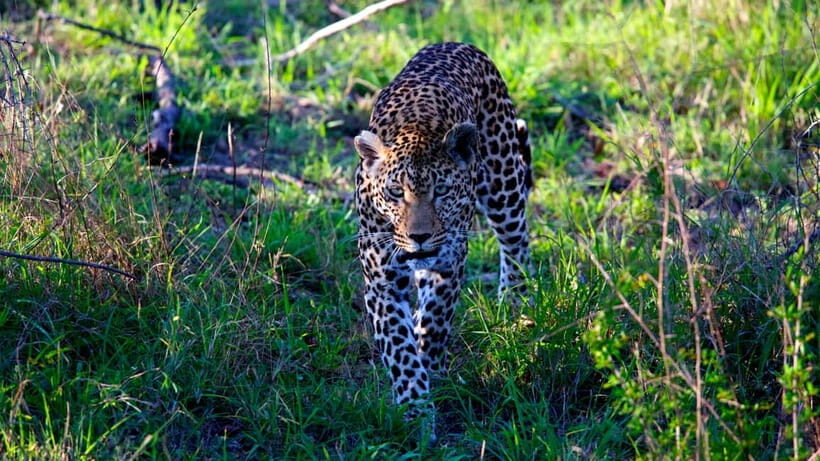
Leopards are the main reason people book. The park’s numbers are part of the reason this route has a reputation: Jhalana–Amagarh is home to about 30–35 leopards, with around 6–7 leopards having territory in the tourism area.
But here’s the reality check you should carry into the safari: leopards are stealth animals. Even with decent local density, sighting them depends on timing, light, temperature, and where the cat decides to move. That’s why the “no refund if leopards aren’t seen” rule exists. It’s not a bait-and-switch; it’s a reminder that you’re in habitat, not a guaranteed viewing gallery.
Also, when you do find a leopard, you might find yourself viewing at a distance. In a less positive experience, a leopard was spotted late in the safari and was barely visible in the distance behind trees, while many vehicles gathered. That’s not unique to this park; it’s how safari viewing works when multiple jeeps receive information at once. So if you’re expecting close-up cat photography, temper that expectation and focus on behavior and presence more than a perfect angle.
The wildlife beyond leopards (and why it’s not just a consolation prize)
Even if the leopard is elusive, the safari isn’t empty. Jhalana is known for a mix of smaller fauna and birds, including:
- Jackals
- Nilgai (blue bull)
- Hyenas
- Jungle cats
- Spotted deer
- Wild boars
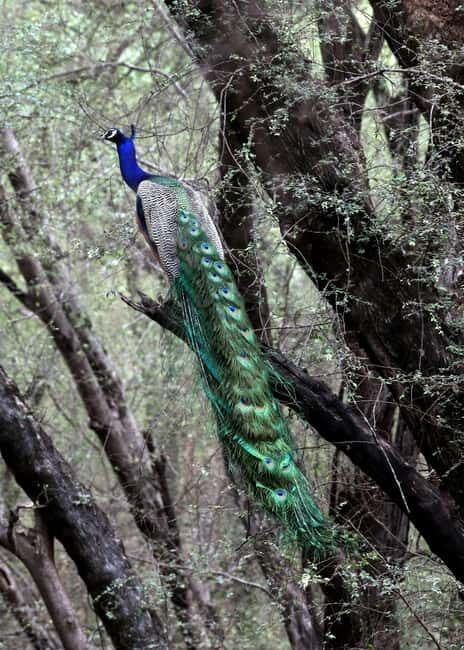
- Peacocks
- Resident and migratory birds
That list matters because it changes how you enjoy the ride. Instead of scanning only for spots and silhouettes, you start looking for signs: movement near the edges, bird alarms, and animal “tells” like stillness after sound. A good guide turns those cues into a story you can follow in real time.
You’ll also get a sense of the park’s ecology across its 23-square-kilometer area. The Aravalli hills give you a mix of cover and vantage points, so your viewing can feel like shifting “chapters” rather than one flat search. On a shorter safari, that variety can make the difference between boredom and a long string of interesting moments.
What the guided experience actually adds
A self-drive safari in a reserve area can feel random. A guided safari helps you work smarter. This tour includes a live guide in English, and the guide’s job is to help you spot animals and understand what you’re seeing.
Even if you know the basics—leopard tracks, general behavior—watching from inside a vehicle is different. You’re dealing with height, distance, brush, and the fact that animals may be present but not visible. That’s where guidance pays off. In the strong feedback you’re likely to encounter from others, guides and drivers were praised for knowing local wildlife and handling the vehicle with care.
So here’s my practical suggestion: come prepared to watch more than shoot. If you’re only focused on photography, you can miss what the guide is pointing out—especially birds and smaller mammals that appear for a short moment and then disappear into cover.
A few more Jaipur tours and experiences worth a look


Routes, crowds, and how to manage the leopard-spotting “cascade”
The park has two safari routes open for visitors. Availability can affect which route you get, and the exact sections you cover may vary depending on conditions and where wildlife is at that moment. That variability can be a plus: different routes can give you different viewing areas.
It can also be a downside if you end up feeling like you repeated the same kind of scenery too many times. One negative experience described a safari that seemed to stay in limited areas and involved a lot of circling. The same trip also showed how leopard sightings can happen late: a leopard was spotted near the end, and multiple vehicles moved in quickly.
What can you do with that info? Pick your strategy:
- If you want the highest chance of a leopard close by, consider choosing a private leopard safari option if it’s available to you.
- Ask how route selection works when you book, especially if you’re traveling during a season when leopard activity might be different.
- Accept that a sighting can bring crowd energy: vehicles can cluster in a small area when everyone gets the same update.
Clothing, binoculars, and photo rules that actually help your day
For wildlife safari success, your behavior matters. The park’s practical guidance is straightforward:
- Wear comfortable, neutral-colored clothing to blend in.
- Bring binoculars for better viewing.
- Use a camera if you want, but avoid flash photography to not disturb animals.
- Keep noise to a minimum to improve your chances.
These aren’t just “nice to know” rules. Neutral clothing and quiet movement reduce your impact on the environment. Binoculars do the heavy lifting when animals are visible only as movement between branches. And no flash keeps the park calm, especially for birds and small mammals that react quickly to sudden light.
One extra comfort tip from real safari road conditions: if you’re prone to motion sickness, plan accordingly. Those “bumpy roads” can turn a great wildlife day into a miserable one.
Price and value: is $36 worth it?
At about $36 per person with a 2.5-hour guided safari, the value depends on what you want from the experience.
Here’s what you’re paying for beyond the ride:
- Access to a reserve-forest style safari area around Jaipur
- Entry to the Jhalana–Amagarh safari park (availability-dependent)
- Transportation in a safari vehicle
- An English-speaking live guide
- A structured viewing time that’s short enough to stay dynamic
Where it can feel expensive is the leopard uncertainty. The park explicitly notes that money won’t be refunded if leopards are not seen. If your goal is a guaranteed leopard sighting, no safari operator can truly promise that. In that case, the price is less about the leopard and more about the overall wildlife viewing experience, the open-space setting, and the guide’s help.
If you compare this safari to longer, more remote safaris, the close-to-city location is a real value point. You get a leopard-focused experience without spending all day driving from Jaipur. And if you do see leopards—especially if the cat is active enough to show behavior rather than a distant silhouette—that moment can justify the cost quickly.
Who this tour suits best (and who should skip it)
This is a wildlife safari in a reserve forest setting, so it’s not built for everyone.
Not suitable:
- Children under 8
- Pregnant women
- People with back problems
So if you have mobility issues or a sensitive back, that’s a firm stop. The safari vehicle and rough roads can be tough even if the driving is careful.
It also suits you best if you like:
- Short, guided nature outings
- Waiting and scanning (wildlife time isn’t controlled)
- Learning as you watch, especially in English
- The idea of conservation and animal education in wide open spaces
If you’re traveling as a family with kids over 8, double-check whether the tour age rules apply strictly. For everyone else, this is a strong “half-day adventure” add-on to a Jaipur itinerary.
Quick practical notes that prevent headaches
A few operational details can make your day smoother:
- The Government Forest Department manages and operates the safari.
- You may need to send your passport for park entry after booking (via WhatsApp or email).
- Entry fees and the safari tour are included, but which specific version you get can depend on availability.
- Smoking is not allowed.
- Food and drinks are not included, so plan for water and snacks according to your comfort on bumpy roads.
- Hotel pickup/drop by AC car is available only if you choose that option.
Also, remember that camera use is allowed, but flash is a no. If you’re used to constant shooting, switch to a “pause and observe” rhythm.
Should you book the Jaipur Jhalana-Amagarh Leopard Safari?
I’d book this if you’re in Jaipur and want a legit leopard-focused safari experience without turning your day into a logistics marathon. The guide-led English experience, the open-forest setting, and the park’s scale (23 sq km and hundreds of animals) make it feel like more than a quick drive.
I’d think twice if your top priority is a guaranteed close-up leopard sighting. The park is upfront about the leopard uncertainty, and late, distant sightings happen. Crowd clustering can also happen when one leopard is spotted and everyone follows the call.
If you want to maximize your odds, consider binoculars, neutral clothing, quiet patience—and if private options are available, it’s worth asking whether that changes your viewing time and positioning.
In short: this is a very good choice for wildlife lovers who can handle uncertainty, rough roads, and the “watch first, shoot later” safari mindset.
FAQ
How long is the Jhalana-Amagarh guided leopard safari?
The safari duration is typically 2 to 2.5 hours, with an overall experience time of about 2.5 hours.
What’s included in the tour price?
It includes the Jhalana-Amagarh safari tour (availability-dependent), entry fees (availability-dependent), transportation in a sharing safari vehicle, and the live guided safari experience for about 2 to 2.5 hours. Private leopard safari and hotel pick-up/drop by AC car are included only if you choose those options.
Do I need to send my passport after booking?
Yes. You’re asked to send your passport for park entry via WhatsApp or email after booking.
Is the safari guided in English?
Yes. The live tour guide is available in English.
Can I skip the ticket line?
Yes, you can skip the ticket line.
What if no leopards are seen?
Money will not be refunded if leopards are not seen.
Who is the tour not suitable for?
It is not suitable for children under 8, pregnant women, and people with back problems. Smoking is also not allowed.