REVIEW · MUMBAI
Mumbai: Dharavi Slum Walking Tour with Local Slum Dweller
Book on GetYourGuide →Operated by Mumbai Dream Tours · Bookable on GetYourGuide
Dharavi changes what you think you know. This walking tour in Mumbai lets you see how people live and work in Dharavi from a resident’s point of view, not a postcard version. You’ll hit the place where Slumdog Millionaire was shot, then move through small workshops, a market, and everyday neighborhoods.
What I love most is the chance to learn the real economy in tiny spaces. I also like that the guide points out why recycling matters here, from plastic recovery to clever reuse of vegetable oil cans.
One possible drawback: this is a place with real hardship, tight alleys, and close-up human stories. If you’re expecting something tidy and distant, you may feel unsettled.
In This Review
- Key things you will notice
- Seeing Dharavi from inside the daily rhythm
- Third Wave Coffee is the real starting line
- Slumdog Millionaire filming spot, then the industries you can feel
- Recycling in Dharavi: plastic work and Rubie’s $1B output link
- The market area and workshop corridors (where the day happens)
- Faith side-by-side: Muslims making a shrine for Hindus
- Leather, soap, dyes, and the science of making things small
- Pottery workshop option: throwing clay with a local potter
- Vegetarian lunch with a local family: eating like you’re invited in
- How guides keep it respectful and safe
- Price and value: $14 plus water and an optional add-on
- Who should book this Dharavi walking tour
- Should you book? My take
- FAQ
- Where is the tour meeting point?
- Does the tour end at the same place it starts?
- What is included in the tour price?
- Is lunch included?
- Is pottery included?
- What language is the tour offered in?
- What should I bring?
- What is the price and cancellation window?
Key things you will notice
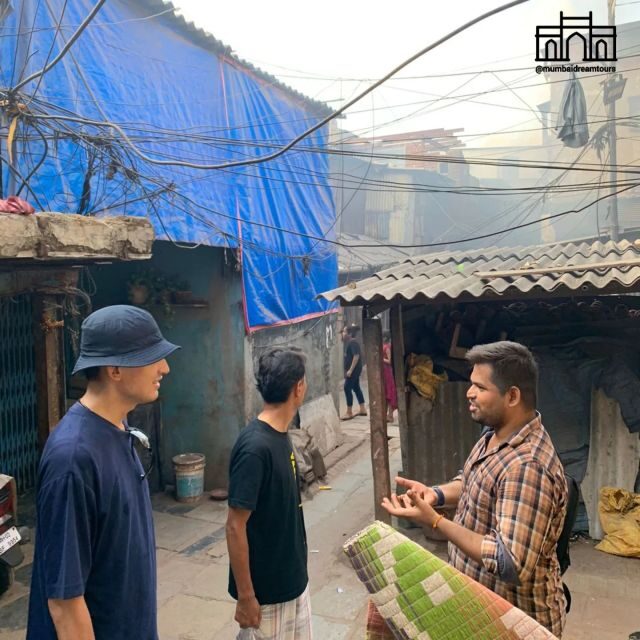
- A resident guide controls what you see and how you see it, with respectful pacing and lots of explanation
- Recycling is the backbone, including plastic work and reused containers like vegetable oil cans
- Handcrafted work in micro-industries: leather goods, soap, colored dyes, and more
- Cultural moments in the middle of daily life, including Muslims making a shrine for Hindus
- Optional add-ons that go beyond watching, like making pottery or eating a vegetarian lunch with a local family
Seeing Dharavi from inside the daily rhythm
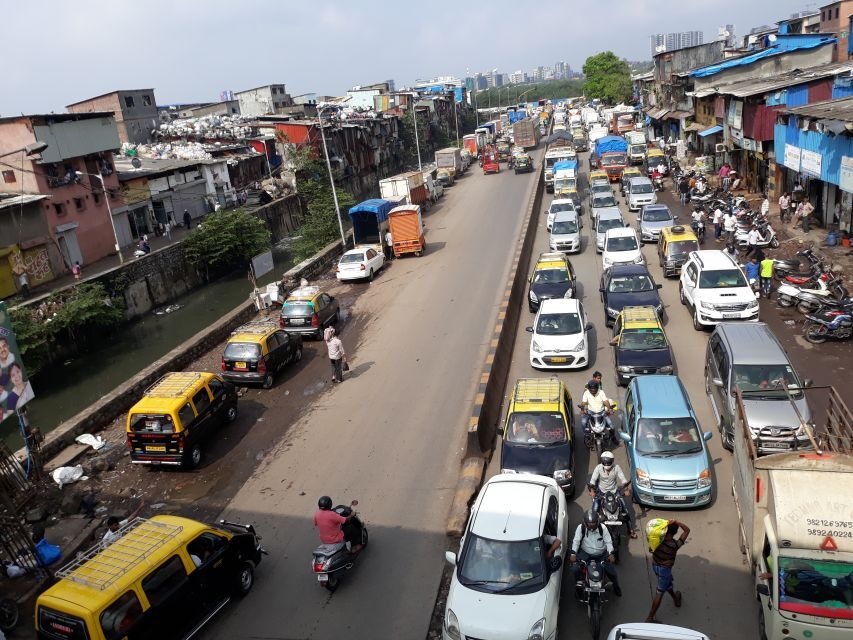
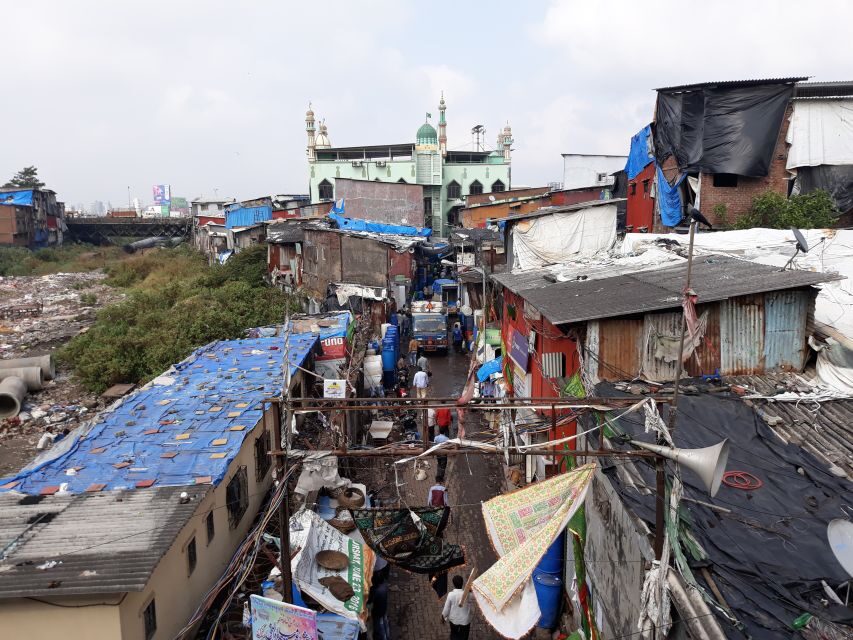
Dharavi isn’t presented as a tragedy here. It’s presented as a working place where people build income, solve problems, and keep community ties strong. Your guide walks you through narrow alleyways, showing you housing, schools, hospitals, and everyday routines alongside industry. That mix is the point: you don’t get only the dramatic parts. You get the whole, lived-in system.
A big mental shift happens when you stop thinking of Dharavi as one thing. It’s more like many small worlds touching each other. One lane might lead you to a workshop floor, the next to a market area, and then to a spot connected to the film Slumdog Millionaire. Seeing those connections in one walk helps you understand why people here are resourceful and why the work keeps going.
It’s also why the tour rating matters. With a 4.9 score from 44 reviews, the consistent message is that the guides handle the experience with care: clear answers, friendly energy, and a focus on not turning residents into scenery.
You can also read our reviews of more walking tours in Mumbai


Third Wave Coffee is the real starting line
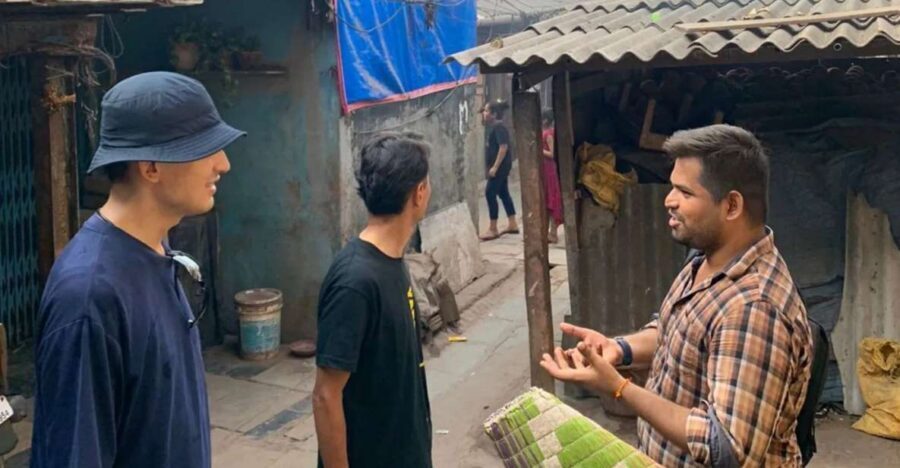
The tour meets at Third Wave Coffee. That matters more than you’d think. It gives you a clean, easy reference point in a city that can feel like information overload on day one in Mumbai.
From there, you start the walk and you end back at the meeting point. That round-trip setup is helpful because it reduces uncertainty. You’re not trying to re-orient yourself after a long morning in tight neighborhoods.
Also note the basics you’ll be asked to bring: a scarf and closed-toe shoes. I’m firmly on team closed-toe shoes for any walking tour in dense areas. You’ll be on the ground, moving through alleyways and workshop zones where you want your feet protected.
And yes, the tour is offered in English, so you won’t be stuck guessing what you’re looking at.
Slumdog Millionaire filming spot, then the industries you can feel
One of the stated highlights is visiting the place where Slumdog Millionaire was shot. After that, the walk turns into a survey of production. You’ll pass leather workshops, soap manufacturers, colored dye makers, and other small-scale operations.
Here’s why I find this part valuable: it reframes what you might assume about “slums.” Instead of treating poverty as the only story, the tour shows how skills and process matter. Colored dyes and soap production aren’t random trades. They are systems—inputs, mixing, shaping, handling materials—that require experience and repeat work daily.
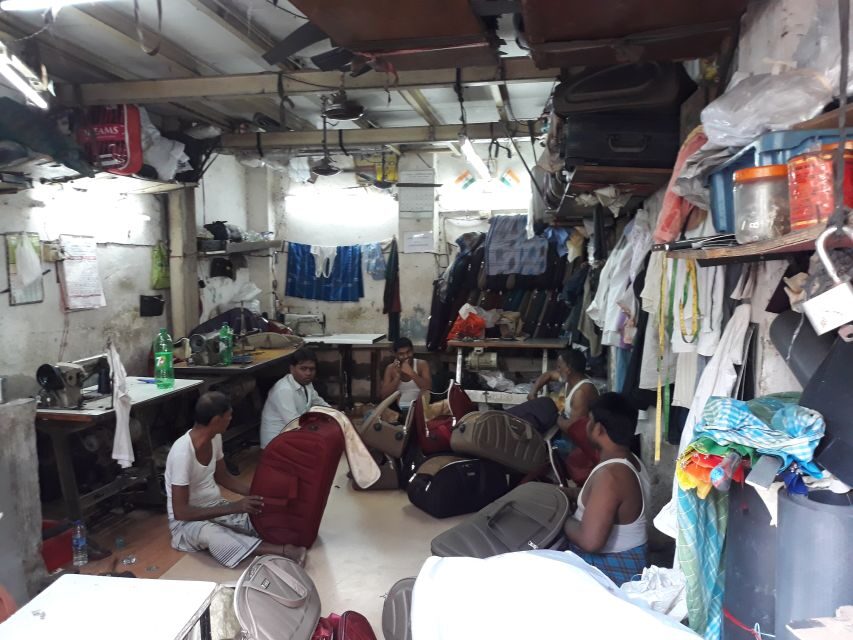
Leather goods deserve special attention. The tour description emphasizes innovative items made in tiny spaces, and leather is one of the industries visitors most often associate with Dharavi because quality can come out of very little room. If you like craftsmanship, you’ll likely notice how much of the workflow is designed around limited space.
Recycling in Dharavi: plastic work and Rubie’s $1B output link

Dharavi has a reputation shaped by images. This tour pushes you toward an economics story instead. The tour notes an estimated annual economic output of about $1 billion USD, and it connects much of that to Rubie’s informal recycling industry.
You’ll also learn how important recycling is to the community, with a focus on plastic. You’ll see practical examples of how materials get reused—especially the recycling of vegetable oil cans. That’s the kind of detail that makes everything else make more sense. When you watch reuse in action, you can see how waste becomes raw material, and how raw material becomes income.
This section is also where your assumptions get challenged in a productive way. Recycling isn’t just an environmental idea here. It’s work. It’s jobs. It’s how materials keep moving even when formal systems don’t fully reach.
The market area and workshop corridors (where the day happens)
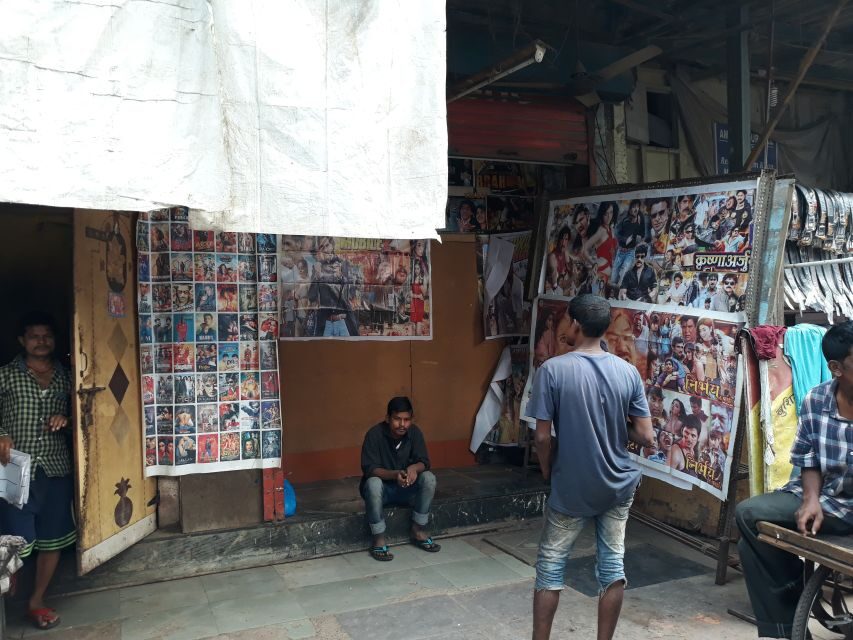
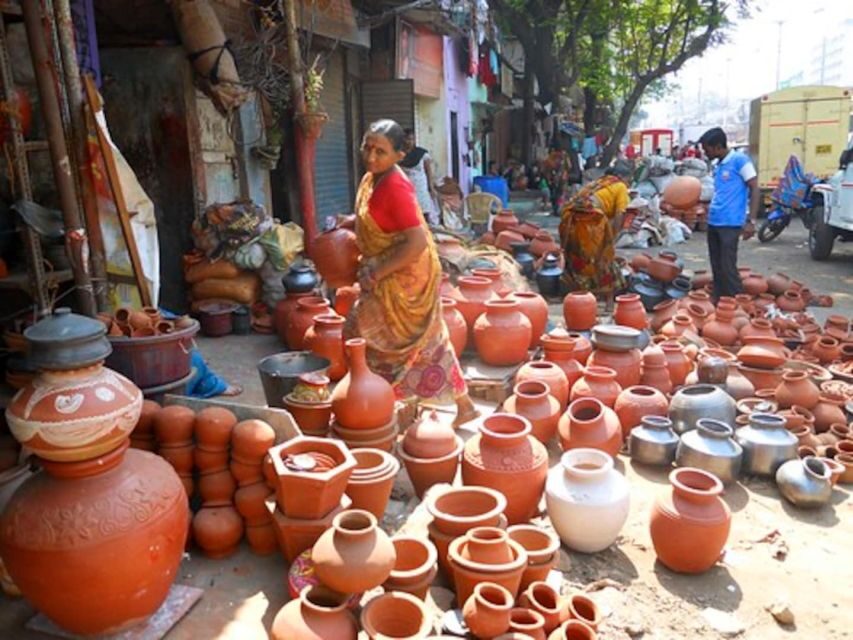
The tour includes a stop in a market area and time walking through the smaller alleyways where day-to-day life unfolds. You’ll see the movement of people and goods, plus you’ll encounter the industries that feed the market.
One of the tour goals is to help you understand the rhythms of a place. That’s why the itinerary isn’t only about big sights. It’s about seeing how industries fit next to homes and community spaces.
You might also notice an emotional layer here. The walk is described as a chance to experience the community spirit of Dharavi. That shows up less in speeches and more in what you witness: shared routines, neighborly interactions, and people who keep working even in cramped conditions.



Faith side-by-side: Muslims making a shrine for Hindus
A striking detail mentioned in the tour description is Muslims making a shrine for Hindus. That’s not a generic cultural checkbox. It’s an example of how multiple communities can interact directly inside everyday life.
Why I think this matters: it complicates the stereotypes you might carry from headlines or distant views. You don’t come away with a single neat label. You come away with the sense that people live with overlapping identities and practical cooperation.
This is also where the presence of a local guide matters. The walk is designed to help you read what you’re seeing and understand context without making it feel like a performance.
Leather, soap, dyes, and the science of making things small
Beyond leather, the tour includes soap manufacturers and colored dye makers. These stops help you understand that Dharavi isn’t only one kind of craft. It’s a chain of connected specialties, where different materials and processes create different products.
Soap and dyes also connect to something else you’ll likely notice: these aren’t just crafts for display. They’re linked to supply needs. They turn inputs into usable outputs. Even if you’re not shopping for anything, you’ll come away knowing that production here is serious and ongoing.
And because the tour focuses on how items are made in tiny spaces, you’ll see how design changes when space is limited. Tools, workflow, and storage all adapt. It’s a lesson in practicality, not a lesson in luxury.
Pottery workshop option: throwing clay with a local potter
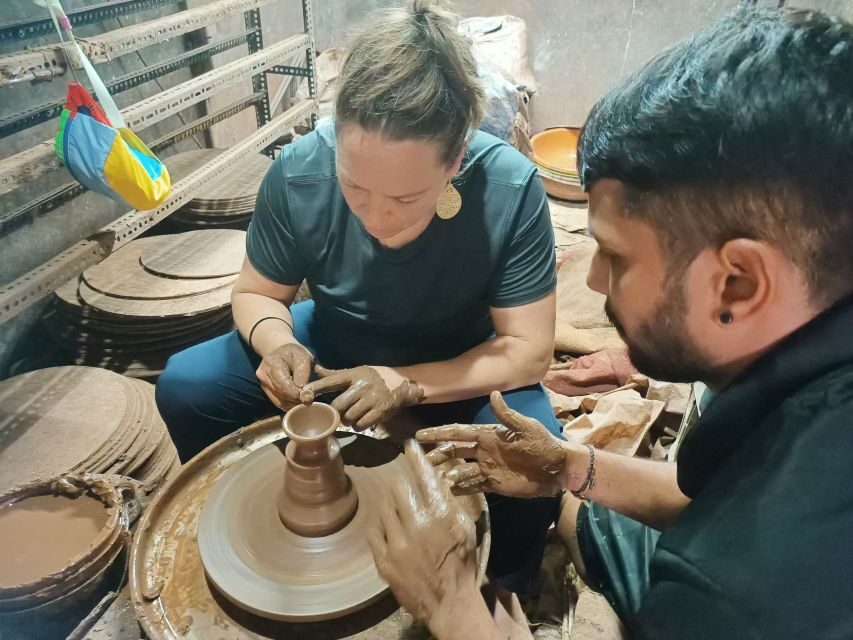
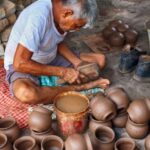
If you choose the pottery-making option, the tour adds hands-on time at a local potter’s workshop. You’ll get a general overview of pottery making, then have a go at throwing on a wheel and making a piece connected to Kumbharwade art.
This is one of the best add-ons because it shifts you from observer to participant. When your hands get involved, you stop treating the tour like a show. You start understanding effort and skill.
A small caution: pottery work can be messy by nature. Wear clothes you’re okay with getting splashed. The tour instructions only specify a scarf and closed-toe shoes, but I’d still recommend dressing for real-world hands-on work.
Vegetarian lunch with a local family: eating like you’re invited in
Another add-on is a vegetarian lunch with a local family. The tour says you can eat on the floor and use your hands, which can be part of the cultural experience rather than just a novelty.
This option is included only depending on what you pick, and food isn’t listed as included for the base tour itself. So if you’re trying to budget carefully, choose the option that matches your plan.
What I like about this lunch format is that it stays grounded. You’re not just tasting food—you’re seeing a table in a home context. And because it’s vegetarian, it fits a lot of diets without you having to scramble for substitutions during the walk.
How guides keep it respectful and safe
The quality of the experience depends heavily on the guide. Multiple named guides show up as standouts: Abhishek, Bharti, Dhruvesh, Rakesh, and Hardik Tank, among others. The common theme is that they explain clearly, answer questions, and handle the visit in a respectful way.
One reason people mention feeling safe is that the guides don’t treat residents as an attraction. They keep the pace controlled. They introduce people rather than using them for content. That’s a big deal in a place where your curiosity can easily become intrusion if nobody guides you.
Some guides also add personal context. For example, Abhishek and Hardik Tank are described as sharing details about their own backgrounds, including showing where they grew up and meeting family. That kind of storytelling turns the tour into something more human and less scripted.
A practical tip: ask questions, but let the guide set the tone for what’s appropriate. You’ll get better answers, and the visit stays respectful.
Price and value: $14 plus water and an optional add-on
At $14 per person, this tour is priced like you can actually do it without guilt. The value comes from what’s included: a guide and water, plus either a vegetarian lunch or a pottery workshop depending on your option.
Even if you skip the add-ons, you’re still paying for the main thing that costs real money in a working neighborhood: a skilled local guide to translate what you’re seeing and keep the walk organized. You’re also paying for time spent navigating the area on foot with context.
If you add lunch or pottery, you’re getting more than an extra activity. You’re getting a deeper entry point into how people live. Lunch gives you a home setting. Pottery gives you a skill and a craft process. Both can turn a one-time walk into a memory with texture.
Who should book this Dharavi walking tour
Book this if you want an honest, practical look at Dharavi that goes beyond images. It works especially well if you like learning how economies function, whether that’s recycling, leather work, dye production, or market life.
It’s also a good match if you want to meet people and ask questions. The guide-led format is built for conversation—especially since English is available.
Skip it if you need a comfortable, low-walking experience or if you feel overwhelmed by poverty realities. The tour is designed to show real life. That can be emotional.
Should you book? My take
If you’re open to seeing Dharavi as a working community with industries, recycling systems, and cultural overlap, this is a strong booking. The $14 price feels fair for what you get, and the guide quality looks consistent based on the named examples and the high overall score.
My final advice: go with curiosity and respect. Wear closed-toe shoes, bring your scarf, and come ready to ask questions. This tour earns its place because it doesn’t just show Dharavi. It explains how the place works.
FAQ
Where is the tour meeting point?
The tour starts at Third Wave Coffee.
Does the tour end at the same place it starts?
Yes, the tour ends back at the meeting point.
What is included in the tour price?
The tour includes the slum tour, a guide, and water. Vegetarian lunch and the pottery workshop are included only if you choose those options.
Is lunch included?
Vegetarian lunch is included depending on the option you select. If you don’t choose that option, food is not included.
Is pottery included?
Pottery making is included depending on the option you select. It involves a visit to a local potter’s workshop, plus hands-on wheel work.
What language is the tour offered in?
The tour is offered in English.
What should I bring?
Bring a scarf and closed-toe shoes.
What is the price and cancellation window?
The price is $14 per person. You can cancel up to 24 hours in advance for a full refund. You can also reserve and pay later by booking without paying today.