REVIEW · AMER INDIA
From New Delhi: Jaipur Guided City Tour with Hotel Pickup
Book on GetYourGuide →Operated by Tripology · Bookable on GetYourGuide
Jaipur in one long day sounds wild. This private tour is built for speed without feeling rushed, with hotel pickup from New Delhi and a guided hit-list of sights like Amber Fort and Jantar Mantar that you can’t really understand from photos alone.
Two things I like a lot: the chance to see Jaipur’s main monuments with a local guide who puts the pieces together, and the skip-the-line style entry via a separate entrance at key stops. You also get Jal Mahal views from the outside and the famous pink-stone vibe that makes Jaipur feel like a film set in real life.
The trade-off is the pace: it’s a 15-hour day with moderate walking, lots of site security checks, and early departure to beat crowds and heat. If you’re sensitive to long days, plan for a slower next day in Jaipur or back in Delhi.
In This Review
- Key Highlights Worth Knowing
- The Big Icons of Jaipur, Done as a Guided Day Trip
- Pickup From New Delhi: Why the Early Start Matters
- Amber Fort: Rajputana Grandeur on a Hill
- Jal Mahal From Outside and Panna Meena Ka Kund Step Wells
- City Palace: A Royal Home With Multiple Styles
- Jantar Mantar: UNESCO Math That You Can Actually See
- Hawa Mahal: 900+ Windows and the Best Way to Enjoy It
- Lunch in Jaipur: Where Food Stops Add Real Value
- Skip-the-Line and Guided Entry: Small Detail, Big Time Saver
- Guides and Drivers: The Human Touch Behind the Sights
- Price and Value: What $16 Really Buys You
- Who Should Book This Tour (and Who Should Skip It)
- Practical Tips to Make the Day Feel Easier
- Should You Book This New Delhi to Jaipur Guided Day Trip?
- FAQ
- How long is the Jaipur guided city tour from New Delhi?
- Is hotel pickup and drop-off included?
- What major sights will I visit?
- Is the tour private?
- Are entry fees included?
- Are meals included?
- What languages are available for the guide?
- Do I need to bring an ID?
- Are there rules about photography or smoking?
Key Highlights Worth Knowing
- Amber Fort in the early hours with guided context for Rajputana and Hindu architecture
- Jantar Mantar’s UNESCO observatory explained in plain language so the instruments make sense
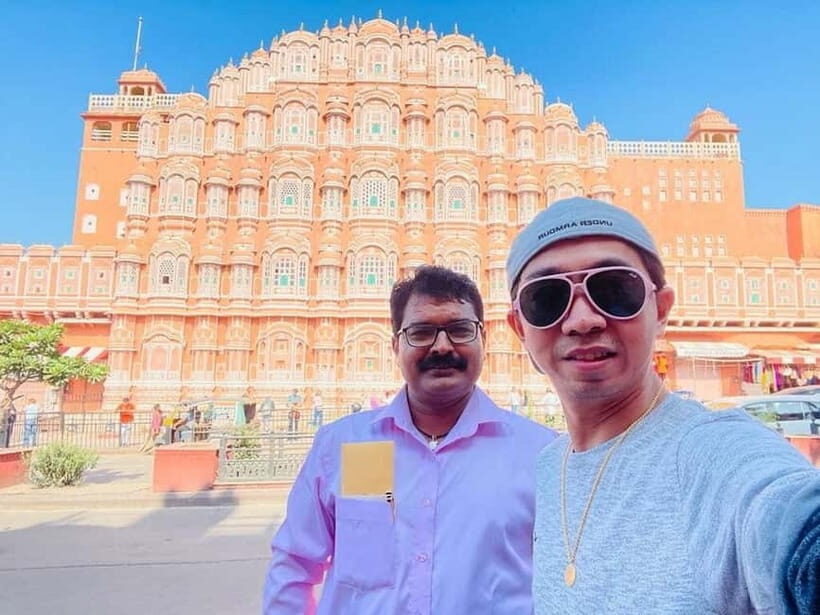
- Hawa Mahal’s 900+ latticed windows with a practical plan for photos and views
- Jal Mahal from outside (entry isn’t allowed) plus nearby stairways at Panna Meena Ka Kund
- Private car + live guide with language options (English, Spanish, French, German)
The Big Icons of Jaipur, Done as a Guided Day Trip
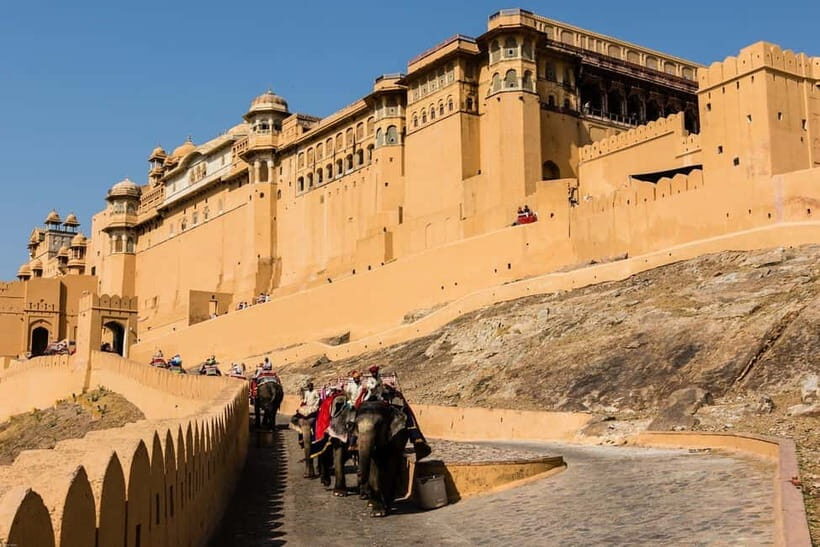
The most useful thing about this tour is not that it lists famous places. It’s that you get a guide to connect them—what each landmark was for, how the city was planned, and why Jaipur looks the way it does today.
You’ll start with Amber (Amer) Fort, then work through Jantar Mantar and City Palace, finishing with Hawa Mahal for the classic Pink City photo moment. Along the way, you’ll also see Jal Mahal from outside and visit the Panna Meena Ka Kund stairways. In other words, you’re covering royal life, engineering genius, and Jaipur’s signature look in one day.
This is also the kind of trip where your camera matters. Even with restrictions in certain areas, there’s still plenty of “stop-the-car, get-the-shot” scenery.
You can also read our reviews of more guided tours in Amer India


Pickup From New Delhi: Why the Early Start Matters
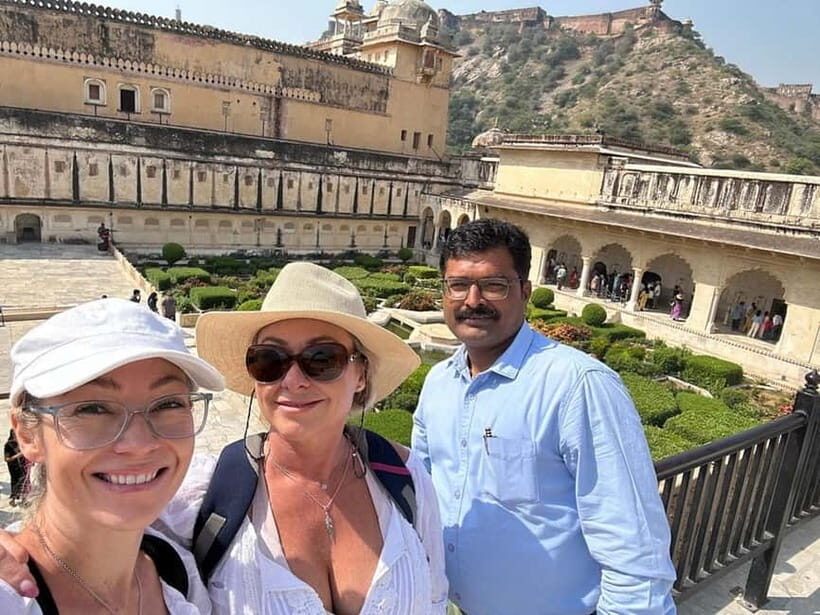
This tour leaves New Delhi before dawn. That detail is not fluff—it’s the difference between Jaipur looking like a quiet museum and Jaipur looking like a human parking lot.
A private car means you’re not waiting around for strangers to trickle in, and you’re not stuck with awkward timing. The early departure helps you:
- reach popular sites before the heaviest crowd surge
- get better light for photos at Amber Fort and Hawa Mahal
- reduce the heat stress, since you’ll still be walking moderately through courtyard and fort terrain
One practical tip: if you’re the type who gets cranky when you’re cold at 5 a.m., pack layers. Rajasthan mornings can feel cooler than you expect.
Amber Fort: Rajputana Grandeur on a Hill
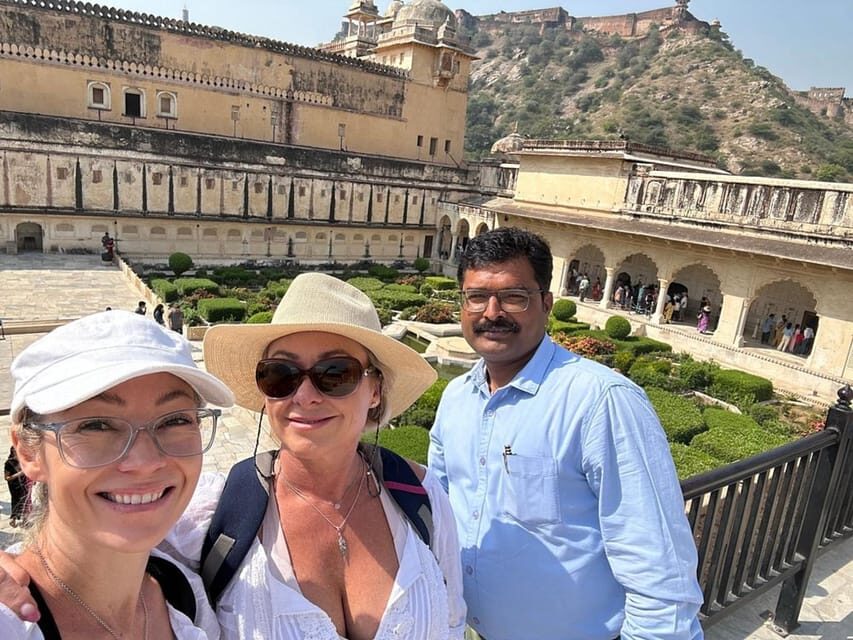
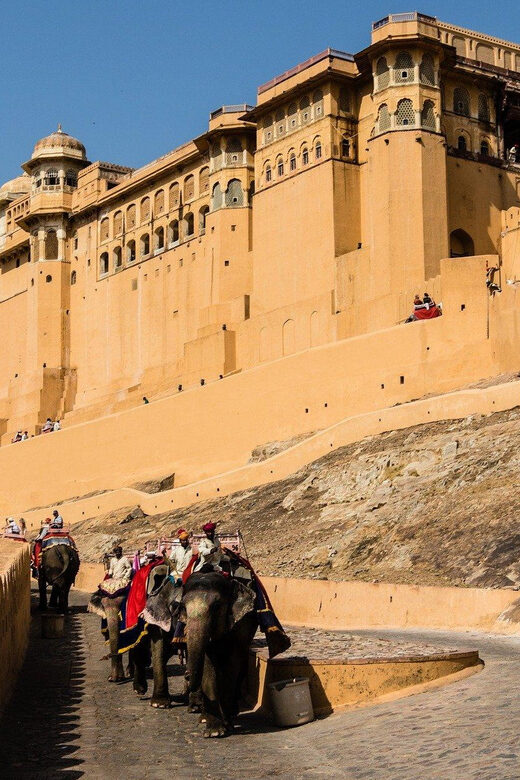
Your day begins at Amber Fort, where the architecture is the main event. The fort sits on a hill and blends Hindu and Rajputana design in a way that feels both ceremonial and functional—like power made into stone geometry.
What you’ll likely notice once you’re there:
- the layout guides your movement, not just your eye
- the fort’s interiors and courtyards have a “public to private” flow
- the structures are designed for more than looks; climate and defense mattered
A quick reality check: the site involves a moderate amount of walking. Comfortable shoes are not optional here. If you have back issues, this is one of the first places that will test you.
Also, you should expect security checks at the entrance. Carry a valid photo ID, since it’s required for monument entry.
Jal Mahal From Outside and Panna Meena Ka Kund Step Wells
Next comes one of those Jaipur “you’ll recognize it instantly” moments: Jal Mahal. You’ll see it from the outside because entry is prohibited, but it still works as a viewpoint stop—especially if the light is right and you can get the water-and-palace contrast in your photos.
After that, you’ll visit Panna Meena Ka Kund, the famous stepped wells/stairways area. This isn’t about royal pageantry like Amber Fort. It’s about infrastructure—how people managed water and access in a city where resources matter.
Here’s the thing I like about adding this stop: it breaks the day’s rhythm. After forts and palaces, the wells remind you Jaipur was built for survival as much as spectacle.
City Palace: A Royal Home With Multiple Styles
City Palace is where Jaipur starts to feel like an actual collection of eras, not a single “one time period” story. The residence reflects multiple architectural influences, including Shilpashastra, Mughal, European, and Rajput elements.
For your visit, focus on how styles layer together:
- Rajput design communicates status and authority
- Mughal influences bring symmetry and refined detailing
- European touches show how tastes shifted over time
City Palace isn’t only about walking through pretty rooms. It’s about understanding how royalty adapted, negotiated power, and kept control through changing political winds.
If you want to make this stop more meaningful, ask your guide to point out examples of different style influences while you’re inside—this is exactly the kind of thing a good guide should connect for you on the spot.
You can also read our reviews of more city tours in Amer India



Jantar Mantar: UNESCO Math That You Can Actually See
Jantar Mantar is a UNESCO World Heritage observatory, and it’s often misunderstood because people approach it like a pile of stone sculptures. With a guide, it clicks: these are instruments meant for measuring the world—time, angles, and more—using the landscape and geometry.
What makes it memorable is how visual it is. You’re not reading about math. You’re standing next to the tools and hearing what they were designed to do.
If you’re even slightly curious about how old science worked, this stop can feel oddly satisfying—like solving a puzzle with the pieces in front of you.
Security checks are common at major sites, and photography can be restricted in certain areas. Follow your guide’s instructions so you don’t lose time to rules you could’ve avoided.
Hawa Mahal: 900+ Windows and the Best Way to Enjoy It
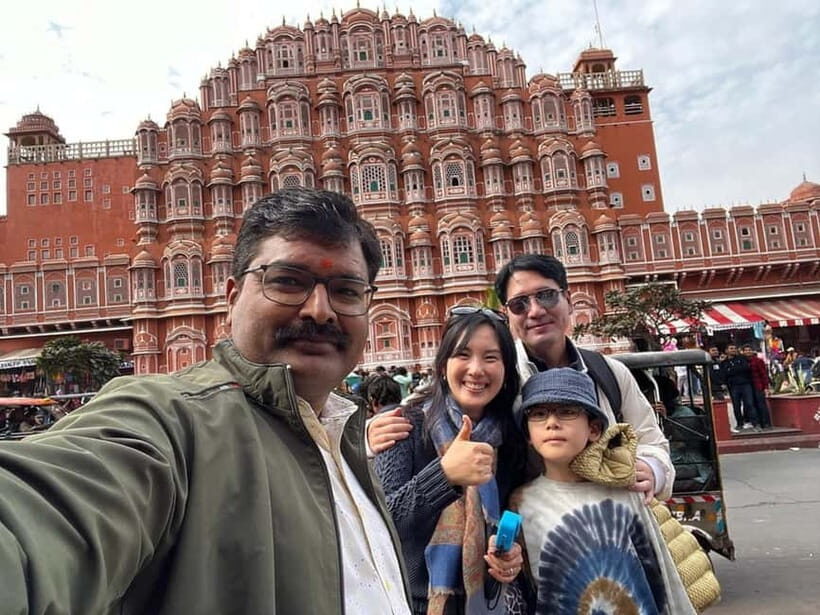
Hawa Mahal is Jaipur’s signature red-and-pink sandstone facade, famous for its 900+ latticed windows that let in cooler breezes. It’s the most iconic skyline image of the day, and it works even if you only have a limited amount of time there.
The smartest way to enjoy Hawa Mahal is to think like a photographer for five minutes:
- plan one wide shot for the facade
- then move for tighter angles and window patterns
- avoid rushing, because the best views often come from side angles
It’s also a good moment to cool down, drink some water, and let your brain re-load after walking and standing at previous stops.
Lunch in Jaipur: Where Food Stops Add Real Value
You’ll have lunch at a traditional restaurant. This part matters more than it sounds, because it keeps you from falling into the tourist trap of grabbing random food between monuments.
The menu options you might try include dishes like Lal Maas, Ker Sangriya, Besan Gatta, Missi Roti, Junglee Murgh, and Lassi. Even if you only sample one or two things, it’s a chance to taste what Rajasthan does when it’s not performing for photos.
Practical advice: go easy on spice if you’re not sure how you’ll handle it after a long day. You’ll have enough adventure with fort steps.
Skip-the-Line and Guided Entry: Small Detail, Big Time Saver
One of the quieter reasons this tour feels good is the attention to entry flow. You get skip-the-line access via a separate entrance at certain monuments. When you’re doing multiple major sites in one day, that time saving adds up fast.
It also reduces the stress factor. Nobody wants to spend a chunk of the morning stuck in a queue while your driver is counting minutes.
Your guide is also there to keep the day moving intelligently—where to stand, when to look up, and how to avoid confusion with restricted areas and photo limits.
Guides and Drivers: The Human Touch Behind the Sights
This tour is built around a live local guide in multiple languages—English, Spanish, French, and German—and the guide can make a huge difference when you’re juggling big names like Amber Fort, City Palace, and Jantar Mantar.
From past visits, guides such as Vipin, Vikram, and Vishnu Kumar Sharma have been part of the experience, and the driving team can include drivers like Himmat. The consistent theme: clear communication, strong command of the history and details, and help with photos.
A good sign you’re in the right hands is when the guide doesn’t just recite facts. They point out what to notice, and they help you frame the monuments so the experience feels complete.
Price and Value: What $16 Really Buys You
The listed price starts around $16 per person, which is unusually good for a 15-hour day trip that includes hotel pickup and drop-off, an air-conditioned vehicle, a guide, and bottled water.
Here’s how I’d judge value:
- You’re paying for long-distance coordination (Delhi to Jaipur and back) plus a guide to interpret major monuments.
- You’re also paying for time saved through guided entry flow, rather than spending your own energy figuring out logistics.
- Entry fees are included only if you select that option, so you should check what you’re covering upfront.
Meals are not included, which makes sense for price. Lunch is still part of the day, but you’ll want to budget extra if the tour doesn’t include it in your option.
Bottom line: this is strong value if you want the big sights handled for you, and you’re comfortable with a full-day schedule.
Who Should Book This Tour (and Who Should Skip It)
This tour is a great fit if:
- you want a guided Jaipur highlights circuit without building a plan from scratch
- you like learning context while seeing the main monuments
- you’re okay with moderate walking and an early start
It’s not a good fit if:
- you’re pregnant
- you have back problems
- you use a wheelchair
Also, expect security checks and follow photography rules in restricted areas.
Practical Tips to Make the Day Feel Easier
Bring what keeps you comfortable from dawn to dusk:
- comfortable shoes
- hat
- camera
- sunscreen
- water (bottled water is provided, but you’ll still want personal comfort)
And keep your expectations grounded. Some sights are designed to be viewed from specific angles, and entry may not be allowed for every structure (Jal Mahal is one example). When you plan for that, the day feels smoother.
Should You Book This New Delhi to Jaipur Guided Day Trip?
If your goal is to see Jaipur’s biggest landmarks—Amber Fort, City Palace, Jantar Mantar, and Hawa Mahal—with a guide and private pickup, I’d say yes. The value is hard to ignore, especially for a full 15-hour day that’s structured to beat crowds and make monuments make sense.
Skip it only if long days and walking feel tough for you, or if you prefer a slow, stay-a-while style of travel. This is a “see the icons, learn fast, move on” kind of trip.
If you’re ready for that rhythm, you’ll leave Jaipur with a clear mental map of why the Pink City looks and works the way it does.
FAQ
How long is the Jaipur guided city tour from New Delhi?
The duration is 15 hours.
Is hotel pickup and drop-off included?
Yes. Hotel pickup and drop-off are included.
What major sights will I visit?
You’ll visit Amber Fort, City Palace, Jantar Mantar, and Hawa Mahal. You’ll also see Jal Mahal from outside and visit the Panna Meena Ka Kund step wells.
Is the tour private?
Yes. It’s a private group.
Are entry fees included?
Entry fees are included if you select the option that includes entry fees.
Are meals included?
Meals are not included. The tour includes a lunch stop at a traditional restaurant, but the listing states meals are not included.
What languages are available for the guide?
The live guide is available in English, Spanish, French, and German.
Do I need to bring an ID?
Yes. You should carry a valid photo ID for entrance to the monuments.
Are there rules about photography or smoking?
Smoking is not allowed. Photography is restricted in certain areas, so follow your guide’s instructions.