REVIEW · MUMBAI
Mumbai By Dawn Morning Markets & The World’s Largest Laundry
Book on Viator →Operated by Explore Mumbai Tours · Bookable on Viator
Mumbai wakes up loud and fragrant. This morning tour trades monuments for the city’s workday chaos: fish auctions at Sassoon Dock, Mumbai’s famous open-air laundry at Dhobi Ghat, and the color-and-scent rhythm of Dadar’s flower and fruit markets, all with an English guide and an AC ride.
I especially like the way guides such as Yash and Abhi explain what you are seeing, connecting the sights to how Mumbai keeps goods moving, from newspaper distribution to milk delivery routines. I also like the photo-friendly timing and pace, because you get short, focused windows at each stop rather than rushing through everything.
One practical consideration: you will spend time standing in and around working markets early in the morning, so comfy shoes help and you should expect crowds.
In This Review
- Key things I’d plan around
- Why Mumbai at dawn feels different than the afternoon
- Sassoon Dock: seafood trading with real urgency
- Dhobi Ghat: the open-air laundry system at full scale
- Dadar Flower Market (Phool Gully): color and scent before the rush
- Dadar Fruit and Vegetable Market: food supply chains at street level
- The AC ride, pickup-start, and drop-off at Prabhadevi
- Value and price: is $20.40 really worth it?
- Guides like Yash and Abhi, and drivers who help you get the shot
- Etiquette tips for working markets (so the morning stays pleasant)
- Who this tour is best for
- Should you book the Mumbai by Dawn markets tour?
- FAQ
- How long is the Mumbai by Dawn Morning Markets tour?
- What stops are included in the tour?
- Is pickup offered, and where does the tour start?
- Is there any admission fee for the market stops?
- What is included with the tour price?
- Is the tour private or shared?
- Is the tour near public transportation?
- What is the cancellation policy?
Key things I’d plan around
- Early morning access: You see the city before the day crowd arrives, which makes the sights feel less staged.
- Sassoon Dock fish action: Old-school trading of fresh catches, fast and noisy in a very real way.
- Dhobi Ghat laundry scale: Hundreds of dhobis working in open air, turning everyday tasks into a spectacle of logistics.
- Dadar Flower Market Phool Gully: Fragrance and color that hit all your senses at once.
- Dadar fruit and veg near Dadar Station: A close look at how daily food supply chains look at street level.
- Private AC comfort: Pickup offered, water included, and you get an English-speaking guide for the group.
Why Mumbai at dawn feels different than the afternoon
If you have only seen Mumbai in daylight, you have missed the city’s engine room. Morning markets move on a different clock, when the streets are still deciding what kind of busy they will be today. That change in rhythm is a big part of the tour’s appeal.
This is also a smart choice if you like street photography and real-world culture. The focus is not monuments or ticketed museums. It is working spaces where people do their jobs, negotiate, sort, and deliver—plus a look at the behind-the-scenes routes that feed millions, including routines around newspapers and milk distribution.
A private format helps too. Since it is only your group, you can ask questions, slow down for photos, or step out for a quick breather without holding up strangers.
A few more Mumbai tours and experiences worth a look



Sassoon Dock: seafood trading with real urgency
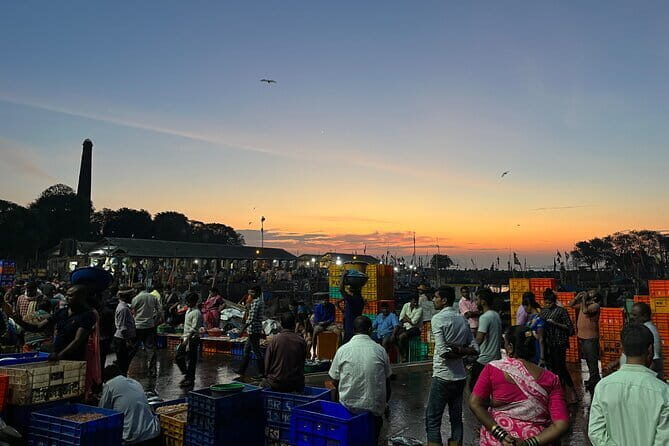
Sassoon Dock is one of the oldest and busiest fish markets in Mumbai, and it shows. Expect a loud, organized chaos: fishermen and traders handling fresh catches, sorting and exchanging them as the day starts to heat up. Even if you are not a seafood person, you can learn a lot just watching how quickly decisions get made.
What I like here is how direct the experience is. There is no special storyline needed. You stand close to the action and see the supply chain in motion. You also get a short window—about 30 minutes—so you can take in the main sights without feeling like you are stuck in one spot too long.
How to make the most of it:
- Keep your camera ready, because moments can change fast.
- Be respectful with space. People are working, not performing.
- Don’t expect a calm, museum-like flow. The market is meant to be active.
A drawback to consider: if you are sensitive to strong smells or tight standing areas, this stop can feel intense. It is still worth it if you go in expecting a working market, not a sightseeing set.
Dhobi Ghat: the open-air laundry system at full scale
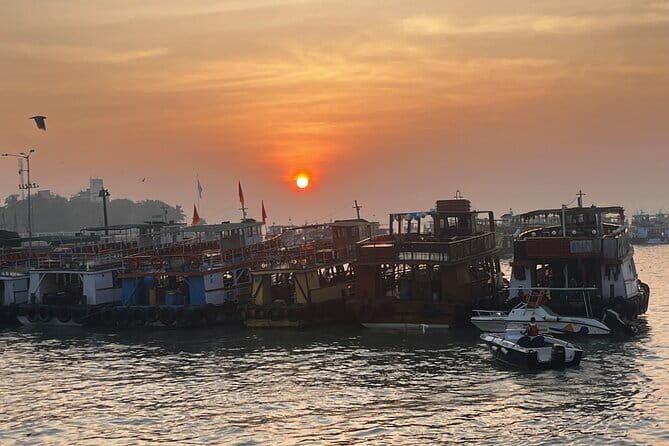
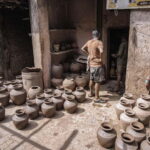
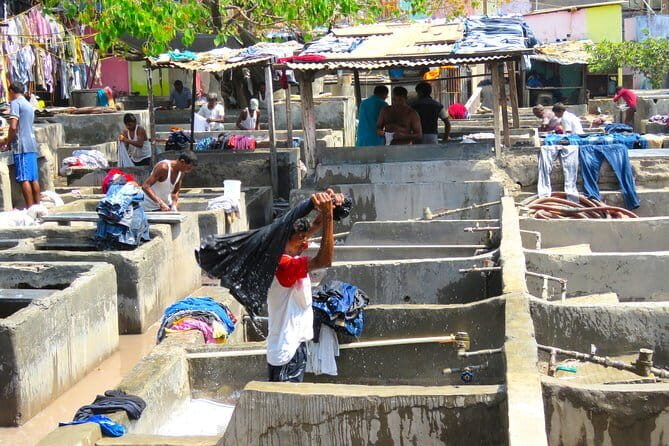
Dhobi Ghat is the highlight for anyone who likes process, not just scenery. This open-air laundromat relies on hundreds of dhobis who wash, dry, and iron clothing for residents and businesses. What looks like a simple chore becomes a full logistics operation when you see it at this scale.
The tour gives you around another 30 minutes here, which is perfect for observing how laundry moves through stages—sorting, washing, drying, and pressing. You will notice how much is done manually, and how much coordination is required just to keep the flow moving.
What to watch (and photograph) without getting in the way:
- The work pattern: people handling different tasks side by side.
- The materials and tools used for washing and drying.
- How clothing is handled as it moves from one stage to the next.
Practical note: this is an outdoor environment, so plan for morning air and whatever the weather is doing. Bring light layers if it feels cool at dawn, and do not wear anything precious. Laundry districts are not gentle on fabric.
Dadar Flower Market (Phool Gully): color and scent before the rush
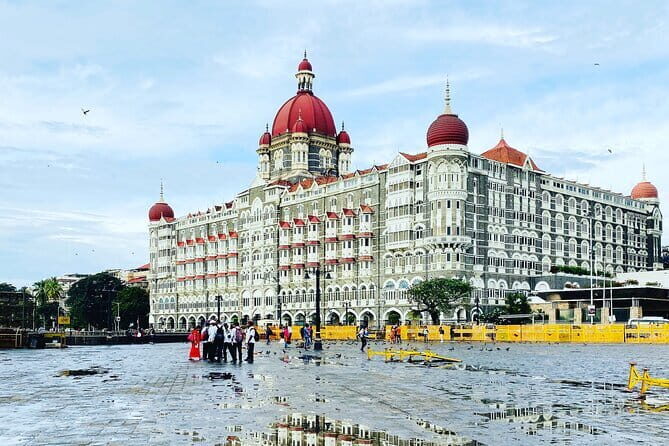
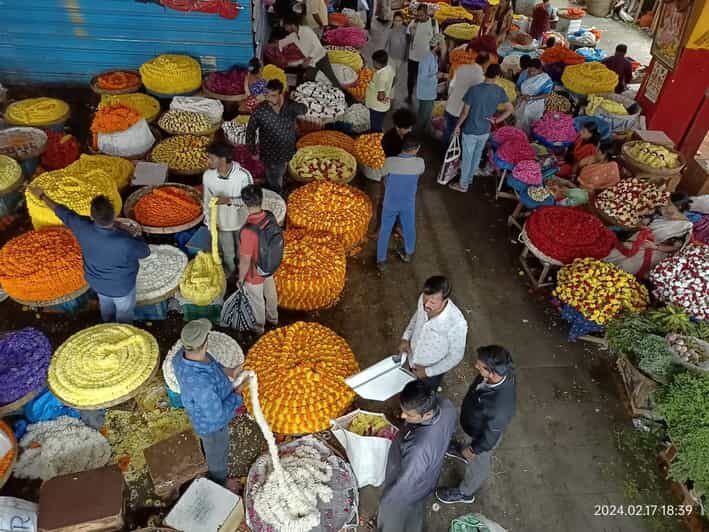
Then you pivot from seafood and laundry into pure sensory overload—flowers. The Dadar Flower Market in the Dadar area, also known as Phool Gully, is where fragrance and color take over the senses. It is a place built for early trade, when florists need fresh supply and the morning buyers are lining up.
The tour time here is also about 30 minutes. That is enough to capture the main angles and still chat with your guide about what you are seeing. I like that this stop is not just a visual moment. If you ask, you can connect the market to how Mumbai’s neighborhoods meet daily needs, from decoration to religious and social use.
What makes it especially good for photographers:
- Strong color contrasts with natural light.
- A layered scene: stalls, vendors, and customers all in one frame.
- The chance to focus on details, like wrapping, arranging, and stems waiting for sale.
A consideration: flowers look easy, but the market can be busy and narrow in places. Keep your pace steady, avoid blocking someone who is actively selling, and take your photos with patience. Dawn markets reward calm behavior.
Dadar Fruit and Vegetable Market: food supply chains at street level
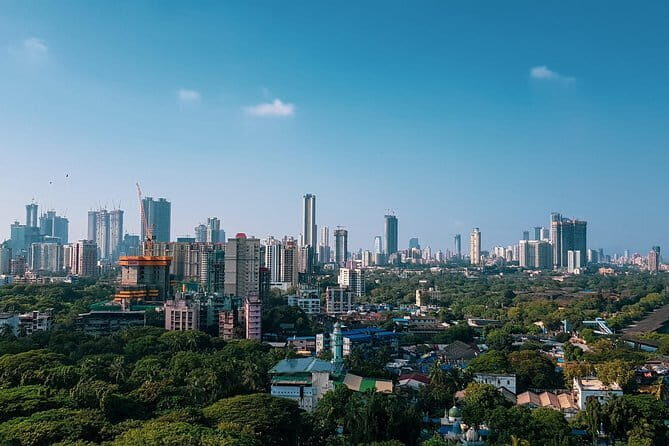
After flowers, the tour heads to the Dadar Fruit and Vegetable Market near Dadar Station over bridge. This is where you can feel the city’s daily food rhythm in a very direct way. Produce is sorted, priced, and moved quickly, and it is easy to see how big the local consumption really is.
You get about 30 minutes here too, which works well because you are not trying to shop or tour a supermarket. You are observing the real supply network. If you like culture that feels practical instead of staged, this is your kind of stop.
What to focus on:
- How vendors organize goods and manage transactions.
- The variety of produce visible in one area.
- The way people move around the market compared to calmer street scenes.
Potential drawback: markets can be slippery and crowded. Wear shoes with grip. If you are carrying a camera bag, keep it close and secure, since this is a busy public space.




The AC ride, pickup-start, and drop-off at Prabhadevi

One quiet luxury here is the private AC vehicle. It matters because dawn in Mumbai can swing from cool to warm quickly, and the transfers between stops are part of the experience. The air-conditioned ride gives you a reset, which helps if you want to photograph without arriving completely sweaty and fried.
Pickup is offered, and the tour starts at PizzaExpress, Dhanraj Mahal, Chhatrapati Shivaji Maharaj Marg, Apollo Bandar, Colaba. You finish at Prabhadevi, Balaseth Madhukar Marg, Krishna Nagar, Parel. So you are not doing a round trip that dumps you back at the first corner.
I like that the end point is in a known area. After 3 hours (approx.), you still have energy to continue exploring or grab breakfast nearby. Still, do plan your day with that drop-off in mind, because this tour is designed to run like a morning job, not a full-day circuit.
You also get a mobile ticket and group discounts, plus bottled water and all fees and taxes. That reduces the usual early-tour stress of figuring out small costs on the spot.
Value and price: is $20.40 really worth it?
At $20.40 per person for about 3 hours, this tour is priced like a budget-friendly, high-impact morning. You are not paying for entry tickets—admission is free for the market stops. What you are paying for is:
- local navigation through working areas,
- an in-person English guide,
- and the AC vehicle that connects multiple neighborhoods efficiently.
For many travelers, the guide value is the deciding factor. Markets make sense faster when you have someone explaining how the system works and what to pay attention to. Guides such as Yash and Abhi are described as adjusting pace and sharing in-depth context, including where to look for the behind-the-scenes logistics like newspaper distribution routines.
Is it a perfect value for everyone? If you expect quiet sightseeing or big landmark photo ops, you may not feel wowed. But if you want the real Mumbai that runs the city’s day-to-day engine, the price-to-time ratio is strong.
Guides like Yash and Abhi, and drivers who help you get the shot
The reviews that match this experience tend to reward two things: good explanation and smooth, considerate logistics.
For example, Yash is described as very passionate and professional, with in-depth knowledge and a habit of going above expected information. He also comes across as someone who lets you set the pace—important when markets are fast and your attention may pull you in different directions.
Abhi is described as informative and obliging, which matters for first-time visitors. If Mumbai is overwhelming, a guide who can translate what you are seeing into clear, usable context makes the morning feel easier.
And don’t underestimate the driver. Deepak is described as driving cautiously and safely, and also being tuned into photography timing—positioning the car so you can grab good angles without making the whole group scramble. That kind of attention makes a short tour feel longer and smoother.
Etiquette tips for working markets (so the morning stays pleasant)
Working markets can be intense. You do not have to be stiff, but you should be mindful. A few habits will make the experience better for you and fairer for the people doing their jobs:
- Ask before photographing close-up. If it feels awkward, back off and shoot wider.
- Keep your group tight. Dropping behind can slow everything down.
- Move with purpose. Stopping suddenly in the flow usually creates friction.
- Use your guide. They can tell you where it is easier to stand and where it is best to pass through.
If you are traveling for photography, consider bringing a strap you trust and a lens that can handle both close detail (flowers, tools, produce) and wider street scenes.
Who this tour is best for
This is a great fit if you:
- want Mumbai beyond monuments,
- care about how cities function day to day,
- and like early morning photography with a human angle.
It also fits solo travelers who want a private group experience, couples who want focused time without crowds of strangers around them, and small groups who prefer a structured plan with room to breathe.
If you have mobility limitations, the tour description only says most travelers can participate and that it is near public transportation. You should plan for standing and walking in market areas where surfaces can be uneven.
Should you book the Mumbai by Dawn markets tour?
I would book it if you want a morning that feels specific to Mumbai, not interchangeable. You get a concentrated set of stops that show three very different systems—seafood trading, open-air laundry logistics, and neighborhood food and flower supply—wrapped in an AC ride and an English-speaking guide.
Skip it if you are looking for calm, landmark-heavy sightseeing or if you hate outdoor working environments. The tour is built for people who enjoy real street life and can handle a bit of sensory intensity.
If you do book, go in with the right mindset: you are watching people do their work. When you do that, the morning becomes more than a photo session. It becomes an instant education on how Maximum City keeps moving.
FAQ
How long is the Mumbai by Dawn Morning Markets tour?
It lasts about 3 hours.
What stops are included in the tour?
You will visit Sassoon Dock, Dhobi Ghat, Dadar Flower Market (Phool Gully), and Dadar Fruit and Vegetable Market.
Is pickup offered, and where does the tour start?
Pickup is offered. The listed start point is PizzaExpress, Dhanraj Mahal, Chhatrapati Shivaji Maharaj Marg, Apollo Bandar, Colaba.
Is there any admission fee for the market stops?
The stops listed show admission ticket free, and the tour includes all fees and taxes.
What is included with the tour price?
The tour includes bottled water, all fees and taxes, and an in-person English guide.
Is the tour private or shared?
It is private, so only your group participates.
Is the tour near public transportation?
Yes, it is near public transportation.
What is the cancellation policy?
Free cancellation is available up to 24 hours in advance for a full refund. If you cancel less than 24 hours before the start time, the amount paid is not refunded.