REVIEW · MUMBAI
Mumbai: A Symphony of Seven Islands – Get Local in One Day
Book on GetYourGuide →Operated by Get Local · Bookable on GetYourGuide
Mumbai becomes a one-day time machine.
This tour turns the city into a story with four scenes and a guide who keeps you moving like a local. I like that it blends street-level stops with big-picture history, so the sights feel connected instead of random. You also get a real mix of transport, which makes you earn the day rather than just watching it pass.
My favorite part is the food-and-places combo: vada pav and pav bhaji are included, not an afterthought. A possible drawback: you’ll do a lot of walking and local rides, so it’s not ideal if you need wheelchair access or long seated breaks.
In This Review
- Key highlights I’d circle on your map
- A one-day script that actually makes sense
- Scene 1: Imperial Bombay from Gateway of India to CST
- Scene 2: Bom Bahia and the Indo-Latin lanes near the docks
- Scene 3: Black Town’s Chor Bazaar and the pulse of commerce
- Scene 4: Dhobi Ghat, Shivaji Park, and the Arabian Sea sunset walk
- Price and what you’re actually paying for at about $34
- Moving like a local: how the transport mix helps you see more
- The guide factor: Shrijit and the storytelling tone
- Who should book this, and who should skip it
- Quick planning checklist before you set out
- Should you book the Symphony of Seven Islands?
- FAQ
- How long is the tour?
- What’s the meeting and language for the tour?
- What food is included?
- Is dessert included?
- What transport will I use during the day?
- Do I need cash?
- Is the tour wheelchair accessible?
- Can I cancel and get a refund?
Key highlights I’d circle on your map
- Four storytelling scenes that follow Mumbai’s evolution from islands to metropolis
- Multiple local transport modes (bus, train, cab, auto) so you move like a Mumbaikar
- Iconic set pieces plus side streets in Colaba, Indo-Latin lanes near the docks, and Black Town markets
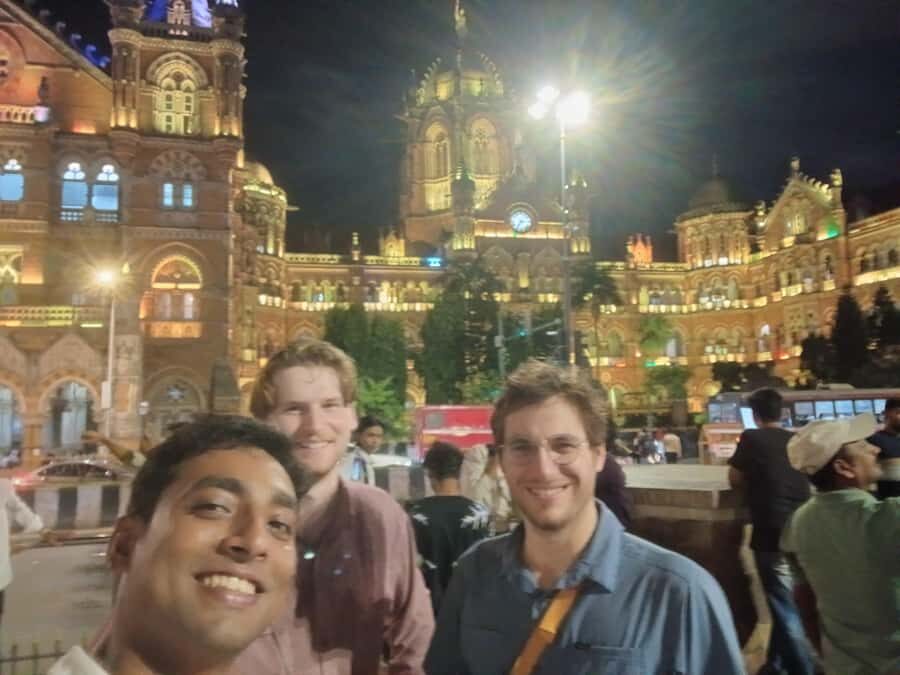
- UNESCO-listed CST Station with a practical food stop at the end of Scene 1
- Proper street-food meals included: vada pav and pav bhaji
- Dhobi Ghat to Shivaji Park to the Arabian Sea for a satisfying full-circle ending
A one-day script that actually makes sense
Mumbai can feel like too many places at once. This tour answers that problem by using a storyline called A Symphony of Seven Islands, with your guide acting like the narrator. Instead of bouncing between landmarks, you follow the city’s journey in steps, like a movie you can walk through.
You’ll appreciate the pacing because each scene adds a new layer. One moment you’re in imperial-era Colaba lanes, and the next you’re on public transport headed toward Portuguese-influenced backstreets or Black Town’s old markets. The day stays grounded in what’s around you, not just what a guidebook says.
A few more Mumbai tours and experiences worth a look


Scene 1: Imperial Bombay from Gateway of India to CST
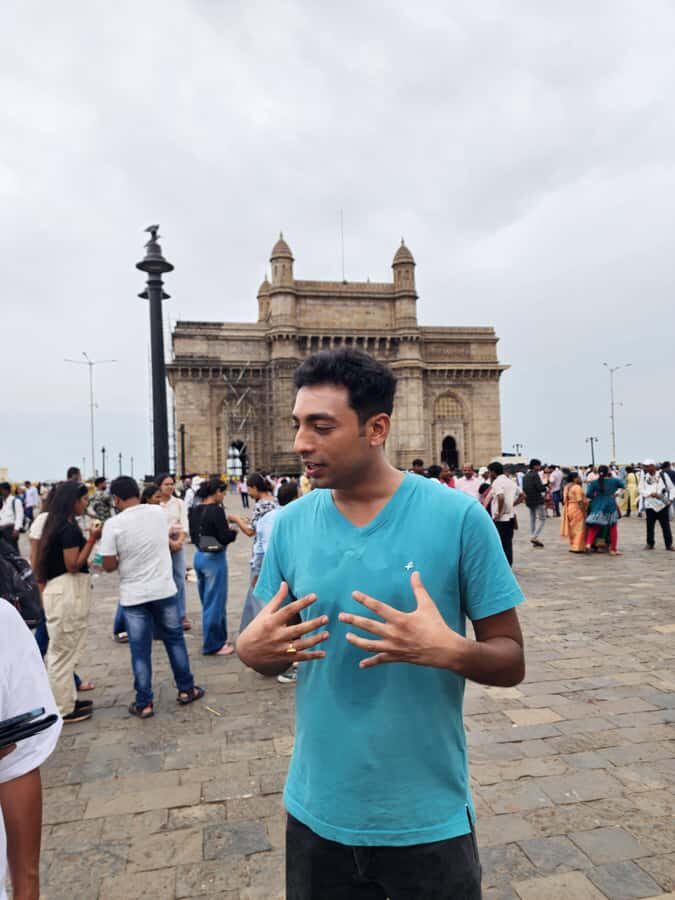
Your day begins where Mumbai’s modern story is tied to arrivals: the Gateway of India. From there, you’ll walk through Colaba, taking in lanes, markets, and the sense that this is a working neighborhood, not a museum.
You’ll also stop at St. Thomas Church, described as Mumbai’s oldest Anglican church. Then the route keeps widening out through central landmarks like the Bombay Stock Exchange area, Flora Fountain, Bombay University, and the High Court—places you’ve probably heard of, but here you’ll see them as part of a living street grid.
Next comes the shift to coastal views at Marine Drive. The architecture in this stretch is where Mumbai’s timeline becomes visible, from older forms to the city’s later growth patterns. It’s a good moment to slow down, because the day’s travel energy ramps up again right after.
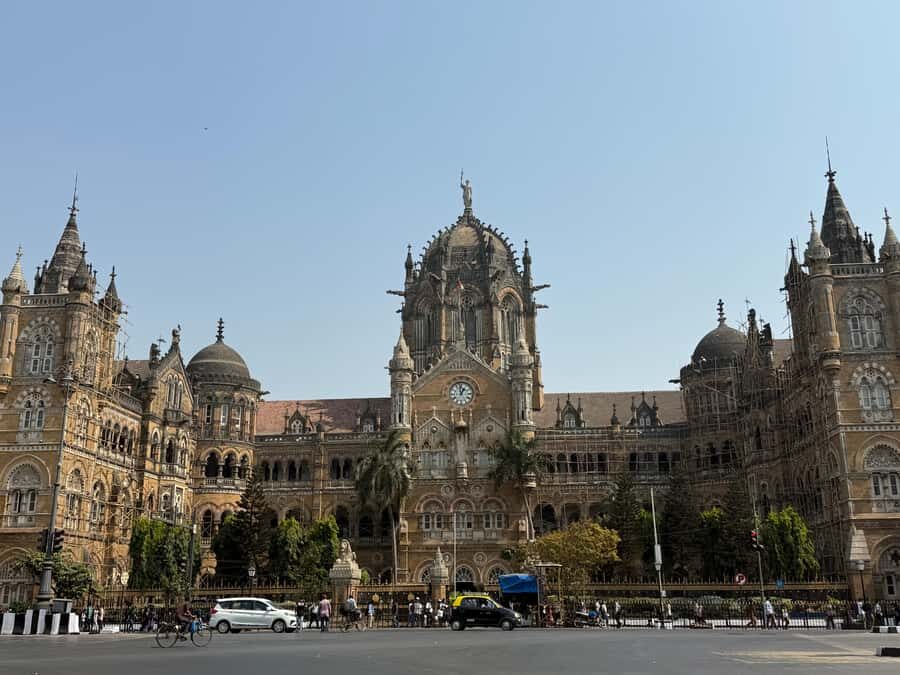
Then you hop on a local bus toward CST Station (Chhatrapati Shivaji Maharaj Terminus), a UNESCO World Heritage Site. You’re pairing a major sight with a practical “how locals eat” payoff: you’ll get to savour Mumbai’s iconic pav bhaji. For many people, this is the first real anchor meal of the day, and it helps you stay fueled for the next transitions.
What to watch for: this portion mixes long walks with street-crossing and crowd flow around landmarks. If you’re sensitive to noise or you hate sudden pedestrian bottlenecks, wear shoes you trust and keep a steady pace.
Scene 2: Bom Bahia and the Indo-Latin lanes near the docks
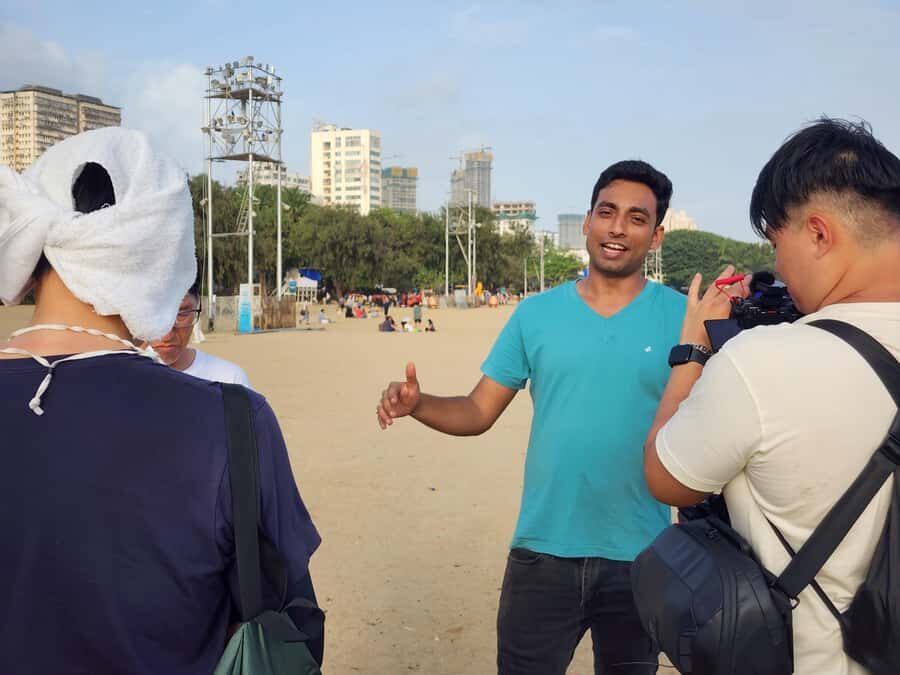
From CST, the tour shifts into time-travel mode with a train ride across the city. The point here isn’t speed. It’s the feeling of moving from one chapter to the next, with the city’s past still visible even when skyscrapers appear close by.
You’ll reach Bom Bahia, a quieter Indo-Latin quarter tucked among modern high-rises. The story frames this as a Portuguese-influenced area, with narrow lanes and older homes—around 200 years old, with sloping roofs and arched windows. Even if you’re not trying to do deep architecture study, it’s one of those places where the streets themselves tell you something.
There’s also a hilltop garden viewpoint with sweeping looks over the docks area. This is valuable because it gives context for why Mumbai mattered to global trade: ships brought goods and ideas, and the harbor shaped the city’s identity early on.
Why this scene matters for value: you’re getting a less typical Mumbai stop without giving up the big-city setting. Many one-day tours stay glued to the famous waterfront and forget that older neighborhoods can still be alive beside new development.
A practical consideration: train rides are part of the experience, but the day still depends on walking through tight lanes. Comfortable clothes and good grip shoes make the biggest difference here.
Scene 3: Black Town’s Chor Bazaar and the pulse of commerce
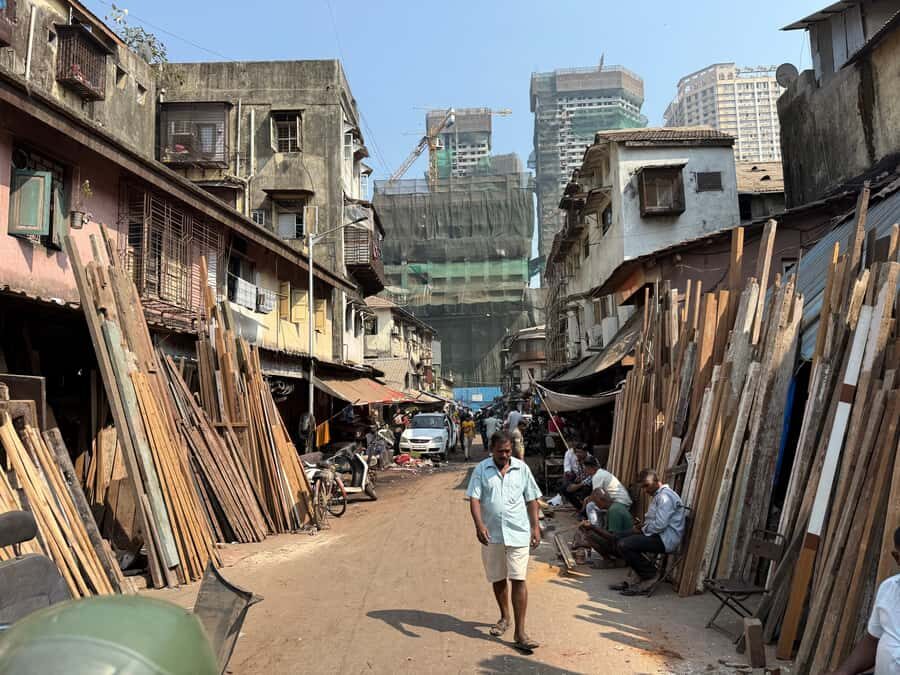
Next, you move into Black Town with a short cab ride into Mumbai’s more raw, everyday rhythm. The name matters because this is where the city’s economic energy shows itself, not as a curated postcard but as a working marketplace mood.
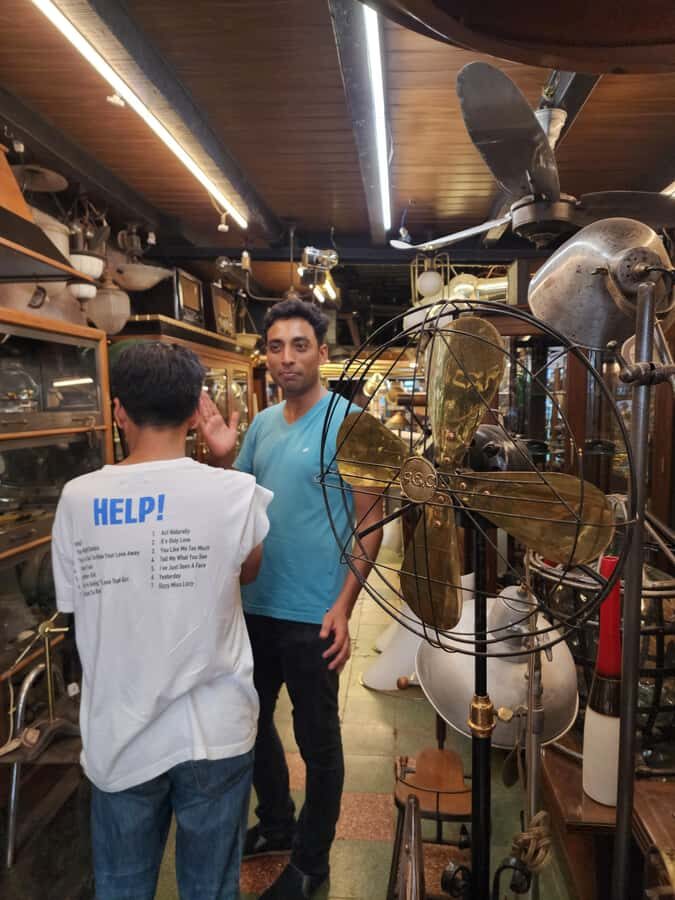
Your key stop is Chor Bazaar, known for antiques and a chaotic market atmosphere. It’s fascinating because it’s not pretending to be polished for tourists. Even if you don’t plan to buy, it’s a sensory lesson in how old and new commerce sits side by side in Mumbai.
This is also where the tour gives you an optional sweet-food moment: there’s a century-old sweet shop nearby where you can try local desserts. Desserts aren’t included, so bring an appetite and decide on the spot. If you skip it, you won’t lose the main flow of the day.
From the market, you continue by heading to a nearby train station to set up the final act. This sequence is well thought out: you see the city’s commerce engine, then you transition again using transit that fits Mumbai’s layout.
What I’d tell you before you go: if shopping crowds are a stress trigger for you, mentally plan for slow movement. Chor Bazaar is the kind of place where you’ll need patience, not speed.
Scene 4: Dhobi Ghat, Shivaji Park, and the Arabian Sea sunset walk
The last scene starts with another train segment—this time into Mumbai’s higher-rise, concrete skyline stretch. The story uses the contrast to show how Mumbai grew upward while daily life kept going below the surface.
Then you visit Dhobi Ghat, the open-air laundry with a reputation as a symbol of the city’s daily rhythm. It’s a practical, human-scale sight. You’re not just seeing a landmark; you’re watching an everyday process that keeps the city moving.
After that, the tour uses a bus ride through the city to Shivaji Park, described as a cultural heart. From there, you’ll take a peaceful walk toward a nearby beach. The day ends with a sunset over the Arabian Sea, a gentle closing note after market noise and transit energy.
Why the ending works: you finish with space and light. You get a chance to absorb the full arc of the day—imperial shoreline, dockside history, market commerce, and then back to the sea.



Price and what you’re actually paying for at about $34
This tour is priced at $34 per person, which sounds modest until you look at what’s included. Here, you’re not just paying for a guide and a few photos. You’re paying for a guided storyline plus specific parts of transit, and you get meals that would otherwise cost you separately.
Included items:
- Expert local guide
- 1 bottled water
- Auto fare
- Train fare
- Vada pav
- Pav bhaji
Not included:
- Desserts (optional)
- Taxi fare (dynamic pricing)
That meals-and-transport bundle is the real value. Vada pav and pav bhaji can add up fast if you’re doing them on your own while also trying to navigate transit. By covering train fare and auto fare, the day becomes easier to budget.
Extra cash matters because cabs are excluded and pricing can shift with traffic and demand. The tour notes that the taxi total won’t exceed Rs. 150, but it recommends carrying at least Rs. 300. I think that’s sensible. It keeps your day stress-free if you hit a cab hop at a moment that feels last-minute.
Moving like a local: how the transport mix helps you see more
One-day tours often fail by relying on cars only. This one avoids that trap. You get walking plus a local bus, trains at key scene transitions, and a cab used to cut through to the right neighborhoods. You’ll also use auto service at some point during the route.
This matters because Mumbai’s layout rewards people who respect how the city moves. You’re not only seeing famous places; you’re experiencing the way the city connects them. The mix also reduces boredom. Waiting in one vehicle forever drains the energy out of a day.
Timing can still be affected by Mumbai traffic. The good sign here is that the route is designed around public transport and short hops instead of one long continuous drive.
My practical tip: keep your day flexible inside your own head. If a bus is late or crowded, don’t treat it like a personal failure. In Mumbai, the city runs on rhythm, not clocks.
The guide factor: Shrijit and the storytelling tone
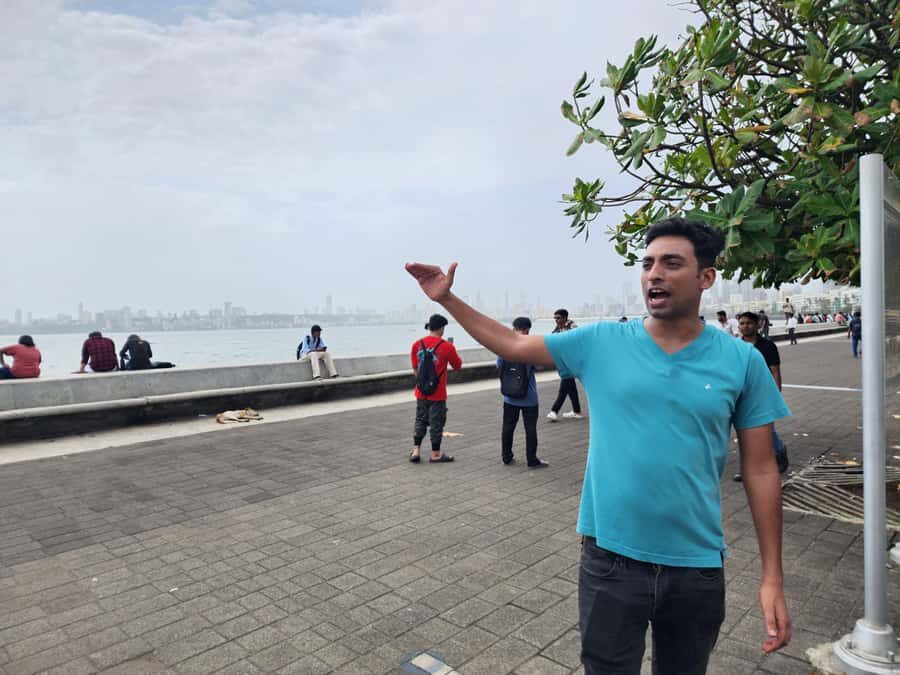
The guide is central to this experience. In the feedback I’ve seen reflected in the tour’s reputation, Shrijit stands out for creating a storyline that links the city’s evolution to what you’re seeing right now. The delivery matters because the tour is built like a movie script, and you want the narrator to keep the pacing smooth.
Good signs to look for:
- Clear historical facts tied to street-level locations
- An easy-going style that doesn’t turn stops into lectures
- Confidence moving the group across mixed transport modes
If your guide brings that vibe, the scenes feel like connected chapters, not random checkpoints.
Who should book this, and who should skip it
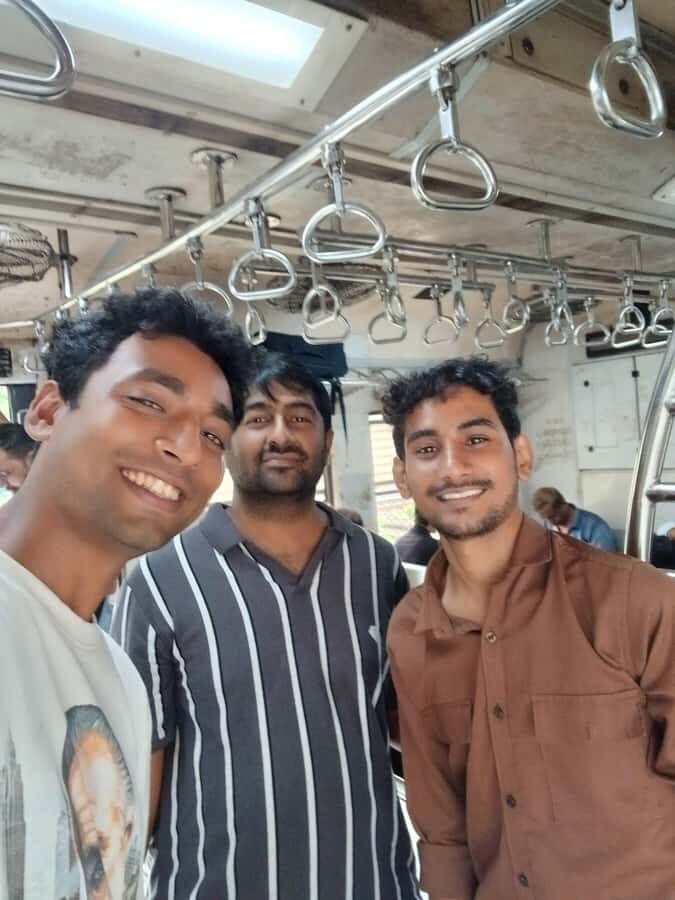
This tour makes sense if you want a structured day that still feels local. You’ll like it if:
- You want history tied to neighborhoods you can actually walk
- You enjoy street food and market energy
- You’re comfortable using public transport for part of the day
It may not be ideal if:
- You need wheelchair accessibility (not suitable)
- You’re traveling with a baby under 1 year
- You’re over 95 years and prefer a quieter pace (not suitable)
Also, if you’re allergic to walking, reconsider. The day is built on movement: lanes, stations, markets, and viewpoints all require steady feet.
Quick planning checklist before you set out
Bring:
- Comfortable shoes
- Comfortable clothes
- Cash for cab fares
- Hand sanitizer or tissues
Carry money smartly. The tour expects taxi pricing to stay under Rs. 150 total, but you still want at least Rs. 300 set aside so you don’t have to scramble.
Also note: the tour runs in English, so you’ll get the narrative without language friction.
Should you book the Symphony of Seven Islands?
If you have just one day in Mumbai and you want more than a highlight list, this tour is a strong pick. The story-first structure gives your feet and photos a purpose, and the included meals keep your energy stable through the day. I also like the way it uses transit as part of sightseeing, not as an annoyance.
Skip it if you need an ultra-restful schedule or wheelchair access. This day expects you to walk, stand, and ride at least a little like a local.
If your goal is to understand Mumbai’s layers—imperial waterfront, Portuguese-influenced lanes near the docks, Black Town commerce, and a final sea-facing sunset—this one-day format is built for that exact mission.
FAQ
How long is the tour?
It’s a one-day tour designed to experience multiple areas and story scenes in a single day.
What’s the meeting and language for the tour?
The tour is in English.
What food is included?
You’ll get vada pav and pav bhaji, plus 1 bottled water.
Is dessert included?
Desserts are optional and not included.
What transport will I use during the day?
You’ll use a mix of transport including walking, local bus, train, cab, and auto service.
Do I need cash?
Yes. Cab fares are dynamic and not included, so the tour recommends carrying some cash, with a suggested minimum of Rs. 300.
Is the tour wheelchair accessible?
No. It’s not suitable for wheelchair users.
Can I cancel and get a refund?
You can cancel up to 24 hours in advance for a full refund.