REVIEW · VARANASI
Guided Walking Tour of Ghats and Galis of Varanasi by VLT
Book on Viator →Operated by Varanasi Local Tours · Bookable on Viator
Varanasi hits different from street level. This guided walk takes you through ghats and galis in northern Varanasi, with stops that feel local, not staged. I especially love the Bansphatak Road flower market and how the route pulls you right up to major ghats, including Manikarnika.
You’ll also get a food-and-sight rhythm that makes sense: flowers, then sweets at Rajbandhu, then narrow alleys and ghat life, ending at the cremation ghat.
One consideration: this is real Varanasi. When you reach Manikarnika Ghat, the cremation activity is not easy to watch, and you should go in mentally prepared.
The tour runs about 2 hours, starts at 2:30 pm from Hotel Ganges Grand, and you’ll be dropped near Manikarnika Ghat. Groups are kept small (up to 30), and you get coffee and/or tea along the way, with a mobile ticket for entry.
In This Review
- Key points to know before you go
- Starting at Godowlia Crossing: why this route works
- Bansphatak Road flower market: a Varanasi welcome you can smell
- Rajbandhu sweets in Kachori Gali: the city’s taste test
- Chowk and paan vendors: the view from the sidewalk
- Thatheri Bazaar: narrow alleys and a sense of age
- Sherwali Kothi photo stop
- Ghats one after another: Panchganga, Scindia, and Manikarnika
- Scindia Ghat and bathing after funeral activity
- Manikarnika Ghat cremation scene
- Tea included, plus how to prepare for an afternoon in alleys
- What you get for about $22.70: value check
- Guides matter here: Sandeep and Monu’s role in the experience
- Who this VLT walk suits best (and who should think twice)
- Should you book this Ghats and Galis Walking Tour?
- FAQ
- FAQ
- Where do I meet and what time does the tour start?
- How long is the walk, and where does it end?
- What’s included in the price?
- Is there any admission ticket cost during the walk?
- Do the guides speak English?
- How physically demanding is this tour?
- How large are the groups?
- Do I need anything for ticket entry?
- What if weather is poor, or I cancel?
Key points to know before you go
- Street-to-ghat route that keeps you moving through neighborhoods, not just one viewpoint
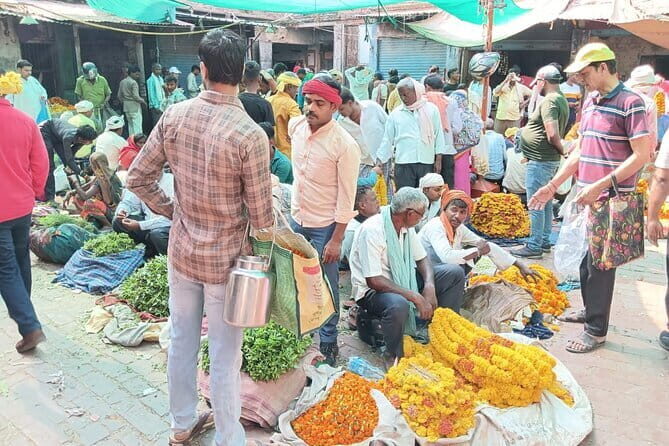
- Bansphatak Road flower market for a sensory first stop
- Rajbandhu sweets in Kachori Gali, with time to taste or take photos
- Thatheri Bazaar lanes plus stops like Sherwali Kothi and old alleyway scenery
- Multiple ghats in sequence including Panchganga, Scindia Ghat, and Manikarnika
- Small group feel (max 30) and tea included
Starting at Godowlia Crossing: why this route works
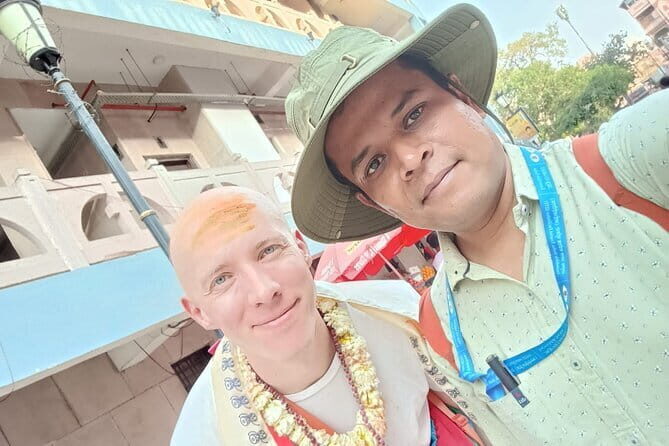
I like tours that get you oriented fast, and this one starts in a smart place: Godowlia Crossing. From there, you walk toward the northern side of Varanasi, which helps you understand the city as a living set of streets and markets, not just postcard ghats.
Your path isn’t a straight line. It’s a series of small turns and neighborhood changes, so the city gradually comes into focus. You’ll pass areas where daily commerce happens in real time, and that matters. Varanasi isn’t meant to be experienced only from a distance, and walking lets you see the texture: the stalls, the alley widths, and the way people move through their own routines.
Also, the timing is good for an afternoon walk. The start is 2:30 pm, and you end up at the cremation ghats later in the route. If you’re sensitive to strong scenes, you’ll want to plan your mindset for that final stretch.
You can also read our reviews of more walking tours in Varanasi


Bansphatak Road flower market: a Varanasi welcome you can smell
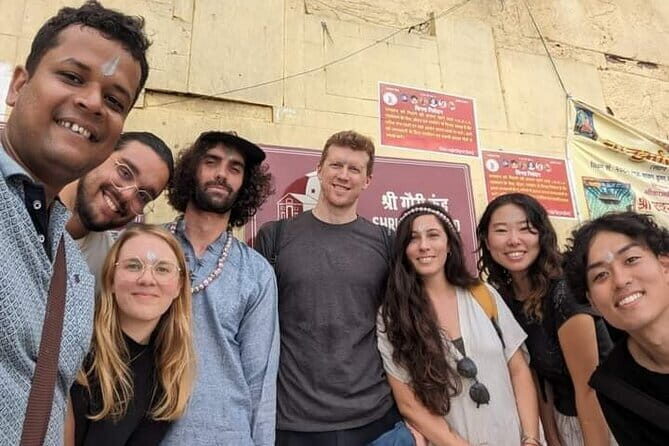
About 10 minutes into the walk, you reach a small flower market on Bansphatak Road. This is your first stop, and it sets the tone. Flowers aren’t just decoration here. They’re part of how people mark rituals, offerings, and celebrations, and you get to see that in motion rather than theory.
You’ll have time to watch vendors selling different types of flowers. It’s the kind of stop where you naturally slow down, look closely, and notice details: colors, bundles, and the constant flow of locals doing business.
Practical note: markets mean foot traffic and standing-room energy. Wear shoes that handle crowded sidewalks and uneven ground.
Rajbandhu sweets in Kachori Gali: the city’s taste test
Next comes Kachori Gali, where the tour stops for sweets at the famous Rajbandhu shop. This is one of those moments where the walking tour turns into a real sensory break. You’ll either try typical Indian sweets or simply pause for photos and atmosphere.
What I like about this stop is the pacing. You’ve just watched vendors at a flower market, then you shift into a comfort-food stop that gives your brain a rest. It also helps you connect with the city in a gentle way. Before you reach the ghats, you’ve already tasted something that feels normal and everyday.
If you’re the type who enjoys “one bite per stop” style sightseeing, this fits that perfectly. And if you’re a photo person, the storefront area gives you plenty to frame without needing to climb or crane for shots.
Chowk and paan vendors: the view from the sidewalk
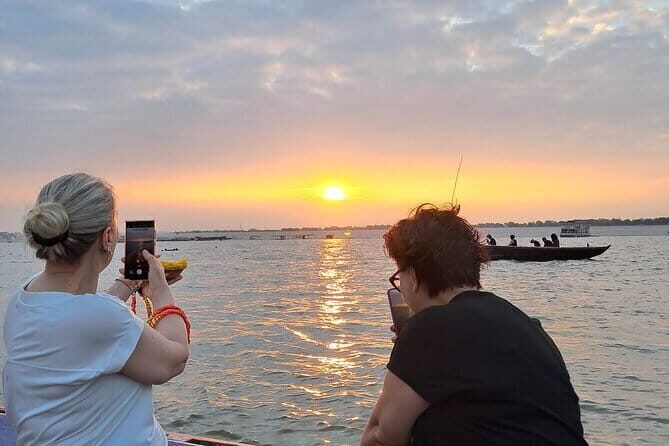
After the Rajbandhu stop, you walk toward Chowk area, following the Kachori Gali street. Along the way, you pass a police station and watch vendors selling paan.
This is where the tour shows you another side of Varanasi: street commerce that’s fast, ordinary, and always in progress. Paan vendors are especially good for understanding local rhythm. You’re not just seeing a product, you’re seeing how people order, how quick the service feels, and how much street life shapes the day.
If you’re easily overwhelmed by lots of movement, remind yourself you’re not expected to do everything. Stop when you want, keep walking when you prefer distance, and let the pace be flexible.
Thatheri Bazaar: narrow alleys and a sense of age
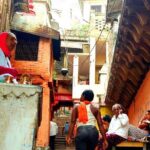
The route then enters Thatheri Bazaar, where you get into old, narrow alleyways. This part of the walk is about feeling scale and history through space. The lanes are tight, and that changes everything: sound carries, crowds compress, and you become more aware of where you place your feet.
You’ll spend about 20 minutes here, which is long enough to slow down and notice what you’d miss if you hurried by alone. It’s also a strong contrast to the earlier market stop. Flowers are bright and open. Thatheri Bazaar is more about texture: walls close in, shops line the street, and the city feels layered.
You can also read our reviews of more guided tours in Varanasi



Sherwali Kothi photo stop
Within Thatheri Bazaar, you’ll make a stop at Sherwali Kothi, described as an old palace. You’ll take photos here, and it gives you a recognizable “landmark moment” in the middle of an area that otherwise can feel like one long braid of lanes.
I like this kind of mid-walk pause. It helps you anchor the experience so you don’t end the tour thinking only about the sensation of walking. You also get a clear visual reference point for later.
Ghats one after another: Panchganga, Scindia, and Manikarnika

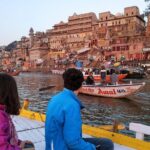
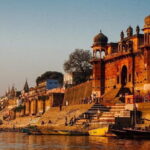
After the alley section, the tour shifts to the ghats. You’ll see famous ghats such as Panchganga, Bhosale Ghat, and later Manikarnika Ghat. The idea is simple: you move through the city and then arrive at the riverfront in stages, so you’re not hit with everything at once.
Scindia Ghat and bathing after funeral activity
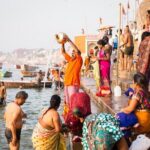
At Scindia Ghat, you’ll stop to watch people bathing after finishing a funeral. This is an emotionally intense concept even in the abstract, and seeing it in person adds weight.
The value here is context. A walking tour guide can help you interpret what you’re seeing without turning it into a lecture. You’ll likely get explanations about why people gather at the ghats and how bathing fits into the flow of ritual life.
Be aware: even if you’re prepared, watching human rituals up close can feel very personal. Keep your distance where needed and follow your guide’s direction on where to stand.
Manikarnika Ghat cremation scene
Then you reach Manikarnika Ghat, where you’ll watch cremation. This is the part that separates “beautiful city walking” from “life-and-death reality check.”
If you handle intense scenes well, this stop can feel powerful in a way words struggle with. If you don’t, it can be distressing. Either way, I’d treat this like a safety decision for your own well-being: don’t come here hoping it will feel like a normal sightseeing stop.
One practical point: the tour ends with a drop near Manikarnika Ghat (near Lalita Ghat), so after you finish, you’re right where you started seeing the most intense activity. Plan your next move with that in mind.
Tea included, plus how to prepare for an afternoon in alleys
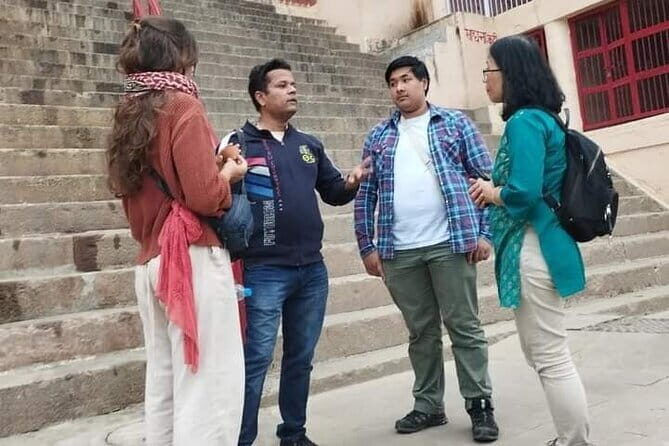
The tour includes coffee and/or tea, which is a genuine help on a walking schedule. It also adds a human break in the middle of the day.
Since the walk is about 2 hours and involves narrow streets, treat it like a real walking outing, not a slow stroll. I’d strongly suggest comfortable shoes and clothing that you can move in easily. Carry a light layer if weather shifts. And keep in mind that you’re walking through areas where you’ll be a visitor among locals going about their day.
If you’re sensitive to crowds, this tour can still work, but you’ll want to take breaks with your eyes. Step aside when needed, focus on what’s directly in front of you, and don’t try to capture everything at once.
What you get for about $22.70: value check
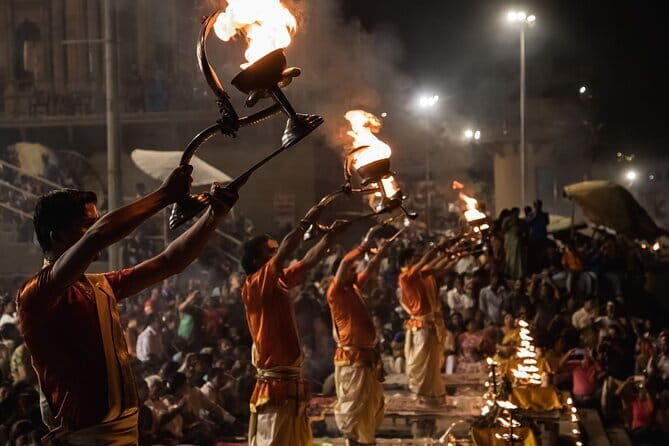
The price is $22.70 per person for about 2 hours. For that, you get a guided route through markets, alleys, and multiple ghats, plus coffee and/or tea.
Two extra value points:
- Admission is included for certain stops, specifically Sherwali Kothi (old palace) and Scindia Ghat (where you watch bathing after funeral activity).
- The group size is capped at 30, which usually helps keep the experience from feeling chaotic.
Is it a bargain or a splurge? In my view, it lands as good value for a first-time orientation walk, especially because you end right at Manikarnika. In other words, you’re buying a guided path that connects the city’s key textures in one go.
Guides matter here: Sandeep and Monu’s role in the experience
This is one of those tours where a good guide can completely change what you take in. In past experiences, guides such as Sandeep and Monu have been praised for being warm, friendly, and clear about the city and Hinduism.
English proficiency is also mentioned in reviews tied to Monu, and that matters when you’re trying to understand what rituals mean and why people are at specific points along the ghats.
I’d look at this tour as a chance to ask small questions in the moment. Even one good answer can help you make sense of a scene that would otherwise feel random.
Who this VLT walk suits best (and who should think twice)
This walking tour is a strong fit for:
- First-time visitors who want an organized feel for Varanasi’s ghats and galis
- People who like market stops and food moments, not only riverfront views
- Solo travelers who want company and a guide steering the route
- Anyone comfortable with walking through narrow lanes and crowded street conditions
Think twice if:
- You’re very uncomfortable with cremation activity, since the route explicitly includes Manikarnika Ghat
- You don’t handle emotionally heavy scenes well, even briefly
- You prefer sightseeing without direct exposure to ritual life
Should you book this Ghats and Galis Walking Tour?
Book it if you want a structured, street-level introduction to Varanasi that connects markets, alleyways, and major ghats in about two hours. The combination of flower market energy, Rajbandhu sweets, Thatheri Bazaar lanes, and then the riverfront sequence is a solid way to get oriented quickly.
Skip or choose carefully if Manikarnika’s cremation scenes would likely overwhelm you. This isn’t a “light” tour, and the final segment is the defining moment.
If you can handle intensity and you want to understand Varanasi through everyday streets rather than only viewpoints, this is a very reasonable pick at $22.70, especially with tea included and a small-group pace.
FAQ
FAQ
Where do I meet and what time does the tour start?
You meet at Hotel Ganges Grand – Varanasi (front of, Marwari Hospital Building, D-37/47, Dashashwamedh Ghat Rd, Crossing, Godowlia, Varanasi). The start time is 2:30 pm.
How long is the walk, and where does it end?
The tour lasts about 2 hours. It ends with a drop at Manikarnika Ghat (near Lalita Ghat, Lahori Tola, Varanasi).
What’s included in the price?
The tour includes coffee and/or tea and guidance through the route of stops. Some stops include admission tickets as noted in the itinerary.
Is there any admission ticket cost during the walk?
Yes. Admission tickets are included for Sherwali Kothi and Scindia Ghat. Other stops are marked as ticket-free.
Do the guides speak English?
The information provided includes praise for a guide’s English being very good in at least one experience. You should still expect explanations to be tailored to the group, but strong English skills are reported.
How physically demanding is this tour?
It’s a walking tour with a stated requirement for moderate physical fitness. The route goes through narrow streets and multiple stops over roughly two hours.
How large are the groups?
The tour has a maximum group size of 30 travelers.
Do I need anything for ticket entry?
The tour uses a mobile ticket.
What if weather is poor, or I cancel?
The experience requires good weather. If it’s canceled due to poor weather, you’ll be offered a different date or a full refund. If you cancel, it’s non-refundable and cannot be changed for any reason.