REVIEW · NEW DELHI
Tea Tasting Session at India’s oldest tea boutique Sancha Tea/Aap Ki Pasand
Book on Viator →Operated by Sancha Tea Boutique · Bookable on Viator
One hour, seven regions, a lot of tea. This tea tasting session at Aap Ki Pasand / Sancha Tea puts you in front of blends and single-region leaves you can actually talk about with staff, guided by Master Tea Taster and blender Mr Sanjay Kapur. I also like the focus on a hands-on shop experience where you can compare flavors side-by-side.
My only caution is simple: this is a shop tasting, not a sightseeing itinerary. If you want a longer, outside-the-store tour with lots of walking and photo stops, you may feel slightly rushed because the experience is about 1 hour.
In This Review
- Key things to know before you go
- Getting your bearings at Aap Ki Pasand Tea Gallery in Daryaganj
- One-hour tea tasting: how the pacing works
- Tea by region: what Darjeeling, Assam, Nilgiri, Sikkim, and Kangra teach you
- Beyond black tea: white, green, and rare small-batch picks
- Masala chai blends with saffron, cardamom, ginger, and Malabar Spice Coast flavors
- Tea shopping for gifts: what to buy when you only have time for one hour
- Price and value: is $7 for a tea session actually worth it?
- Who should book Sancha Tea’s tasting, and who might skip it
- Should you book this tea tasting?
- FAQ
- How much does the tea tasting cost?
- How long is the tea tasting session?
- Where does the experience start?
- What are the opening hours of the tea shop?
- Is the booking confirmed when I reserve?
- Is there a limit on group size?
- Can I cancel for a full refund?
- Does the experience run in all weather?
Key things to know before you go
- Meet Mr Sanjay Kapur’s tea shop legacy (founded in 1981) and learn why they treat tea like craft.
- Taste across multiple tea types: black, green, white, plus Ayurvedic herbal options.
- Compare regions such as Darjeeling, Assam, Nilgiri, Sikkim, and Kangra to understand terroir in plain language.
- Try masala chai blends flavored with spices like cardamom, ginger, and saffron, tied to India’s Malabar Spice Coast.
- Ask for in-store brewing from sommeliers for teas you want to experience more fully.
- Small group feel with a maximum of 20 people, so explanations are easier to follow.
Getting your bearings at Aap Ki Pasand Tea Gallery in Daryaganj
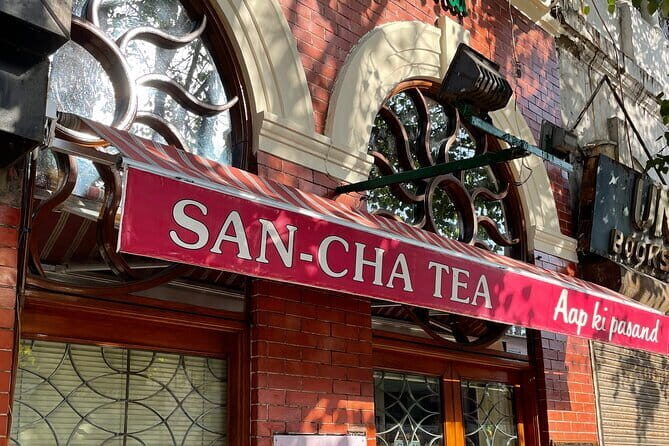
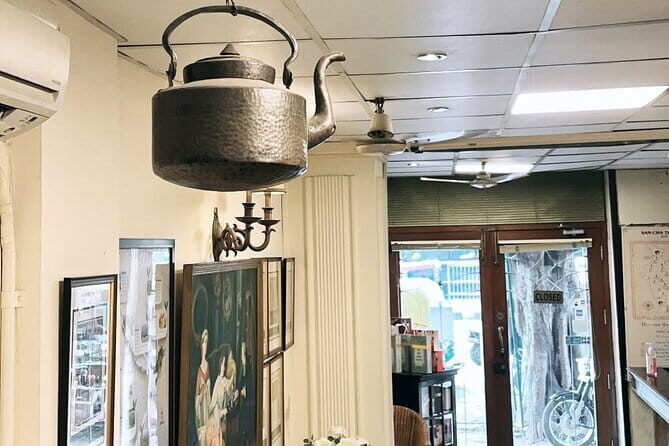
The experience starts at Aap Ki Pasand Tea Gallery (Sancha Tea) at 15 Netaji Subhash Marg, opposite Golcha Cinema in Daryaganj. It’s easy to spot and, importantly, it’s near public transportation, so you can slot it into a busy Delhi day without needing complicated logistics.
This matters because the tasting is short. You’re not trying to cram in a half-day “tea culture tour.” You’re going somewhere that’s already set up for sipping, smelling, and deciding. The shop is described as India’s oldest artisanal tea boutique, founded in 1981 and run by Mr Sanjay Kapur, a master tea taster and blender. That kind of long-running presence usually means the space is organized for repeat tasting and repeat questions, not just a one-time demo.
Also, since the session ends back at the meeting point, you’re not forced into a weird backtrack. You can plan to have dinner nearby after.
One more practical note: the shop runs Monday through Saturday from 10:30 AM to 5:30 PM. So if your schedule is tight, aim to book for the middle of the day and keep a buffer in case you arrive later than planned.
You can also read our reviews of more food & drink experiences in New Delhi

One-hour tea tasting: how the pacing works

This is built as a mobile-ticket experience for about 1 hour. In that time, you’ll sample multiple teas and blends while staff explain what you’re tasting and where it comes from. There’s no long lecture format. The shop is set up to let you compare cups quickly and ask questions while you still remember what each one tasted like.
A big quality signal here is the variety available for tasting: the shop offers 100 Indian teas and blends, including pure teas and spice/herb/flower blends. That’s a lot of choice for one hour, and it changes how the tasting feels. Instead of one or two “signature” options, you can usually move across black, green, white, and flavored chai styles and figure out what you genuinely like.
You’ll also have the option to ask sommeliers to brew a tea in the store on the house. That’s a simple but useful feature: sometimes a tea’s aroma is one thing, and the brewed cup is another. Getting staff to brew what you want means you’re not stuck with only the flight you thought you wanted at booking time.
The experience has a maximum of 20 travelers, which helps a lot. Large crowds can kill a tasting because people can’t hear details and they lose their turn. Here, the group size is small enough that the tasting stays conversational.
Potential drawback: because it’s about an hour, decision-making happens fast. If you’re the type who needs extra time to compare six similar cups, you’ll want to come with a few tea goals in mind, like white tea vs. black tea preferences, or whether you’re hunting for gifts.
Tea by region: what Darjeeling, Assam, Nilgiri, Sikkim, and Kangra teach you
The core idea is terroir—how a region’s climate and growing style shapes the tea leaves. You’re tasting from multiple Indian growing areas, including Darjeeling, Assam, Nilgiri, Sikkim, and Kangra. Even if you don’t know much about tea, the explanations are meant to make those differences feel obvious.
Here’s how I’d think about the tasting lesson before you go:
- Darjeeling: often associated with delicate complexity and fragrance, so you’ll likely notice lighter, more aromatic notes.
- Assam: tends to feel fuller-bodied, so you can look for depth and stronger flavor.
- Nilgiri: can read differently from the Himalayan regions; it’s a helpful comparison point when you’re trying to understand what “Indian tea” tastes like beyond the two famous names.
- Sikkim: another regional angle that helps you see how the same broad category can taste noticeably different.
- Kangra: a region that’s less common on export menus, which makes it exciting if you like trying teas you don’t automatically find at home.
You don’t need to memorize facts during the session. Your real win is building a mental map: which region types you like, and what flavor families you prefer (more floral, more malty, more brisk, more soothing, and so on). That makes buying tea later a lot easier.
Also, this is one of those places where it’s worth asking questions as you taste. If you like one cup, ask what makes it different from the next cup on the table. Staff are there to help you understand quickly, so you can decide thoughtfully rather than guessing.
Beyond black tea: white, green, and rare small-batch picks
India is often pictured as a black-tea story, but this shop makes a point of the newer wave of white teas and a broader range of styles. You’ll have the chance to taste black, green, and white teas, plus the store’s range of “rare small batch” teas—specifically highlighted as something you can try in the country of origin.
That matters because “rare” isn’t just marketing here. When you taste small-batch teas, you’re not only tasting flavor. You’re tasting variation—how two teas that sound similar can still taste different. That’s useful whether you’re a serious tea person or just want the best souvenir possible.
In practical terms, a tasting like this helps you avoid the most common tea mistake: buying something you think you’ll like based on the name. Instead, you can decide based on what the leaf actually does in a cup. If you’re buying for someone else, this tasting is also a confidence-builder. You can match teas to tastes: lighter vs. stronger, floral vs. earthy, and straight leaf tea vs. spice-forward blends.
If wellness teas matter to you, the shop also offers Ayurvedic herbal teas for wellness. You won’t want to treat herbal tea like a substitute for regular tea, but it can be a nice complement—especially if you like something caffeine-free or gentler in the evening.
Masala chai blends with saffron, cardamom, ginger, and Malabar Spice Coast flavors
Chai is where this place gets especially fun because the shop doesn’t only sell one masala chai formula. They describe 7 unique masala chai blends built with real spices like saffron, cardamom, ginger, and other spices linked to India’s Malabar Spice Coast.
What I like about that approach is that it turns chai from a generic “spiced tea” into a set of distinct flavor choices. You can pick based on mood:
- If you want something warm and aromatic, look for stronger cardamom and saffron presence.
- If you want a deeper, spicy kick, ginger-forward blends often do the job.
- If you prefer a smoother chai experience, you can compare how different spice mixes change the overall balance.
Because the session includes both pure teas and chai blends, you can also compare how spice changes what you perceive. A green or white tea might taste subtle and delicate on its own; chai style shifts it toward comfort-spice intensity.
If you’re shopping for gifts, chai blends are usually the easiest win. They feel familiar, but the quality and spice ratios can be surprisingly different from what you find back home.





Tea shopping for gifts: what to buy when you only have time for one hour
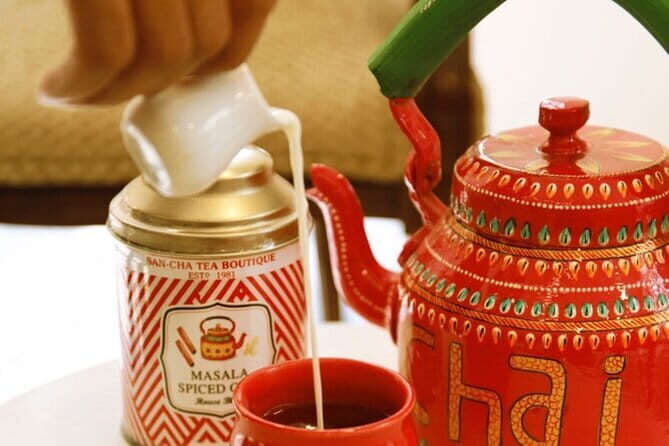
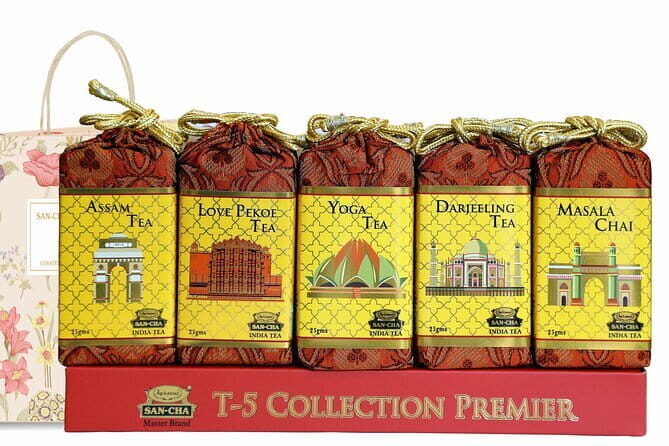
You’ll see a lot of options because the store says it offers over 100 blends of Indian tea, including blends with real spices, herbs, flowers, and also pure tea. That’s exactly why the tasting is valuable. You reduce guesswork in the shop.
Here’s a simple strategy that works well in a place like this:
- Pick your likely winner while you’re tasting. Don’t wait until you’re standing in front of shelves.
- Think in categories, not single products.
- For straight tea lovers: choose pure black/green/white teas from the regions you liked.
- For gift-givers: choose chai blends with recognizable spices.
- For “wellness” purchases: consider the Ayurvedic herbal teas that fit caffeine-free needs.
- If you’re buying for multiple people, choose one “safe favorite” and one “adventure pick.” The adventure pick might be a less common region tea or a spice blend with saffron or mixed herbs.
The shop is also described as having a good reputation for quality and freshness, and staff are there to explain what each tea is meant to taste like. That combination is what you want in a souvenir purchase: confidence and clarity, not pressure.
One more practical advantage: because the tasting is in the same place where you buy, you can taste, compare, then purchase while your preferences are fresh in your mind.
Price and value: is $7 for a tea session actually worth it?
At $7 per person (with about 1 hour on the clock), this is priced like an easy add-on for tea lovers. The value comes from the number of decisions you get to make in a short time: you’re comparing multiple tea styles, multiple regions, and spice-forward chai blends, with the option to ask for in-store brewing.
It also helps that the session is capped at 20 travelers, so the explanations have room to land. And because the shop offers an enormous range, you’re not paying just for one cup—you’re paying for a short guided path through a huge selection.
If you’re visiting Delhi with limited time, that low price point is meaningful. You’re not committing to a multi-hour activity to satisfy your curiosity. You can do this and still keep your afternoon open for other sights or shopping.
The one thing to watch is your own pace. If you want a slow, linger-all-afternoon tea conversation, you may find the 1-hour format a little tight. For everyone else—especially people who like tasting and learning quickly—it’s a solid deal.
Who should book Sancha Tea’s tasting, and who might skip it
Book it if you:
- Love trying multiple teas and want to learn the differences between regions.
- Want a straightforward cultural food-and-drink experience in central Delhi.
- Are hunting for tea souvenirs and want a tasting-based buying plan.
- Prefer a calm, low-pressure shop atmosphere where you can ask questions.
You might skip or look for something longer if you:
- Want a full-day tour with multiple neighborhoods and lots of outdoor time.
- Need a lot of time to compare flavors slowly without any schedule pressure.
- Are only interested in one specific tea type and don’t care about comparisons.
Also, the experience requires good weather, even though it’s a tea shop activity. If you’re traveling in uncertain conditions, plan a backup day and keep your schedule flexible.
Should you book this tea tasting?
Yes—if you want an efficient, high-quality way to understand Indian tea beyond the basics. For a low price, you get variety across black, green, and white teas, plus spice chai blends, and you can ask staff to brew what you’re curious about. It’s also an easy add-on because it’s centralized in Daryaganj and finishes where you started.
If you’re the type who enjoys food tastings, comparing regions, and buying gifts with confidence, this is exactly your kind of stop. Just don’t treat it like a half-day tour—treat it like a focused, one-hour tasting lesson and shopping opportunity.
FAQ
How much does the tea tasting cost?
It costs $7.00 per person.
How long is the tea tasting session?
It lasts about 1 hour.
Where does the experience start?
It starts at Aap Ki Pasand Tea Gallery (Sancha Tea), 15 Netaji Subhash Marg, opposite Golcha Cinema, diagonally, Daryaganj, New Delhi, Delhi 110002.
What are the opening hours of the tea shop?
Monday through Saturday, 10:30 AM to 5:30 PM.
Is the booking confirmed when I reserve?
Confirmation is received at the time of booking.
Is there a limit on group size?
Yes, the maximum number of travelers is 20.
Can I cancel for a full refund?
Yes. Free cancellation is available up to 24 hours in advance for a full refund.
Does the experience run in all weather?
It requires good weather. If canceled due to poor weather, you’ll be offered a different date or a full refund.