REVIEW · MUMBAI
Banganga Walkeshwar Walking Tour
Book on Viator →Operated by Mumbai Dream Tours · Bookable on Viator
A short walk here feels like a long memory. The Banganga Walkeshwar Walking Tour takes you through one of Mumbai’s most layered pockets of old faith and everyday life, centered on Walkeshwar Temple and the Banganga Tank area. I love how the route is built around real places people still use, not just photo stops, and you’ll get stories tied to temples, memorial stones, and the tank’s steps where daily life happens.
What I especially like is the combination of temple sightseeing with street-level Mumbai—like the narrow lane around Banganga Tank and the open-air laundry at Dhobi Ghat. One thing to keep in mind: this tour is religious and neighborhood-focused, and food and drink aren’t included, so plan to eat before or after.
In This Review
- Key things to know before you go
- Banganga and Walkeshwar: the 2.5-hour time machine in Mumbai
- Meeting at Hotel Banganga Arogya Bhavan and how the route flows
- Stop 1: Walkeshwar’s 18 temples, memorial stones, and the Banganga Tank steps
- A guided walk around 18 temples
- Memorial stones worshiped by Gujaratis
- Banganga Tank: where worship meets daily life
- Deepstambhas and pillars of light
- Practical consideration at Stop 1
- Stop 2: Banganga lanes, dharamsalas, and Dhobi Ghat’s open-air laundry
- Narrow street energy (and what you’ll actually see)
- Encroaching migrant communities and housing realities
- Dhobi Ghat: open-air laundry built by the British
- Practical consideration at Stop 2
- Why the guide matters here (and what Ajay’s style adds)
- Price and value: what $18.13 buys you in a 2.5-hour neighborhood walk
- Practical tips for a smooth Walkeshwar and Banganga day
- Who this tour is best for (and who should skip it)
- Should you book the Banganga Walkeshwar Walking Tour?
- FAQ
- How long is the Banganga Walkeshwar Walking Tour?
- Where does the tour start?
- What’s included in the price?
- Is food and drink included?
- What’s the group size limit?
- Do I need a ticket on my phone?
Key things to know before you go
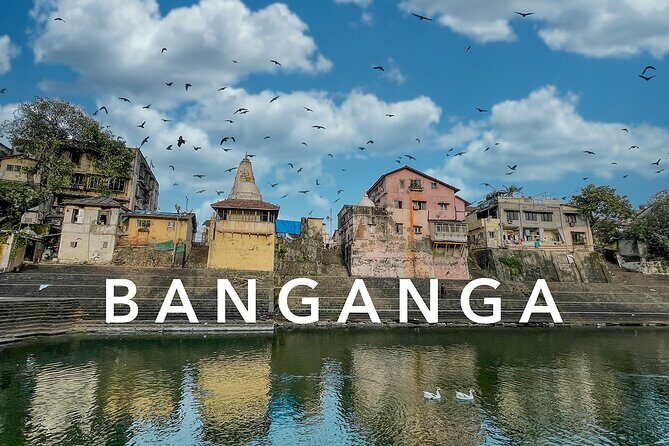
- Walkeshwar Temple focus: a guided walk through an area described as Mumbai’s oldest continually inhabited place, with a circuit of 18 surrounding temples
- Banganga Tank steps are “multi-purpose”: the steps serve as a kids’ play area, social space, drying area, and a place for puja
- Deepstambhas pillars of light: these mark temple entrances and—according to local belief—each one links to a saint’s burial
- Banganga lane + dharamsalas: you’ll see temples, homes, and religious rest houses packed into a narrow street
- Dhobi Ghat viewing: an open-air laundry scene described as Mumbai’s second largest, said to have been built by the British
Banganga and Walkeshwar: the 2.5-hour time machine in Mumbai
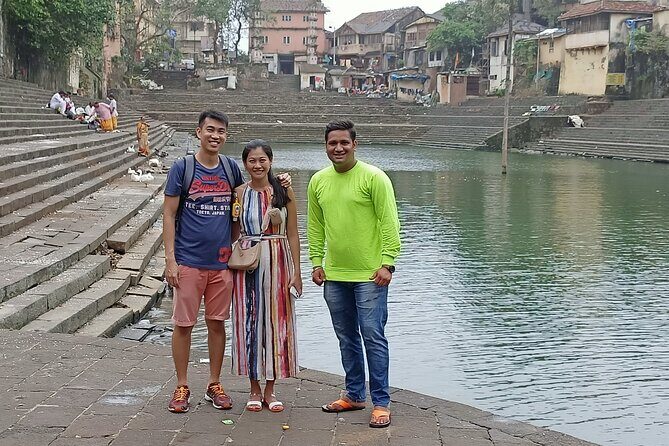
If Mumbai feels like a rush of cars and skyscrapers to you, this tour is the antidote. It’s not trying to beat you with “top 10 monuments.” Instead, it slows you down around Banganga Tank and the Walkeshwar area, where the details are the point.
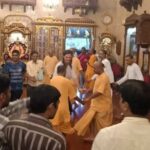
The vibe is old-world and lived-in. You’re walking through temple spaces where people still go for worship, and you’re also moving alongside the everyday rhythm of the neighborhood: children around the tank steps, people using the lane, and the practical reality of laundry life at Dhobi Ghat.
You should also know what this kind of tour tends to reward. You’ll get more out of it if you enjoy religious architecture, local legends, and city neighborhoods that aren’t staged for visitors. If your priority is big-ticket skyline views and “instant wow” monuments from far away, you may feel this route is too narrow and short. But if you want a human-scale Mumbai story, it’s a strong match.
You can also read our reviews of more walking tours in Mumbai


Meeting at Hotel Banganga Arogya Bhavan and how the route flows
The tour starts back at Hotel Banganga Arogya Bhavan in Walkeshwar (Banganga, Shop No. 91, Road, Shubash Chowk, Malabar Hill, Mumbai). The activity ends back at the meeting point, which keeps things simple.
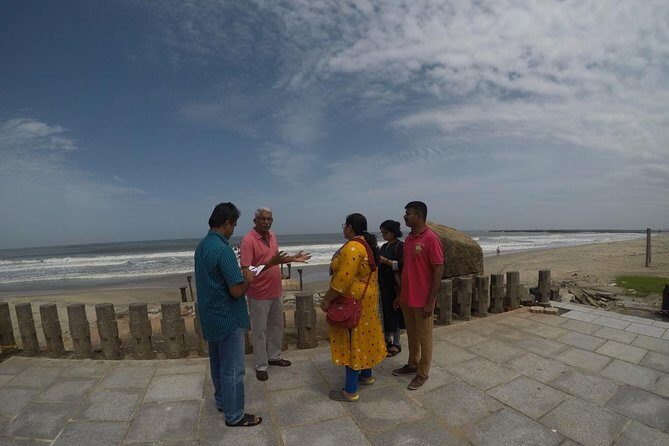
Time-wise, it’s a compact format: about 2 hours at Stop 1 (Walkeshwar), then 30 minutes at Stop 2 (Banganga/Dhobi Ghat area). That pacing matters. You’re not getting dragged across half the city, and you’re not spending most of your time stuck in transit.
This also means you’ll likely need to dress and plan like you’re walking in a busy neighborhood. Comfortable shoes are non-negotiable. And since the tour doesn’t include food or drink, you’ll want a snack plan—especially if you’re sensitive to long days in Mumbai’s heat.
One more detail that’s genuinely useful: it’s capped at a maximum of 15 travelers. That usually helps the guide keep the group together and answer questions without turning into a lecture you can’t hear.
Stop 1: Walkeshwar’s 18 temples, memorial stones, and the Banganga Tank steps
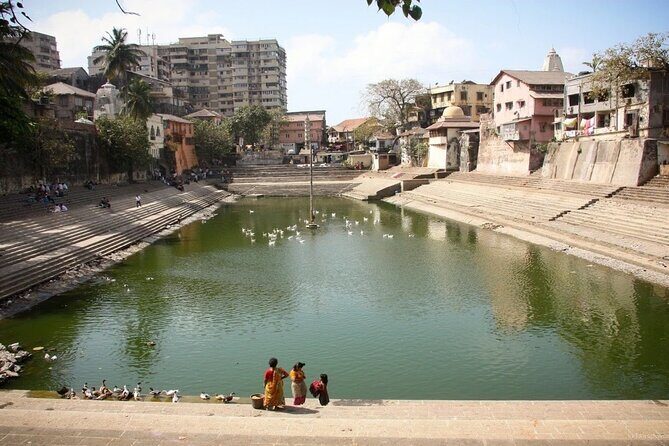
Stop 1 is the heart of the experience. The tour centers on Walkeshwar as an area described as the oldest continually inhabited place in Mumbai. That doesn’t mean it’s frozen in time; it means the layers are old, and the community has been here a long time.
A guided walk around 18 temples
You’re told you’ll take a walk through 18 temples in the surrounding area, with the guide sharing deeper stories for each. That’s a big difference from a simple “temple photo and move on” visit. When a guide ties each spot to meaning—who goes there, why it matters, what the symbols suggest—you start to see the neighborhood as a map of faith, not just a cluster of buildings.
Memorial stones worshiped by Gujaratis
One of the more distinctive points here is the mention of memorial stones (called pallias) described as memorial markers for dead warriors, which are worshiped by Gujaratis. Even if you don’t know the legend in advance, the presence of this practice adds context: this area isn’t only about daily devotion. It also holds community memory, honor, and identity in stone.




Banganga Tank: where worship meets daily life
The centerpiece is Banganga Tank and Walkeshwar Temple. What makes this special is that the steps around the tank aren’t just scenic. The steps are described as serving multiple purposes:
- a play area for children
- a social hub for residents
- a place to dry washing
- a spot to perform puja
That combination is the real “aha.” You’re seeing religion as part of life, not a separate layer behind a fence.
Deepstambhas and pillars of light
Near the entrance and in significant temple areas, you’ll find Deepstambhas—pillars of light. The tour includes the fascinating belief that a saint is said to be buried under each one. Whether you treat the story literally or as tradition, it shapes how you read the space: the markings aren’t random. They’re tied to an idea of sacred presence and spiritual geography.
Practical consideration at Stop 1
Because this stop involves temple spaces and a tight network of points, you’ll want to be respectful with clothing and behavior. That’s not just “politeness.” In active religious areas, it keeps the experience comfortable for you and for the people using the space.
Also, since admission tickets are listed as free at this stop, the cost comes down to your time and your comfort—not entry fees.
Stop 2: Banganga lanes, dharamsalas, and Dhobi Ghat’s open-air laundry
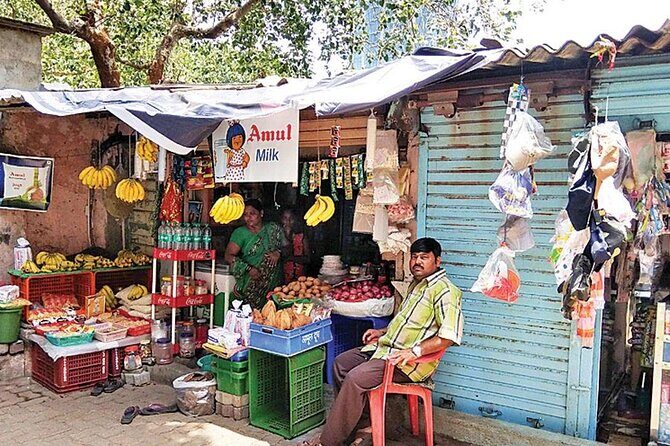
Stop 2 shifts from temple clusters to the narrow street life around Banganga Tank. The tour describes a street lined with temples, homes, and dharamsalas (religious rest houses). This is where you start to feel the neighborhood as a system, not a sightseeing circuit.
Narrow street energy (and what you’ll actually see)
The lane context matters because it explains what you’re looking at. When the street is described as flanked with dharamsalas, you understand that visitors and devotees may move through here in different seasons and for different reasons. And because temples and homes sit side by side, the area reads as community space first—tourism is secondary.
Encroaching migrant communities and housing realities
The tour also notes that the area includes slum-dwellers who have occupied it for past few decades. That’s not a side note to skip. It’s important context for seeing Mumbai honestly. You’ll be looking at a place with deep history and also real social pressure—how neighborhoods evolve and how space gets used.
I find that guided framing helps. Without it, visitors often treat these areas as scenery. With the framing, you’re less likely to turn people’s lives into background texture.
Dhobi Ghat: open-air laundry built by the British
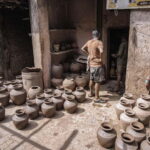
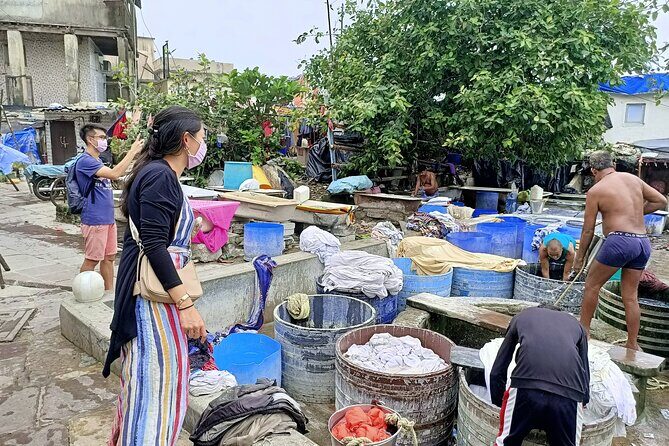
Then comes Dhobi Ghat, described as Mumbai’s second largest laundry, with open-air laundry and a note that it was built by the British. Even without extra explanation, you’ll quickly understand the scale: laundry isn’t done in tiny private spaces. It’s part of the city’s visible rhythm.
This is one of those stops where the “wow” factor is not about architecture. It’s about logistics and scale—how a whole working process is visible right in the middle of city life. You might find it more interesting if you’re the type who likes watching real work and understanding what it takes to keep a city running.
Practical consideration at Stop 2
This part can feel busy. With open-air laundry and neighborhood streets nearby, keep your expectations realistic: you’re not guaranteed quiet corners. Go in with a patient mindset and keep your camera usage respectful.
Why the guide matters here (and what Ajay’s style adds)
This tour includes an English-speaking guide, and that’s a major part of the value. The itinerary is loaded with items that are hard to interpret on your own—memorial stones, Deepstambhas symbolism, the temple-to-temple logic of a walk through 18 sites, and how Banganga Tank steps function for both worship and daily routines.
One review specifically calls out Ajay as a host who was well informed and passionate, explaining everything in detail. That’s the exact kind of guide you want for a route like this. Otherwise, you’ll see a lot of pretty architecture with limited meaning. With the right guide, you’ll start connecting the symbols to the people who keep using them.
For you, the best-case scenario is simple: questions get answered, and you leave with a mental map of what each spot represents.
Price and value: what $18.13 buys you in a 2.5-hour neighborhood walk
At $18.13 per person, this is priced like a low-friction introduction to a specific neighborhood story—especially since the plan includes free admission at the stops you visit. You’re paying mainly for:
- an English-speaking guide
- a tight route (about 2 hours 30 minutes)
- local storytelling tied to multiple religious and community sites
Is it a bargain? It can be, because your “entry fee” is effectively $0 for the key sights, and your cost is focused on interpretation. For many visitors, the biggest challenge in Mumbai isn’t finding places—it’s making sense of what you’re seeing. This tour is built to solve that for a relatively small outlay.
Also, the tour uses a mobile ticket, which tends to reduce the hassle level on day-of arrival.
One small budgeting note: food and drink aren’t included, so factor in a snack or planned meal. That doesn’t kill the value, but it keeps you from getting surprised later.
Finally, it’s commonly booked about 40 days in advance. That doesn’t guarantee sell-out, but it’s a good hint that slots can fill—especially during peak travel seasons.
Practical tips for a smooth Walkeshwar and Banganga day
Here’s how I’d set you up for an easy, respectful, and actually enjoyable walk.
Wear comfortable shoes. You’ll be moving through temple-area paths and neighborhood lanes. If your feet hate you, your brain stops paying attention.
Dress for temples. The tour is centered on active worship spaces. Go with clothes that are easy to move in and appropriate for religious sites.
Bring water or plan a quick stop. Since no food and drink are included, you’ll want hydration. If you’re prone to low-energy afternoons, plan a snack before the tour or right after.
Arrive a little early. The meeting point is a specific hotel address in Walkeshwar. Showing up early gives you time to orient and find your guide without stress.
Keep expectations city-real. Stop 2 explicitly includes areas with migrant community presence and open-air work like laundry. Mumbai life is visible here. You’ll enjoy it more if you’re open to that.
Mobile ticket ready. The tour uses a mobile ticket, so make sure your phone battery is healthy.
Who this tour is best for (and who should skip it)
This walking tour is a strong fit if you:
- love religious places but want context beyond a quick look
- enjoy local legends and how communities explain their sacred spaces
- want to see everyday Mumbai life around Banganga Tank and Dhobi Ghat
- prefer a small-group feel (max 15 travelers)
You might skip or consider a different format if you:
- mainly want distant major sights by car (this route is time-focused on Walkeshwar and Banganga)
- need a food-inclusive tour (this one doesn’t include it)
- prefer monuments over neighborhood-scale reality
Should you book the Banganga Walkeshwar Walking Tour?
Book it if you want the kind of Mumbai that feels lived-in—where worship, community memory, and daily routines share the same physical space. The Walkeshwar Tank-and-temple circuit plus the street-and-laundry stop is a neat combo: faith on one side, work and neighborhood life on the other.
Think twice if you’re visiting with “must-see monuments only” energy. This isn’t trying to replace the big-name skyline day. It’s doing something better for the right traveler: turning a small area into a whole city lesson.
If you like guides who can explain why a place matters—and you’re happy to walk through active neighborhood lanes—this one is worth your time.
FAQ
How long is the Banganga Walkeshwar Walking Tour?
It runs for about 2 hours 30 minutes in total, with roughly 2 hours at Walkeshwar and about 30 minutes at Banganga.
Where does the tour start?
The tour starts at Hotel Banganga Arogya Bhavan, Banganga (Shop No. 91, Road, Shubash Chowk, Walkeshwar, Malabar Hill, Mumbai, Maharashtra 400006, India).
What’s included in the price?
The tour includes an English-speaking guide. The listed admission tickets for the stops are free.
Is food and drink included?
No. Food and drink are not included.
What’s the group size limit?
The tour has a maximum of 15 travelers.
Do I need a ticket on my phone?
Yes. The tour uses a mobile ticket. Confirmation is received at the time of booking.