REVIEW · PUNE
Best of Pune Private City Tour with Lunch and Transport
Book on Viator →Operated by World of Bollywood Tours · Bookable on Viator
Pune in a day with a local guide. This private route is built for quick orientation, with hotel pickup and drop-off plus a schedule that mixes famous monuments with neighborhood walks, and I especially like the included local lunch (along with snacks and bottled water). The one thing to consider is that it’s a whirlwind: many stops are brief, so if you want long, slow hangs at every site, you may feel a bit rushed.
I like that the day feels practical, not just sightseeing. You’ll see Hindu temples like Dagadusheth Halwai Ganapati Temple, heritage sites tied to Indian independence at Aga Khan Palace, and then swing over to gardens and other places of worship that show how varied Pune can be.
Because it’s private, your guide can steer the pacing. People have praised guides such as Rahil Khan for being responsive and adjusting when interests shift, and that kind of flexibility matters when you’re moving through a busy city like Pune.
In This Review
- Key things worth knowing before you go
- Price and logistics: what $120 buys you in real terms
- Getting picked up, staying comfortable: transport and included food
- Stop-by-stop: Dagadusheth Ganapati to Shaniwar Wada
- Dagadusheth Halwai Ganapati Temple (quick start, big energy)
- Aga Khan Palace (independence-era gravity)
- Shaniwar Wada (Maratha power, 1732 style)
- Jijamatabaug / Lal Mahal (Shivaji’s early connection)
- Walking in old Pune: Tulshibaug, Kolsa Galli, and market street time
- Tulshibaug Market (see the city’s everyday rhythm)
- Kolsa Galli (a short walk on an old bazaar lane)
- Shopping streets: Fergusson College Road and Mahatma Gandhi Road
- Culture and museum time: Pune Tribal Museum and what it adds
- Pune Tribal Museum (Tribal Research Institute museum focus)
- Parks, gardens, and calm breaks: Osho Teerth Park and Empress Gardens
- Osho Teerth Park (a breather of green and water)
- Empress Gardens (Queen Victoria’s namesake)
- National War Museum: reflection without the chaos
- Multiple faiths in one loop: synagogue, gurudwara, fire temple, church
- Ohel David Synagogue (Lal Deval drive-by)
- Gurudwara Guru Nanak Darbar (Sikh worship stop)
- Jamshetji Jeejeebhoi Fire Temple (Zoroastrian place of worship)
- St. Mary’s Church (architecture appreciation)
- Sadguru Shri Jangli Maharaj Samadhi Temple (samadhi visit)
- Neighborhood drives that explain modern Pune: Race Course and Koregaon Park
- Pune Race Course (118 acres, 190-year-old vibe)
- Koregaon Park and the Osho Commune drive-by
- Market-to-street rhythm: how to use your short free time
- Who this tour fits best (and who should skip it)
- Should you book this Pune private tour?
- FAQ
- What is the duration of the Pune private city tour?
- Is hotel pickup and drop-off included?
- What meals and drinks are included?
- Are entry fees included?
- Is this a private tour or a group tour?
- What time does the tour operate?
- Do I need to pay for alcoholic beverages?
- Do I need to bring tickets?
- What is the cancellation policy?
Key things worth knowing before you go
- Hotel pickup and drop-off are included, so you don’t burn time figuring out transport.
- Lunch, snacks, bottled water, and soft drinks are included, which keeps the day comfortable.
- Private tour format means you’re not stuck with a fixed group pace.
- Entry fees are included, along with parking, tolls, and other on-the-road costs.
- You’ll cover big themes in one loop: faiths, independence-era sites, gardens, war memorials, and markets.
- Most stops are short (about 5–20 minutes), so it’s a highlights tour, not a deep research day.
Price and logistics: what $120 buys you in real terms
At $120 per person, this isn’t a budget “hop-on-hop-off” situation. You are paying for a private, air-conditioned vehicle, round-trip pickup, a guide, and a day where entry fees and most practical costs are already handled.
For me, the value equation is simple: you’re getting transportation plus a guided route through major sights without having to line up tickets or negotiate every small logistics problem. And the included meals and drinks matter in Pune, where heat and walking can add up faster than you’d expect.
You can also read our reviews of more city tours in Pune
Getting picked up, staying comfortable: transport and included food
The tour runs about 5 to 6 hours, starting within the operator’s daily window of 9:00 AM to 5:00 PM. Your pickup can come from your hotel or another location, which is a big help if you’re staying outside the most central areas.
You’ll travel in an air-conditioned vehicle, with bottled water and soft drinks supplied. Lunch is served at a traditional café, plus there are tea/coffee breaks and local snacks during the day, so you’re less likely to end up stuck between meals with only street food in reach.
Stop-by-stop: Dagadusheth Ganapati to Shaniwar Wada
Dagadusheth Halwai Ganapati Temple (quick start, big energy)
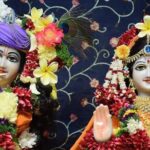
You begin at Dagadusheth Halwai Ganapati Temple, a Hindu temple dedicated to Lord Ganesha. It’s roughly 130 years old, and the site draws huge crowds—over 100,000 pilgrims per year—so even a short visit gives you a sense of everyday devotion in Pune.
Practical tip: dress and behave respectfully since this is an active place of worship. If you want photos, try to time them around the less crowded moments in your allotted time.
Aga Khan Palace (independence-era gravity)
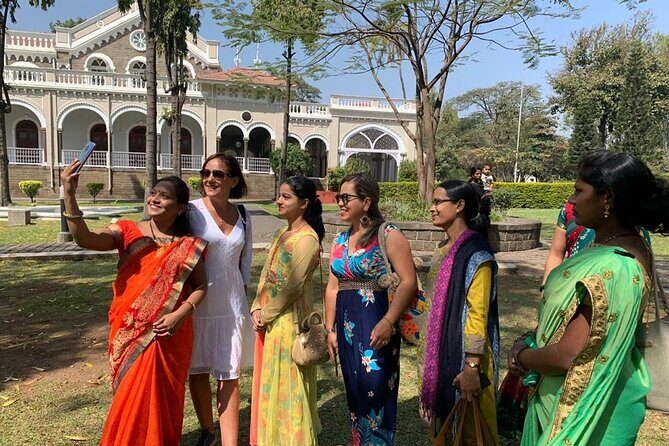
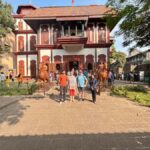
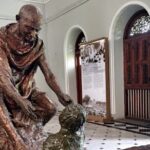
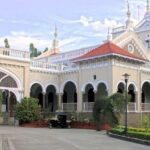
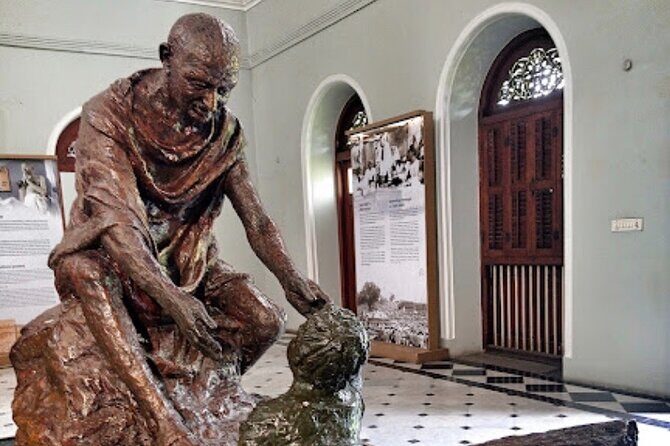
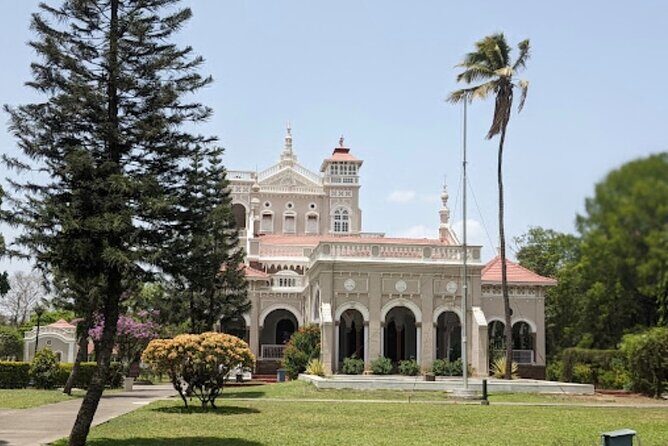
Next is Aga Khan Palace, known not just for its impressive presence, but for its connection to India’s freedom movement. It served as a prison for Mahatma Gandhi, his wife Kasturba Gandhi, his secretary Mahadev Desai, and Saroji (as referenced in the tour description).
This stop is one of the most meaningful in the day because it adds context to modern India, not only ancient temples. Even with a shorter time window, you’ll get a clear sense of why the palace is remembered.
You can also read our reviews of more private tours in Pune
Shaniwar Wada (Maratha power, 1732 style)
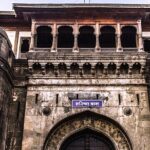
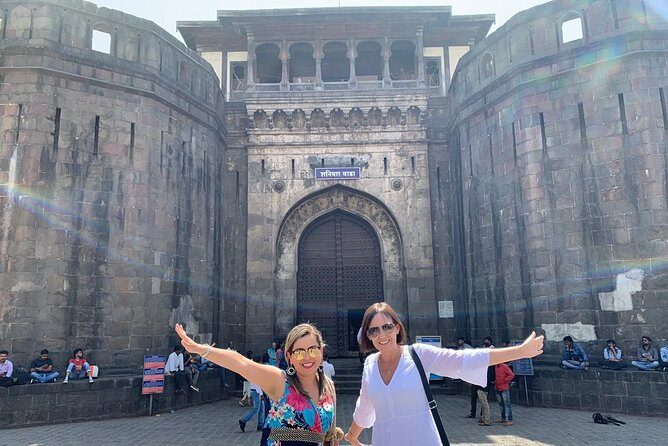
Then you’re at Shaniwar Wada, a 300-year-old fort and one of Pune’s main attractions. Built in 1732 in Maratha imperial architectural style, it was the throne seat of the Peshwas of the Maratha Empire.
The fort is a great contrast to the temple earlier: you move from devotion to power, from living faith to political history. If you’re the type who likes your photos with dramatic walls and big open views, you’ll appreciate this one.
Jijamatabaug / Lal Mahal (Shivaji’s early connection)
You’ll also pass through Jijamatabaug, tied to Lal Mahal (Red Palace). The tour notes that it’s linked with Chhatrapati Shivaji Maharaj’s early life, including that his father Shaji spent childhood there (as described in the tour info).
This is a small stop, but it helps connect the day’s theme: Pune as a place where major figures and events left physical marks you can still point to today.
Walking in old Pune: Tulshibaug, Kolsa Galli, and market street time
Tulshibaug Market (see the city’s everyday rhythm)
Your route includes time around Tulshibaug, described as a busy street market in old Pune. You’ll also find a historic temple nearby, and the market sits in front of Vishrambaug Wada.
This is the kind of stop where you’ll either love the energy or just use it as a quick look. Either way, it’s useful because it brings you out of monuments and into day-to-day street life.
Kolsa Galli (a short walk on an old bazaar lane)
Later you’ll take a short stroll in Kolsa Galli, tied to ancient market areas and described as a small by-lane. The tour also calls out “Centre Street” as part of the area, which helps you understand why this part feels like a traditional commercial pocket.
If you want souvenirs, spices, small gifts, or just the feel of old Pune, this stop gives you a taste without demanding hours.
Shopping streets: Fergusson College Road and Mahatma Gandhi Road
The day includes drive-by and short viewing time on major shopping areas like Fergusson College Road and Mahatma Gandhi Road. These are useful if you want a quick sweep of modern Pune commerce after the temple and heritage stops.
Culture and museum time: Pune Tribal Museum and what it adds
Pune Tribal Museum (Tribal Research Institute museum focus)
One of the more distinctive stops is Pune Tribal Museum, associated with the Tribal Research Institute and housed in the campus of Scheduled Castes & Scheduled Tribes Research & Training Institute. It’s popularly known as the Tribal museum, and it’s designed around tribal arts and artifacts.
This stop works well because the rest of your day covers major monuments and famous public sites. The museum adds a different lens: how culture and identity show up through art, artifacts, and research.
Parks, gardens, and calm breaks: Osho Teerth Park and Empress Gardens
Osho Teerth Park (a breather of green and water)
You’ll pause at Osho Teerth Park, described as a calm setting for walks and jogs with dense foliage, gardens, and a stream. This is the “slow your pace” moment in the day, and it’s smart planning when you’re otherwise in temple-and-fort mode.
Empress Gardens (Queen Victoria’s namesake)
Then comes Empress Botanical Garden / Empress Gardens, named after Queen Victoria. It’s described as home to many rare species of trees and flowers, and you’ll get time for a stroll.
Even though your visit is brief, gardens are where the city changes tone. If you’re photographing, bring some patience: the best pictures usually take a minute as you wait for light and shadows.
National War Museum: reflection without the chaos
Next you’ll visit the National War Museum in Pune Cantonment. The tour describes it as a war memorial dedicated to post-Independence war martyrs, and it notes this memorial is the only one in South Asia erected by (the description is cut off in the provided info).
Even with limited time, this stop adds a serious emotional counterweight to the more decorative architecture and shopping lanes. It also helps you understand how Pune honors sacrifice in a modern, structured way.
Multiple faiths in one loop: synagogue, gurudwara, fire temple, church
This tour has a strong “Pune as a crossroads” feel. You’ll move through or pass by places tied to different communities—useful if you want the city’s complexity without needing a separate itinerary for each group.
Ohel David Synagogue (Lal Deval drive-by)
You’ll drive past the Ohel David Synagogue, locally called LAL DEVAL. The description says it’s 90-feet high, red in color, built in English Gothic style in 1867, and is one of the largest synagogues built in India.
This is a classic drive-past “spot it, note it, move on” moment. It’s still worth it because the building is a visual landmark, and it broadens the day beyond only Hindu heritage.
Gurudwara Guru Nanak Darbar (Sikh worship stop)
You’ll see Gurudwara Guru Nanak Darbar, described as a famous Sikh place of worship in Pune. This is another quick visit, but it matters because it keeps the tour from becoming only temples and forts.
Jamshetji Jeejeebhoi Fire Temple (Zoroastrian place of worship)
You’ll also visit Jamshetji Jeejeebhoi Fire Temple, a Zoroastrian worship site. The tour notes it’s frequented by people of the Zoroastrian religion, giving you a chance to see a different spiritual tradition represented in Pune’s public spaces.
St. Mary’s Church (architecture appreciation)
And then there’s St. Mary’s Church, described as having stunning architecture and being frequented by Pune’s smaller Christian population. If you’re the kind of person who enjoys churches for design and quiet, you’ll likely appreciate the short stop.
Sadguru Shri Jangli Maharaj Samadhi Temple (samadhi visit)
Finally, you’ll see Sadguru Shri Jangli Maharaj Samadhi Temple, described as an ancient temple frequented by devout Hindus. It’s another “spiritual” stop that reinforces how faith is woven into everyday geography.
Neighborhood drives that explain modern Pune: Race Course and Koregaon Park
Not everything on this route is a “step out and walk” moment. Some stops are intentionally shorter, like drive past segments, and they help you build a mental map.
Pune Race Course (118 acres, 190-year-old vibe)
The tour includes a drive past the Pune Race Course, described as 118 acres and about 190 years old. Even if you don’t enter, the size gives you a sense of how Pune’s institutions sit inside large land parcels.
Koregaon Park and the Osho Commune drive-by
You’ll also drive around Koregaon Park, described as an old-world residential area. The route notes a drive past the Osho Commune, formerly known as the Rajneesh Ashram.
For many first-time visitors, these neighborhoods are useful because they show how Pune isn’t only “heritage” sites. It has modern residential and spiritual layers too—just seen from the car window instead of through a long visit.
Market-to-street rhythm: how to use your short free time
Because the schedule is packed, think of your market and shopping time as “browse and orient,” not “shop until you drop.” You’ll get brief windows near places like Tulshibaug, Kolsa Galli, Fergusson College Road, Jangali Maharaj Road, and Mahatma Gandhi Road.
Practical advice: wear comfortable shoes with grip. You’ll likely spend more time standing and walking than you’d expect from a schedule that looks like mostly short stops.
Also, plan for cultural etiquette at places of worship. Your guide can help you with what’s appropriate on the day, but your default should be simple: keep voices down, dress with respect, and follow any entry rules at each site.
Who this tour fits best (and who should skip it)
This tour is a strong match if you want a high-impact overview of Pune in one day. It’s especially good for:
- First-time visitors who want key monuments plus neighborhood context
- People who like variety: temples, independence-era sites, museums, gardens, and different faith communities
- Travelers who prefer a prepared day over figuring out transport and timing
You might want a different style of trip if you:
- Want deep time at fewer places (this is mostly short stops)
- Plan to do heavy shopping, since market time is limited
- Prefer a slower walk-heavy day with long museum visits
Should you book this Pune private tour?
I’d book it if your goal is orientation with real structure: you show up, get guided through major Pune highlights, eat a solid included lunch, and return to your hotel without transport hassles. The best part is the mix—Pune isn’t treated as one-note, and you’ll see how different eras and communities share the same city space.
Skip it if you hate rushing between stops or you want a “choose one neighborhood and wander” day. In that case, you’ll likely enjoy a more focused tour.
If your schedule is tight and you want the most value out of a single day, this private Pune loop is a solid way to do it.
FAQ
What is the duration of the Pune private city tour?
The tour lasts about 5 to 6 hours.
Is hotel pickup and drop-off included?
Yes. Round-trip transfers from your hotel are included, and pickup and drop-off can be arranged from your hotel or another location.
What meals and drinks are included?
Lunch is included, along with snacks and bottled water. Tea, coffee, local snacks, and refreshments are also included, plus unlimited mineral water and soft drinks.
Are entry fees included?
Yes. All entry fees are included, along with taxes, tolls, parking fees, and allowances.
Is this a private tour or a group tour?
This is a private tour/activity. Only your group participates.
What time does the tour operate?
The tour runs daily within the stated hours of 9:00 AM to 5:00 PM.
Do I need to pay for alcoholic beverages?
Alcoholic beverages are not included and are available to purchase.
Do I need to bring tickets?
A mobile ticket is provided.
What is the cancellation policy?
Free cancellation is available up to 24 hours in advance for a full refund. If you cancel less than 24 hours before the start time, the amount paid isn’t refunded.