REVIEW · NEW DELHI
Gandhi Delhi Private History Adventure Tour
Book on Viator →Operated by Intrepid Urban Adventures - India · Bookable on Viator
Gandhi’s final hours live on in Delhi. I love the private-group pace and the fact that admissions are included for the key sites, so you don’t burn time sorting tickets. The main drawback to keep in mind: the tour is short, so you’ll want to come with a little curiosity, and timing can occasionally run behind schedule depending on your guide and day.
This half-day experience starts at 1:00 pm and runs about 4 hours, with pickup from a centrally located hotel and a mobile ticket you can use on the go. The group stays small (up to 12 people), and you travel with an English-speaking guide on a private setup, not a big bus shuffle.
One more plus that matters to me: it’s promoted as a carbon neutral tour operated by a B Corp certified company using travel as a force for good. If you care about how tourism is managed as much as where you go, that’s a nice fit.
In This Review
- Key points to know before you go
- Gandhi Smriti and Birla House: the last stretch of his life
- Inside the National Gandhi Museum: documents that explain the man
- Raj Ghat and the “Hey Ram” inscription: quiet power in a garden
- Private group pace (max 12) and English guidance that works
- What $40.03 buys: three sites, admissions included, plus pickup
- Timing and route rhythm: starting at 1:00 pm
- Dress code and on-the-ground manners in Delhi
- How to pair this Gandhi tour with the rest of your Delhi days
- Should you book this Gandhi Delhi Private History Adventure Tour?
- FAQ
- How long is the Gandhi Delhi private tour?
- What time does the tour start?
- Where do you go on the tour?
- Are admission tickets included?
- Is pickup included?
- Is the tour private?
- Is an English-speaking guide provided?
- Can I get a full refund if I cancel?
Key points to know before you go
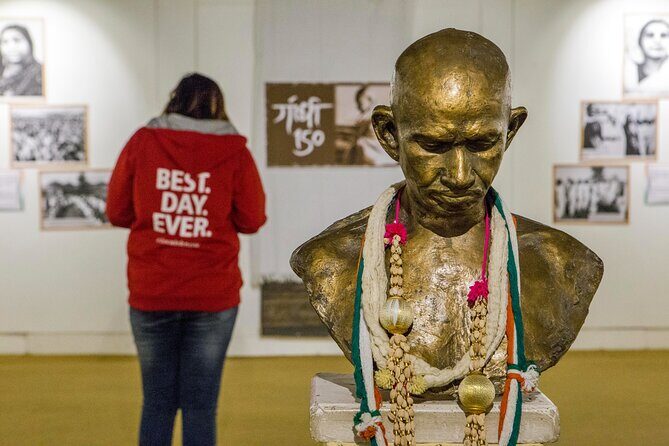
- Gandhi Smriti (Birla House) in the place where he was assassinated
- National Gandhi Museum with books, manuscripts, journals, and photographs tied to Gandhi
- Raj Ghat with the “Hey Ram” inscription and a calm cremation memorial garden
- Pickup + private transportation from a centrally located hotel
- Short, focused timing (about 4 hours) with guidance you can ask questions with
Gandhi Smriti and Birla House: the last stretch of his life
Your tour starts at Gandhi Smriti, in New Delhi, where the story turns from biography into something you can feel. This is the memorial site connected to the Birla House, the place where Gandhi spent his final days before he was assassinated in January 1948.
What you do here matters. You’ll get time in the well-preserved room Gandhi called home, and you’ll also tour the grounds connected to his routine evening walk. That combination is powerful: you’re not just reading about history; you’re moving through the setting where everyday movement and extraordinary events collided.
A practical note: this stop is timed at about 40 minutes and includes admission, so don’t plan to “linger and linger.” If you’re the type who likes to read every sign twice, you might have to choose a few highlights and let the rest go. I’d treat it like a guided sketch, not a full textbook.
Also, the multimedia museum is part of this site. Even if you’re not a big fan of screens, multimedia can be a helpful way to understand what you’re looking at—especially for first-time visitors. It’s a good warm-up before you go deeper into papers and artifacts later.
Finally, dress matters here. The sites are conservative, and you’ll be more comfortable if your clothes cover shoulders and knees. Delhi can be hot, so loose, lightweight layers are your friend—respectful and practical.
You can also read our reviews of more private tours in New Delhi



Inside the National Gandhi Museum: documents that explain the man
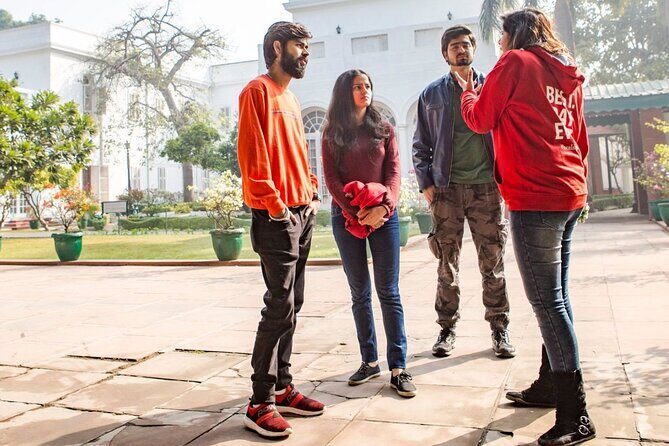
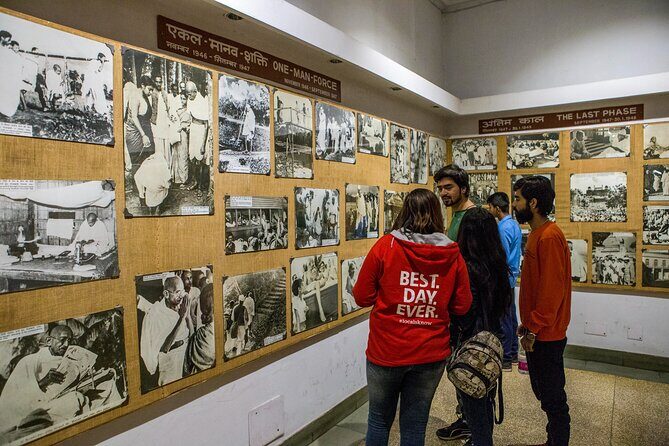
Next you’ll head to the National Gandhi Museum, locally known as the National Gandhi Museum. This is where the tour shifts from scenes to ideas—documents, records, and visual material that show what Gandhi believed and how he worked.
This stop is shorter on the clock (about 20 minutes), but the content is dense in a good way. You’ll have time to explore books, manuscripts, journals, and photographs connected to Gandhi. If you come away from museums frustrated because you felt rushed, this one is at least designed for a quick but meaningful scan of primary materials.
Here’s how I’d use this time if you want value: don’t try to read everything. Instead, pick a theme you care about—nonviolence, civil resistance, moral leadership, or the way Gandhi framed justice. Then let the exhibits you see support that one thread. With only 20 minutes, focus beats breadth.
One more tip: your guide’s job here is to connect the dots between the objects and the man. In past groups, guides like Indira and others have been praised for being friendly and clear, so if something piques your interest, ask a direct question. A well-worded question can turn a short museum visit into a satisfying story.
And yes, admission is included, so you’re paying for a guided, time-managed pass through the sites that matter. That’s a big part of why the tour hits for first-time visitors.
Raj Ghat and the “Hey Ram” inscription: quiet power in a garden
The final stop is Raj Ghat, on the west bank of the Yamuna River. This is the cremation memorial for Gandhi, and the tone changes here from “history site” to “place of reflection.”
You’ll see the memorial with Gandhi’s final words inscribed: Hey Ram. You’ll also visit the spot where he was cremated after his assassination. Raj Ghat is a green garden setting, and it’s also where other Indian leaders were cremated at different points, so you’re not only looking at Gandhi—you’re seeing how India remembers.
This stop is about 20 minutes with admission included. That means you get enough time to take it in, stand where you need to stand, and read the key inscriptions without feeling trapped. If you want extra quiet, arrive ready to slow down for a moment. This is one of those places where rushing feels wrong.
For many people, Raj Ghat is the emotional payoff of the tour. Gandhi Smriti gives you the “how and where it happened.” The museum gives you “what he taught.” Raj Ghat gives you the “why it still matters,” even if you don’t share every belief.
If you’re traveling with kids, this is also the easiest stop to handle. It’s calmer than a museum and more outdoor-friendly, so it’s a good end point before you head back toward your hotel.
Private group pace (max 12) and English guidance that works
Even though this is a private tour, the group size stays small—up to 12 people—and the result is usually a more relaxed pace than you’ll get on big tours. You’re in control of the rhythm, and you can ask questions as you go instead of shouting across a crowd.
Your guide is listed as an English-speaking local guide. In the field, guide quality seems to be the difference between a “good tour” and a “wow.” In one set of positive experiences, guides such as Audesh C. Mishra were described as going out of their way to make the afternoon feel special, even extending time when the group took their time. Another group noted Abhi as the guide, with a friendly and professional driver named Sonny.
That’s the best-case scenario: a guide who can explain why each site connects to Gandhi’s life and values, not just recite dates. The tour also includes tips on what else to see and do, plus what to eat during your stay, so the guide can help you turn the afternoon into a bigger Delhi plan.
Now, the caution. Not every experience is perfect. There’s at least one report of a guide giving thin information compared to what you’d expect from a guided tour, and another complaint about the tour being late and shorter than promised. I can’t control that, but I can help you handle it: keep expectations realistic, ask questions if something feels off, and if you’re the type who needs deep context, consider reading a quick Gandhi primer before you go. You’ll get more out of the time you have.
What $40.03 buys: three sites, admissions included, plus pickup

Let’s talk value, because $40.03 in Delhi can mean very different things depending on what’s included. Here, the price is tied to a short set of major Gandhi sites—Gandhi Smriti, the National Gandhi Museum, and Raj Ghat—and the tour includes admissions for each stop.
You’re also getting private transportation with pickup from a centrally located hotel in Delhi, plus an English-speaking guide. For many visitors, that combo is the value: you skip the mental overhead of figuring out logistics, and you pay for the convenience of being carried from site to site in a manageable time window.
And because the tour includes tips for what else to see and where to eat, the value isn’t only in the three stops. If the guide gives helpful recommendations, this can save you time and help you avoid tourist-trap wandering later.
The “gotcha” with value is timing. At about 4 hours, you’ll get a guided run through highlights, not a full day of slow reading and extra exhibits. If you’re the kind of visitor who wants to spend 90 minutes in a museum alone, you might still enjoy the tour, but plan to do deeper DIY visits later.
Still, for first-timers who want the essentials—where Gandhi lived his last days, the museum materials behind the legend, and the cremation memorial—this is a straightforward, practical buy.
You can also read our reviews of more historical tours in New Delhi





Timing and route rhythm: starting at 1:00 pm
The tour starts at 1:00 pm. That matters because Delhi afternoons can be warm, and museums can feel better earlier or later. Starting at 1:00 pm is a workable compromise, and the schedule is built around short indoor/outdoor segments.
Here’s the rhythm you’ll feel:
- Gandhi Smriti first (roughly 40 minutes)
- National Gandhi Museum next (roughly 20 minutes)
- Raj Ghat last (roughly 20 minutes)
This order is smart. It moves from the dramatic site of his final days to the paper trail that explains his philosophy, then ends at the memorial garden.
In one negative experience, a tour started late and ended up lasting less time than promised. That can happen in any city with traffic and tight schedules. My advice is simple: don’t plan a “must be somewhere at 5:00 pm” appointment right after. Keep your next commitment flexible, or plan something that can flex if the driver runs into city delays.
Also, the tour ends with options to explore on your own or arrange a taxi back to your hotel. That’s helpful when you want to keep your momentum without standing around waiting for a group departure.
Dress code and on-the-ground manners in Delhi
One thing I appreciate about this tour’s guidance is the emphasis on conservative dress. Throughout Asia, and especially outside the major-party-district feel of big cities, it’s worth dressing with respect.
For this tour, you’re strongly recommended to wear modest clothing—cover your shoulders and knees. Loose, lightweight long clothing is both comfortable in heat and appropriate for religious and memorial environments.
This is more than politeness. It helps you feel comfortable in quiet spaces like Raj Ghat and respectful inside memorial buildings where visitors are often expected to behave calmly. It also prevents the “why am I overheated” spiral when you’re doing multiple walking-and-standing moments.
If you’re bringing children, the tour is described as child-friendly. Kids under age 6 can join free of charge (you need to inform the operator when booking). That means it’s not designed like a strict academic lecture. It’s history you can absorb at a human pace.
How to pair this Gandhi tour with the rest of your Delhi days
This tour is focused. It’s not trying to be a whole Delhi circuit. So the best pairing strategy is to put it where you can build a narrative.
If your morning is for big landmarks (government buildings, major monuments, markets), then this afternoon provides a moral and historical anchor. If your afternoon includes parks or a slower pace, you’ll appreciate how Raj Ghat closes things down gently.
You’ll also get practical help from your guide: the tour includes tips on what else to see and do and what to eat during your stay. I’d take that seriously and ask for one or two recommendations only—otherwise you end up with ten tabs open in your brain and zero momentum on the street.
If you want deeper context after the tour, plan a follow-up visit to a museum or a reading stop later. The tour gives you a framework; you decide how far you want to go.
Should you book this Gandhi Delhi Private History Adventure Tour?
I’d book it if you want three essential Gandhi-related sites handled in a time-managed private way. At around $40 with pickup, admissions included, and an English-speaking guide, it’s good value for first-timers who want meaning without turning the afternoon into a logistics project.
I’d think twice if you’re a “single site, hours of reading” visitor. The schedule is short on purpose, so you’ll be choosing highlights instead of absorbing everything. Also, build in flexibility because timing and guide depth can vary from one day to another.
If you go in with respect, ask questions, and let the places guide you, this is one of those Delhi experiences that sticks. Gandhi Smriti is vivid, the museum adds real material context, and Raj Ghat leaves you with a quieter kind of understanding than most sightseeing.
FAQ
How long is the Gandhi Delhi private tour?
It runs for about 4 hours (approximately).
What time does the tour start?
The start time is 1:00 pm.
Where do you go on the tour?
You visit Gandhi Smriti, the National Gandhi Museum, and Raj Ghat.
Are admission tickets included?
Yes. Admission tickets are included for Gandhi Smriti, the National Gandhi Museum, and Raj Ghat.
Is pickup included?
Yes, pickup is offered with private transportation from a centrally located hotel in Delhi.
Is the tour private?
Yes. It’s a private tour, meaning only your group participates.
Is an English-speaking guide provided?
Yes, the tour includes a local English-speaking guide.
Can I get a full refund if I cancel?
Free cancellation is available. You can cancel up to 24 hours in advance for a full refund.