REVIEW · MUMBAI
Shared Group Mumbai Tour For Cruise traveler
Book on Viator →Operated by Young Tours And Travel · Bookable on Viator
South Mumbai moves fast, and this tour helps you get your bearings fast. I liked the small group size (up to 10), which makes it easier to ask questions without feeling rushed. I also loved the contrast between major landmarks and everyday Mumbai, especially Dhobi Ghat, where you see laundry work in the open. One possible drawback: the whole loop is timed, so most stops are quick photo-and-look visits rather than long hangs.
You’ll ride in an air-conditioned vehicle, then hop out at key spots for short stretches of walking. I also appreciated the practical setup: the tour has a mobile ticket, includes Mani Bhavan museum time, and runs on either a morning or afternoon schedule—useful if you’re trying to fit Mumbai into a cruise day.
In This Review
- Key things to know before you go
- A cruise-day friendly route that starts (and ends) in Fort
- Price and value: what $59 gets you in real sightseeing time
- The pace: why it feels like a sampler (and how to enjoy it)
- Gateway of India: the iconic start with a specific story
- Marine Drive: a 3.6-kilometre strip for sea air and skyline views
- Mani Bhavan Gandhi Museum: where Mumbai politics took shape
- Hanging Gardens and Kamala Nehru Park: Malabar Hill’s views plus animal-shaped hedges
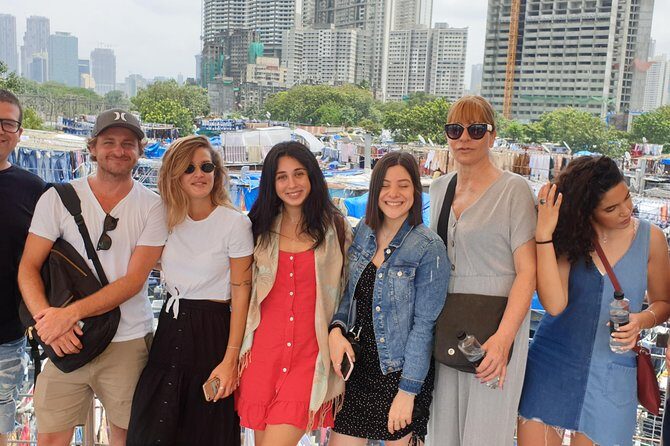
- Dhobi Ghat: the open-air laundry scene that hits you immediately
- Chhatrapati Shivaji Terminus: names, identity, and a dramatic arrival point
- Bombay High Court and University of Mumbai Library: British-era institutions in modern use
- Colaba Causeway: finishing on commerce and city rhythm
- Your guide and small-group feel: how to get the most in 4–5 hours
- Choosing morning or afternoon: the simple way to match your day
- Who this tour is for (and who might want something else)
- Should you book it?
- FAQ
- FAQ
- How long is the South Mumbai tour?
- What is the group size?
- How much does it cost?
- Where does the tour start and end?
- Do I need to buy tickets for the attractions?
- Is transportation included?
- Are there morning and afternoon departures?
- Is this tour suitable for most travelers?
- What if the weather is bad?
- What is the cancellation window?
Key things to know before you go

- Up to 10 people means more personal attention from your guide
- AC transport keeps the main time in the car comfortable
- Dhobi Ghat + major monuments gives you both spectacle and real local routine
- Mani Bhavan museum is included, while many other sights are free to enter
- 4 to 5 hours is ideal if your time in Mumbai is limited
A cruise-day friendly route that starts (and ends) in Fort
If you’re arriving by cruise, the biggest win here is the location of the meeting point. The tour starts around Ballard Pier / Alexandra Dock / Green Gate in Fort, and it finishes back at the same meeting point. That round-trip matters. You don’t have to play airport-style navigation games before or after your half-day.
Time-wise, plan on about 4 to 5 hours total. That’s long enough to see meaningful South Mumbai highlights, but short enough that you’re not stuck trying to squeeze in everything. For most first-time visitors, this kind of half-day tour is a clean way to understand the city’s layout—what’s close to the sea, where the big public buildings sit, and where neighborhoods start to change.
You can also read our reviews of more boat tours in Mumbai

Price and value: what $59 gets you in real sightseeing time
At $59 per person, you’re paying for more than just a checklist. You’re getting a professional guide, group transportation in an air-conditioned vehicle, and a tight route that avoids long “getting from A to B” dead time. The structure also helps with value because so many stops are admission-free.
What’s included is the practical part: Mani Bhavan Gandhi Museum has admission covered in the tour. Most other major viewpoint stops—like Gateway of India, Marine Drive, Hanging Gardens, Kamala Nehru Park, Dhobi Ghat, Chhatrapati Shivaji Terminus, Bombay High Court, University of Mumbai Library, and Colaba—are listed as free entry.
In other words, your money goes to guide time, vehicle time, and the parts where you need ticket access. That’s why this tour works well when you want a lot of “I saw that” moments without spending extra on every stop.
The pace: why it feels like a sampler (and how to enjoy it)
The schedule is built around quick hits. Several stops are around 10 minutes, Hanging Gardens and Kamala Nehru Park are short looks, and you get about 30 minutes at Mani Bhavan. Dhobi Ghat is also a brief stop, but it’s the kind of place where even a short visit gives you strong impressions.
Here’s the deal: if you love deep museum hours and long wandering, this won’t replace a full day in Mumbai. But if you want to map the city mentally and get a high-quality overview of key South Mumbai landmarks plus one unforgettable local scene, this timing is exactly right.
My advice: treat this as a “set the stage” tour. After it ends back at Fort, you can decide what you want to return to on your own.
Gateway of India: the iconic start with a specific story
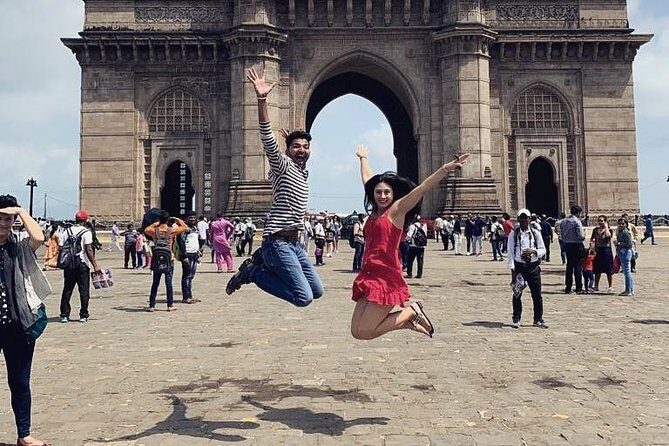
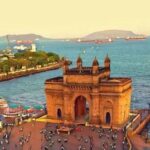
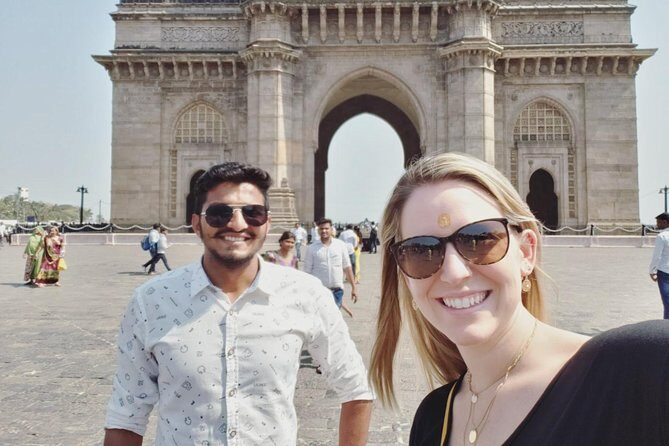
The tour kicks off at Gateway of India near Apollo Bunder. This is a classic Mumbai landmark—an arch monument built in the early twentieth century to commemorate the landing of the first British monarch in India, with King-Emperor George V and Queen-Empress Mary part of the story.
What I like about starting here is that it gives you an immediate landmark anchor. You’re not just looking at a pretty structure; you’re getting the historical framing for the rest of the South Mumbai architecture you’ll see later.
It’s also a straightforward stop: a short window to look, take photos, and understand what kind of coastline-and-monuments city Mumbai can be.
Marine Drive: a 3.6-kilometre strip for sea air and skyline views
From the Gateway area, you head to Marine Drive, a 3.6-kilometre-long boulevard in South Mumbai. Even with limited time, it’s one of those places where you quickly understand why people describe it as one of Mumbai’s signature drives: the road sits along the waterfront, so you get that long perspective that a single building simply can’t provide.
Expect a quick stop—enough time to walk a bit, orient yourself, and grab photos—but not enough time to “live there.” If you’re choosing between morning and afternoon departures, you’ll often find the light and crowd levels change a lot. Pick the slot that matches the rest of your day.




Mani Bhavan Gandhi Museum: where Mumbai politics took shape
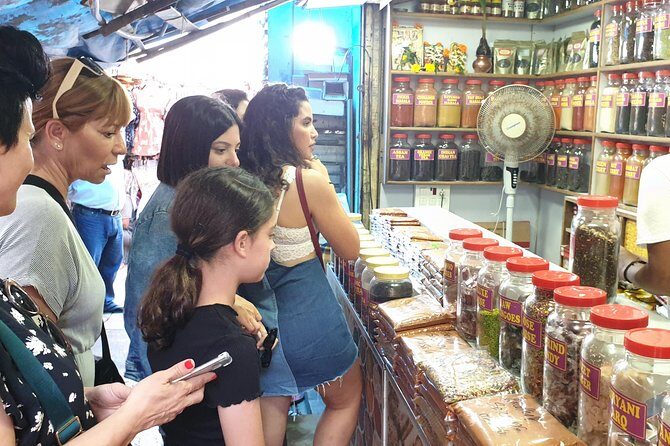
Next up is Mani Bhavan, a museum and historical building linked to Gandhi’s political activities in Mumbai between 1917 and 1934. It’s located in the Gamdevi precinct, and it was a focal point of his work during those years.
This is your one longer stop at about 30 minutes, and that matters. It gives you enough time to read, connect the exhibits to what you already know about Gandhi, and leave with context instead of just a photo.
Since museum admission is included, you don’t have to mentally budget for entry fees during the tour. It’s also a good pause from the more monument-and-street style viewing. If Gandhi’s story is on your travel radar, you’ll feel the relevance immediately.
Hanging Gardens and Kamala Nehru Park: Malabar Hill’s views plus animal-shaped hedges
You’ll then climb into the Malabar Hill area for the Hanging Gardens, also known as Pherozeshah Mehta Gardens. The gardens are terraced and set high on the western side of Malabar Hill, opposite Kamala Nehru Park. The views are part of the reason people come—sunset views over the Arabian Sea are specifically highlighted—and you also get a distinctive garden detail: hedges carved into the shapes of animals.
If you like “why was this built this way” stories, you’ll appreciate the origin detail: the park was laid out in 1881 by Ulhas Ghapokar over a main reservoir. Some accounts say it was meant to help cover the water from the potentially contaminating activity of the nearby Towers of Silence.
Timing is short here, so don’t expect a long stroll. Instead, focus on the big picture: terrace levels, sea-facing perspective, and the animal hedge shapes you can spot quickly.
Right after, you’ll also pass through Kamala Nehru Park, part of the Hanging Gardens complex and a popular stop for families and tourists. It’s a good breather spot in the middle of the tour loop.
Dhobi Ghat: the open-air laundry scene that hits you immediately
This is the stop that tends to stick in your memory. Dhobi Ghat (Mahalaxmi Dhobi Ghat) is an open-air laundromat where washers known as dhobis work in the open to clean clothes and linens from Mumbai’s hotels and hospitals. It was constructed in 1890.
A lot of tours mention “local color.” Dhobi Ghat gives you something more specific: you’re watching an actual working setup designed for volume. It’s not a staged performance. The scale is what gets people, and one review specifically noted how far the laundry stretches—long enough that it feels like the work goes on forever.
Practical note: since this is an active work area, treat it like a working space, not a museum. Keep your steps smooth, follow your guide’s direction, and be mindful when taking photos.
Also, there’s a little human touch you may experience during the tour—one review highlighted chai as part of the overall moment. If your guide offers a stop like that, it’s a nice reminder that a city tour is also about how you move through the day, not just what you photograph.
Chhatrapati Shivaji Terminus: names, identity, and a dramatic arrival point
From Dhobi Ghat, you’ll visit Chhatrapati Shivaji Terminus (CST), one of the most recognizable transport buildings in India. A key detail here: the station’s name changed to Chhatrapati Shivaji Terminus in March 1996 to honor Shivaji, the 17th-century founder of the Maratha Empire. The title Chhatrapati comes before his name as a royal designation.
This is another short stop, but it’s worth using the time well. Look at how the structure reads as both a functional station and a statement of civic pride. Even without deep architectural knowledge, you’ll feel the scale.
If you’re a train fan, don’t skip this moment. It’s quick, but it gives you a landmark that will anchor the rest of your mental map of Mumbai.
Bombay High Court and University of Mumbai Library: British-era institutions in modern use
Next comes the Bombay High Court, one of three High Courts established in India at the Presidency Towns. It was created by Letters patent granted by Queen Victoria dated June 26, 1862, and it was inaugurated on August 14, 1862 under the High Courts Act, 1861.
It’s a fast photo-and-look visit, but these facts help you understand why the building carries weight. When you know the dates, you stop seeing it as just another government structure and start seeing it as something tied to a specific era of colonial legal administration.
After that, you’ll stop at the University of Mumbai Library. The University of Mumbai is among the earliest state universities in India and the oldest in Maharashtra. It was called the University of Bombay until 1997, and it offers bachelor’s, master’s, doctoral courses, plus diplomas and certificates across arts, commerce, science, medical, and engineering. The language of instruction for most courses is English.
You might not get a deep campus tour in this half-day slot, but the library stop works as a “public institutions” contrast to the more street-level scenes.
Colaba Causeway: finishing on commerce and city rhythm
Your last major stop is Colaba Causeway, officially known as Shahid Bhagat Singh Road. It’s a commercial street and a major causeway linking Colaba and Old Woman’s Island.
This is a good finish because it shifts you from monuments and formal buildings to everyday movement. It also helps if you plan to keep exploring after the tour, because Colaba’s street energy is the kind of place where you can turn “I learned where things are” into “I know where to go next.”
You’ll typically have about 15 minutes here. Use that time to soak in the street layout and pick out landmarks or streets you want to revisit.
Your guide and small-group feel: how to get the most in 4–5 hours
This tour is built for people who want a guide to connect dots fast. With a group capped at 10 travelers, you’re less likely to feel lost or stuck waiting for the car while everyone else catches up.
One review mentioned two kind and experienced guides, and that lines up with what you want from a half-day tour: someone who can explain what you’re seeing in plain language and keep the pace moving without making you feel like you’re sprinting.
If you’re the type who likes to ask questions, small-group tours are where that works best. If you’re more camera-first, the guide still helps by pointing out what to look for quickly—like the garden animal hedges or what makes the railway terminus name change matter.
Choosing morning or afternoon: the simple way to match your day
The tour offers morning or afternoon departures. The practical way to choose is to match it to the rest of your schedule on land.
- Pick morning if you want a calmer start and an earlier end back near Fort.
- Pick afternoon if you want more day light while you’re at waterfront and viewpoints like Marine Drive and the Hanging Gardens area.
Since good weather is required, your actual choice may depend on what the forecast looks like right before you go.
Who this tour is for (and who might want something else)
This South Mumbai loop is a strong fit if you:
- are doing a cruise day and need a manageable half-day plan
- want a mix of major landmarks plus a real working scene in one go
- like Gandhi-related sites and public architecture
- prefer small-group tours over big buses
You might want a different option if you:
- want long stays at fewer places
- plan to spend most of your time inside museums beyond what Mani Bhavan offers here
- dislike quick photo-stop pacing
Should you book it?
I’d book this tour if you want a smart half-day overview of South Mumbai with AC comfort, a small group, and a route that balances famous monuments with something genuinely local at Dhobi Ghat. For the price, you’re not paying to enter every site; you’re paying for guided time and transportation, with the museum stop included.
If your main goal is deep exploration, then it won’t fully satisfy you. But if your goal is to get oriented and see standout highlights without exhausting your day, this is a solid choice.
FAQ
FAQ
How long is the South Mumbai tour?
It runs about 4 to 5 hours.
What is the group size?
The tour is limited to a maximum of 10 travelers.
How much does it cost?
The price is $59.00 per person.
Where does the tour start and end?
It starts at the Ballard Pier Mumbai / Alexandra Dock / Green Gate area in Fort and ends back at the same meeting point.
Do I need to buy tickets for the attractions?
Many stops list admission as free. Mani Bhavan Gandhi Museum includes admission in the tour.
Is transportation included?
Yes. You travel in an air-conditioned vehicle.
Are there morning and afternoon departures?
Yes, you can choose from morning or afternoon departures.
Is this tour suitable for most travelers?
Most travelers can participate.
What if the weather is bad?
This experience requires good weather. If it’s canceled due to poor weather, you’ll be offered a different date or a full refund.
What is the cancellation window?
You can cancel for a full refund up to 24 hours before the experience’s start time.