REVIEW · MUMBAI
Private City Tour with Dharavi Slum Dhobighat and Dabbawalla
Book on Viator →Operated by Namaste Tours and Trips · Bookable on Viator
South Mumbai feels like a photo album. Then the day quietly changes gear. You’ll see Dharavi and Dhobi Ghat alongside headline landmarks, with a guide named Siddhi (often called Sid) known for a careful, human approach.
What I like most is the mix of big names and real daily work, and the way Siddhi connects places with stories you can actually use while you travel. One thing to consider: it’s a full 6 to 7 hours, and the last stretch into Dharavi and Dhobi Ghat works best when the weather cooperates.
In This Review
- Key Highlights You’ll Care About
- A Private Mumbai Mix: Heritage Landmarks Then Real Working Life
- Timing and Where the Day Starts (Regal Cinema at 9:30)
- South Mumbai Icons: Gateway of India, University Library, High Court, and Chhatrapati Shivaji Terminus
- Crawford Market to Marine Drive: Markets, Sea Air, and City Views
- Gandhi’s Mumbai: Mani Bhavan, Hanging Gardens, and Kamala Nehru Park
- Banganga Tank, Then Antilia: Temple Water and Billionaire Row in One Thread
- Dhobi Ghat at Mahalaxmi: Where You’ll Watch Laundry Become History
- Churchgate Railway Station Area: A Quick Look at the City’s Motion
- Dharavi With Siddhi: How to See a Living Neighborhood Without Reducing It
- Where the dabbawalla fits (and how to check before you go)
- Value for Money: Why This Price Can Make Sense in Mumbai
- What to Bring and How to Handle the Day Comfortably
- Who This Tour Is Best For
- Should You Book This Private Mumbai Tour?
- FAQ
- How long is the private city tour in Mumbai?
- What time does the tour start and where is the meeting point?
- Is pickup included?
- Is this tour private or shared?
- What’s included in the itinerary?
- What happens if the weather is bad?
Key Highlights You’ll Care About
- Siddhi’s sensitive, people-first style makes tough neighborhoods feel understandable, not like a spectacle
- A full South Mumbai circuit hits Gateway of India, Chhatrapati Shivaji Terminus, and Marine Drive in one day
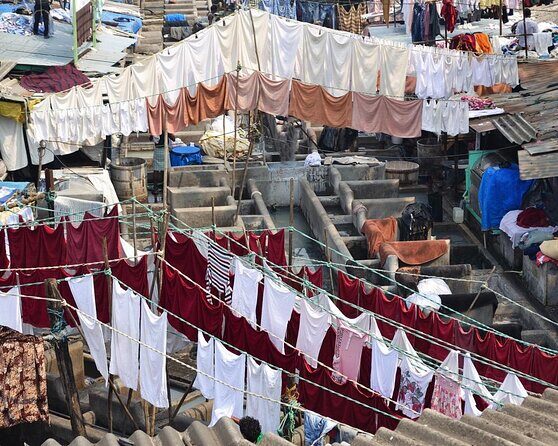
- Dhobi Ghat’s working-laundry reality turns laundry lines into a window on how Mumbai functions
- Dharavi time is the centerpiece with a guided walk that helps you read what you’re seeing
- Private-group pace (only your group joins), so you’re not stuck in a herd
- Quick stops, mostly free sights means less time paying, more time walking and watching
A Private Mumbai Mix: Heritage Landmarks Then Real Working Life
This is the kind of Mumbai day I look for when I want variety without wasting time. You start in classic South Mumbai landmarks, then the tour pivots into spaces that most visitors only skim past. The result is a day that feels balanced: monuments and mess, empire-era architecture and everyday labor.
Siddhi’s role matters here. In the feedback I saw, people repeatedly pointed out a professional guide with a calm, respectful way of talking about places where residents live and work. That’s a big deal in Dharavi and at Dhobi Ghat, where the temptation is to treat the scene like a show. This tour steers you toward seeing people first.
Also, you’re not stuck with fixed entrances and ticket queues for every stop. Most of the sights listed are free to enter, and the itinerary is built around short, guided pauses plus walking time where it counts.
You can also read our reviews of more city tours in Mumbai



Timing and Where the Day Starts (Regal Cinema at 9:30)
Your morning starts at Regal Cinema, Apollo Bandar, Colaba, Mumbai. Start time is 9:30 am, and the total duration is about 6 to 7 hours. You end in Dharavi, at Kumbhar Wada.
This timing shapes the whole experience. You get to cover the most scenic parts of South Mumbai before mid-day crowds build too much, then transition toward the afternoon where the Dharavi/Dhobi Ghat focus becomes more meaningful. It also means you’ll want a comfortable schedule for the rest of your day after you’re dropped off in Dharavi.
One more practical note: the experience depends on good weather. If weather is poor, you may be offered a different date or a full refund. If your trip is tight, that flexibility matters.
South Mumbai Icons: Gateway of India, University Library, High Court, and Chhatrapati Shivaji Terminus
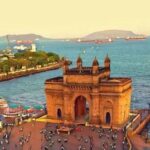
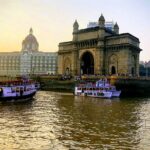
The early stops are about helping you get your bearings fast. Gateway of India is a strong opener because it’s instantly recognizable and gives you a sense of where the city’s story bends toward the waterfront. You’ll have a short stop here (around 20 minutes) with free entry, enough time to take a few photos and learn what the monument is commemorating.
Next comes the University of Mumbai Library stop. This is one of those moments where the tour slows down just enough to give context about Mumbai as an educational hub, not only a film-and-business machine. It’s brief, so don’t expect a long museum vibe, but it helps you understand how the city’s institutions sit in the same geography as its colonial-era architecture.
Then you pass the Bombay High Court principal bench for about 10 minutes. In many cities, courts feel dry and distant. In Mumbai, the architecture and placement help you see how law, power, and daily movement overlap.
From there, you reach Chhatrapati Shivaji Terminus (about 20 minutes). This UNESCO World Heritage railway station is the kind of building that forces your attention. Even if you don’t spend time inside, the exterior alone tells you the city invested in design and engineering long before “modern” became a buzzword.
Crawford Market to Marine Drive: Markets, Sea Air, and City Views
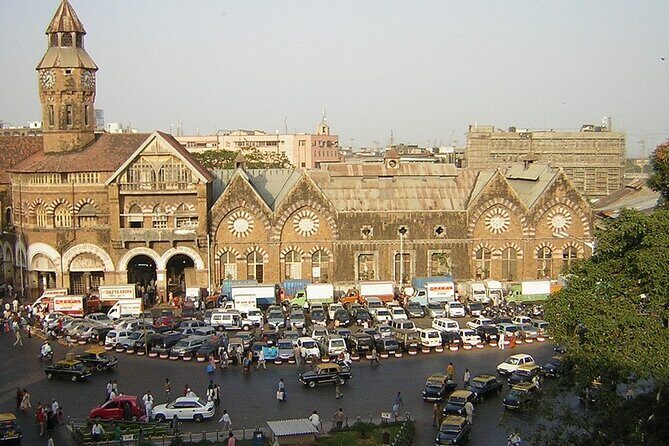
Crawford Market is a stop that gives you a real sense of South Mumbai’s daily rhythm. It’s famous, and the building dates to the late 1800s, so you get both location energy and architectural history in a short time window. You’ll have about 20 minutes here, and because entry is free, the tour isn’t nickel-and-diming you just to stand in the right place.
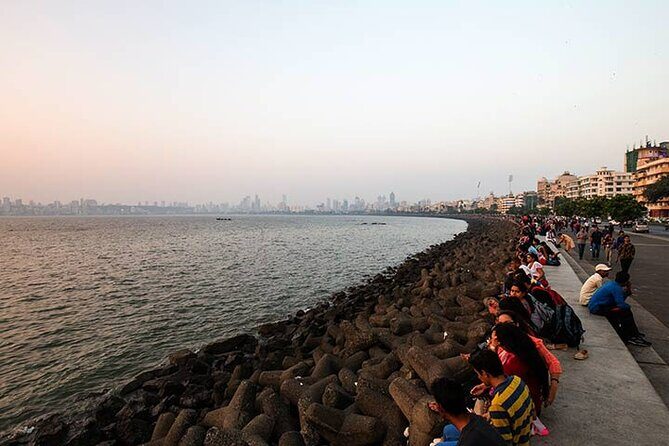
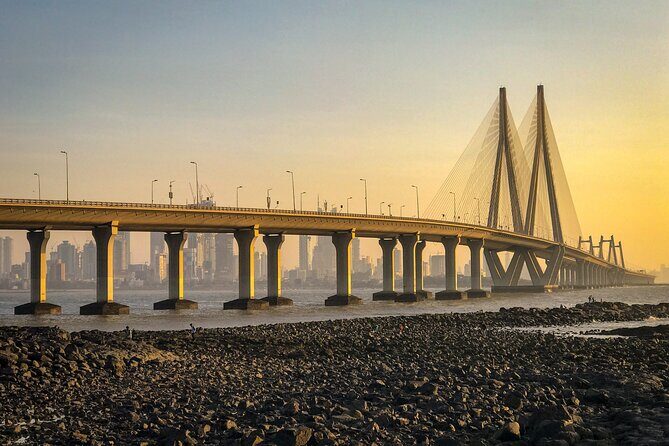
Then you head toward Marine Drive, the long promenade along the coast. You’re given a short window (around 20 minutes), but it’s enough to notice how the sea-front road and the city’s skyline relationship shapes the way people move. On a day like this, Marine Drive is also a mental reset before you go from views to work.
If you’re thinking about photography, aim to watch the light. Early in the day it’s often clearer. Later, haze can soften the skyline, but it also makes the scene feel more “real Mumbai” and less like postcards.
Gandhi’s Mumbai: Mani Bhavan, Hanging Gardens, and Kamala Nehru Park
A big reason I like adding Mani Bhavan is that it changes the tone from architecture to political life. Mani Bhavan is dedicated to Gandhi and is tied to his activities in Mumbai. With only a brief stop (about 20 minutes), it won’t turn into a full history lesson. Still, it gives you a grounded thread: the city isn’t only about buildings and business. It’s also about movements and organizing.
Next are the Hanging Gardens, also known as Pherozeshah Mehta Gardens. This is a classic Mumbai viewpoint moment—terraced gardens with a camera-friendly setting over Malabar Hill. You’ll have about 20 minutes. The value here isn’t just photos. It’s the feeling of height and perspective, the reminder that Mumbai’s density is layered.
Then Kamala Nehru Park, another short stop (about 20 minutes), offers a view back toward Marine Drive. The tour uses these garden stops to keep you from spending the entire day at street level. You get a breath of open air and a chance to read the city’s layout, even if only briefly.
You can also read our reviews of more private tours in Mumbai




Banganga Tank, Then Antilia: Temple Water and Billionaire Row in One Thread
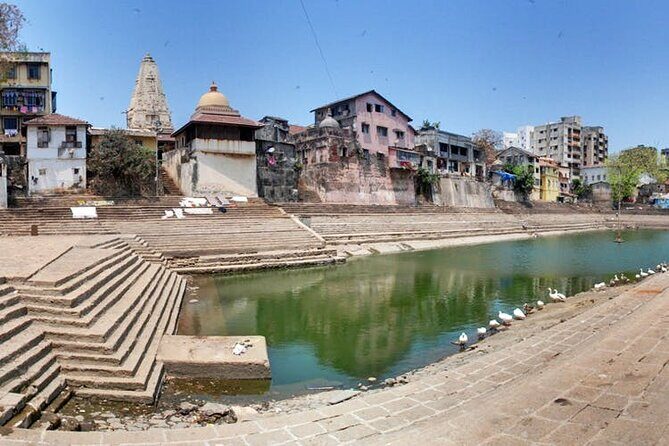
Banganga is a temple tank connected to the Hindu Walkeshwar Temple complex in the Malabar Hill area. It’s a quiet pause (around 20 minutes) that fits the day’s rhythm: view from above, then a step toward spiritual space. You don’t need to be deeply religious to appreciate how these places structure community life.
After that, the itinerary turns to Antilia, the famous private residence in the billionaires row of Mumbai. This isn’t an “inside” visit kind of stop; it’s a passing look that helps you understand the city’s extremes. Seeing it on the same day as temple water and public promenades can feel jarring, but that contrast is part of understanding Mumbai’s scale.
If you tend to judge based on single moments, Antilia can skew your thinking. I’d use it as a prompt: notice what’s different, and then notice what’s still the same—people still live, work, commute, and build community around all of it.
Dhobi Ghat at Mahalaxmi: Where You’ll Watch Laundry Become History
Dhobi Ghat (Mahalakshmi Dhobi Ghat) is one of the stops that turns this tour from sightseeing into “how the city actually runs.” It’s an open-air laundry place near Mahalaxmi railway station, accessible from other transport points too (like the Jacob Circle monorail station).
You get about 30 minutes here, and that time matters. Dhobi Ghat isn’t a museum gallery with fixed displays. It’s active work. The point of the stop is to see the routines, the physical labor, and the system behind the scenes of a city that never pauses.
Because this is a working place, you should keep your behavior grounded. Move calmly, follow your guide’s lead, and avoid treating people like props for your camera. A guide like Siddhi is useful precisely here, because he can explain what you’re seeing without turning the people into a spectacle.
Churchgate Railway Station Area: A Quick Look at the City’s Motion
Churchgate Railway Station is the kind of stop that adds “Mumbai texture” without demanding your whole attention. Around 20 minutes, you get the seaside Churchgate area feel plus nearby sports grounds like Oval Maidan and Brabourne Stadium.
Even if your main interest is Dharavi and Dhobi Ghat, this stop helps connect the dots. Mumbai’s neighborhoods are always linked by movement—trains, promenades, markets, and shortcuts. Watching how a city is laid out is often the fastest way to feel confident when you’re on your own later.
Dharavi With Siddhi: How to See a Living Neighborhood Without Reducing It
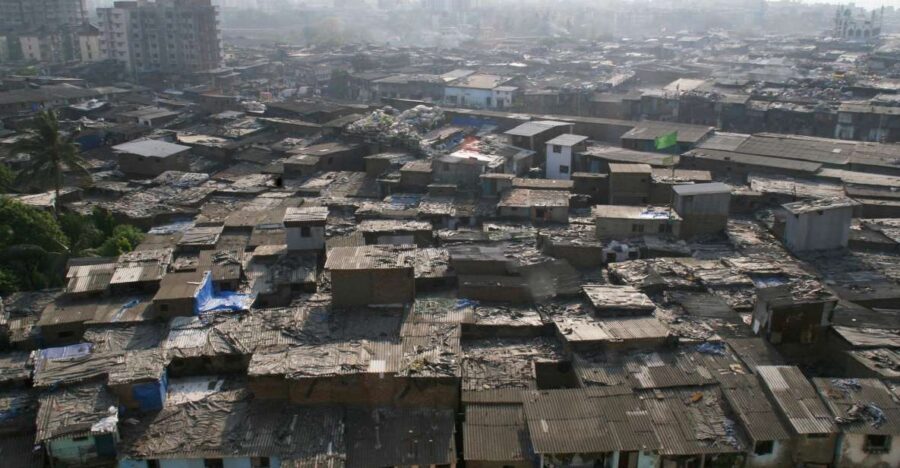
Dharavi is the centerpiece, with about 2 hours dedicated to the area. Dharavi is described as one of the world’s largest slums, with roughly 1,000,000 people in a little over 2.1 square kilometers. That scale alone is hard to absorb. The guided structure is what helps you make sense of it without flattening it into a single stereotype.
The most praised aspect of the experience I saw wasn’t just “information.” It was the guide’s way of handling sensitive topics with care. Siddhi is repeatedly described as having a very human and sensitive approach, and that shows up in the kind of time you get. Instead of marching through, the emphasis is on explanation and context.
One traveler described it as a real privilege to be taken around people’s private homes. That phrasing tells you the tour style: it’s not just street views. You’re walking in an active community where privacy and respect matter.
If you’re booking this, arrive mentally ready to be challenged by what you see. Dharavi can be uncomfortable. The goal is to understand what daily life looks like and how community systems work in tight spaces. If you treat the neighborhood like a problem to solve, you’ll miss the intelligence and resilience already on display.
Where the dabbawalla fits (and how to check before you go)
The tour title includes a dabbawalla component, but the stops provided highlight landmarks plus Dharavi and Dhobi Ghat. That doesn’t mean a dabbawalla moment is missing, only that it may not be spelled out as a separate listed stop.
If dabbawallas are a must for you, ask your guide beforehand what you’ll see related to the lunchbox network on your specific day. This is especially worth doing since you’ll be spending a lot of time on Dharavi’s streets, where food logistics and daily work often overlap.
Value for Money: Why This Price Can Make Sense in Mumbai
The price is $75.69 per person, and the tour runs 6 to 7 hours. For Mumbai, that can be a strong deal if you value two things: (1) a private guide and (2) time that’s difficult to piece together alone.
You’re paying for coordination across a wide geographic arc: Colaba to South Mumbai icons, then Malabar Hill views, then Dhobi Ghat, then into Dharavi. A lot of tourists spend multiple half-days stitching this together. With one guide and a private-group pace, you lose less time to “where do we go next” stress.
Also, many stops are free to enter, which helps keep the day from ballooning. The major “cost” is your time and attention. This tour is built for that trade.
One more value point from feedback: people liked that the guide didn’t push purchases. In a city where shopping stops can quietly inflate your day, a calm “you don’t have to buy anything” approach keeps your experience focused on seeing, not spending.
What to Bring and How to Handle the Day Comfortably
This kind of day is a walking day with short stops and longer moments in active places. Wear comfortable shoes you can stand in for a while. Bring a hat and water, especially because Dhobi Ghat and Dharavi are outdoors and you may need shade.
For Dharavi, consider how you want your camera to behave. Photos can be sensitive. Follow your guide’s guidance on where photography is appropriate.
If you’re prone to getting overwhelmed, give yourself permission to slow down. The guide’s job isn’t only to name sights. It’s to help you process what you’re seeing step by step.
Who This Tour Is Best For
This is a great match if you want:
- a private guide and a custom pace for your group
- a one-day overview of Mumbai that includes both famous monuments and real neighborhood life
- a guided Dharavi experience that prioritizes respect and context
It’s less ideal if you only want “classic postcard” Mumbai with minimal street-level realism. The value here is contrast, and that contrast comes with reality.
Should You Book This Private Mumbai Tour?
I’d book it if you want more than a highlights reel. This tour pairs the big, iconic South Mumbai sights with Dhobi Ghat’s working-laundry scene and a careful, guided look at Dharavi. The best reason to choose it is the guide’s approach—professional and clearly focused on being respectful.
I’d think twice if your schedule can’t handle a 6 to 7 hour commitment or if you’re visiting during a period when weather reliability is low. Still, the experience is designed with free-entry stops and a private-group pace, so it tends to feel efficient and guided rather than chaotic.
If you’re curious, send a message in advance and ask one simple question: what will you do on the dabbawalla angle during your day? Once you get that answer, you’ll know if this is the right mix for your interests.
FAQ
How long is the private city tour in Mumbai?
The tour duration is about 6 to 7 hours.
What time does the tour start and where is the meeting point?
The start time is 9:30 am, and the meeting point is Regal Cinema, Apollo Bandar, Colaba, Mumbai.
Is pickup included?
Pickup is offered, and the tour includes a mobile ticket.
Is this tour private or shared?
This is a private tour/activity. Only your group will participate.
What’s included in the itinerary?
The day includes stops such as Gateway of India, Mani Bhavan Gandhi Museum, Dhobi Ghat, and a major visit to Dharavi, along with other South Mumbai landmarks like Chhatrapati Shivaji Terminus and Marine Drive.
What happens if the weather is bad?
The experience requires good weather. If it’s canceled due to poor weather, you’ll be offered a different date or a full refund.