REVIEW · CHENNAI
Chennai: Magical Markets Guided Walking Tour
Book on GetYourGuide →Operated by Yo Tours · Bookable on GetYourGuide
Markets tell you the real Chennai fast. This 2-hour walk puts you in the chaos on purpose, moving through Black Town and George Town lanes where you’ll see and smell the city’s favorite stalls: flowers, spices, fruits, and cloth.
I love the hidden-lane access and the way a local guide makes the crowd feel navigable. I also love that the stops aren’t random shopping stops, they’re market types stacked together, from the spice market scents to the texture of traditional textiles.
One thing to think about: timing and guide coordination matter. With only a short 2-hour window and very real street traffic, delays or a missed meeting spot can shrink the experience.
In This Review
- Key highlights worth clocking
- Entering Chennai through its markets, not its monuments
- Getting oriented at the King George V statue meeting point
- Black Town & George Town lanes: the real traffic lesson
- The Textile Market: fabric first, shopping second
- The Spice Market: learn the scents, then learn the names
- The Flower Market: garlands, freshness, and fast color
- Georgetown Market: older lanes, daily essentials, and how to shop smart
- Nanda as an example: when the guide turns chaos into conversation
- Price and time: does $18 make sense for 2 hours?
- What to bring so the markets don’t beat you
- Should you book this Chennai Magical Markets walking tour?
- FAQ
- FAQ
- How long is the Chennai Magical Markets guided walking tour?
- What is the price per person?
- Where do we meet for the tour?
- What languages will the guide speak?
- What is included in the tour price?
- What is not included?
- What should I bring with me?
- Is free cancellation available?
Key highlights worth clocking
- King George V statue start: easy landmark, then straight into market lanes
- Black Town & George Town streets: narrow paths plus chaotic traffic energy
- Textile Market color and fabric shopping: a visual feast of traditional cloth
- Spice Market aromas: herbs and spice scents you can’t get from a store shelf
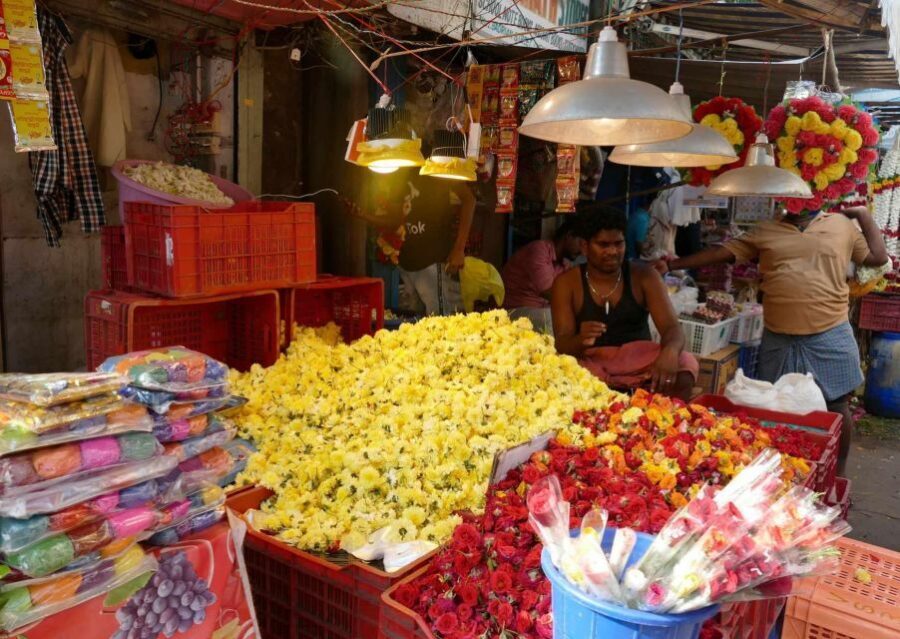
- Flower Market garlands and freshness: stalls built around fragrance and bright color
- Local tips that save money: the guide shares practical ways to shop smart
Entering Chennai through its markets, not its monuments
Chennai has plenty of big sights, sure. But the fastest way to understand the city is how it trades. This guided walk is built around that idea: you’re not just looking at stalls, you’re learning how Chennai moves through everyday shopping life.
In about two hours, you’ll get dropped into a mix of neighborhoods and market styles. The route centers on Black Town and George Town, known for tight lanes where scooters, bikes, pedestrians, and vendors all share the same space. That sounds stressful on paper. In practice, a good guide turns it into a lesson: where to stand, when to cross, and how to keep your bearings while the street does what the street does.
You can also read our reviews of more walking tours in Chennai

Getting oriented at the King George V statue meeting point
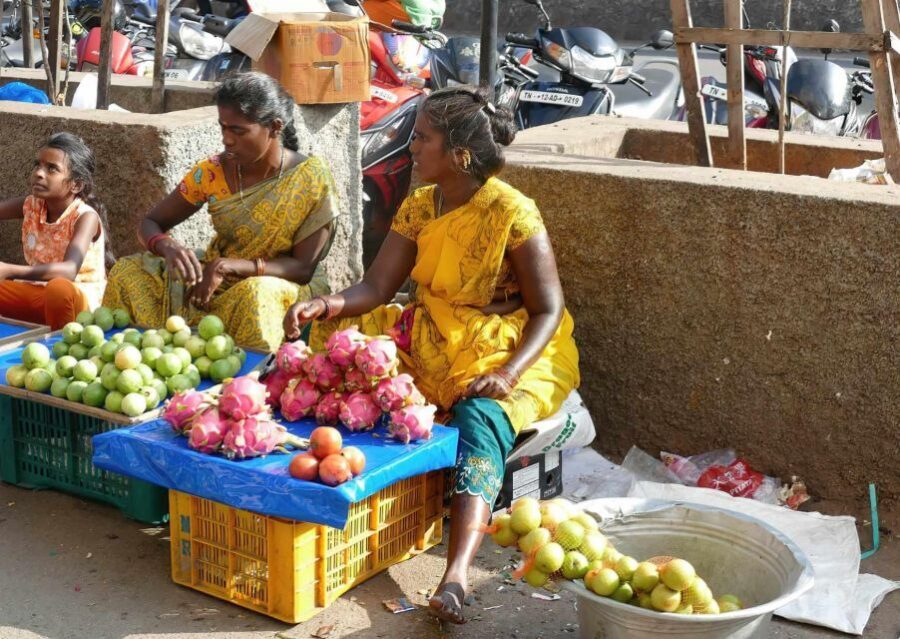
Your tour meets at the King George V statue. That’s a helpful detail because it gives you a clear anchor before you step into the maze of lanes.
Once you start walking, you’ll realize why a guided format works here. You can’t treat these streets like a calm museum route. The market flow changes as you go: one lane is stacked with cloth and clothing, the next is all produce, and then suddenly you’re in spice-and-herb territory where the air itself seems to switch gears.
If you’re aiming to photograph, keep your phone ready but not in your hand the whole time. In tight market alleys, you’ll want to stay hands-free and move with the group. That way you can actually watch what’s going on instead of bumping into people while trying to frame a shot.
Black Town & George Town lanes: the real traffic lesson

Black Town and George Town are part of what makes this walk feel alive. The narrow lanes bring you close to the goods and the people selling them. You’ll notice quick conversations at stall counters, constant movement around baskets and piles, and that slightly chaotic rhythm that’s hard to experience any other way.
This is also where you’ll see the value of the guide. A storyteller/guide who speaks English and Hindi can help you understand what you’re looking at and how to approach vendors without making it awkward. Even if you only catch bits of the explanation, you’ll still pick up practical context—like what’s typical to buy here and how vendors think about pricing and choice.
Potential drawback: because the streets are busy and traffic exists outside the lanes too, the route’s success depends on keeping the group moving. If a guide gets delayed getting to the meeting point, that two-hour time can evaporate quickly.
The Textile Market: fabric first, shopping second
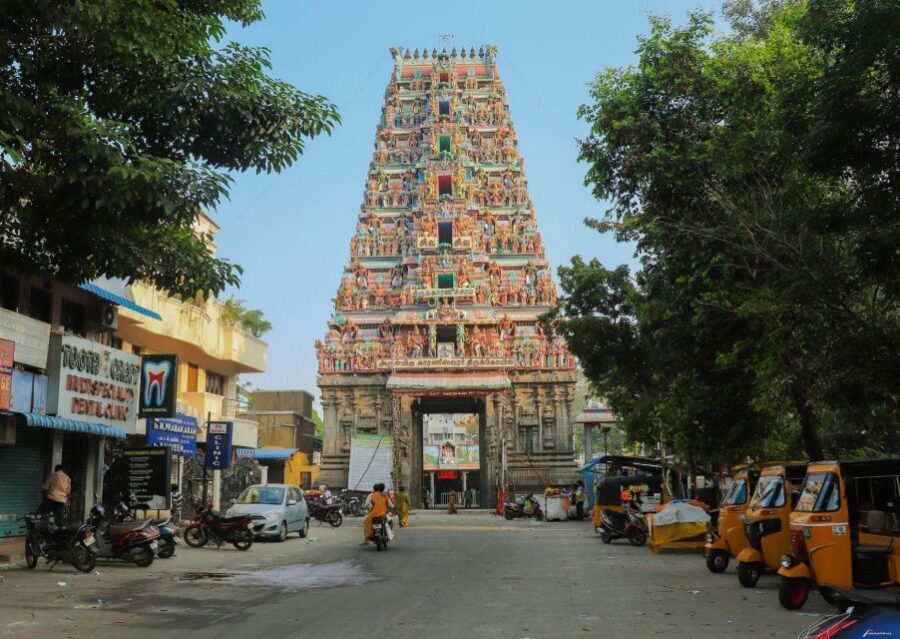
One of the strongest segments is the Textile Market. This is where Chennai’s market energy shifts from food-and-aroma to texture, color, and craft. You’ll wander through streets that feel designed for cloth trade: stacks, bolts, hanging fabrics, and plenty of traditional garments.
What I like about this stop is simple: textiles are visual. You don’t need deep language knowledge to grasp what’s happening. You can focus on the patterns, the weave, the way garments are folded, and how vendors describe the look and feel.
What you might need to manage: if you’re not planning to buy, it can still be easy to get pulled into comparisons. Fabric shopping is naturally persuasive—vendors show options back-to-back. The trick is to enjoy it like a gallery. Ask a couple of questions, take photos carefully, and decide if you want to buy before you get overwhelmed by choices.
Also, if you do buy, expect negotiation to be part of the conversation. The tour’s local tips can help you shop more confidently, especially if you’re not used to this style of market interaction.
The Spice Market: learn the scents, then learn the names

The Spice Market is built around smell, which changes the whole experience. You’re not just walking past products, you’re inhaling them. Spices and herbs are stacked in ways that make it easy to see variety, and the air carries the real message: this is a place where cooking culture is part of daily life.
This is where a guide earns their keep. Without help, it’s easy to treat spice stalls like an assortment of jars. With guidance, you’ll start to connect scents to ingredients and understand why certain mixes exist.
A practical tip: go slow with your senses. Smells can be strong in crowded stalls, and you’ll want to keep your head clear. If you’re sensitive to strong aromas, stick near the edges of the stall area while you listen and look.
If you’re interested in bringing something home, consider buying smaller amounts. It’s easier to test what you like and adjust later. The tour’s money-saving advice can be useful here, because spice pricing can vary depending on what exactly you’re purchasing and how it’s packaged.
You can also read our reviews of more guided tours in Chennai






The Flower Market: garlands, freshness, and fast color

The Flower Market is the stop that often surprises people. It’s not only about pretty blooms. In a market setting, flowers are part of daily rituals and celebrations, which means the display is practical and immediate.
You’ll see an impressive array of fresh flowers and garlands. The colors can be intense, and you’ll notice how vendors arrange garlands in ways meant to be seen and purchased quickly. There’s often a feeling of motion here—people coming in for bunches, garlands, and immediate selections.
What you’ll take away: Chennai’s market life isn’t only about taking things home. It’s also about the meaning of what’s bought. Flowers are a good example. Even if you don’t buy, it helps you understand why the market matters.
If you plan to photograph, watch for condensation and moisture around fresh materials. Don’t expect a clean, dry environment. This is a working market, and your gear should match that reality.
Georgetown Market: older lanes, daily essentials, and how to shop smart
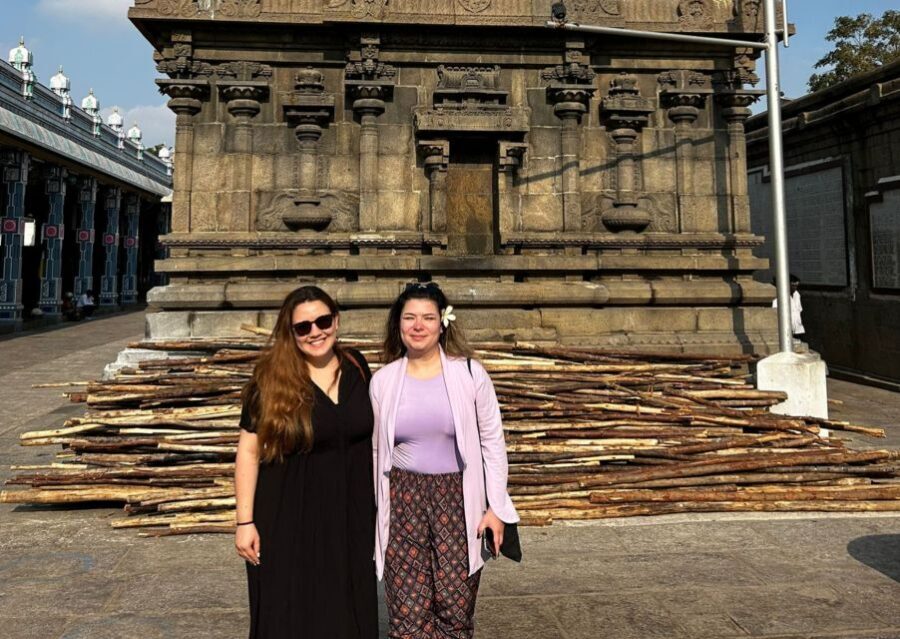
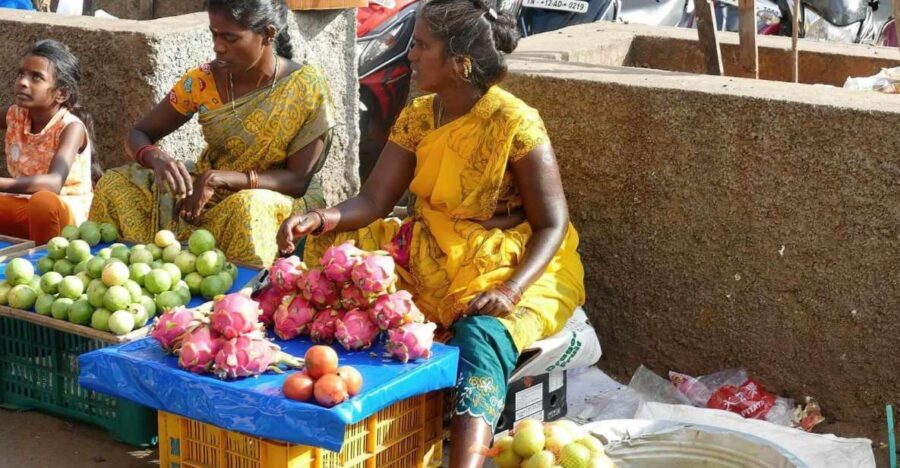
Georgetown Market is one of Chennai’s oldest and most lively market areas on this route. Here, the focus returns to daily essentials: fruits, vegetables, spices, cloth and textiles, jewelry, and everyday items.
This stop can be a fun reality check. It shows you that markets aren’t just for souvenirs. They’re where people stock up. And that changes how vendors behave. They’re not performing for you like a craft fair. They’re working.
This is also a good place to use what the guide shares about saving money. If the guide tells you where bargains tend to cluster or when it’s better to ask rather than grab the first price, you’ll feel it immediately. Even small advice can stop you from overpaying just because you were rushed.
Nanda as an example: when the guide turns chaos into conversation
On some departures, the guide is Nanda, and that name comes with two very different vibes in the feedback. When it’s working, people describe Nanda as someone who can keep the walk enjoyable even when the crowd is dense. You’ll typically get more than point-and-say stops—you’ll get conversation and a sense of the market’s rhythm.
When it’s not working, the issues are mostly practical: delayed arrivals from traffic, communication that feels compressed, and a tour that ends early. In the worst cases, the meeting point is missed or the group is told they are a no-show.
The takeaway for you: if you book, treat the start time seriously. Be at the King George V statue early, and if you see any scheduling updates, don’t assume it’ll fix itself. Market tours live and die by timing.
Price and time: does $18 make sense for 2 hours?
$18 for two hours is a bargain if the route runs smoothly and the guide actually stays engaged. You’re paying for three things: a local storyteller, guidance through crowded lanes, and access to smaller lanes and places you’d likely miss on your own.
It’s not a long, slow, get-lost kind of tour. It’s a focused hit of the market experience: spice scents, flower color, textile texture, and the daily trading vibe of Georgetown.
My advice: decide what you want from the time. If you want a guided intro that helps you shop sensibly and understand what you’re looking at, the price feels fair. If your schedule is tight and you can’t handle delays, consider building in a buffer.
Also remember what’s not included. There’s no hotel pickup, and you should bring your own water. With crowded streets and heat, hydration isn’t optional.
What to bring so the markets don’t beat you
This is where small preparation pays off. You’re told to bring a sun hat, and I agree. Chennai can be bright and warm, and even shade is limited in narrow lanes.
Also consider:
- Comfortable walking shoes with grip (lanes can be uneven)
- Phone charged and ready, but stored often to avoid bumps
- A lightweight layer if you get air-condition jumps near shops
Since water bottle is not included, plan to buy one near the route or carry your own if your tour rules allow it. You’ll walk in close quarters, and you’ll want to avoid feeling drained halfway through.
Should you book this Chennai Magical Markets walking tour?
I’d book it if you want a short, guided taste of Chennai’s market life, especially if spice, flowers, and textiles are on your must-see list. The concept is strong: Black Town and George Town lanes plus targeted stops for aromas, fabrics, and produce.
I’d think twice if your day is strict or you rely on an exact start time with no flexibility. This experience can be hit hard by missed meeting points, traffic delays, or stalls closing depending on the day. If you go when the markets are fully active and the guide is on time, this $18 walk can be one of the most practical ways to understand Chennai fast.
If you’re an independent shopper who still wants guidance for navigating crowds and bargaining, this is a smart fit. If you hate noise, crowds, and street-level chaos, you may prefer a calmer food-and-history option instead.
FAQ
FAQ
How long is the Chennai Magical Markets guided walking tour?
It lasts 2 hours.
What is the price per person?
The price is $18 per person.
Where do we meet for the tour?
The meeting point is the King George V statue.
What languages will the guide speak?
The live guide speaks English and Hindi.
What is included in the tour price?
You get a trained and friendly storyteller/guide, local tips and recommendations, access to hidden lanes and places, and great conversations.
What is not included?
Hotel pickup and drop are not included, and water bottle is not included.
What should I bring with me?
Bring a sun hat.
Is free cancellation available?
Yes. You can cancel up to 24 hours in advance for a full refund, and you can also reserve now and pay later.